



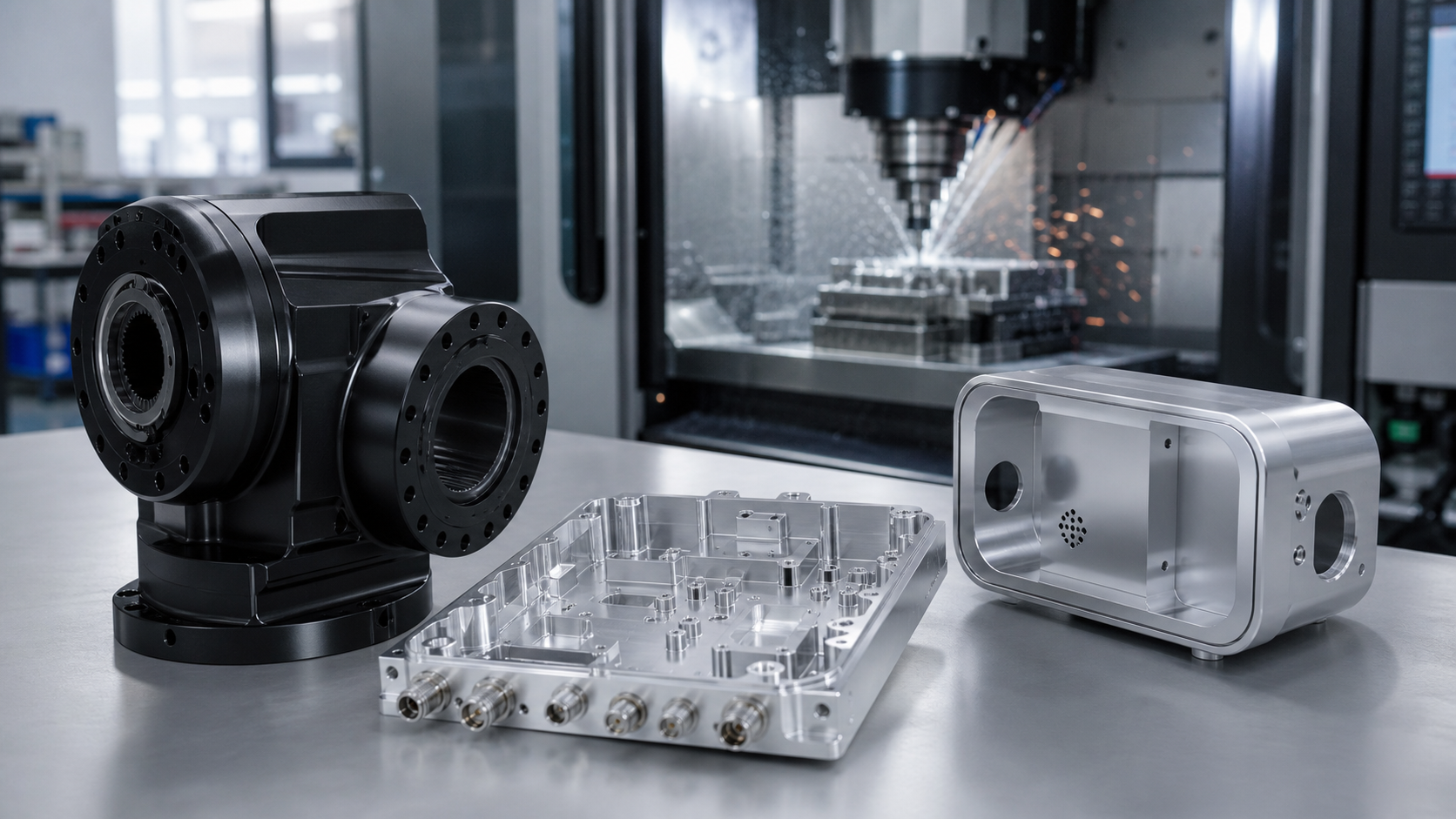
Ein praktischer technischer Leitfaden für 6061-T6 CNC-Bearbeitung von Aluminium, einschließlich Materialverhalten, T6-Temperament, Legierungsvergleiche, Bearbeitungsparameter, Oberflächenveredelungen, Kostenfaktoren, DFM-Regeln, und reale Projektbeispiele.
Einführung
6061-T6-Aluminium ist eines der am häufigsten spezifizierten Materialien für präzisionsgefertigte Teile, da es ein praktisches Gleichgewicht an Festigkeit bietet, Korrosionsbeständigkeit, Bearbeitbarkeit, Verfügbarkeit, und Kosten. Ingenieure verwenden es für Halterungen, Gehäuse, Kühlkörper, Vorrichtungen, Roboterkomponenten, HF-Hohlräume, und viele andere CNC-Bearbeitungsanwendungen für Aluminium.
Trotzdem, Die Wahl von 6061-T6 garantiert nicht automatisch ein gutes Ergebnis. Wandstärke, Toleranzstrategie, Werkzeugauswahl, Temperaturregelung, Eloxierungszugabe, und Teilegeometrie wirken sich alle auf die Bearbeitungsqualität und die Endkosten aus. In dieser Anleitung wird erläutert, wie sich 6061-T6 während des Betriebs verhält kundenspezifische CNC-Bearbeitung und wie man gestaltet, Zitat, und prüfen Sie die daraus hergestellten Teile.
Was dieser Leitfaden behandelt
- 6061-T6-Materialeigenschaften: chemisch, mechanisch, Thermal-, und elektrische Daten
- Was der T6-Temper bedeutet und wann T651 die bessere Wahl ist
- 6061-T6-Vergleiche mit 7075, 6063, 5052, 304 Edelstahl, und ADC12
- CNC-Bearbeitungsparameter, Werkzeuge, Befestigung, und Toleranzkontrolle
- Oberflächenveredelungen für 6061-T6-Teile, einschließlich eloxierter und leitfähiger Beschichtungen
- Kostentreiber und Volumeneffekte bei der 6061-T6-CNC-Bearbeitung
- DFM-Richtlinien für Wände, Löcher, Toleranzen, und Oberflächenbehandlung
- Projektbeispiele für häufige Herausforderungen bei der 6061-T6-Bearbeitung
- Häufig gestellte technische Fragen
Materialeigenschaften
Der Wert von 6061-T6 ergibt sich aus seinem ausgewogenen Eigenschaftssatz. Es ist nicht die stärkste Aluminiumlegierung, noch das günstigste, aber es ist vorhersehbar, weit verbreitet, und einfach zu bearbeiten.
Chemische Zusammensetzung
6061 ist eine wärmebehandelbare Al-Mg-Si-Legierung. Magnesium und Silizium bilden beim Altern Mg2Si-Ausscheidungen, Das ist die Hauptquelle der Stärkung. Kupfer verleiht Stärke, während Chrom hilft, das Kornwachstum zu kontrollieren und die Korrosionsbeständigkeit verbessert.
| Element | Min (%) | Max (%) | Rolle |
| Aluminium (Al) | 95.80 | 98.60 | Unedles Metall |
| Magnesium (Mg) | 0.80 | 1.20 | Primäre Stärkung (Mg₂Si) |
| Silizium (Und) | 0.40 | 0.80 | Primäre Stärkung (Mg₂Si), verbessert die Fließfähigkeit |
| Kupfer (Cu) | 0.15 | 0.40 | Erhöht die Kraft, fördert die Alterungsverhärtung |
| Chrom (Cr) | 0.04 | 0.35 | Steuert das Kornwachstum, verbessert die Korrosionsbeständigkeit |
| Eisen (Fe) | — | 0.70 | Restverunreinigung |
Mechanische Eigenschaften
6061-T6 bietet normalerweise 310 MPa Zugfestigkeit und 276 MPa-Streckgrenze. Das ist niedriger als bei vielen Stählen, Die Legierung hat jedoch nur etwa ein Drittel der Dichte von Stahl, was ihm einen starken Kraft-Gewicht-Vorteil verleiht. Auch sein niedrigerer Modul spielt eine Rolle: im Vergleich zu Stahl, 6061 Teile verformen sich bei gleicher Belastung stärker, Daher sollte die Steifigkeit frühzeitig in der Konstruktion überprüft werden.
| Eigentum | Wert | Einheit |
| Zugfestigkeit | 310 | MPa |
| Streckgrenze (0.2% versetzt) | 276 | MPa |
| Verlängerung | 8-12 | % |
| Elastizitätsmodul | 68.9 | GPa |
| Brinellhärte | 95 | HB |
| Ermüdungsfestigkeit | 96.5 | MPa |
| Dichte | 2.70 | g/cm³ |
Thermische und elektrische Eigenschaften
6061-T6 leitet Wärme gut, Dies trägt dazu bei, dass die Schneidwärme die Schnittstelle zwischen Werkzeug und Werkstück verlässt und ermöglicht höhere Schnittgeschwindigkeiten. Der Kompromiss ist die Wärmeausdehnung. A 10 Eine Temperaturänderung um etwa 100 °C kann zu groben Schwankungen führen 0.0236 mm Dimensionsbewegung auf a 100 mm-Funktion, was bereits größer ist als viele Präzisionstoleranzen.
Es ist 40-47% IACS sorgt für elektrische Leitfähigkeit 6061 nützlich für elektronische Gehäuse, HF-Hohlräume, Und Kundenspezifische CNC-Bearbeitung des Kühlkörpers Anwendungen. Jedoch, Beim Eloxieren entsteht eine isolierende Oxidschicht, Daher müssen leitende Oberflächen möglicherweise maskiert oder stattdessen mit einer leitenden Beschichtung versehen werden.
Verwandter Cluster-Artikel: 6061-Eigenschaften von T6-Aluminium: Chemisch, Mechanisch, und thermische Daten
Was bedeutet T6??
T6 ist eine Temperamentbezeichnung. Für 6061, Dies bedeutet, dass das Material lösungsgeglüht und künstlich gealtert wurde. Dies ist der häufigste Zustand bei CNC-Bearbeitung 6061 Teile, weil es stabil ist, Wiederholbare Festigkeit, ohne dass die Legierung schwierig zu bearbeiten ist.
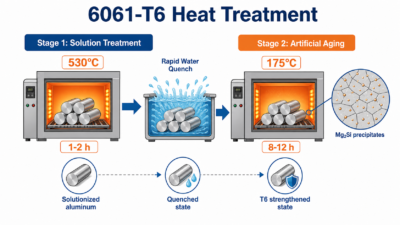
Der T6-Wärmebehandlungsprozess
Lösungsbehandlung: Die Legierung wird auf ca. erhitzt 530 du C, lange genug gehalten, um Magnesium und Silizium in der Aluminiummatrix aufzulösen, und dann schnell abgeschreckt, um eine übersättigte feste Lösung zu erhalten.
Künstliches Altern: Das Material wird erneut auf ca. erhitzt 175 °C erhitzt und mehrere Stunden lang gehalten. Bei diesem Schritt bilden sich feine Mg2Si-Ausscheidungen, Erhöhung der Festigkeit und Härte durch Begrenzung der Luxationsbewegung.
T6 im Vergleich zu anderen Temperamenten
| Temperament | Zugfest (MPa) | Ertrag (MPa) | Verlängerung (%) | HB | Anwendung |
| O (Geglüht) | 124 | 55 | 25 | 30 | Tief formend |
| T4 | 241 | 145 | 22 | 65 | Biegen + Nachalterung |
| T6 | 310 | 276 | 8-12 | 95 | CNC-Bearbeitung, Strukturteile |
| T651 | 310 | 276 | 8-12 | 95 | Dicke Platte/Stange, stressfrei |
| T5 | 262 | 207 | 12 | 75 | Extrudierte Profile |
T6 wird häufig in der CNC-Bearbeitung verwendet, da es eine gute Festigkeit aufweist, vorhersehbare Bearbeitbarkeit, stabile Eigenschaften, starke Eloxierungsleistung, und breites Marktangebot.
T651 hat die gleichen nominellen mechanischen Eigenschaften wie T6, Es beinhaltet jedoch einen Dehnschritt, um die Restspannung zu reduzieren. Für dicke Platten und lange Teile, T651 ist oft die sicherere Wahl, da es sich beim Schruppen und Schlichten weniger leicht bewegt.
Materialvergleiche
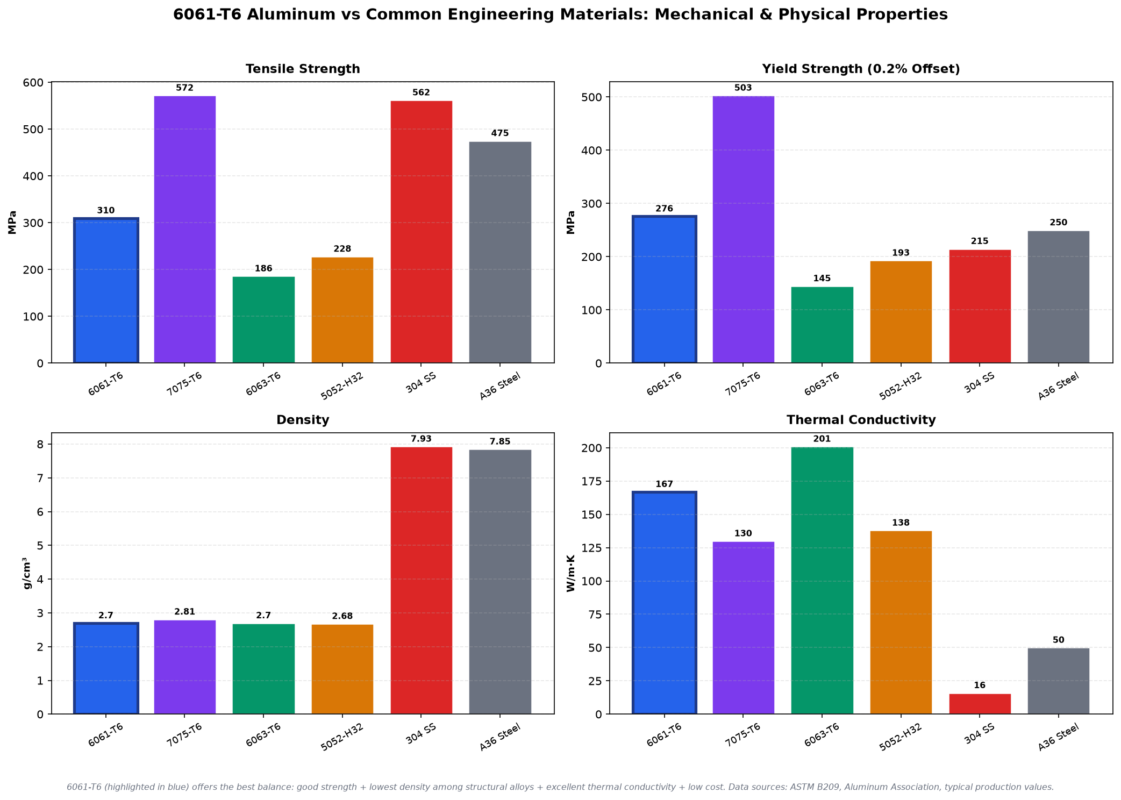
Bei der Materialauswahl beginnen viele Kosten- und Leistungsprobleme. Die richtige Wahl hängt von der Belastung ab, Steifheit, Korrosionseinwirkung, kosmetische Anforderungen, Produktionsvolumen, und ob das Teil aus Blech gefertigt wird, Bar, Extrusion, oder Gießen.
6061-T6 vs. 7075-T6
7075-T6 ist viel stärker als 6061-T6 und wird häufig für Luft- und Raumfahrt- und Hochlastanwendungen ausgewählt. Die Nachteile sind höhere Materialkosten, geringere Korrosionsbeständigkeit, schlechtere Schweißbarkeit, und anspruchsvollere Bearbeitungssteuerung. Verwenden 7075 wenn die Kraft der limitierende Faktor ist, nicht nur, weil es hochwertiger klingt.
Verwandter Cluster-Artikel: 6061-T6 vs. 7075-T6 Aluminium: Stärke, Kosten, und Bearbeitbarkeit
6061-T6 vs. 6063-T6
6063 ist hauptsächlich eine Extrusionslegierung. Es bietet ein sauberes eloxiertes Aussehen und geringere Kosten, aber es ist deutlich schwächer als 6061. Wählen 6063 für Strangpressprofile, dekorative Teile, und einige Kühlkörper; wählen 6061 für CNC-bearbeitete Strukturbauteile.
6061-T6 vs. 5052-H32
5052 ist eine nicht wärmebehandelbare Al-Mg-Legierung mit ausgezeichneter Korrosionsbeständigkeit und Formbarkeit. Für Blech ist es oft besser geeignet, verbogene Teile, und Meeres- oder chemische Umgebungen, während 6061-T6 normalerweise besser für gefräste Strukturteile geeignet ist.
6061-T6 vs 304 Edelstahl
304 Edelstahl bietet eine stärkere Korrosionsbeständigkeit und eine viel bessere Hochtemperaturleistung. Es ist auch viel dichter, volumenmäßig teurer, und langsamer zu bearbeiten. Bei Korrosion Edelstahl verwenden, Temperatur, oder Hygieneanforderungen rechtfertigen den Mehraufwand und die Bearbeitungszeit.
6061-T6 vs. ADC12 Aluminiumdruckguss
ADC12 ist für den Druckguss in großen Mengen konzipiert. Es kann die Stückkosten senken, sobald das Volumen groß genug ist, um den Werkzeugbedarf zu rechtfertigen, aber es bringt eine geringere Präzision, mögliche Porosität, und schlechtere Eloxierungsleistung. Für Prototypen, Kleinserienfertigung, enge Toleranzen, und saubere Eloxierung, CNC-gefräst 6061 ist in der Regel der flexiblere Weg.
Verwandter Cluster-Artikel: 6061-T6 vs. ADC12 Druckguss-Aluminium: CNC-Bearbeitung vs. Druckguss
CNC-Bearbeitung 6061-T6: Werkzeuge, Geschwindigkeiten, und Feeds
6061-T6 ist im Vergleich zu vielen technischen Metallen fehlerverzeihend, Aber es braucht immer noch scharfe Werkzeuge, gute Spanabfuhr, stabile Befestigung, und Temperaturbewusstsein. Die häufigsten Probleme sind Aufbauschneidenbildung, dünnwandige Bewegung, Grate, und Dimensionsabweichung bei Präzisionsmerkmalen.
Werkzeugauswahl
| Werkzeugmaterial | Anwendung | Kosten |
| Unbeschichtetes Hartmetall | Allgemeines Schruppen/Schlichten | Medium |
| Diamantbeschichtetes Hartmetall (DLC) | High-Speed-Finishing | Hoch |
| PCD (Polykristalliner Diamant) | Großvolumig, hochpräzise | Sehr hoch |
| HSS | Wasserhähne, Reibahlen, geringe Lautstärke | Niedrig |
Für Allgemeines CNC-Fräsen, Unbeschichtete Hartmetall-Schaftfräser mit zwei oder drei Schneiden, einen hohen Spiralwinkel, und große Späneräume sind ein verlässlicher Ausgangspunkt. Diamantbeschichtete Werkzeuge können bei der Hochgeschwindigkeitsbearbeitung oder langen Produktionsläufen hilfreich sein. Egal welche Beschichtung, Die Schneide muss scharf bleiben; Stumpfe Werkzeuge verschmieren Aluminium und erhöhen die Aufbauschneide.
Schnittparameter für Hartmetallwerkzeuge
| Betrieb | Schnittgeschwindigkeit (m/min) | Futter pro Zahn (mm/z) | DOC (mm) |
| Schruppen (Seitenmühle) | 300-500 | 0.05-0.15 | 0.5-1.0×D |
| Schruppen (Planfräser) | 400-600 | 0.10-0.20 | 1-3 |
| Halbfertigbearbeitung | 500-800 | 0.03-0.08 | 0.3-0.5 |
| Abschluss | 600-1000+ | 0.02-0.05 | 0.1-0.3 |
| Bohren (5-10mm) | 150-300 | 0.10-0.20mm/U | — |
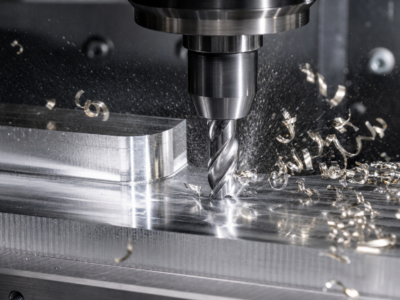
Die praktische Regel ist einfach: Verwenden Sie ausreichend Spindelgeschwindigkeit und Vorschub, um die Späne in Bewegung zu halten. Wenn die Maschinendrehzahl begrenzt ist, kann nicht durch Reiben bei sehr geringem Vorschub kompensiert werden. Eine stabile Vorschubgeschwindigkeit, Korrekte Spanlast, Eine wirksame Kühlmittelstrategie ist in der Regel wichtiger als die Verfolgung einer theoretischen Geschwindigkeitszahl.
Befestigung und Anti-Verformung
Weil 6061 hat einen niedrigeren Modul als Stahl, Dünne Wände können sich unter Klemm- und Schnittkräften verbiegen. Verwenden Sie mäßigen Klemmdruck, weiche Kiefer, ggf. Vakuum-Werkstückhalterung, und trennen Sie das Schruppen vom Schlichten. Für dünne oder hochwertige Teile, Lassen Sie den Rohling für einen letzten Lichtdurchgang stehen, nachdem sich das Teil entspannt hat.
Enge Toleranzen erreichen
6061-T6 kann Präzisionstoleranzen einhalten, Aber die Temperaturkontrolle ist oft der entscheidende Faktor. Für kritische Dimensionen, ermöglichen, dass Material und Maschine ein thermisches Gleichgewicht erreichen, in einer kontrollierten Umgebung beenden, und überprüfen Sie die Funktionen mit geeigneten CNC-Inspektionsdienste anstatt sich nur auf maschinelle Offsets zu verlassen.
Verwandter Cluster-Artikel: 6061-T6 CNC-Bearbeitungsparameter: Geschwindigkeiten, Feeds, Werkzeuge, und Toleranzen
Oberflächenbeschaffenheit für 6061-T6-Teile
6061-T6 reagiert auf viele gut Oberflächenveredelung Prozesse. Das richtige Finish hängt vom Aussehen ab, Korrosionsbeständigkeit, Leitfähigkeit, tragen, Maskierungspflichten, und Maßzugabe.
Eloxieren
Durch Eloxieren entsteht eine kontrollierte Aluminiumoxidschicht, die die Korrosionsbeständigkeit und Oberflächenhärte verbessert und gleichzeitig eine Farbfärbung ermöglicht. Die Schwefeleloxierung vom Typ II ist die Standardoberfläche für viele bearbeitete Werkstücke 6061 Teile; Hartanodisierung vom Typ III wird verwendet, wenn die Verschleißfestigkeit wichtiger ist als die Farbhelligkeit.
| Typ | Film (µm) | Härte (HV) | Farbe | Kosten |
| Typ I (Chrom) | 2-7 | 200-400 | Transparent/grau | Medium |
| Typ II (Schwefelhaltig) | 5-25 | 300-500 | Alle Farben färbbar | Niedrig |
| Typ III (Hart) | 25-100 | 400-800 | Grau/Schwarz | Hoch |
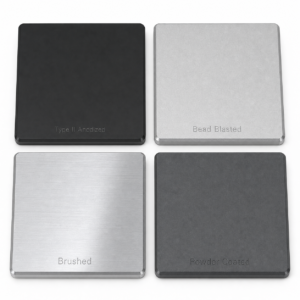
Ein häufiger Konstruktionsfehler besteht darin, Anodisierungsablagerungen zu ignorieren. Als Faustregel, etwa die Hälfte der Filmdicke wächst nach außen. A 10 Mikrometerfilm kann etwa hinzufügen 5 Mikrometer pro Oberfläche, was bei Bohrungen wichtig ist, Slots, Threads, und eng anliegende Baugruppen.
Verwandter Cluster-Artikel: 6061-T6-Eloxierung: Typen, Farben, Dicke, und Prozessleitfaden
Andere Oberflächenveredelungen
| Beenden | Aussehen | Korrosion | Kosten | Anwendung |
| Perlenstrahlen | Gleichmäßig matt | Gerecht (Nur Basis) | Niedrig | Voranodisieren, mattes Aussehen |
| Bürsten | Lineare Textur | Gerecht | Medium | Premium-Unterhaltungselektronik |
| Chromatumwandlung | Farblos/gelb | Gut | Niedrig | Leitfähiger Korrosionsschutz, Farbgrundierung |
| Pulverbeschichtung | Verschiedene Farben/Texturen | Exzellent | Medium | Gehäuse, Outdoor-Ausrüstung |
| Flüssigmalerei | Verschiedene Effekte | Gut | Niedrig-Mittel | Aussehensteile, dekorativ |
JADE-CNC unterstützt die Koordination von der Bearbeitung bis zum Finish, einschließlich Eloxieren, Perlenstrahlen, Bürsten, und Partnerbeschichtungsverfahren. Der entscheidende Punkt ist nicht nur, ob ein Finish verfügbar ist, aber ob Maskierung, Toleranzzulage, Farbkonsistenz, und Inspektion werden vor Beginn der Bearbeitung geplant.
Kosten für die CNC-Bearbeitung 6061-T6
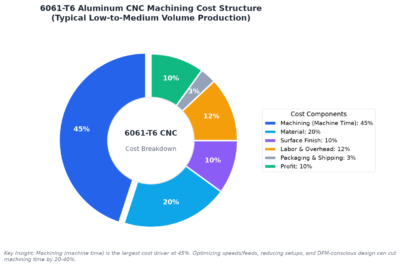
Die Kosten für ein 6061-T6-Teil hängen weniger vom Namen der Legierung als vielmehr von der Geometrie ab, Zykluszeit, Toleranzanforderungen, Anzahl der Setups, Oberflächenbeschaffenheit, Inspektionsebene, und Produktionsvolumen. Der Materialpreis ist wichtig, Die Bearbeitungszeit ist jedoch in der Regel der größere Kostenfaktor.
Kostenstruktur
| Kostenartikel | Prozentsatz |
| Material | 10-30% |
| Bearbeitung (Maschinenzeit) | 40-60% |
| Oberflächenbeschaffenheit | 5-20% |
| Arbeit/Gemeinkosten | 10-20% |
| Verpackung/Versand | 2-5% |
| Profitieren | 10-20% |
Richtpreis für Material
Bei den nachstehenden Zahlen handelt es sich um indikative Marktspannen mit Stand August 2026. Sie sollten als Zitatkontext behandelt werden, keine festen Einkaufspreise. Die endgültigen Kosten hängen von der Region ab, Anbieter, Lagerform, Dicke, Zertifizierungsanforderungen, und Auftragsvolumen.
| Bilden | Spezifikation | Preis (USD/kg) |
| 6061-T6-Platte | 1-10mm | 3.7-6.0 |
| 6061-T6-Platte | 10-50mm | 3.3-5.2 |
| 6061-T651 dicke Platte | >25mm | 4.5-7.5 |
| 6061-T6-Stange | 10-150mm | 3.0-5.2 |
Aluminiumpreisentwicklung
| Jahr | Durchschnitt | Reichweite | YoY |
| 2024 | $2,970 | $2,806-3,164 | — |
| 2025 | $3,257 | $3,015-3,552 | +9.7% |
| 2026 (Vorhersage) | $3,507-3,657 | $3,343-3,761 | +7.7-12.3% |
Kosten nach Volumen
| Volumen | Stückpreis | Vorlaufzeit |
| Prototyp (1-5) | 3-5x Grundlinie | 3-7 Tage |
| Niedrig (10-50) | 1.5-2x Grundlinie | 7-12 Tage |
| Medium (100-500) | 1.0-1.3x Grundlinie | 12-20 Tage |
| Hoch (1000+) | 0.7-1.0x Grundlinie | 20-40 Tage |
Der größte Preisverfall pro Einheit tritt normalerweise zwischen einem einmaligen Prototyp und einer Kleinserie auf. Nach ungefähr 100 Stücke, Die Einsparungen gehen weiter, aber die Kurve flacht ab. Für sehr hohe Volumina, Extrusion oder Druckguss können wirtschaftlicher werden, Diese Prozesse erfordern jedoch Werkzeuge und bringen unterschiedliche Toleranz- und Oberflächenbeschränkungen mit sich.
Für CNC-Bearbeitung mit geringem Volumen, Bei JADE-CNC steht die Prozessstabilität im Fokus, DFM-Feedback, und Kontrolle der Chargenkonsistenz, anstatt einfach nur den niedrigsten Stückpreis anzugeben.
DFM-Richtlinien für 6061-T6-Teile
Ein gutes DFM ist der schnellste Weg, Kosten zu senken und Überraschungen bei der Bearbeitung zu vermeiden. Das Ziel besteht nicht darin, alle Funktionen freizugeben; Es geht darum, enge Toleranzen und schwierige Geometrien den Merkmalen vorzubehalten, die sich tatsächlich auf die Funktion auswirken.
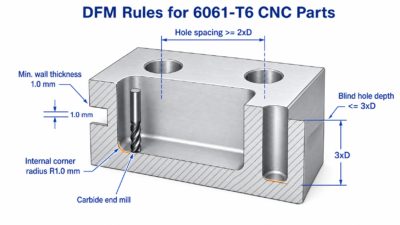
Wandstärke
- Minimum: 0.5 mm für kurze Wände mit Sonderbefestigung
- Empfohlen: 1.0 mm oder dicker für die meisten bearbeiteten Wände
- Darüber hohe Mauern 20 mm: zumindest verwenden 1.5 mm Dicke oder Rippen hinzufügen
Löcher und Gewinde
- Mindestlochdurchmesser: 0.5 mm, mit 1.0 mm oder größer bevorzugt
- Sacklochtiefe: Wenn möglich, sollte der Durchmesser unter dem Dreifachen liegen
- Thread-Minimum: M1,6 möglich, M3 oder größer bevorzugt
- Effektive Gewindetiefe: in der Regel nicht mehr als das 2,5-fache des Nenndurchmessers
- Tippen Sie auf Bohrkostenschätzung: Nenndurchmesser minus 1,0825x Steigung
Ecken und Filets
- Inneneckenradius: 0.5 mm mindestens, 1.0 mm bevorzugt
- Innenradien müssen mit den verfügbaren Werkzeuggrößen übereinstimmen; Vermeiden Sie scharfe Innenecken
- Brechen Sie scharfe Außenkanten mit C0,2-C0,5-Fasen oder R0,2-R0,5-Verrundungen
Toleranzen
- Allgemeine Toleranz: +/-0.1 mm für unkritische Merkmale
- Präzisionstoleranz: +/-0.02-0.05 mm, wo die Funktion es erfordert
- Hohe Präzision: +/-0.005-0.01 mm nur mit spezieller Prozesssteuerung
- Wenden Sie beim Zusammenstecken nur enge Toleranzen an, Versiegelung, Ausrichtung, oder Funktionsmaße
Oberflächenbehandlungsdesign
- Ermöglichen Sie den Anodisierungsaufbau auf Präzisionspassflächen
- Leitende Oberflächen abdecken, wenn elektrischer Kontakt erforderlich ist
- Gewindelöcher abkleben oder stanzen, wenn die Beschichtungsdicke die Montage beeinträchtigen könnte
Verwandter Cluster-Artikel: 6061-T6 DFM-Richtlinien: Checkliste und Tipps für Design for Manufacturing
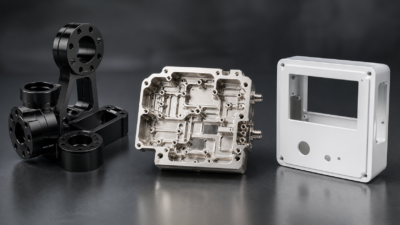
Projektbeispiele
Die folgenden Beispiele zeigen, wie sich Material verhält, Befestigung, Abschluss, und Inspektion kommen in tatsächlichen 6061-T6-Projekten zusammen.
Projektbeispiele
Fall 1: Roboterstrukturkomponentensatz
- Umfang: Oberarm, Unterarm, Verbindungsflansche, Endeffektorplatte, und Motorhalterungen
- Material: 6061-T6/T651
- Kritische Anforderungen: +/-0.02 mm Gelenklöcher und +/-0.01 mm Planlauffehler
- Beenden: Perlenstrahlen plus Schwarzeloxieren
- Prozessstrategie: 5-Achsenaufbauplanung, Grob-/Fertigtrennung, Stressabbau, und einheitliches Batch-Eloxieren
- Ergebnis: 12-Lieferung am Tag unter Einhaltung der Toleranzen, Farbkonsistenz kontrolliert, und Vormontage bestanden
Fall 2: HF-Kommunikationshohlraum
- Teil: 5G Filterhohlraum, 120 X 80 X 30 mm
- Material: 6061-T6-Vollmaterial zur Vermeidung von Gussporosität
- Kritische Anforderungen: Hohlraum +/-0.02 mm und Ebenheit 0.01 mm
- Beenden: innen chemisch vernickelt und außen natürlich eloxiert
- Herausforderung: Maskierungs- und Oberflächenbehandlungssequenz für HF-Leistung
- Ergebnis: Ebenheit 0.008 mm, interne Ra 0.6, Gasdichtheit bestanden, und HF-Leistung erfüllt
Fall 3: Gehäuse und Halterung für medizinische Geräte
- Umfang: oberes/unteres Gehäuse, Innenhalterung, und Displayrahmen
- Material: medizinische Qualität 6061-T6
- Beenden: Weiße Eloxierung der Gehäuse und dunkelgraue Eloxierung der Blende
- Herausforderung: dünne Wände, kosmetische Konsistenz, Und 0.1 mm Schalenspalt
- Ergebnis: 10-Lieferung am Tag, Keine sichtbaren Verarbeitungsfehler, 0.1 +/-0.015 mm Spalt, und Inspektion bestanden
Abschluss
6061-T6 ist nach wie vor die Standard-Aluminiumwahl für viele präzisionsgefertigte Teile, da es für viele Anwendungen stark genug ist, leicht zu beschaffen, effizient zu bearbeiten, und kompatibel mit gängigen Lackierungen. Es ist nicht immer das beste Material, obwohl. Verwenden 7075 wenn maximale Kraft unerlässlich ist, 6063 für Strangpressprofile, 5052 für umgeformte korrosionsbeständige Blechteile, 304 Edelstahl für starke Korrosion oder Hitze, und ADC12, wenn das Druckgussvolumen die Werkzeugausstattung rechtfertigt.
Ein erfolgreiches 6061-T6-Projekt hängt normalerweise von scharfen Werkzeugen ab, Korrekte Spanlast, stabile Befestigung, Temperaturregelung, realistische Toleranzen, und Oberflächenplanung. Wenn diese Entscheidungen frühzeitig getroffen werden, 6061-T6 kann starke Leistung zu einem vernünftigen Preis liefern.
JADE-CNC 6061-T6-Funktionen
- 6061-T6/T651-Platten und -Stäbe sind für die Prototypen- und Serienfertigung verfügbar
- 3-Achse, 4-Achse, und 5-Achsen-Bearbeitungszentren sowie CNC-Drehmaschinen
- Eloxieren, Perlenstrahlen, Bürsten, und abgestimmte Beschichtungspartner
- KMG-Inspektion und ISO 9001:2015 Qualitätsmanagement
- Prototyp, geringe Lautstärke, und Unterstützung bei der Produktion mittlerer Stückzahlen
- DFM-Analyse, Prozessempfehlungen, und Unterstützung bei der Materialauswahl
Um ein 6061-T6-Projekt zu überprüfen, Senden Sie Ihr 3D-Modell und Ihre 2D-Zeichnungen an JADE-CNC und Fordern Sie ein CNC-Bearbeitungsangebot an. Für die meisten Projekte, Das Team kann die Herstellbarkeit überprüfen, Materialwahl, Oberflächenbeschaffenheit, und Inspektionsanforderungen vor Produktionsbeginn.
Häufig gestellte Fragen
Ist 6061-T6 gut für die CNC-Bearbeitung geeignet??
Ja. 6061-T6 bearbeitet sauber mit scharfen Werkzeugen, unterstützt hohe Schnittgeschwindigkeiten, und kann bei geringem Werkzeugverschleiß gute Oberflächengüten erzeugen.
Was ist der Unterschied zwischen 6061 und 6061-T6?
6061 ist der Legierungsgrad. T6 ist das Temperament, Das bedeutet, dass das Material lösungsgeglüht und künstlich gealtert wurde. Für bearbeitete Teile, 6061 ohne weitere Details bezieht sich normalerweise auf 6061-T6- oder 6061-T651-Lager.
Kann 6061-T6 eloxiert werden??
Ja. 6061-T6 ist eine der zuverlässigsten Aluminiumlegierungen für die Eloxierung vom Typ II und kann auch hart eloxiert werden, wenn Verschleißfestigkeit wichtig ist.
Ist 6061-T6 stärker als 7075-T6?
NEIN. 7075-T6 ist viel stärker, es ist aber auch teurer und weniger korrosionsbeständig. 6061-T6 ist oft die bessere Wahl, wenn ausgewogene Leistung und Kosten wichtiger sind als maximale Festigkeit.
Welche Toleranzen kann 6061-T6 einhalten??
Allgemeine Bearbeitungstoleranzen liegen häufig bei ca +/-0.05 Zu +/-0.1 mm. Präzisionsmerkmale können erreicht werden +/-0.02 mm oder enger mit geeigneten Maschinen, Befestigung, Temperaturregelung, und Inspektion.
Wie viel kostet 6061-T6??
Materialkosten ändern sich je nach Marktbedingungen, Lagerform, Zertifizierung, und Lautstärke. In vielen bearbeiteten Teilen, Maschinenzeit und Einrichtung sind größere Kostentreiber als Rohmaterial allein.
Soll ich 6061-T6 CNC-Bearbeitung oder ADC12-Druckguss wählen??
Wählen Sie CNC-gefräst 6061 für Prototypen, niedrige bis mittlere Lautstärke, enge Toleranzen, Eloxieren, und solide Materialintegrität. Wählen Sie den ADC12-Druckguss für komplexe Formen in großen Stückzahlen, wenn die Werkzeugkosten gerechtfertigt sind.
Welche Mindestwandstärke ist für 6061-T6-Teile praktisch??
A 0.5 Für kurze Elemente mit spezieller Befestigung ist möglicherweise eine Wandstärke von 1 mm möglich, Aber 1.0 mm oder dicker ist für die meisten CNC-bearbeiteten Teile ein sichereres Konstruktionsziel.
Verwandte 6061-T6-Artikel
- 6061-Vollständiger Leitfaden zur T6-Aluminium-CNC-Bearbeitung
- 6061-T6 vs. 7075-T6 Aluminium: Stärke, Kosten & Bearbeitbarkeit
- 6061-T6 Aluminium eloxiert: Typen, Farben, Dicke & Designregeln
- 6061-T6 CNC-Bearbeitungsparameter: Geschwindigkeiten, Feeds, Werkzeuge & Prozesskontrolle
- 6061-T6 vs. ADC12 Aluminium: CNC-Bearbeitung oder Druckguss?
- 6061-T6 CNC-Bearbeitungs-DFM-Richtlinien: Designregeln & Checkliste
- 6061-Eigenschaften von T6-Aluminium: Mechanisch, Thermal & Chemische Daten
Dieser Leitfaden basiert auf veröffentlichten Materialdaten, öffentliche Marktinformationen, und praktische Erfahrung in der Zerspanung. Die Preisangaben beziehen sich auf August 2026 und sollte bei der Angebotserstellung bestätigt werden.

Leo Liang, Gründer Bester Partner mit R&D
JADE-CNCs Gründer LEO, der über zwei Jahrzehnte Branchenexpertise mitbringt, Leo begann seine Karriere als Lehrling und erprobte seine Fähigkeiten in der Oberflächenbehandlung und CNC-Bearbeitung.