



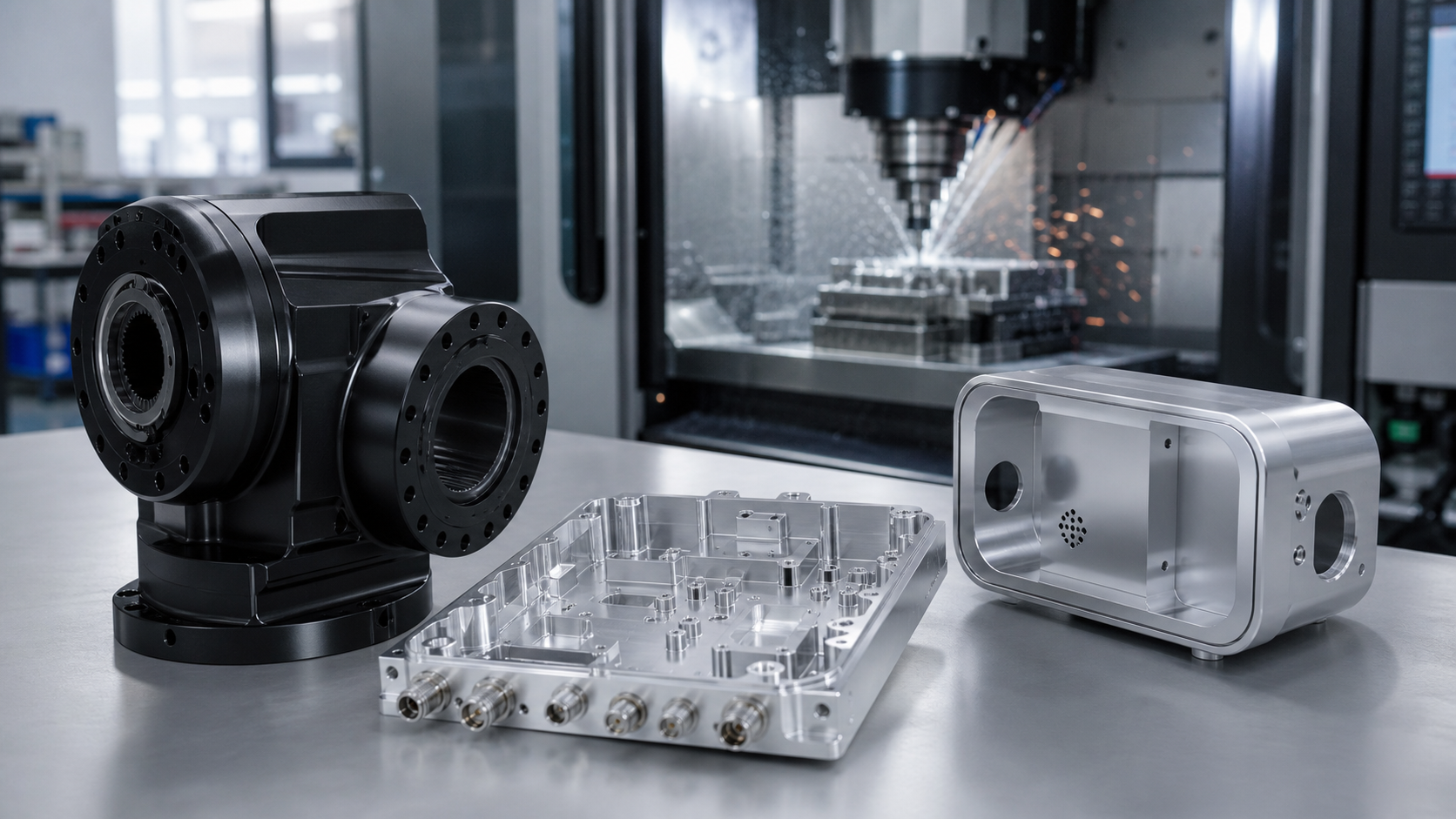
Практическое инженерное руководство по 6061-T6 обработка алюминия на станке с ЧПУ, включая материальное поведение, Т6 закал, сравнение сплавов, параметры обработки, обработка поверхности, факторы стоимости, правила ДФМ, и реальные примеры проектов.
Введение
6061-Алюминий Т6 является одним из наиболее часто используемых материалов для прецизионных деталей, поскольку он обеспечивает практический баланс прочности., коррозионная стойкость, обрабатываемость, доступность, и стоимость. Инженеры используют его для кронштейнов, корпуса, радиаторы, приспособления, робототехнические компоненты, РЧ полости, и многие другие приложения для обработки алюминия с ЧПУ..
Все еще, выбор 6061-T6 не гарантирует автоматически хороший результат. Толщина стенки, стратегия толерантности, выбор инструмента, контроль температуры, припуск на анодирование, и геометрия детали влияют на качество обработки и конечную стоимость.. В этом руководстве объясняется, как 6061-T6 ведет себя во время индивидуальная обработка с ЧПУ и как спроектировать, цитировать, и осмотреть изготовленные из него детали.
Что охватывает это руководство
- 6061-Свойства материала Т6: химический, механический, термический, и электрические данные
- Что означает характер T6 и когда T651 — лучший выбор
- 6061-Сравнение Т6 с 7075, 6063, 5052, 304 нержавеющая сталь, и АЦП12
- Параметры обработки с ЧПУ, оснастка, приспособление, и контроль толерантности
- Поверхностная обработка деталей из 6061-T6, включая анодирование и проводящие покрытия
- Факторы затрат и объемный эффект при обработке на станке с ЧПУ 6061-T6
- Рекомендации DFM для стен, дыры, допуски, и обработка поверхности
- Примеры проектов для решения распространенных задач обработки станка 6061-T6
- Часто задаваемые инженерные вопросы
Свойства материала
Ценность 6061-T6 обусловлена его сбалансированным набором свойств.. Это не самый прочный алюминиевый сплав., и не самый дешевый, но это предсказуемо, широко доступен, и легко обрабатывается последовательно.
Химический состав
6061 представляет собой термообрабатываемый сплав Al-Mg-Si.. Магний и кремний образуют осадок Mg2Si при старении., что является основным источником укрепления. Медь добавляет прочности, в то время как хром помогает контролировать рост зерен и улучшает коррозионную стойкость.
| Элемент | Мин (%) | Макс (%) | Роль |
| Алюминий (Ал) | 95.80 | 98.60 | Основной металл |
| Магний (мг) | 0.80 | 1.20 | Первичное усиление (Mg₂Si) |
| Кремний (И) | 0.40 | 0.80 | Первичное усиление (Mg₂Si), улучшает текучесть |
| Медь (Cu) | 0.15 | 0.40 | Увеличивает силу, способствует закалке с возрастом |
| Хром (Кр) | 0.04 | 0.35 | Контролирует рост зерна, улучшает коррозионную стойкость |
| Железо (Фе) | — | 0.70 | Остаточные примеси |
Механические свойства
6061-T6 обычно обеспечивает 310 предел прочности МПа и 276 Предел текучести МПа. Это ниже, чем у многих сталей., но сплав составляет всего около одной трети плотности стали, что дает ему сильное преимущество по соотношению прочности и веса.. Его более низкий модуль также имеет значение.: по сравнению со сталью, 6061 детали прогибаются больше при той же нагрузке, поэтому жесткость следует проверять на ранних этапах проектирования.
| Свойство | Ценить | Единица |
| Предел прочности | 310 | МПа |
| Предел текучести (0.2% компенсировать) | 276 | МПа |
| Удлинение | 8-12 | % |
| Модуль упругости | 68.9 | ГПа |
| Твердость по Бринеллю | 95 | полупансион |
| Усталостная прочность | 96.5 | МПа |
| Плотность | 2.70 | г/см³ |
Тепловые и электрические свойства
6061-Т6 хорошо проводит тепло, что помогает отводить тепло от поверхности раздела инструмент-заготовка и поддерживает более высокие скорости резания.. Компромисс – тепловое расширение.. А 10 Изменение температуры на градусы Цельсия может создать примерно 0.0236 мм габаритного перемещения по 100 мм особенность, что уже превышает многие допуски точности.
Его 40-47% Электропроводность IACS делает 6061 полезен для электронных корпусов, РЧ полости, и обработка радиатора на заказ с ЧПУ приложения. Однако, анодирование создает изолирующий оксидный слой, поэтому проводящие поверхности могут нуждаться в маскировке или проводящем покрытии..
Связанная статья кластера: 6061-Свойства алюминия T6: Химическая, Механический, и тепловые данные
Что означает Т6?
Т6 — обозначение закалки. Для 6061, это означает, что материал подвергся термической обработке и искусственно состарился.. Это наиболее распространенное состояние для станков с ЧПУ. 6061 части, потому что это дает стабильную, повторяемая прочность без усложнения обработки сплава.
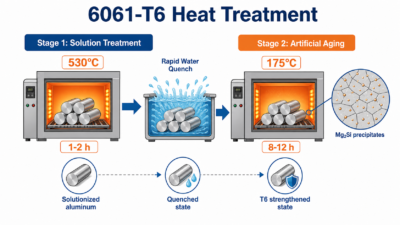
Процесс термообработки Т6
Лечение раствором: сплав нагревается примерно до 530 ты С, выдерживается достаточно долго, чтобы растворить магний и кремний в алюминиевой матрице, а затем быстро закаливают, чтобы сохранить пересыщенный твердый раствор.
Искусственное старение: материал повторно нагревается примерно до 175 градус С и выдерживали несколько часов.. На этом этапе образуются мелкие выделения Mg2Si., увеличение прочности и твердости за счет ограничения движения вывихов.
T6 против других темпераментов
| Характер | Растяжимый (МПа) | Урожай (МПа) | Удлинение (%) | полупансион | Приложение |
| О (Отожженный) | 124 | 55 | 25 | 30 | Глубокая формовка |
| Т4 | 241 | 145 | 22 | 65 | Гибка + постстарение |
| Т6 | 310 | 276 | 8-12 | 95 | обработка с ЧПУ, структурные части |
| Т651 | 310 | 276 | 8-12 | 95 | Толстая пластина/пруток, избавленный от стресса |
| Т5 | 262 | 207 | 12 | 75 | Экструдированные профили |
T6 широко используется при обработке на станках с ЧПУ, поскольку сочетает в себе хорошую прочность., предсказуемая обрабатываемость, стабильные свойства, сильная производительность анодирования, и широкое предложение на рынке.
T651 имеет те же номинальные механические свойства, что и T6., но он включает в себя этап растяжения для уменьшения остаточного напряжения.. Для толстых листов и длинных деталей, T651 часто является более безопасным выбором, поскольку вероятность его смещения во время черновой и чистовой обработки меньше..
Сравнение материалов
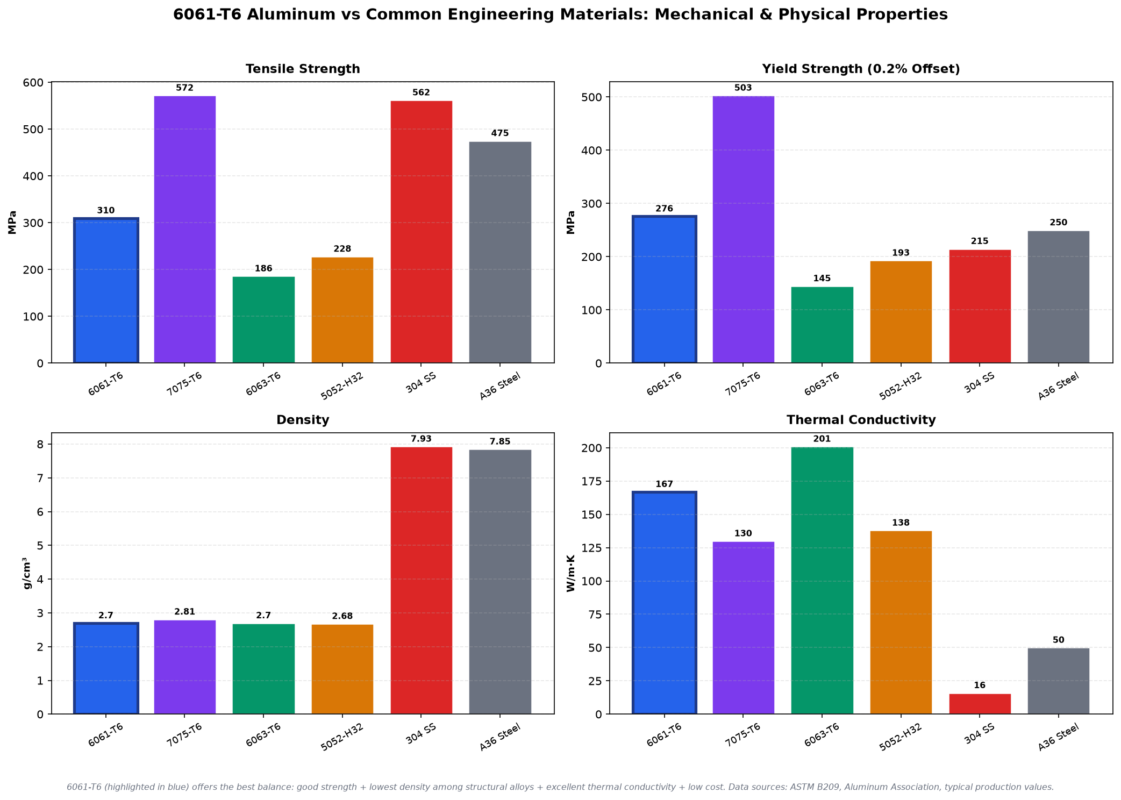
Выбор материала – это то, с чего начинаются многие проблемы, связанные со стоимостью и производительностью.. Правильный выбор зависит от нагрузки, жесткость, воздействие коррозии, косметические требования, объем производства, и будет ли деталь изготавливаться из пластины, бар, экструзия, или кастинг.
6061-Т6 против 7075-Т6
7075-T6 намного прочнее, чем 6061-T6, и его часто выбирают для аэрокосмической отрасли и приложений с высокими нагрузками.. Компромисс – более высокие материальные затраты., более низкая коррозионная стойкость, плохая свариваемость, и более требовательный контроль обработки. Использовать 7075 когда сила является ограничивающим фактором, не просто потому, что это звучит более премиально.
Связанная статья кластера: 6061-T6 против 7075-T6 Алюминий: Сила, Расходы, и обрабатываемость
6061-Т6 против 6063-Т6
6063 в основном это экструзионный сплав. Он имеет чистый анодированный внешний вид и более низкую стоимость., но он значительно слабее, чем 6061. Выбирать 6063 для экструдированных профилей, декоративные детали, и несколько радиаторов; выбирать 6061 для конструкционных компонентов, обработанных на станках с ЧПУ.
6061-Т6 против 5052-H32
5052 представляет собой неподдающийся термической обработке сплав Al-Mg с превосходной коррозионной стойкостью и пластичностью.. Зачастую он лучше подходит для листового металла., изогнутые части, и морская или химическая среда, тогда как 6061-T6 обычно лучше подходит для фрезерованных деталей конструкций..
6061-Т6 против 304 Нержавеющая сталь
304 нержавеющая сталь обеспечивает более высокую коррозионную стойкость и гораздо лучшие характеристики при высоких температурах.. Кроме того, он намного плотнее, дороже по объему, и медленнее машина. Используйте нержавеющую сталь при коррозии, температура, или гигиенические требования оправдывают дополнительные затраты и время обработки.
6061-T6 против ADC12 из литого алюминия
ADC12 предназначен для литья под давлением в больших объемах.. Это может снизить себестоимость единицы продукции, если объем будет достаточно большим, чтобы оправдать использование инструментов., но это снижает точность, возможная пористость, и худшие характеристики анодирования. Для прототипов, мелкосерийное производство, жесткие допуски, и чистое анодирование, обработанный на станке с ЧПУ 6061 обычно это более гибкий путь.
Связанная статья кластера: 6061-T6 против ADC12, литой алюминий: Обработка с ЧПУ против литья под давлением
Обработка с ЧПУ 6061-T6: Инструменты, Скорости, и каналы
6061-Т6 прощает ошибки по сравнению со многими конструкционными металлами., но для этого все равно нужны острые инструменты, хорошая эвакуация стружки, стабильное крепление, и осведомленность о температуре. Наиболее распространенными проблемами являются наросты на краях., тонкостенное движение, картавит, и размерный сдвиг прецизионных элементов.
Выбор инструмента
| Материал инструмента | Приложение | Расходы |
| Твердый сплав без покрытия | Общая черновая/чистовая обработка | Середина |
| Твердый сплав с алмазным покрытием (DLC) | Высокоскоростная отделка | Высокий |
| ПКД (Поликристаллический алмаз) | Большой объем, высокоточный | Очень высокий |
| HSS | Краны, развертки, малообъемный | Низкий |
Для общего Фрезерование с ЧПУ, твердосплавные концевые фрезы без покрытия с двумя или тремя канавками, большой угол спирали, и большие пищеводы для стружки являются надежной отправной точкой. Инструменты с алмазным покрытием могут помочь при высокоскоростной чистовой обработке или длительных производственных циклах.. Каким бы ни было покрытие, режущая кромка должна оставаться острой; тупые инструменты пачкают алюминий и увеличивают наросты на кромке.
Параметры резания твердосплавными инструментами
| Операция | Скорость резания (м/мин) | Подача на зуб (мм/з) | ДОКТОР (мм) |
| Черновая обработка (боковая мельница) | 300-500 | 0.05-0.15 | 0.5-1.0×Д |
| Черновая обработка (торцовая мельница) | 400-600 | 0.10-0.20 | 1-3 |
| Получистовая обработка | 500-800 | 0.03-0.08 | 0.3-0.5 |
| Отделка | 600-1000+ | 0.02-0.05 | 0.1-0.3 |
| Бурение (5-10мм) | 150-300 | 0.10-0.20мм/об | — |
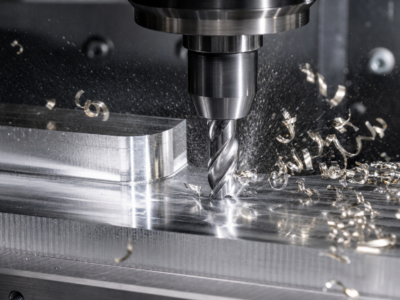
Практическое правило простое: используйте достаточную скорость шпинделя и подачу, чтобы стружка двигалась. Когда частота вращения машины ограничена, не компенсируйте это трением при очень низкой подаче. Стабильная скорость подачи, правильная загрузка чипа, и эффективная стратегия подачи охлаждающей жидкости обычно имеют большее значение, чем погоня за теоретическим числом оборотов..
Крепление и защита от деформации
Потому что 6061 имеет более низкий модуль упругости, чем сталь, тонкие стенки могут изгибаться под действием зажимающих и режущих сил. Используйте умеренное давление зажима., мягкие челюсти, вакуумное рабочее место, где это необходимо, и отделить черновую обработку от чистовой. Для тонких или дорогостоящих деталей, оставьте запас для окончательного легкого прохода после того, как деталь расслабится.
Достижение жестких допусков
6061-T6 может поддерживать прецизионные допуски, но контроль температуры часто является решающим фактором. Для критических размеров, позволить заготовке и машине достичь теплового равновесия, закончить в контролируемой среде, и проверьте функции с помощью соответствующих Инспекционные услуги с ЧПУ вместо того, чтобы полагаться только на машинные смещения.
Связанная статья кластера: 6061-T6 Параметры обработки с ЧПУ: Скорости, Ленты, Оснастка, и допуски
Поверхностная обработка деталей из 6061-T6
6061-Т6 хорошо реагирует на многие отделка поверхности процессы. Правильная отделка зависит от внешнего вида, коррозионная стойкость, проводимость, носить, требования к маскировке, и размерный припуск.
Анодирование
Анодирование образует контролируемый слой оксида алюминия, который повышает коррозионную стойкость и твердость поверхности, одновременно позволяя окрашивать в цвет.. Серное анодирование типа II является стандартной отделкой для многих обрабатываемых изделий. 6061 части; Твердое анодирование типа III используется, когда износостойкость важнее яркости цвета..
| Тип | Фильм (мкм) | Твердость (ВН) | Цвет | Расходы |
| Тип I (Хромовый) | 2-7 | 200-400 | Прозрачный/серый | Середина |
| Тип II (серный) | 5-25 | 300-500 | Возможность окрашивания во все цвета | Низкий |
| Тип III (Жесткий) | 25-100 | 400-800 | Серый/черный | Высокий |
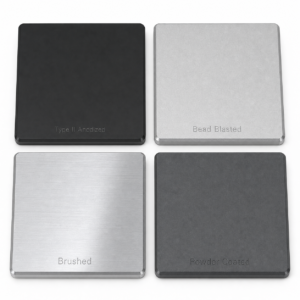
Распространенной ошибкой проектирования является игнорирование наростов анодирования.. Как правило, около половины толщины пленки вырастает наружу. А 10 Микрометрическая пленка может добавить около 5 микрометры на поверхность, что имеет значение для зануд, слоты, нити, и плотно прилегающие сборки.
Связанная статья кластера: 6061-Т6 Анодирование: Типы, Цвета, Толщина, и руководство по процессу
Другая обработка поверхности
| Заканчивать | Появление | Коррозия | Расходы | Приложение |
| Дробеструйная очистка | Равномерный матовый | Справедливый (только база) | Низкий | Предварительное анодирование, матовый внешний вид |
| Чистка | Линейная текстура | Справедливый | Середина | Бытовая электроника премиум-класса |
| Преобразование хромата | Бесцветный/желтый | Хороший | Низкий | Кондуктивная защита от коррозии, грунтовка для краски |
| Порошковое покрытие | Различные цвета/текстуры | Отличный | Середина | Корпуса, уличное оборудование |
| Жидкая покраска | Различные эффекты | Хороший | Низкий-средний | Внешний вид детали, декоративный |
JADE-CNC поддерживает координацию обработки и чистовой обработки, включая анодирование, дробеструйная обработка, чистка, и партнерские процессы нанесения покрытий. Важным моментом является не только наличие отделки., а маскировка ли, допуск на толерантность, консистенция цвета, и осмотр планируются до начала обработки.
Стоимость обработки станка с ЧПУ 6061-T6
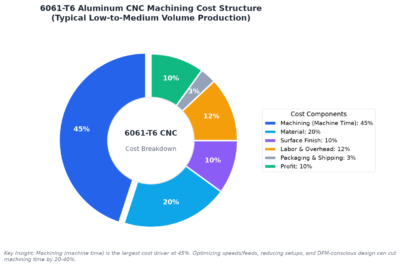
Стоимость детали из 6061-T6 зависит не столько от названия сплава, сколько от геометрии., время цикла, требования толерантности, количество установок, обработка поверхности, уровень проверки, и объем производства. Цена материала имеет значение, но время обработки обычно является более серьезным фактором затрат.
Структура затрат
| Статья затрат | Процент |
| Материал | 10-30% |
| Обработка (машинное время) | 40-60% |
| Поверхностная обработка | 5-20% |
| Труд/Накладные расходы | 10-20% |
| Упаковка/Доставка | 2-5% |
| Выгода | 10-20% |
Ориентировочная цена материала
Приведенные ниже цифры представляют собой ориентировочные рыночные диапазоны по состоянию на август. 2026. Их следует рассматривать как цитирующий контекст., не фиксированные закупочные цены. Окончательная стоимость зависит от региона, поставщик, складская форма, толщина, потребности в сертификации, и объем заказа.
| Форма | Спецификация | Цена (долларов США/кг) |
| 6061-Пластина Т6 | 1-10мм | 3.7-6.0 |
| 6061-Пластина Т6 | 10-50мм | 3.3-5.2 |
| 6061-T651 Толстая пластина | >25мм | 4.5-7.5 |
| 6061-Т6 Бар | 10-150мм | 3.0-5.2 |
Тенденция цен на алюминий
| Год | Средний | Диапазон | г/г |
| 2024 | $2,970 | $2,806-3,164 | — |
| 2025 | $3,257 | $3,015-3,552 | +9.7% |
| 2026 (прогноз) | $3,507-3,657 | $3,343-3,761 | +7.7-12.3% |
Стоимость по объему
| Объем | Цена за единицу товара | Время выполнения |
| Прототип (1-5) | 3-5х базовый уровень | 3-7 дни |
| Низкий (10-50) | 1.5-2х базовый уровень | 7-12 дни |
| Середина (100-500) | 1.0-1.3х базовый уровень | 12-20 дни |
| Высокий (1000+) | 0.7-1.0х базовый уровень | 20-40 дни |
Наибольшее падение цены за единицу продукции обычно происходит между единичным прототипом и небольшой партией.. Примерно через 100 куски, экономия продолжается, но кривая выравнивается. Для очень больших объемов, экструзия или литье под давлением могут стать более экономичными, но эти процессы требуют инструментов и накладывают различные ограничения на допуски и качество отделки..
Для малообъемная обработка на станке с ЧПУ, JADE-CNC фокусируется на стабильности процесса, Обратная связь с ДФМ, и контроль согласованности от партии к партии, а не просто назначать самую низкую цену за штуку.
Рекомендации DFM для деталей 6061-T6
Хороший DFM — самый быстрый способ снизить затраты и избежать неприятных сюрпризов при обработке.. Цель не в том, чтобы ослабить каждую функцию.; это значит оставить жесткие допуски и сложную геометрию для функций, которые действительно влияют на функциональность..
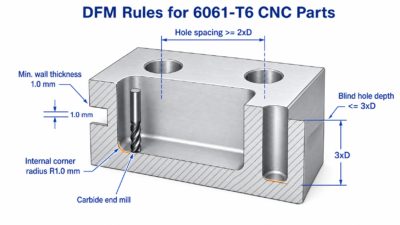
Толщина стены
- Минимум: 0.5 мм для коротких стен со специальным креплением
- Рекомендуется: 1.0 мм или толще для большинства обработанных стенок
- Высокие стены выше 20 мм: используйте хотя бы 1.5 Толщина мм или добавить ребра
Отверстия и резьбы
- Минимальный диаметр отверстия: 0.5 мм, с 1.0 предпочтительно мм или больше
- Глубина глухого отверстия: по возможности держите диаметр ниже 3x
- Минимальная резьба: М1,6 возможно, Предпочтительно M3 или больше
- Эффективная глубина резьбы: обычно не более чем в 2,5 раза больше номинального диаметра
- Оценка сверления метчиком: номинальный диаметр минус шаг 1,0825x
Углы и скругления
- Внутренний угловой радиус: 0.5 мм минимум, 1.0 мм предпочтительно
- Внутренние радиусы должны соответствовать доступным размерам инструмента.; избегайте указания острых внутренних углов
- Сломайте острые внешние кромки с помощью фасок C0,2-C0,5 или скруглений R0,2-R0,5.
Допуски
- Общая толерантность: +/-0.1 мм для некритичных функций
- Прецизионный допуск: +/-0.02-0.05 мм там, где этого требует функция
- Высокая точность: +/-0.005-0.01 мм только при специальном контроле процесса
- Применяйте жесткие допуски только к сопряжениям., уплотнение, выравнивание, или функциональные размеры
Проектирование обработки поверхности
- Допускать накопление анодирования на прецизионных сопрягаемых поверхностях.
- Маскируйте проводящие поверхности, когда требуется электрический контакт.
- Замаскируйте или заделайте резьбовые отверстия, если толщина покрытия может повлиять на сборку.
Связанная статья кластера: 6061-T6 Рекомендации DFM: Контрольный список и советы по проектированию для производства
Примеры проектов
Примеры ниже показывают, как материальное поведение, приспособление, отделка, и проверка объединяются в реальных проектах 6061-T6..
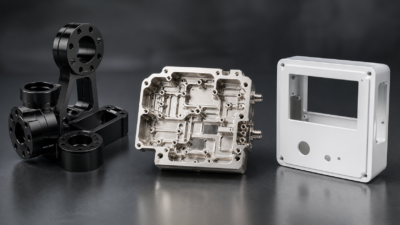
Примеры проектов
Случай 1: Набор роботизированных структурных компонентов
- Объем: плечо, предплечье, соединительные фланцы, концевая эффективная пластина, и опоры двигателя
- Материал: 6061-Т6/Т651
- Критические требования: +/-0.02 мм соединительные отверстия и +/-0.01 торцовое биение мм
- Заканчивать: дробеструйная очистка плюс черное анодирование
- Стратегия процесса: 5-планирование установки оси, разделение черновой/чистовой обработки, снятие стресса, и унифицированное серийное анодирование
- Результат: 12-доставка в день с соблюдением допусков, контролируемая консистенция цвета, и предварительная сборка прошла
Случай 2: Полость радиочастотной связи
- Часть: 5Полость фильтра G, 120 х 80 х 30 мм
- Материал: 6061-Твердая заготовка T6, чтобы избежать пористости отливки
- Критические требования: полость +/-0.02 мм и плоскостность 0.01 мм
- Заканчивать: химическое никелирование внутри и естественное анодирование снаружи
- Испытание: последовательность маскировки и обработки поверхности для обеспечения радиочастотных характеристик
- Результат: плоскостность 0.008 мм, внутренний Ра 0.6, газонепроницаемость пройдена, и производительность RF достигнута
Случай 3: Корпус и кронштейн для медицинского оборудования
- Объем: верхний/нижний корпус, внутренний кронштейн, и лицевая панель дисплея
- Материал: медицинский 6061-T6
- Заканчивать: белое анодирование корпуса и темно-серое анодирование лицевой панели
- Испытание: тонкие стены, косметическая консистенция, и 0.1 зазор оболочки мм
- Результат: 10-дневная доставка, отсутствие видимых дефектов отделки, 0.1 +/-0.015 мм зазор, и проверка пройдена
Заключение
6061-T6 остается выбором алюминия по умолчанию для многих прецизионных деталей, поскольку он достаточно прочен для многих применений., легко найти, эффективен в обработке, и совместим с обычными покрытиями. Это не всегда лучший материал, хотя. Использовать 7075 когда необходима максимальная сила, 6063 для экструдированных профилей, 5052 для формованных коррозионностойких листовых деталей, 304 нержавеющая сталь для сильной коррозии или нагрева, и ADC12, когда объем литья под давлением оправдывает использование инструментов.
Успешный проект 6061-T6 обычно зависит от острого инструмента., правильная загрузка чипа, стабильное крепление, контроль температуры, реалистичные допуски, и планирование отделки поверхности. Когда эти решения принимаются заранее, 6061-T6 может обеспечить высокую производительность по разумной цене..
Возможности JADE-CNC 6061-T6
- 6061-Пластины и стержни T6/T651 доступны для прототипного и серийного производства.
- 3-ось, 4-ось, и 5-осевые обрабатывающие центры плюс токарные станки с ЧПУ
- Анодирование, дробеструйная обработка, чистка, и скоординированные партнеры по нанесению покрытий
- Проверка ШМ и ISO 9001:2015 управление качеством
- Прототип, малообъемный, и поддержка среднеобъемного производства
- DFM-анализ, рекомендации по процессу, и помощь в выборе материалов
Чтобы просмотреть проект 6061-T6, отправьте свою 3D-модель и 2D-чертежи в JADE-CNC и запросить цену на обработку на станке с ЧПУ. Для большинства проектов, команда может проверить технологичность, выбор материала, обработка поверхности, и требования к проверке перед началом производства.
Часто задаваемые вопросы
Подходит ли 6061-T6 для обработки на станках с ЧПУ??
Да. 6061-T6 обрабатывает чисто острыми инструментами., поддерживает высокие скорости резания, и может обеспечить хорошее качество поверхности при низком износе инструмента..
В чем разница между 6061 и 6061-Т6?
6061 это марка сплава. Т6 - это характер, это означает, что материал был подвергнут термической обработке и искусственно состарен.. Для обработанных деталей, 6061 без дальнейших подробностей обычно относится к стоку 6061-T6 или 6061-T651..
Можно ли анодировать 6061-T6??
Да. 6061-T6 является одним из самых надежных алюминиевых сплавов для анодирования типа II, а также может подвергаться твердому анодированию, когда важна износостойкость..
6061-T6 сильнее 7075-T6??
Нет. 7075-Т6 намного сильнее, но он и дороже и менее устойчив к коррозии. 6061-T6 часто является лучшим выбором, когда сбалансированная производительность и стоимость важнее максимальной прочности..
Какие допуски может выдерживать 6061-T6??
Общие допуски механической обработки часто составляют около +/-0.05 к +/-0.1 мм. Прецизионные функции могут достигать +/-0.02 мм или меньше с помощью подходящих машин., приспособление, контроль температуры, и осмотр.
Сколько стоит 6061-Т6?
Стоимость материалов меняется в зависимости от рыночных условий, складская форма, сертификация, и объем. Во многих обработанных деталях, машинное время и настройка являются более важными факторами затрат, чем просто сырье.
Должен ли я выбрать обработку на станке с ЧПУ 6061-T6 или литье под давлением ADC12??
Выбирайте станки с ЧПУ 6061 для прототипов, низкий и средний объем, жесткие допуски, анодирование, и целостность прочного материала. Выбирайте литье под давлением ADC12 для больших объемов сложных форм, когда стоимость оснастки оправдана..
Какая минимальная толщина стенки практична для деталей из 6061-T6??
А 0.5 мм стены возможно для небольших конструкций со специальным креплением, но 1.0 мм или толще — более безопасная цель проектирования для большинства деталей, обработанных на станках с ЧПУ..
Статьи по теме 6061-T6
- 6061-Полное руководство по обработке алюминия T6 с ЧПУ
- 6061-T6 против 7075-T6 Алюминий: Сила, Расходы & Обрабатываемость
- 6061-T6 Анодирование алюминия: Типы, Цвета, Толщина & Правила проектирования
- 6061-T6 Параметры обработки с ЧПУ: Скорости, Ленты, Оснастка & Управление процессом
- 6061-T6 против ADC12 Алюминий: Обработка с ЧПУ или литье под давлением?
- 6061-T6 Обработка на станке с ЧПУ Рекомендации DFM: Правила проектирования & Контрольный список
- 6061-Свойства алюминия T6: Механический, Термальный & Химические данные
Это руководство основано на опубликованных данных о материалах., информация о публичном рынке, и практический опыт механической обработки. Цены указаны ориентировочные по состоянию на август. 2026 и должно быть подтверждено во время котировки проекта.

Лео Лян, Основатель, лучший партнер R&Д
Основатель JADE-CNC Лео, который обладает более чем двадцатилетним опытом работы в отрасли, Лео начал свою карьеру в качестве ученика и практиковал свои навыки в области обработки поверхностей и обработки на станках с ЧПУ..