


CNC-Fräsen von Kunststoff
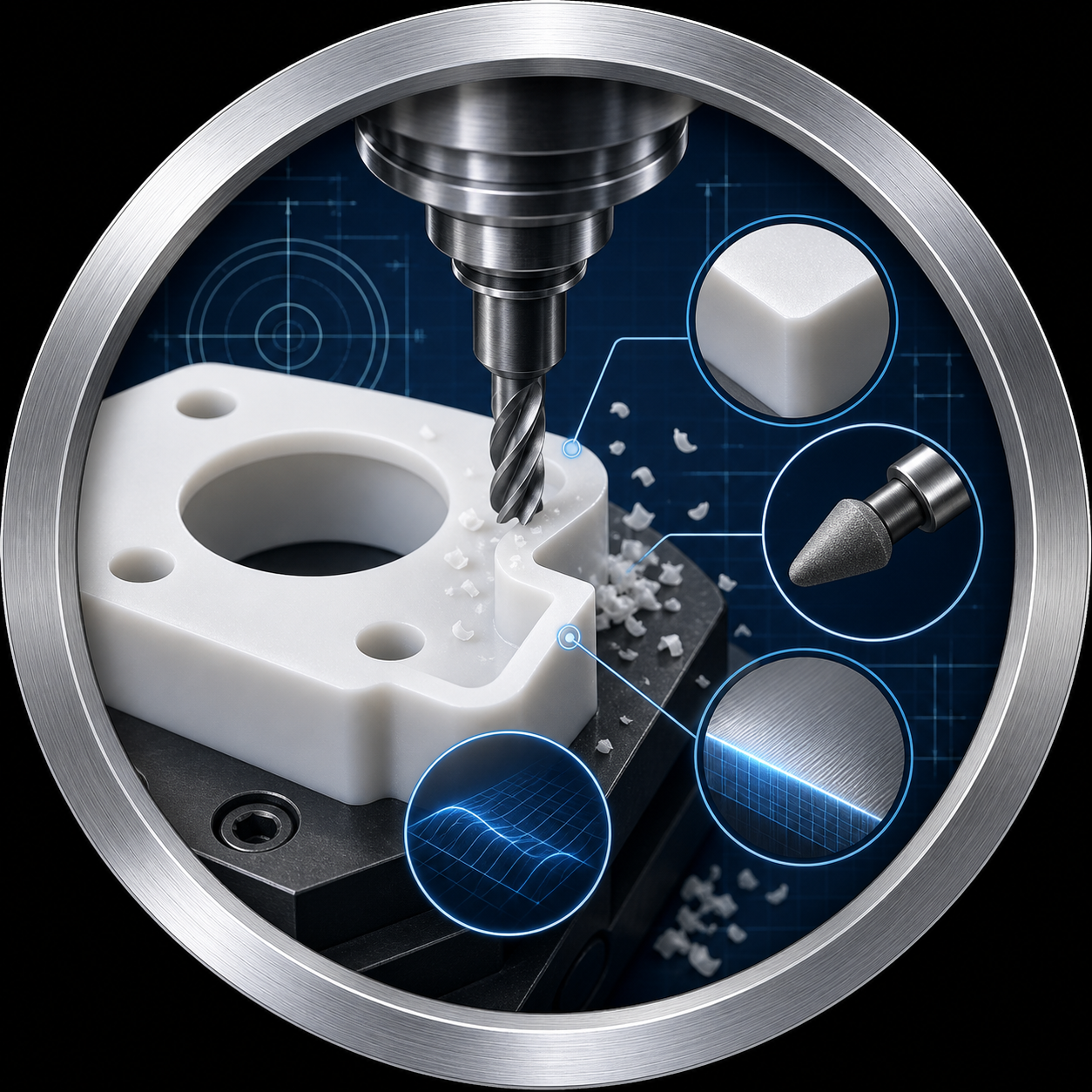
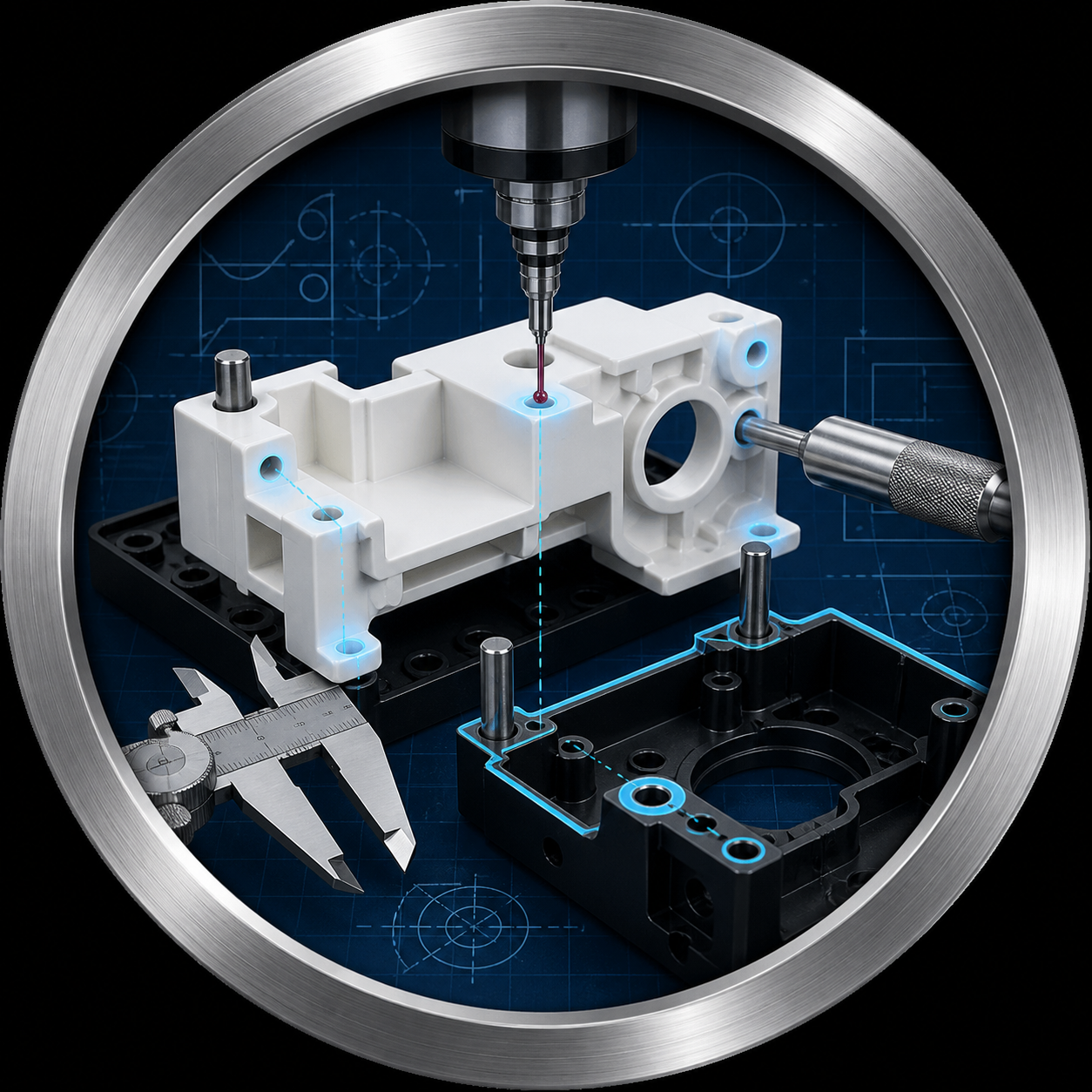
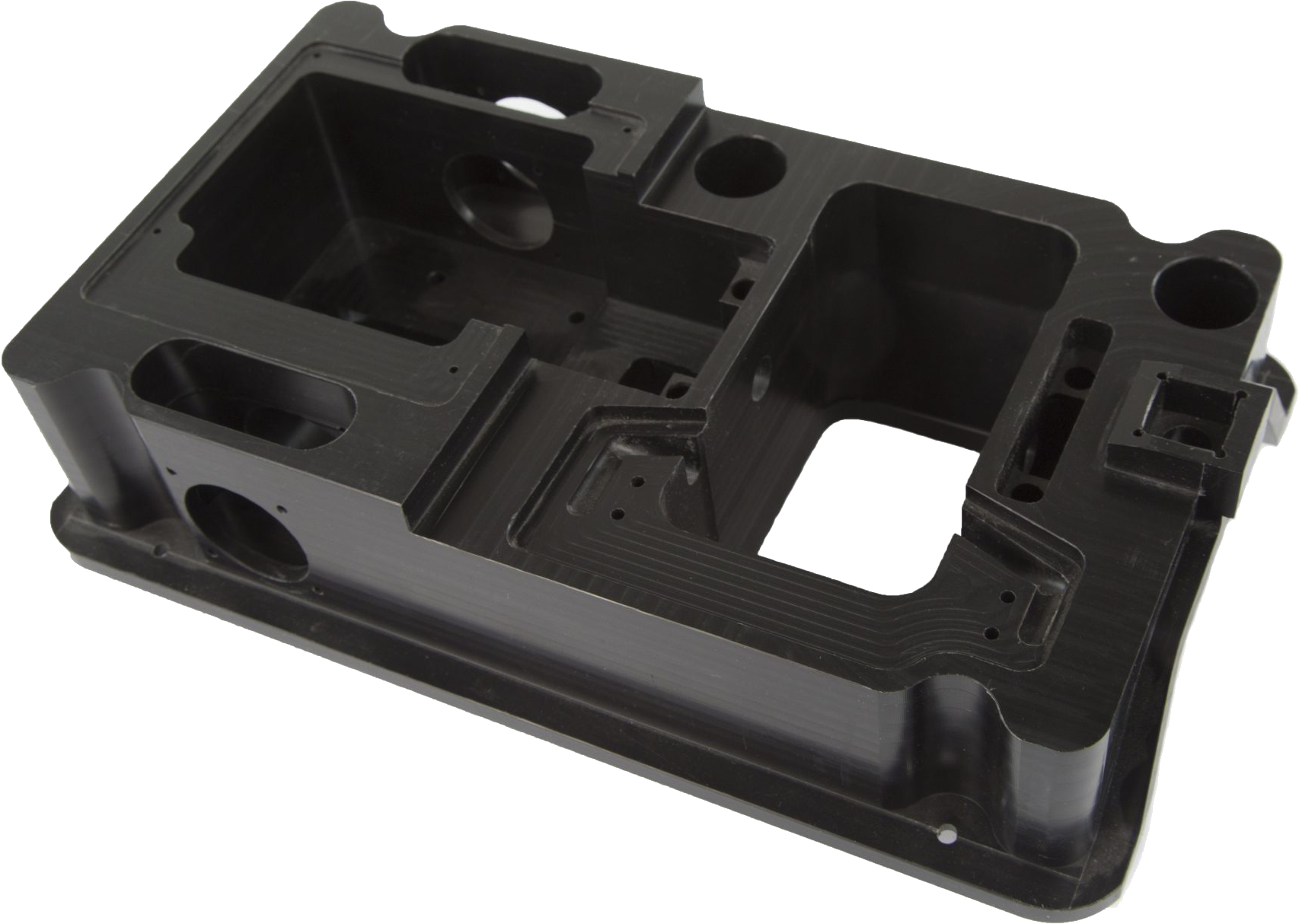
Ähnlich wie bei der Metallbearbeitung, aber gutes Kunststofffräsen erfordert typischerweise höhere Spindelgeschwindigkeiten und schärfere Werkzeuge.
CNC-Drehen von Kunststoff
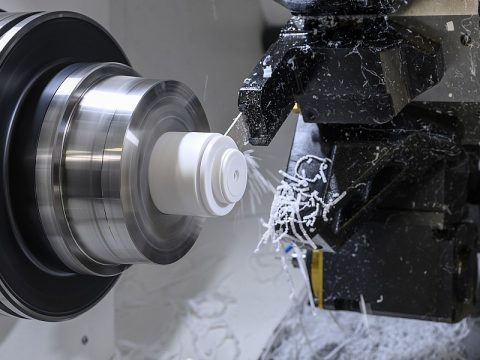
Das Werkstück dreht sich, während sich das Werkzeug linear bewegt, Ideal für zylindrische und konische Teile.
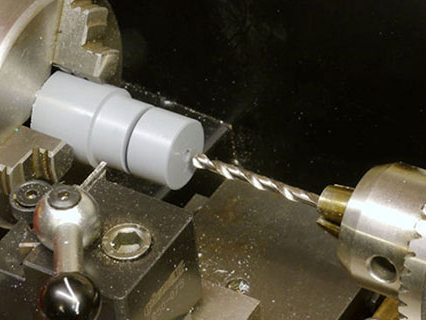
CNC-Bohren von Kunststoff
Beim Gewindeschneiden von Kunststoffen muss auf die Zähigkeit des Materials und die Festigkeit des Gewindes geachtet werden.
Die bevorzugte Wahl für kostengünstiges Prototyping, insbesondere für Teile, die einer Funktionsprüfung bedürfen, Montagekontrollen, und ästhetische Bewertung. Es kann in Betracht gezogen werden Produktgehäuse, Kfz-Innenteile, Und Funktionsprototypen.
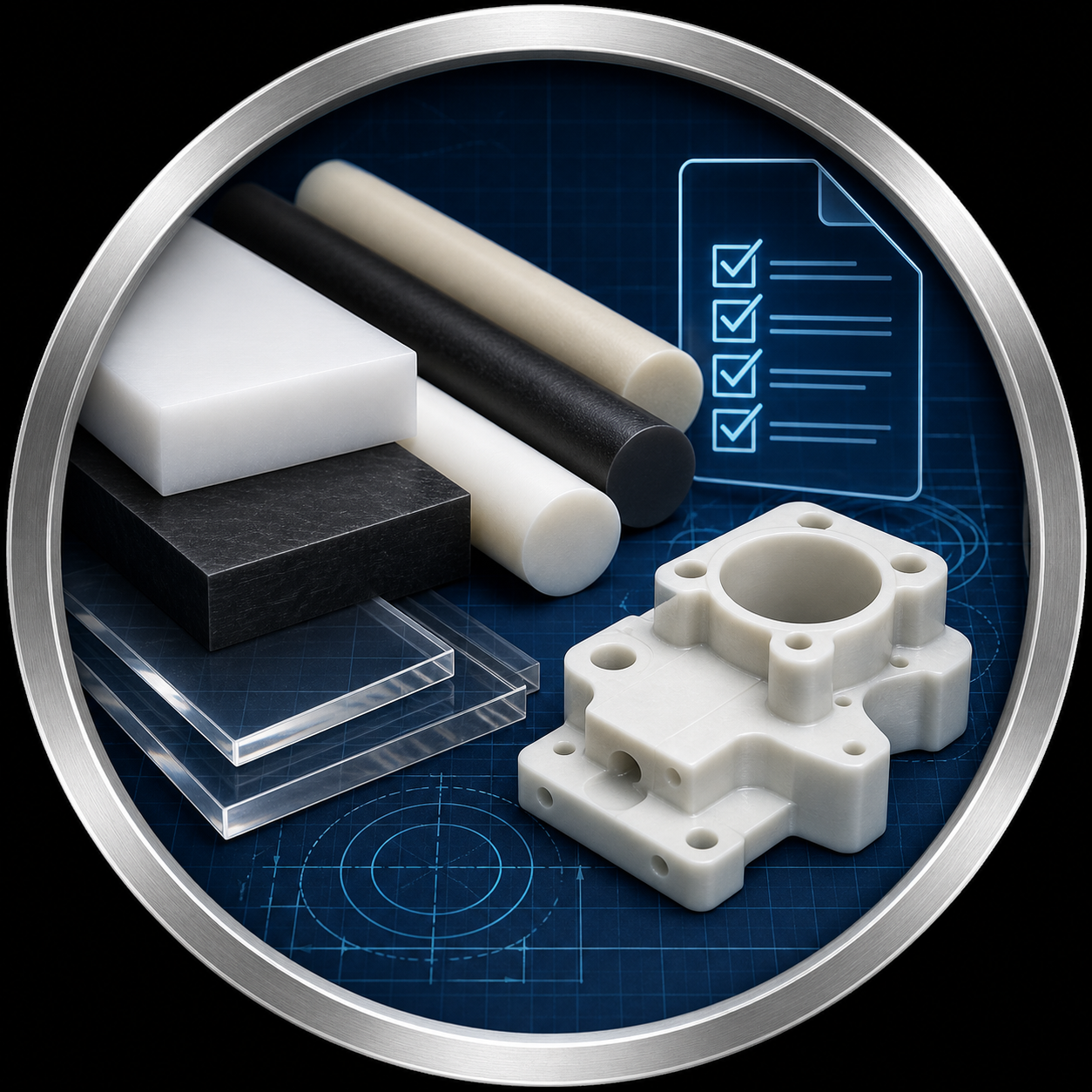
Materialqualität, Lagerform, Wandgestaltung, Toleranz, beenden, Dokumentation, und Zeitplan werden während der Angebotsanfrage auf der Grundlage der Zeichnung und des Verhaltens des Kunststoffmaterials bestätigt.
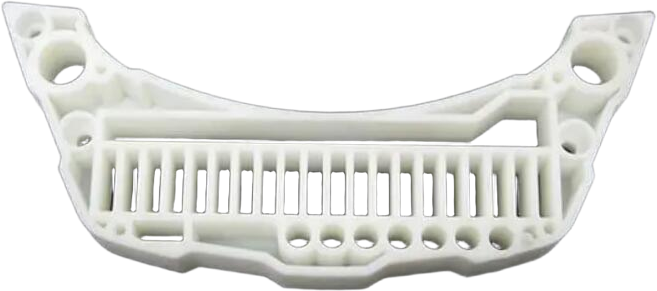
PEEK ist ein technischer Kunststoff, der für bearbeitete Teile verwendet wird, die eine höhere Temperaturbeständigkeit erfordern, Verschleißleistung, chemische Beständigkeit, oder Dimensionsstabilität als herkömmliche Kunststoffe.
Materialqualität, Lagerform, Wandgestaltung, Toleranz, beenden, Dokumentation, und Zeitplan werden während der Angebotsanfrage auf der Grundlage der Zeichnung und des Verhaltens des Kunststoffmaterials bestätigt.

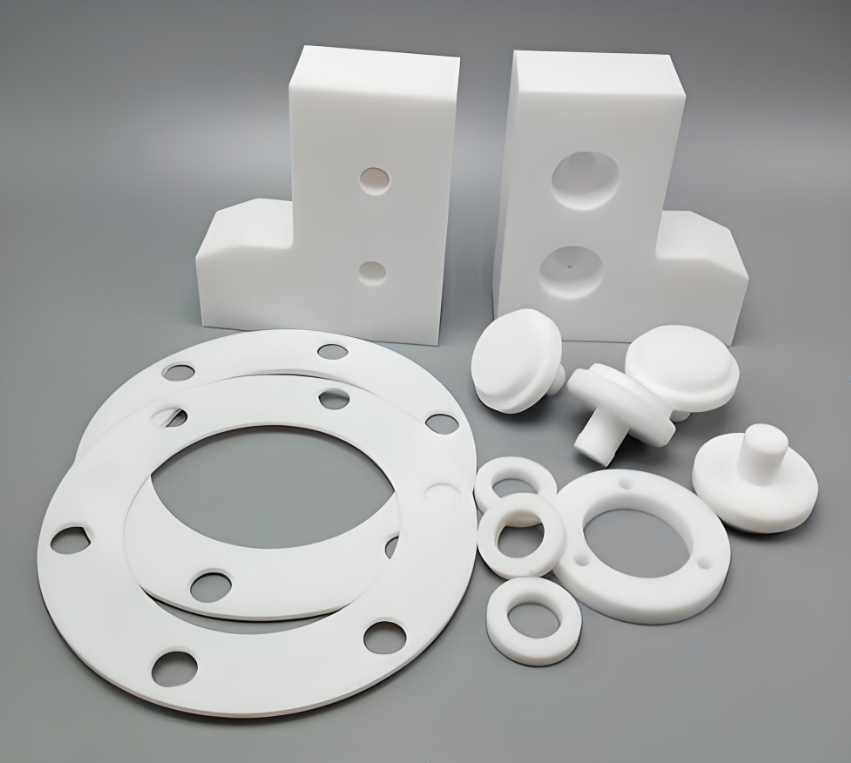
PTFE ist immer speziellen Umgebungen vorbehalten, die eine extreme Temperaturbeständigkeit erfordern, Beständigkeit gegen starke Chemikalien, oder extrem geringe Reibung/Antihafteigenschaften. Und es wurde für Robben verwendet, Dichtungen, Ventilauskleidungen, isolierende Teile, Laborartikel, Untergrund für Antihaftbeschichtungen.
Materialqualität, Lagerform, Wandgestaltung, Toleranz, beenden, Dokumentation, und Zeitplan werden während der Angebotsanfrage auf der Grundlage der Zeichnung und des Verhaltens des Kunststoffmaterials bestätigt.
PC gilt seit jeher als die beste Wahl für Anwendungen, die eine Kombination aus hoher Schlagfestigkeit erfordern, Transparenz, und thermische Stabilität. Dies kann für hochtransparente Teile in Betracht gezogen werden, wie zum Beispiel eine Schutzbrille, Schutzschilde, Kfz-Lichtabdeckungen, Gehäuse für elektronische Geräte, hochfeste transparente Komponenten.
Materialqualität, Lagerform, Wandgestaltung, Toleranz, beenden, Dokumentation, und Zeitplan werden während der Angebotsanfrage auf der Grundlage der Zeichnung und des Verhaltens des Kunststoffmaterials bestätigt.

PMMA hat zAußergewöhnliche optische Klarheit (>92%), gute Witterungsbeständigkeit, hohe Oberflächenhärte, und lässt sich kristallklar polieren. Es ist tDie erste Wahl, wenn es um hohe Transparenz geht, hervorragendes Aussehen, und UV-/Witterungsbeständigkeit erforderlich. Es kann in Betracht gezogen werden LichtHerstellung von Prototypen.
Materialqualität, Lagerform, Wandgestaltung, Toleranz, beenden, Dokumentation, und Zeitplan werden während der Angebotsanfrage auf der Grundlage der Zeichnung und des Verhaltens des Kunststoffmaterials bestätigt.

Epoxy Board wird in der CNC-Bearbeitung wegen seiner hervorragenden elektrischen Isolierung geschätzt, gute mechanische Festigkeit, Dimensionsstabilität, und Vielseitigkeit. Kann für Gehäuse elektrischer Geräte verwendet werden, leichte Strukturplatten, bei denen die elektrische Isolierung entscheidend ist. Sie können es für Strukturteile entwerfen, die eine höhere Steifigkeit als Acryl erfordern, bei denen jedoch kein Metall erforderlich ist.
Materialqualität, Lagerform, Wandgestaltung, Toleranz, beenden, Dokumentation, und Zeitplan werden während der Angebotsanfrage auf der Grundlage der Zeichnung und des Verhaltens des Kunststoffmaterials bestätigt.

POM's anderer Name ist “Metallersatz.” welche fweist eine hohe Steifigkeit auf, ausgezeichnete Dimensionsstabilität, einen sehr niedrigen Reibungskoeffizienten, und überlegene Kriechfestigkeit. Maschinen zu einem glatten, satinartige Oberfläche. POM ist pPerfekt für mechanische Präzisionsteile, die eine hohe Steifigkeit erfordern, geringe Reibung, und Maßhaltigkeit, oft als Ersatz für Metall zur Gewichtsersparnis oder Korrosionsvermeidung. POM kann für p verwendet werdenPräzisionsgetriebe, Lager, Nocken, Ventile, Messergriffe, Und sperren Komponenten.
Materialqualität, Lagerform, Wandgestaltung, Toleranz, beenden, Dokumentation, und Zeitplan werden während der Angebotsanfrage auf der Grundlage der Zeichnung und des Verhaltens des Kunststoffmaterials bestätigt.

Nylon ist An ichhandeln Material für bewegliche Teile, die eine hohe Verschleißfestigkeit erfordern, geringe Reibung, und Haltbarkeit unter zyklischer Belastung. Nylon kann in Betracht gezogen werden Getriebe, Lager, Rollen, Vorrichtungen, verschleißfeste Buchsen.
Materialqualität, Lagerform, Wandgestaltung, Toleranz, beenden, Dokumentation, und Zeitplan werden während der Angebotsanfrage auf der Grundlage der Zeichnung und des Verhaltens des Kunststoffmaterials bestätigt.

PP hat gGute Ermüdungsbeständigkeit, ausgezeichnete Beständigkeit gegenüber chemischen Lösungsmitteln, und gute elektrische Isolierung. Bei niedrigen Temperaturen spröde, was geeignet ist zu apin Teilen einlegen, die ein geringes Gewicht erfordern, chemische Beständigkeit, Lebendes Scharnierdesign, oder Einweg-/Einwegartikel.
Materialqualität, Lagerform, Wandgestaltung, Toleranz, beenden, Dokumentation, und Zeitplan werden während der Angebotsanfrage auf der Grundlage der Zeichnung und des Verhaltens des Kunststoffmaterials bestätigt.