


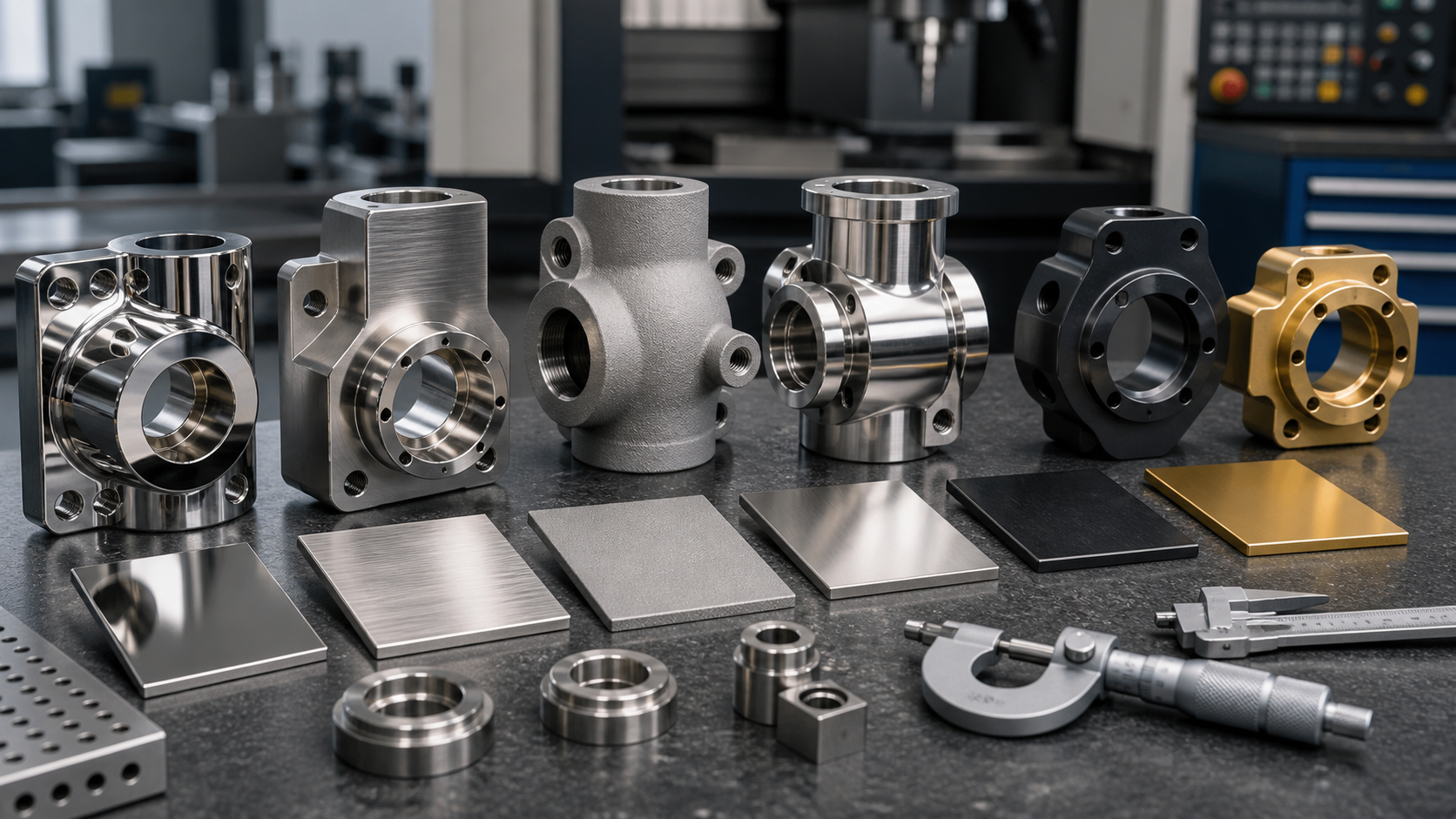
La finitura superficiale delle parti in acciaio inossidabile non è un passaggio estetico finale, ma fa parte del processo Servizio di lavorazione CNC. Molti progetti richiedono rilavorazioni dopo che le dimensioni hanno già superato l'ispezione, non perché il centro di lavoro manchi di precisione, ma perché lo strumento segna, sbavature, residui di pulizia, passivazione, elettrolucidatura, e le modifiche dimensionali finali non sono state considerate insieme durante la pianificazione del processo. Per medico, macchine alimentari, corpi valvola del fluido, parti dell'aspetto, e componenti assemblati, la finitura superficiale influisce direttamente sul rischio di corrosione, convalida della pulizia, spazio di montaggio, e consistenza del lotto.
Nelle revisioni del progetto JADE-CNC, i requisiti della superficie sono confermati insieme al tipo di materiale, sovrametallo di lavorazione, metodo di fissaggio, e articoli di ispezione. Lo scopo è semplice: non aspettare che il pezzo sia stato lavorato per scoprirlo “questo valore Ra non può essere raggiunto,” “questa apertura del foro si è allargata dopo l'elettrolucidatura,” O “la superficie critica necessita di nuova mascheratura dopo la sabbiatura.”
Primo, Definire quale problema risolve la finitura superficiale
I clienti in genere descrivono i requisiti come “un po' più luminoso,” “non deve arrugginire,” “deve superare il controllo alimentare,” O “nessun segno di strumento sulla superficie.” In termini ingegneristici, tali descrizioni devono essere suddivise in requisiti realizzabili e ispezionabili: grado di aspetto, intervallo di rugosità, requisiti di resistenza alla corrosione, se la parte viene utilizzata in applicazioni mediche o a contatto con alimenti, se è necessario un trattamento post-saldatura, quali dimensioni sono dimensioni funzionali, e quali aree non devono avere materiale rimosso.
Problema comune | Lavorazione & Giudizio finale | Rischio comune |
Segni di utensili o chiacchiere sulla superficie | Confermare se terminare la lavorazione, macinazione, o è necessaria una lucidatura: non fare affidamento esclusivamente sulla post-elaborazione per nasconderlo | La lucidatura non è in grado di riparare in modo affidabile i segni profondi delle vibrazioni; l'aspetto del batch sarà incoerente |
Parte soggetta a ruggine | Verificare il materiale, contaminazione della lavorazione, pulizia, passivazione, o percorso di elettrolucidatura | La contaminazione da trucioli di ferro e le zone interessate dal calore della saldatura possono causare macchie di ruggine anche su superfici superficiali 304/316 |
Dimensioni strette | Distinguere le dimensioni di pretrattamento e posttrattamento sul disegno | Elettrolucidatura, sabbiatura, e il pretrattamento PVD possono alterare i bordi e le aperture dei fori |
Applicazioni mediche o alimentari | Confermare la passivazione, elettrolucidatura, imballaggio pulito, e requisiti di documentazione | Il trattamento puramente estetico non può sostituire la gestione della pulizia e della tracciabilità |
Esistono sei processi di finitura superficiale dell'acciaio inossidabile comunemente utilizzati: lucidatura meccanica, spazzolatura, sabbiatura, passivazione, elettrolucidatura, e rivestimento in PVD. Ognuno ha un principio diverso, effetto, costo, e un'applicazione adeguata. Questa guida spiega tutti e sei i processi in dettaglio, fornisce indicazioni sulla selezione e considerazioni pratiche, e ti aiuta a scegliere il processo giusto prima di effettuare un ordine.
Sei processi in sintesi: Confronta le differenze in una tabella
Inizia con una tabella panoramica che mette fianco a fianco i parametri principali di tutti e sei i processi per fornire un punto di partenza chiaro prima dei dettagli del processo.
Processo | Principio | Effetto superficie | Miglioramento della corrosione | Rimozione materiale | Costo relativo |
Lucidatura meccanica | L'attrito meccanico rimuove le irregolarità della superficie | Finitura a specchio/satinata, luminoso | Medio (rimuove lo strato difettoso) | 0.01–0,05 mm | Basso-medio |
Spazzolatura | La cintura/spazzola crea una texture direzionale | Grana dritta/casuale, opaco | Basso | 0.005–0,02 mm | Basso |
Sabbiatura delle perle | Impatto abrasivo ad alta pressione sulla superficie | Opaco uniforme, ruvido | Basso | 0.005–0,01 mm | Basso |
Passivazione | Il trattamento chimico supporta la formazione di film passivo | Aspetto sostanzialmente invariato | Alto (conversione chimica) | Praticamente nessuno | Basso |
Elettrolucidatura | La dissoluzione elettrochimica rimuove i picchi superficiali | Specchio ultraliscio, alta brillantezza | Alto (rimozione + passivazione) | 0.01–0,03 mm | Medio-alto |
Rivestimento PVD | Deposizione fisica da vapore di rivestimento ceramico | Oro/nero/canna di fucile ecc. | Alto (protezione del rivestimento) | Rivestimento 1–3μm | Alto |
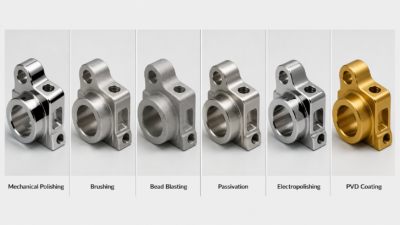
Sei processi spiegati in dettaglio
Lucidatura meccanica
La lucidatura meccanica è il metodo di finitura superficiale più tradizionale e diffuso. Mole, nastri abrasivi, e le ruote in tela rimuovono progressivamente i segni degli utensili e le irregolarità della superficie attraverso l'attrito meccanico, ottenendo infine una finitura a specchio o satinata. I gradi di lucidatura vanno dalla lucidatura grossolana (Ra 1,6μm) alla lucidatura fine (Ra 0,2μm) per finitura a specchio (Ra 0,05μm) – più alto è il voto, maggiore è il costo del lavoro.
Il vantaggio della lucidatura meccanica è la sua versatilità: molte parti in acciaio inossidabile possono essere lucidate, e i costi sono relativamente controllabili. Gli svantaggi sono che non è possibile raggiungere cavità complesse e interni di fori profondi, la lucidatura a mano ha scarsa consistenza, e la qualità fluttua notevolmente in grandi lotti. Inoltre, la lucidatura rimuove una piccola quantità di materiale (0.01–0,05 mm), quindi le parti di alta precisione richiedono un margine di lucidatura.
In pratica, la lucidatura meccanica è comunemente usata per le parti estetiche, componenti decorativi, e superfici di contatto delle apparecchiature alimentari. Tuttavia, per parti mediche e ad alta pulizia, la sola lucidatura meccanica potrebbe non essere sufficiente: in genere viene combinata con l’elettrolucidatura o la passivazione.
Spazzolatura
La spazzolatura utilizza nastri abrasivi o macchine spazzolatrici per creare texture direzionali sulla superficie. I modelli comuni includono la grana diritta (attaccatura dei capelli) e grana casuale (fiocco di neve). Le superfici spazzolate hanno una texture opaca, grana uniforme, e un'atmosfera raffinata. Sono più resistenti ai graffi rispetto alle finiture a specchio, e i piccoli graffi sono meno visibili.
La spazzolatura è economica ed efficiente, adatto per pannelli piani di grandi dimensioni e superfici curve semplici. Tuttavia, la grana del pennello ha direzionalità, pertanto la direzione delle venature deve essere coordinata con la geometria della parte durante la progettazione. parti saldate e le superfici curve complesse sono difficili da spazzolare, e il grano può diventare discontinuo. La rugosità della superficie spazzolata è tipicamente Ra 0,4–1,6μm, con miglioramento limitato della corrosione: la passivazione è consigliata in ambienti corrosivi.
Involucri per elettronica di consumo, pannelli decorativi architettonici, e i pannelli per stoviglie sono le applicazioni più comuni per la spazzolatura. Entrambi 304 E 316 sono adatti per la spazzolatura, con una differenza minima nei risultati.
Sabbiatura delle perle
La sabbiatura utilizza aria compressa per spingere le perle di vetro, perle di ceramica, o ossido di alluminio ad alta velocità sulla superficie del pezzo, creando una superficie ruvida opaca uniforme attraverso l'impatto. Le superfici sabbiate non sono direzionali e hanno una struttura uniforme, riducendo la visibilità di leggeri segni di lavorazione e piccole variazioni della superficie. È uno dei metodi di finitura superficiale più economici.
I parametri chiave sono il tipo di abrasivo e la dimensione della grana. La sabbiatura con perle di vetro produce una multa, superficie morbida; le perle di ceramica sono più dure e hanno una consistenza più grossolana; l'ossido di alluminio produce la superficie più ruvida ma con forte adesione, idoneo come base per successive tinteggiature o incollaggi. La rimozione del materiale è minima (0.005–0,01 mm), con impatto dimensionale trascurabile, ma le parti con pareti sottili richiedono attenzione alla deformazione dovuta alla pressione di sabbiatura.
La sabbiatura è comunemente utilizzata per le parti meccaniche interne, infissi, custodie per apparecchiature, e come trattamento di base per la successiva verniciatura o incollaggio. Le superfici sabbiate hanno un'elevata ruvidità e tendono ad accumulare contaminanti, rendendoli inadatti per superfici a contatto con alimenti o dispositivi medici a meno che non siano seguiti da elettrolucidatura o passivazione.
Passivazione
La passivazione è un trattamento chimico che immerge le parti in acciaio inossidabile in una soluzione di acido nitrico o citrico, rimuovendo ferro libero e contaminanti dalla superficie e favorendo la formazione di un denso film passivo di ossido di cromo. Questo film passivo è la ragione fondamentale per cui l'acciaio inossidabile è “inossidabile” — quando il cromo superficiale viene danneggiato o contaminato durante la lavorazione, la passivazione ripristina la resistenza alla corrosione.
La passivazione non modifica né l'aspetto né le dimensioni, è a basso costo, e spesso vale la pena valutarlo per le parti CNC in acciaio inossidabile, in particolare le parti saldate o le parti esposte alla corrosione. Le parti passivate mostrano una migliore resistenza alla corrosione, ma il film passivo è molto sottile (nanoscala) e possono essere danneggiati dall'attrito meccanico. Perciò, la passivazione è tipicamente il processo finale, o utilizzato in combinazione con altri metodi di finitura.
La passivazione è comunemente specificata per scopi medici, cibo, marino, e parti in acciaio inossidabile sensibili alla corrosione, ma il requisito finale dovrebbe derivare dal disegno, standard, o ambiente di servizio. La passivazione dell'acido citrico è più rispettosa dell'ambiente e adatta all'industria alimentare e medica, mentre la passivazione con acido nitrico offre risultati più stabili ed è più ampiamente utilizzata nelle applicazioni industriali.
Elettrolucidatura
L'elettrolucidatura può essere intesa come “galvanica inversa” — la parte funge da anodo in una soluzione elettrolitica, e quando viene applicata la corrente, i picchi superficiali microscopici vengono preferibilmente disciolti, ottenendo una finitura a specchio ultra liscia. A differenza della lucidatura meccanica, l'elettrolucidatura è una dissoluzione chimica: non produce stress meccanico o deformazione, e può trattare uniformemente cavità complesse, buchi profondi, e sottili lacune.
I vantaggi pratici dell'elettrolucidatura includono: la rugosità superficiale può raggiungere Ra 0,1–0,4μm, più liscia della lucidatura meccanica; rimuove contemporaneamente ferro libero e contaminanti, fornendo un effetto di passivazione; è senza sbavature e senza stress, con una migliore resistenza alla corrosione rispetto alla sola passivazione. I compromessi sono costi più elevati e una rimozione tipica del materiale di 0,01–0,03 mm (che richiedono il calcolo delle tolleranze per parti di alta precisione), e risultati variabili in base al tipo di acciaio inossidabile: 316/316L generalmente produce risultati migliori rispetto a 304.
L'elettrolucidatura viene spesso utilizzata per componenti fluidi ad alta pulizia, interni di tubi per alimenti e bevande, apparecchiature per semiconduttori, e componenti medici selezionati laddove le specifiche lo richiedono. Per parti saldate, assicurarsi che la saldatura sia liscia prima dell'elettrolucidatura, in caso contrario si potrebbe verificare una lucidatura eccessiva o una lucidatura insufficiente in corrispondenza della saldatura.
Le parti in acciaio inossidabile per uso medico e le parti in acciaio inossidabile per macchinari alimentari non sempre richiedono l'elettrolucidatura. La vera base del giudizio è il disegno, specifiche, mezzo di contatto, metodo di pulizia, e requisiti di audit. Per ulteriori scenari medici, fare riferimento a Lavorazione di pezzi medicali in acciaio inossidabile; per strutture di macchine alimentari, fare riferimento a Lavorazione dell'acciaio inossidabile per macchinari alimentari.
Rivestimento PVD
PVD (Deposizione fisica di vapore) ionizza metalli come titanio o cromo in un ambiente sotto vuoto e li deposita sulla superficie della parte, formando un rivestimento ceramico spesso 1–3μm. I colori comuni includono l'oro (Stagno), nero (DLC), canna di fucile (TiCN), e blu. I rivestimenti PVD possono fornire un'elevata durezza, resistenza all'usura, colore controllato, e protezione superficiale aggiuntiva quando il substrato e il pretrattamento sono idonei.
Il rivestimento PVD ha costi elevati e severi requisiti di pretrattamento: la superficie deve essere liscia e uniforme prima del rivestimento, in genere richiedono prima la lucidatura meccanica o la spazzolatura, altrimenti i difetti sottostanti saranno visibili attraverso il rivestimento. Lo spessore del rivestimento è di soli 1–3μm e non influisce sulla precisione dimensionale, ma la progettazione di maschere e dispositivi per parti complesse può influire sull'uniformità del rivestimento, con rivestimenti potenzialmente più sottili nei fori interni e nelle scanalature profonde.
Il PVD è comunemente usato per parti decorative di fascia alta, casse di orologi, utensili da taglio, componenti dello stampo, e applicazioni che richiedono sia resistenza all'usura che decorazione. Entrambi 304 E 316 può essere adatto per il rivestimento PVD durante la pulizia, attivazione, mascheramento, e la progettazione degli impianti sono controllati.
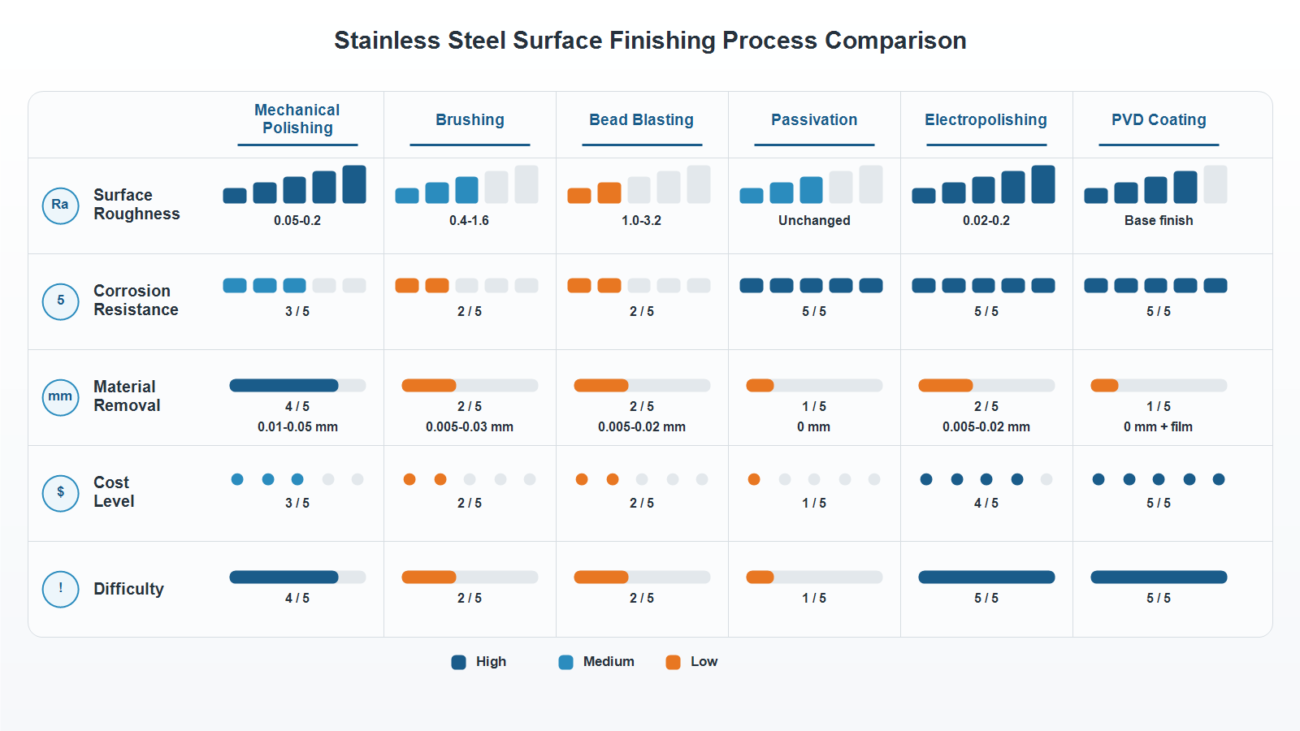
Slot immagine 2: Confronto dei parametri di sei processi (può essere progettato come infografica)
Combinazioni di processi: Quando un processo non è sufficiente
In produzione, un processo di finitura spesso non può soddisfare tutte le funzionalità, cosmetico, e requisiti di corrosione. Ecco gli approcci combinati più comuni.
Il flusso standard per le parti saldate è: Saldatura → Ravvivatura di saldatura → Lucidatura meccanica → Passivazione. La saldatura distrugge la pellicola passiva dell'acciaio inossidabile, e vicino alla saldatura appare uno scolorimento dovuto all'ossidazione: l'area interessata normalmente necessita prima di una medicazione o di una pulizia della saldatura, seguita dalla passivazione quando è richiesta resistenza alla corrosione. Per tubi saldati dell'industria alimentare e medicale, è inoltre possibile specificare l'elettrolucidatura per garantire che l'interno sia liscio e privo di angoli morti.
Per parti che richiedono un'elevata resistenza alla corrosione e un'elevata qualità estetica, la combinazione “Lucidatura meccanica → Elettrolucidatura → Passivazione” è comunemente usato. La lucidatura meccanica rimuove i principali segni e difetti degli utensili, l'elettrolucidatura consente di ottenere una superficie ultra liscia, e la passivazione fornisce la protezione finale. Questa combinazione costa di più, ma può essere appropriato per scopi medici, marino, e apparecchiature sensibili alla corrosione quando le specifiche lo supportano.
Le parti decorative comunemente usano “Spazzolatura/Sabbiatura → Rivestimento PVD”. Lo strato di base viene spazzolato o sabbiato per creare texture, e il PVD deposita un rivestimento sopra la trama, preservando la trama e aggiungendo colore e resistenza all'usura. Si noti che la qualità del trattamento di base prima del PVD determina direttamente l'aspetto finale.
Per parti generali sensibili ai costi, “Lucidatura meccanica/Spazzolatura → Passivazione” è sufficiente. L'aspetto soddisfa i requisiti, la passivazione ripristina la resistenza alla corrosione, e il costo è ridotto al minimo.
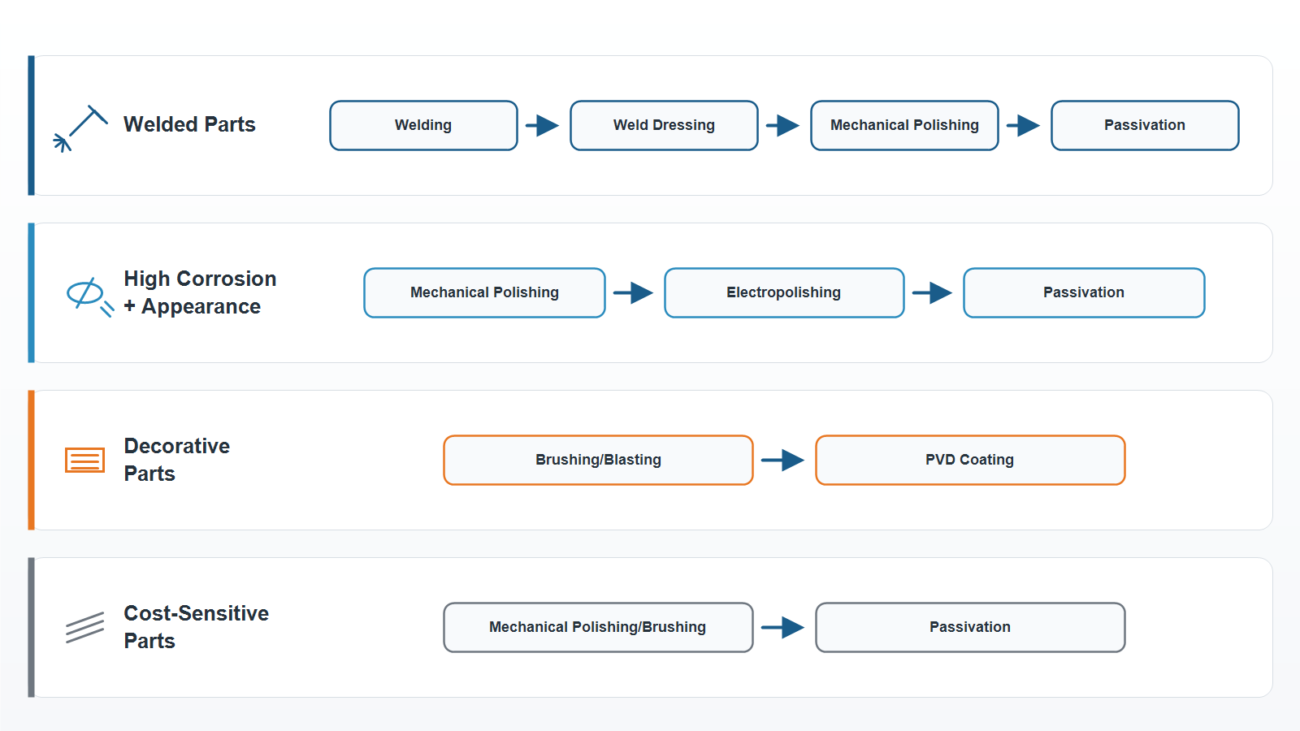
Slot immagine 3: Diagramma di flusso della combinazione di processi comuni (4 tipici percorsi combinati)
Guida alla selezione: Scegli il processo per applicazione
Ciascuno dei sei processi ha le sue applicazioni adatte. In caso di dubbio, utilizzare la seguente guida.
Applicazione | Processo consigliato | Motivo |
Aspetto generale/parti decorative | Lucidatura meccanica o Spazzolatura | Basso costo, l'aspetto soddisfa i requisiti |
Parti decorative/orologi/strumenti di fascia alta | Rivestimento in PVD (base lucida/spazzolata) | Resistenza all'usura + controllo del colore + aspetto coerente |
Superfici di contatto delle apparecchiature alimentari | Lucidatura meccanica + Passivazione | Liscio + resistente alla corrosione, per uso alimentare |
Interni dei tubi per alimenti/elevata pulizia | Elettrolucidatura + Passivazione | Ultra liscio, senza angoli morti, facile da pulire |
Impianti medici/strumenti chirurgici | Elettrolucidatura + Passivazione | Pulibile + resistente alla corrosione + controllato dalle bave |
Equipaggiamento marittimo/parti chimiche | Passivazione o Elettrolucidatura | Priorità alla resistenza alla corrosione, aspetto secondario |
Parti meccaniche/attrezzature interne | Sabbiatura | Costo più basso, nasconde i segni degli utensili |
Parti strutturali saldate | Medicazione di saldatura + Passivazione | Ripristina la resistenza alla corrosione della zona di saldatura |
Parti che richiedono successiva verniciatura/incollaggio | Sabbiatura | La superficie ruvida aumenta l'adesione |
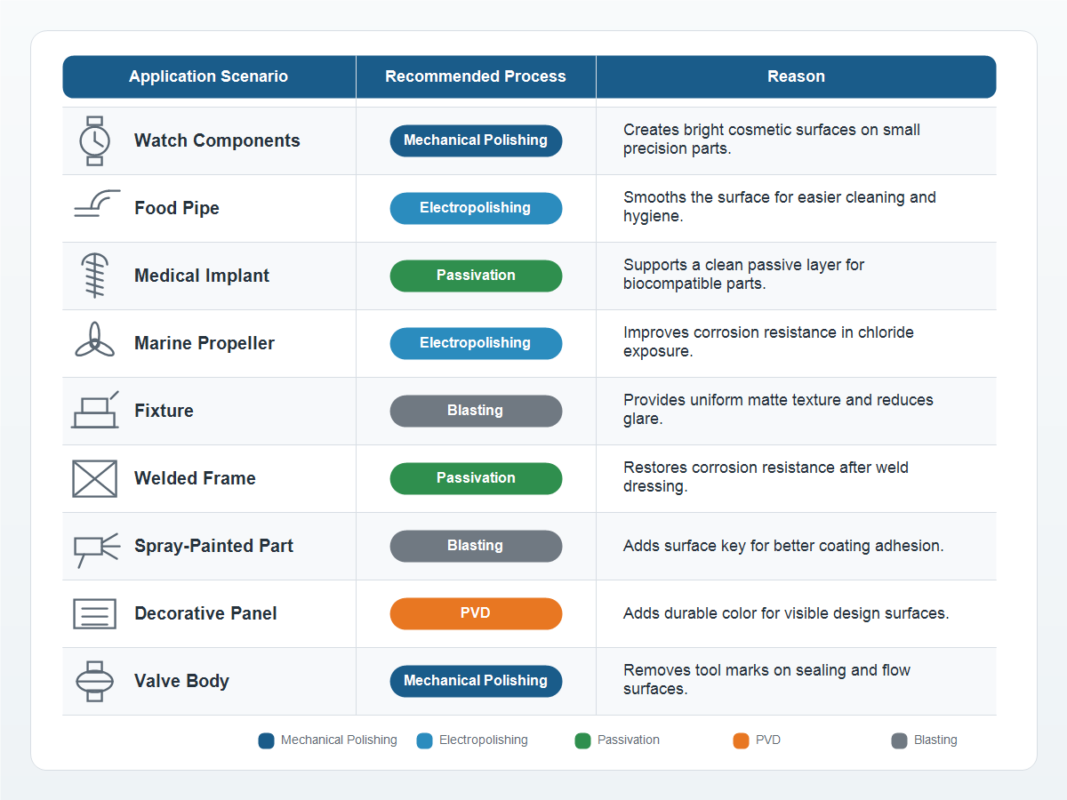
Slot immagine 4: Tabella di riferimento del processo consigliato dall'applicazione
Come JADE-CNC gestisce la finitura superficiale
JADE-CNC può gestire la lavorazione a cinque assi, lavorazione torni-fresatrice, sbavatura, pulizia, passivazione, elettrolucidatura, PVD, controllo dimensionale finale, e requisiti di imballaggio all'interno di un unico piano di produzione. Per i clienti esteri, questo approccio unico riduce i problemi di passaggio di consegne tra più negozi e i confini di responsabilità poco chiari, migliorando al tempo stesso il controllo sui tempi di consegna, consistenza del lotto, e rischio rottame.
Conclusione
La selezione della finitura superficiale deve essere valutata insieme alla funzione della parte, materiale, segni di lavorazione, requisiti di pulizia, rischio dimensionale, e metodo di ispezione finale. Invia i tuoi disegni 3D/2D, grado del materiale, rugosità del bersaglio, requisiti di aspetto, mezzo di contatto, dimensioni critiche, e volume annuo. JADE-CNC può aiutare a valutare il percorso di lavorazione CNC e di finitura superficiale appropriato.
Articoli correlati sull'acciaio inossidabile
- Lavorazione CNC dell'acciaio inossidabile: La guida completa alla risoluzione dei problemi
- Lavorazione di pezzi medicali in acciaio inossidabile: 316Materiale L, Requisiti di processo e conformità
- Lavorazione dell'acciaio inossidabile per macchinari alimentari: Materiale di grado sanitario, Saldatura e finitura superficiale
- Saldatura dell'acciaio inossidabile per pezzi lavorati a CNC: TIG, Saldatura laser e controllo della distorsione
- Problemi di lavorazione CNC dell'acciaio inossidabile & Soluzioni: Bordo costruito, Usura degli strumenti, Trapani rotti & Chiacchiere

Leone Liang, Fondatore Miglior Partner con R&D
Il fondatore di JADE-CNC LEO, che vanta oltre due decenni di esperienza nel settore, Leo ha iniziato la sua carriera come apprendista e ha messo in pratica le sue competenze nel trattamento superficiale e nella lavorazione CNC.