


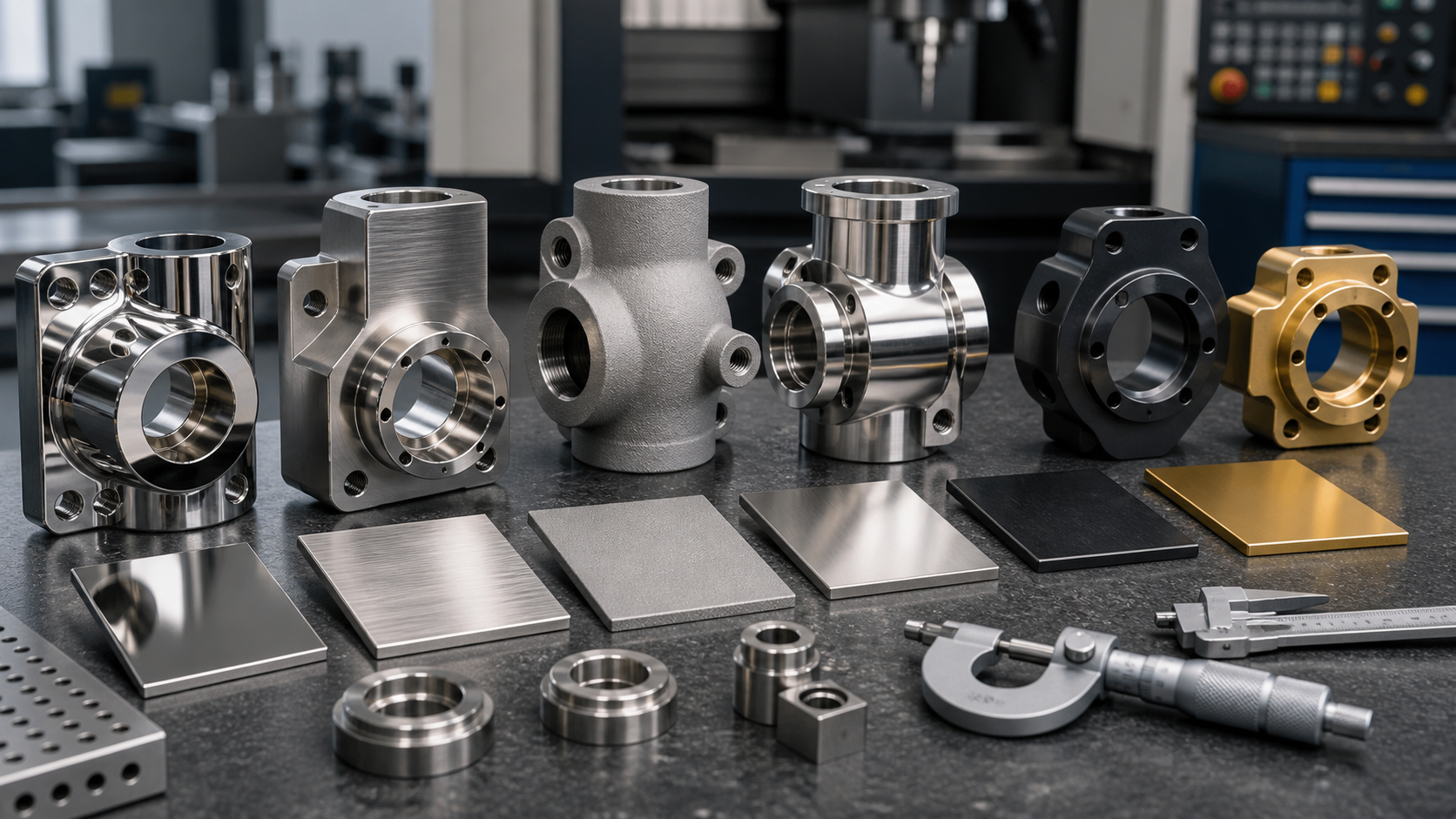
O acabamento superficial de peças de aço inoxidável não é uma etapa cosmética final – faz parte do Serviço de usinagem CNC. Muitos projetos exigem retrabalho depois que as dimensões já passaram pela inspeção, não porque o centro de usinagem não tenha precisão, mas porque as marcas da ferramenta, rebarbas, resíduo de limpeza, passivação, eletropolimento, e as alterações dimensionais finais não foram consideradas em conjunto durante o planejamento do processo. Para medicina, máquinas de alimentos, corpos de válvulas de fluido, peças de aparência, e componentes montados, o acabamento superficial afeta diretamente o risco de corrosão, validação de limpeza, folga de montagem, e consistência do lote.
Nas análises do projeto JADE-CNC, os requisitos de superfície são confirmados juntamente com o grau do material, subsídio de usinagem, método de fixação, e itens de inspeção. O propósito é simples: não espere até que a peça tenha sido usinada para descobrir que “este valor Ra não pode ser alcançado,” “esta abertura do furo aumentou após o eletropolimento,” ou “a superfície crítica precisa ser mascarada novamente após a detonação.”
Primeiro, Defina qual problema o acabamento superficial resolve
Os clientes normalmente descrevem os requisitos como “um pouco mais brilhante,” “não deve enferrujar,” “deve passar pela auditoria alimentar,” ou “sem marcas de ferramenta na superfície.” Em termos de engenharia, essas descrições precisam ser divididas em requisitos fabricáveis e inspecionáveis: grau de aparência, faixa de rugosidade, requisitos de resistência à corrosão, se a peça é usada em aplicações médicas ou de contato com alimentos, se o tratamento pós-solda é necessário, quais dimensões são dimensões funcionais, e quais áreas não devem ter material removido.
Problema comum | Usinagem & Julgamento Final | Risco Comum |
Marcas de ferramentas ou vibração na superfície | Confirme se a usinagem de acabamento, moagem, ou é necessário polimento - não confie apenas no pós-processamento para encobri-lo | O polimento não pode reparar com segurança marcas de vibração profunda; a aparência do lote será inconsistente |
Parte propensa a enferrujar | Verifique o material, contaminação de usinagem, limpeza, passivação, ou rota de eletropolimento | A contaminação por cavacos de ferro e as zonas afetadas pelo calor da solda podem causar manchas de ferrugem mesmo em 304/316 |
Dimensões apertadas | Distinguir dimensões de pré-tratamento e pós-tratamento no desenho | Eletropolimento, explodindo, e o pré-tratamento PVD podem alterar bordas e aberturas de furos |
Aplicações médicas ou alimentares | Confirme a passivação, eletropolimento, embalagem limpa, e requisitos de documentação | O tratamento baseado apenas na aparência não pode substituir o gerenciamento de limpeza e rastreabilidade |
Existem seis processos de acabamento superficial de aço inoxidável comumente usados: polimento mecânico, escovar, jateamento de contas, passivação, eletropolimento, e revestimento PVD. Cada um tem um princípio diferente, efeito, custo, e aplicação adequada. Este guia explica todos os seis processos em detalhes, fornece orientação de seleção e considerações práticas, e ajuda você a escolher o processo certo antes de fazer um pedido.
Seis processos em resumo: Compare as diferenças em uma tabela
Comece com uma tabela de visão geral que coloca os parâmetros principais de todos os seis processos lado a lado para fornecer um ponto de partida claro antes dos detalhes do processo.
Processo | Princípio | Efeito de superfície | Melhoria da corrosão | Remoção de Materiais | Custo relativo |
Polimento Mecânico | O atrito mecânico remove irregularidades da superfície | Acabamento espelhado/acetinado, brilhante | Médio (remove camada de defeito) | 0.01–0,05mm | Baixo-Médio |
Escovação | Cinto/pincel cria textura direcional | Grão reto/aleatório, fosco | Baixo | 0.005–0,02 mm | Baixo |
Jateamento de contas | Impacto abrasivo de alta pressão na superfície | Fosco uniforme, duro | Baixo | 0.005–0,01mm | Baixo |
Passivação | O tratamento químico apoia a formação de filme passivo | Aparência essencialmente inalterada | Alto (conversão química) | Praticamente nenhum | Baixo |
Eletropolimento | A dissolução eletroquímica remove picos superficiais | Espelho ultra-suave, alto brilho | Alto (remoção + passivação) | 0.01–0,03 mm | Médio-Alto |
Revestimento PVD | Deposição física de vapor de revestimento cerâmico | Ouro/preto/gunmetal etc.. | Alto (proteção de revestimento) | Revestimento 1–3μm | Alto |
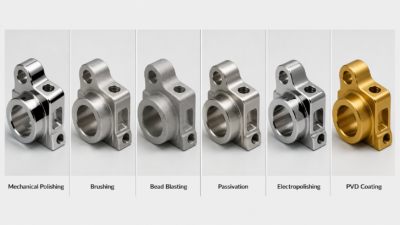
Seis processos explicados em detalhes
Polimento Mecânico
O polimento mecânico é o método de acabamento superficial mais tradicional e amplamente utilizado. Rebolos, cintas abrasivas, e rodas de tecido removem progressivamente marcas de ferramentas e irregularidades de superfície através de fricção mecânica, finalmente conseguindo um acabamento espelhado ou acetinado. Os graus de polimento variam de polimento áspero (Ra 1,6μm) para polimento fino (Ra 0,2μm) para acabamento espelhado (Ra 0,05μm) - quanto maior a nota, quanto maior o custo do trabalho.
A vantagem do polimento mecânico é a sua versatilidade – muitas peças de aço inoxidável podem ser polidas, e os custos são relativamente controláveis. As desvantagens são que cavidades complexas e interiores de furos profundos não podem ser alcançados, o polimento manual tem pouca consistência, e a qualidade flutua visivelmente em lotes grandes. Adicionalmente, o polimento remove uma pequena quantidade de material (0.01–0,05mm), portanto, peças de alta precisão exigem tolerância de polimento.
Na prática, polimento mecânico é comumente usado para peças de aparência, componentes decorativos, e superfícies de contato com equipamentos de alimentos. No entanto, para peças médicas e de alta limpeza, o polimento mecânico por si só pode não ser suficiente – normalmente é combinado com eletropolimento ou passivação.
Escovação
A escovação usa cintas abrasivas ou máquinas de escovação para criar texturas direcionais na superfície. Padrões comuns incluem grãos retos (linha do cabelo) e grãos aleatórios (floco de neve). As superfícies escovadas têm uma textura fosca, grão uniforme, e uma sensação refinada. Eles são mais resistentes a arranhões do que acabamentos espelhados, e pequenos arranhões são menos visíveis.
A escovação é barata e eficiente, adequado para grandes painéis planos e superfícies curvas simples. No entanto, o grão do pincel tem direcionalidade, portanto, a direção das fibras deve ser coordenada com a geometria da peça durante o projeto. peças soldadas e superfícies curvas complexas são difíceis de escovar, e o grão pode tornar-se descontínuo. A rugosidade da superfície escovada é normalmente Ra 0,4–1,6μm, com melhoria limitada da corrosão — a passivação é recomendada em ambientes corrosivos.
Gabinetes para eletrônicos de consumo, painéis decorativos arquitetônicos, e painéis de utensílios de cozinha são as aplicações mais comuns para escovação. Ambos 304 e 316 são adequados para escovar, com diferença mínima nos resultados.
Jateamento de contas
O jateamento de esferas usa ar comprimido para impulsionar esferas de vidro, contas de cerâmica, ou óxido de alumínio em alta velocidade na superfície da peça, criando uma superfície áspera fosca uniforme através do impacto. As superfícies jateadas não são direcionais com uma textura uniforme, reduzindo a visibilidade de marcas leves de usinagem e pequenas variações de superfície. É um dos métodos de acabamento superficial de menor custo.
Os principais parâmetros são o tipo de abrasivo e o tamanho do grão. O jateamento com esferas de vidro produz uma multa, superfície macia; contas de cerâmica são mais duras e com uma textura mais grossa; o óxido de alumínio produz a superfície mais áspera, mas com forte adesão, adequado como base para posterior pintura ou colagem. A remoção de material é mínima (0.005–0,01mm), com impacto dimensional insignificante, mas peças de paredes finas requerem atenção à deformação causada pela pressão de explosão.
O jateamento é comumente usado para peças mecânicas internas, jogos, gabinetes de equipamentos, e como tratamento base para posterior pintura ou colagem. Superfícies jateadas apresentam alta rugosidade e tendem a acumular contaminantes, tornando-os inadequados para superfícies de contato com alimentos ou médicos, a menos que sejam seguidos de eletropolimento ou passivação.
Passivação
A passivação é um tratamento químico que imerge peças de aço inoxidável em solução de ácido nítrico ou ácido cítrico, removendo ferro livre e contaminantes da superfície e promovendo a formação de uma densa película passiva de óxido de cromo. Este filme passivo é a razão fundamental pela qual o aço inoxidável é “inoxidável” — quando o cromo superficial é danificado ou contaminado durante a usinagem, a passivação restaura a resistência à corrosão.
A passivação não altera a aparência ou as dimensões, é de baixo custo, e muitas vezes vale a pena avaliar peças CNC de aço inoxidável - especialmente peças soldadas ou peças com exposição à corrosão. Peças passivadas apresentam melhor resistência à corrosão, mas o filme passivo é muito fino (nanoescala) e pode ser danificado por fricção mecânica. Portanto, a passivação é normalmente o processo final, ou usado em combinação com outros métodos de acabamento.
A passivação é comumente especificada para uso médico, comida, marinho, e peças de aço inoxidável sensíveis à corrosão, mas o requisito final deve vir do desenho, padrão, ou ambiente de serviço. A passivação com ácido cítrico é mais ecológica e adequada para as indústrias alimentícia e médica, enquanto a passivação com ácido nítrico oferece resultados mais estáveis e é mais amplamente utilizada em aplicações industriais.
Eletropolimento
O eletropolimento pode ser entendido como “galvanoplastia reversa” — a peça serve como ânodo em uma solução eletrolítica, e quando a corrente é aplicada, picos superficiais microscópicos são preferencialmente dissolvidos, alcançando um acabamento espelhado ultra-suave. Ao contrário do polimento mecânico, eletropolimento é dissolução química – não produz tensão mecânica ou deformação, e pode tratar uniformemente cavidades complexas, buracos profundos, e lacunas finas.
As vantagens práticas do eletropolimento incluem: a rugosidade da superfície pode atingir Ra 0,1–0,4μm, mais suave que o polimento mecânico; remove simultaneamente ferro livre e contaminantes, proporcionando um efeito de passivação; é livre de rebarbas e sem estresse, com melhor resistência à corrosão do que apenas a passivação. As vantagens e desvantagens são o custo mais elevado e a remoção típica de material de 0,01 a 0,03 mm (exigindo cálculo de tolerância para peças de alta precisão), e resultados variados de acordo com o tipo de aço inoxidável - 316/316L geralmente produz melhores resultados do que 304.
O eletropolimento é frequentemente usado para componentes fluidos de alta limpeza, interiores de tubos de alimentos e bebidas, equipamento semicondutor, e componentes médicos selecionados onde a especificação assim o exigir. Para peças soldadas, certifique-se de que a solda esteja lisa antes do eletropolimento, caso contrário, pode ocorrer polimento excessivo ou insuficiente na solda.
Peças médicas de aço inoxidável e peças de aço inoxidável de máquinas alimentícias nem sempre requerem eletropolimento. A verdadeira base para julgamento é o desenho, especificações, meio de contato, método de limpeza, e requisitos de auditoria. Para mais cenários médicos, consulte Usinagem de peças médicas de aço inoxidável; para estruturas de máquinas alimentares, consulte Usinagem de aço inoxidável para máquinas alimentícias.
Revestimento PVD
PVD (Deposição Física de Vapor) ioniza metais como titânio ou cromo em um ambiente de vácuo e os deposita na superfície da peça, formando um revestimento cerâmico de 1–3μm de espessura. As cores comuns incluem ouro (Estanho), preto (DLC), metal de canhão (TiCN), e azul. Os revestimentos PVD podem fornecer alta dureza, resistência ao desgaste, cor controlada, e proteção adicional da superfície quando o substrato e o pré-tratamento são adequados.
O revestimento PVD tem alto custo e requisitos rigorosos de pré-tratamento – a superfície deve ser lisa e uniforme antes do revestimento, normalmente exigindo polimento mecânico ou escovação primeiro, caso contrário, os defeitos subjacentes aparecerão através do revestimento. A espessura do revestimento é de apenas 1–3μm e não afeta a precisão dimensional, mas o design de mascaramento e fixação para peças complexas pode afetar a uniformidade do revestimento, com revestimentos potencialmente mais finos em furos internos e canais profundos.
PVD é comumente usado para peças decorativas de alta qualidade, assistir casos, ferramentas de corte, componentes do molde, e aplicações que exigem resistência ao desgaste e decoração. Ambos 304 e 316 pode ser adequado para revestimento PVD durante a limpeza, ativação, mascarar, e o design do acessório são controlados.
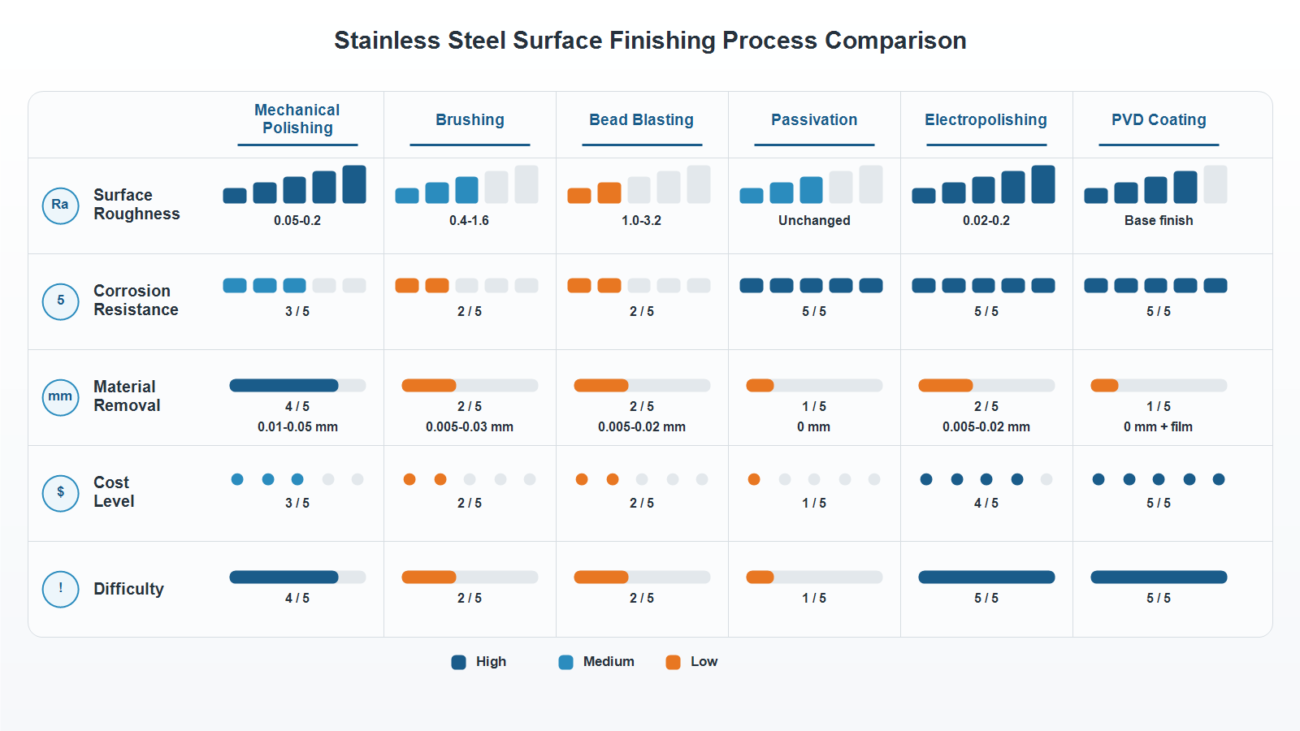
Slot de imagem 2: Comparação de parâmetros de seis processos (pode ser projetado como infográfico)
Combinações de Processos: Quando um processo não é suficiente
Em produção, um processo de acabamento muitas vezes não consegue atender a todos os requisitos funcionais, cosmético, e exigência de corrosão. Aqui estão as abordagens de combinação mais comuns.
O fluxo padrão para peças soldadas é: Soldagem → Tratamento de solda → Polimento mecânico → Passivação. A soldagem destrói a película passiva do aço inoxidável, e descoloração por oxidação aparece perto da solda — a área afetada normalmente precisa primeiro de curativo ou limpeza de solda, seguido de passivação quando a resistência à corrosão é necessária. Para tubos soldados da indústria alimentícia e médica, o eletropolimento também pode ser especificado para garantir que o interior seja liso e livre de cantos mortos.
Para peças que exigem alta resistência à corrosão e alta qualidade de aparência, a combinação “Polimento mecânico → Eletropolimento → Passivação” é comumente usado. O polimento mecânico remove as principais marcas e defeitos da ferramenta, o eletropolimento atinge uma superfície ultra-lisa, e passivação fornece proteção final. Essa combinação custa mais, mas pode ser apropriado para uso médico, marinho, e equipamentos sensíveis à corrosão quando a especificação o suporta.
Peças decorativas comumente usadas “Escovação/Jateamento → Revestimento PVD”. A camada base é escovada ou jateada para criar textura, e o PVD deposita um revestimento sobre a textura — preservando a textura e adicionando cor e resistência ao desgaste. Observe que a qualidade do tratamento de base antes do PVD determina diretamente a aparência final.
Para peças gerais sensíveis ao custo, “Polimento/escovação mecânica → Passivação” é suficiente. A aparência atende aos requisitos, a passivação restaura a resistência à corrosão, e o custo é minimizado.
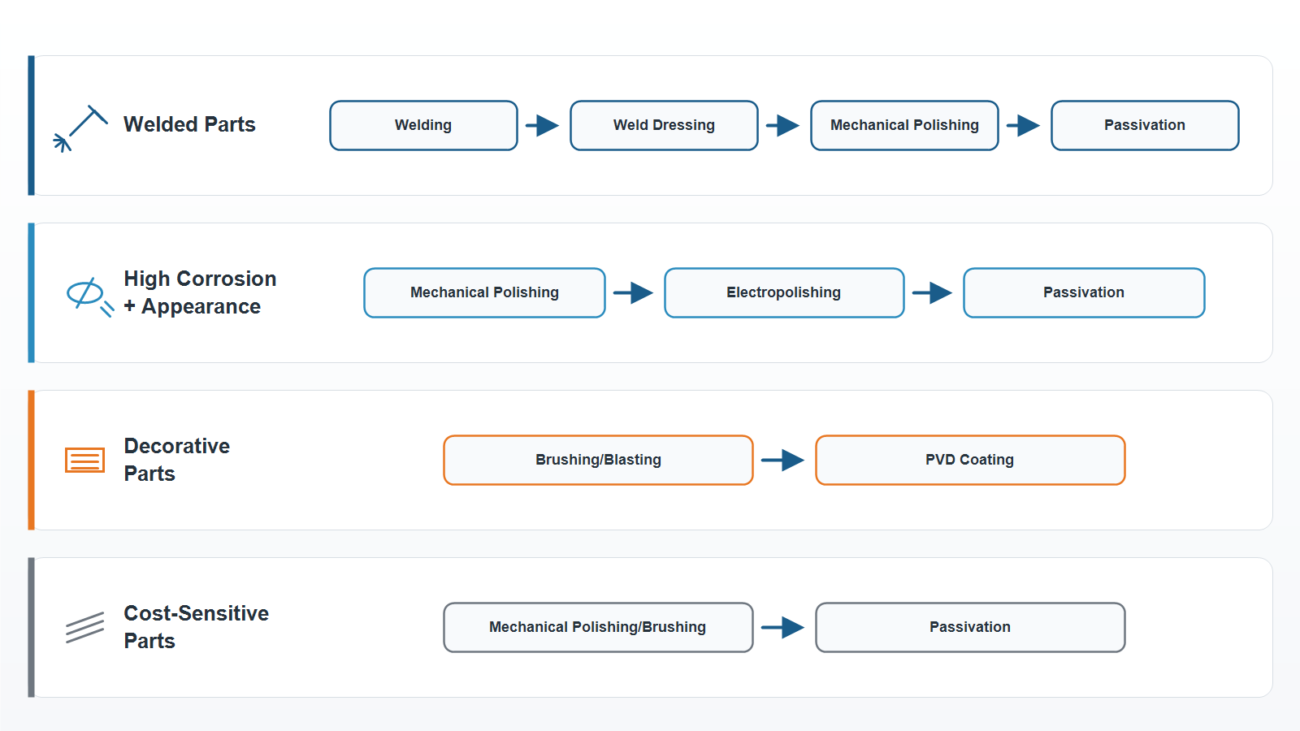
Slot de imagem 3: Fluxograma comum de combinação de processos (4 caminhos de combinação típicos)
Guia de seleção: Escolha o Processo por Aplicação
Cada um dos seis processos tem suas aplicações adequadas. Em caso de dúvida, use a seguinte orientação.
Aplicativo | Processo recomendado | Razão |
Aparência geral/peças decorativas | Polimento mecânico ou escovação | Baixo custo, aparência atende aos requisitos |
Peças/relógios/ferramentas decorativas de alta qualidade | Revestimento PVD (base polida/escovada) | Resistência ao desgaste + controle de cores + aparência consistente |
Superfícies de contato com equipamentos alimentares | Polimento mecânico + Passivação | Suave + resistente à corrosão, de qualidade alimentar |
Interiores de tubos de alimentação/alta limpeza | Eletropolimento + Passivação | Ultra-suave, sem cantos mortos, fácil de limpar |
Implantes médicos/instrumentos cirúrgicos | Eletropolimento + Passivação | Lavável + resistente à corrosão + controlado por rebarbas |
Equipamentos marítimos/peças químicas | Passivação ou Eletropolimento | Prioridade à resistência à corrosão, aparência secundária |
Peças/dispositivos mecânicos internos | Jateamento de contas | Menor custo, esconde marcas de ferramentas |
Peças estruturais soldadas | Curativo de solda + Passivação | Restaura a resistência à corrosão da zona de solda |
Peças que necessitam de posterior pintura/colagem | Jateamento de contas | Superfície áspera aumenta a adesão |
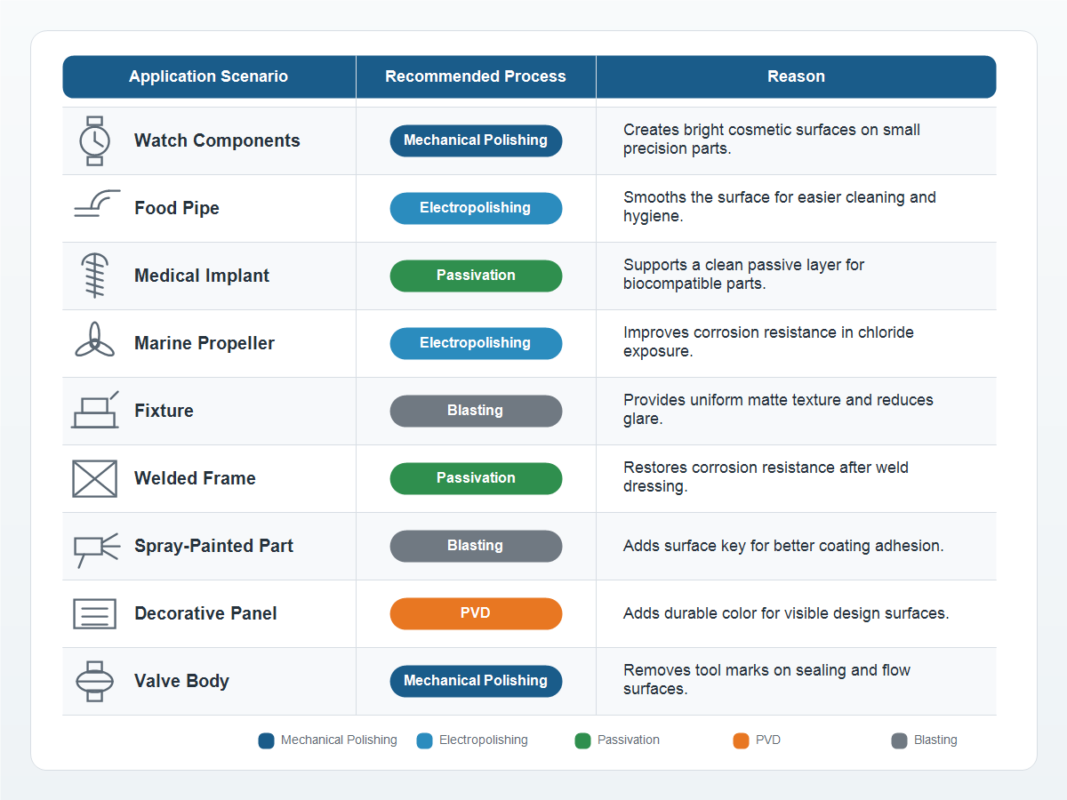
Slot de imagem 4: Tabela de referência de processo recomendada pelo aplicativo
Como o JADE-CNC lida com o acabamento de superfície
JADE-CNC pode gerenciar usinagem de cinco eixos, usinagem de torno-fresador, rebarbação, limpeza, passivação, eletropolimento, PVD, inspeção dimensional final, e requisitos de embalagem dentro de um único plano de fabricação. Para clientes estrangeiros, esta abordagem única reduz os problemas de transferências entre várias lojas e limites de responsabilidade pouco claros, ao mesmo tempo que melhora o controle sobre o lead time, consistência do lote, e risco de sucata.
Conclusão
A seleção do acabamento superficial deve ser avaliada juntamente com a função da peça, material, marcas de usinagem, requisitos de limpeza, risco dimensional, e método de inspeção final. Envie seus desenhos 3D/2D, grau de material, rugosidade alvo, requisitos de aparência, meio de contato, dimensões críticas, e volume anual. JADE-CNC pode ajudar a avaliar a rota apropriada de usinagem CNC e acabamento de superfície.
Artigos relacionados de aço inoxidável
- Usinagem CNC em aço inoxidável: O guia completo para solução de problemas
- Usinagem de peças médicas de aço inoxidável: 316Material L, Requisitos de Processo e Conformidade
- Usinagem de aço inoxidável para máquinas alimentícias: Material de qualidade sanitária, Soldagem e Acabamento Superficial
- Soldagem de aço inoxidável para peças usinadas CNC: TIG, Soldagem a laser e controle de distorção
- Problemas de usinagem CNC em aço inoxidável & Soluções: Borda Construída, Desgaste da ferramenta, Brocas quebradas & Conversa

Leo Liang, Fundador Melhor Parceiro da R&D
LEO Fundador da JADE-CNC, que traz mais de duas décadas de experiência no setor, Leo iniciou sua carreira como aprendiz e praticou suas habilidades em tratamento de superfície e usinagem CNC.