


Fresatura CNC di plastica
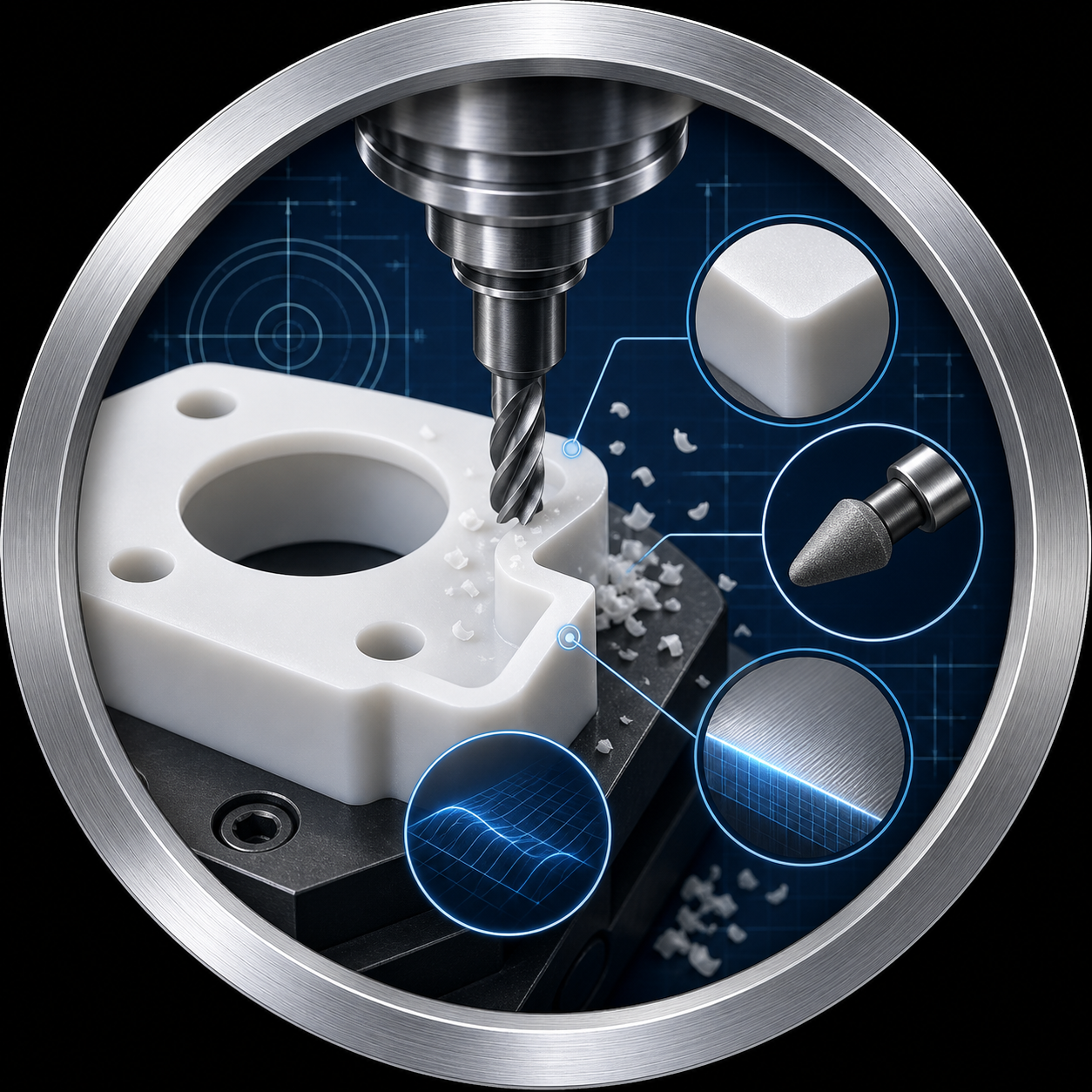
Simile alla lavorazione dei metalli, ma una buona fresatura della plastica richiede in genere velocità del mandrino più elevate e utensili più affilati.
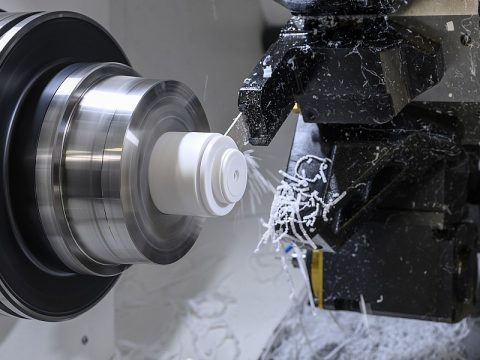
Tornitura CNC della plastica
Il pezzo ruota mentre l'utensile si muove linearmente, ideale per pezzi cilindrici e conici.
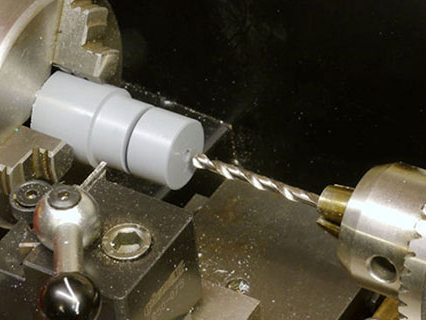
Plastica per foratura CNC
È necessario prestare attenzione alla tenacità del materiale e alla resistenza della filettatura quando si maschia la plastica.
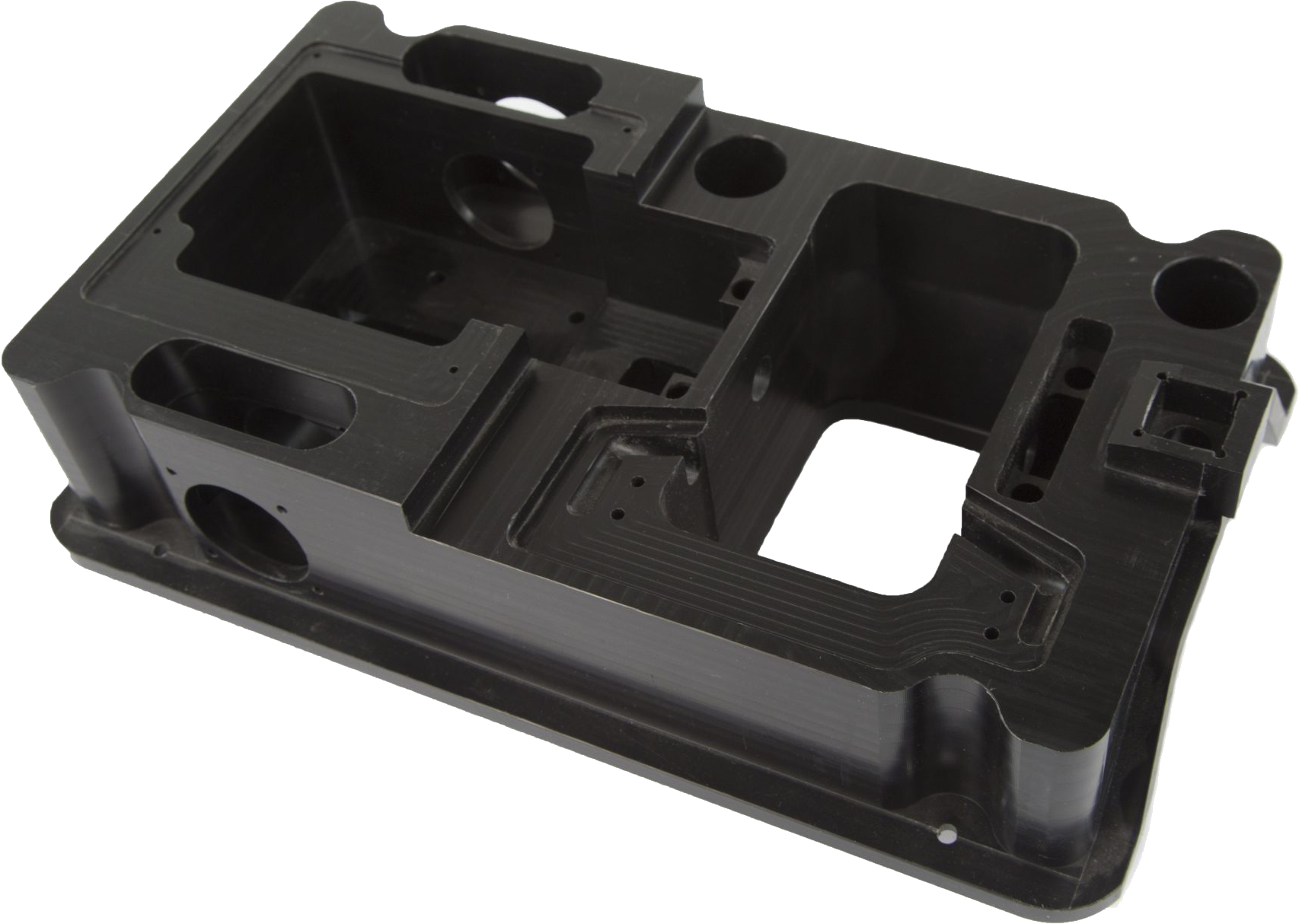
La scelta preferita per la prototipazione a basso costo, soprattutto per le parti che richiedono test funzionali, controlli di montaggio, e valutazione estetica. Potrebbe essere preso in considerazione Involucri del prodotto, parti interne automobilistiche, E prototipi funzionali.
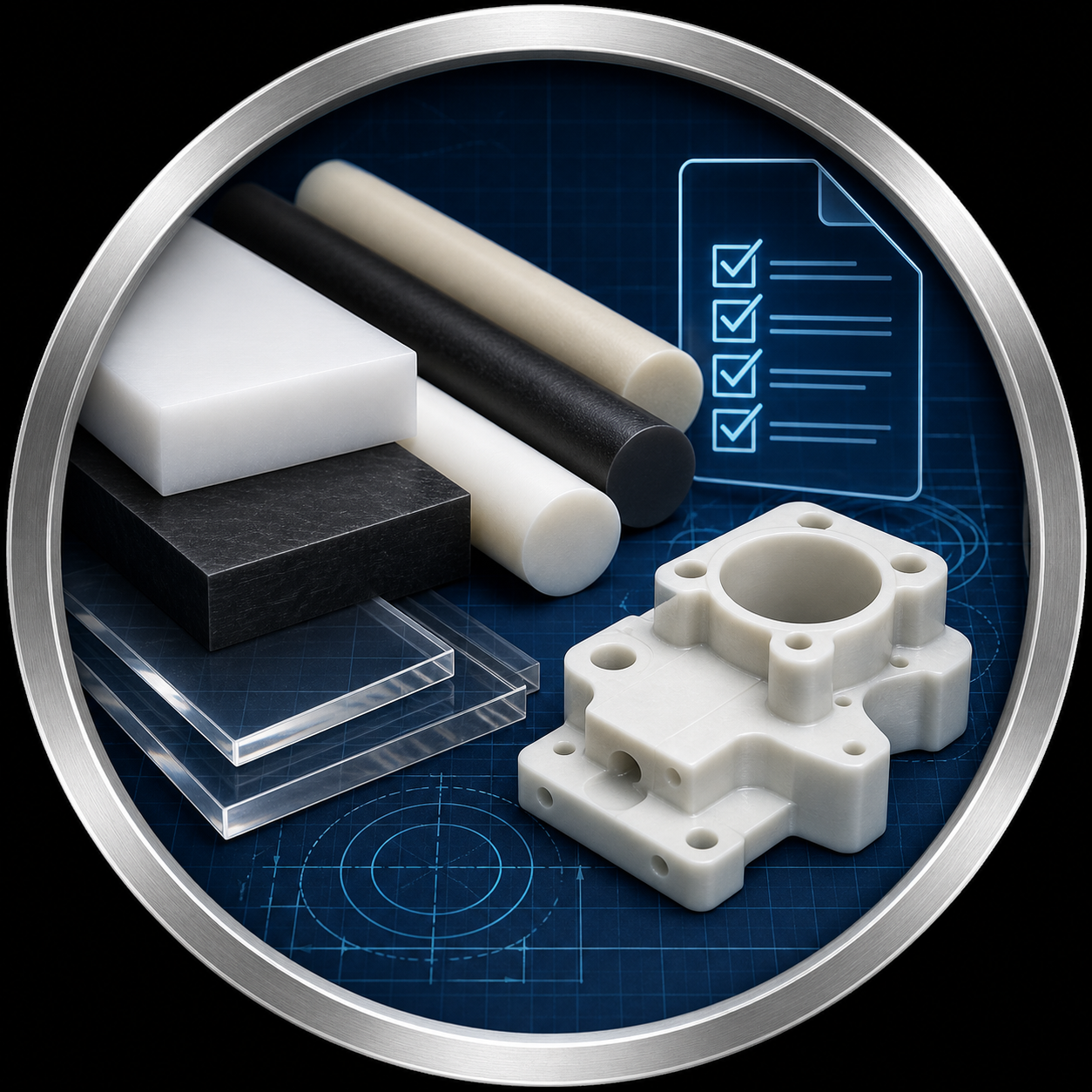
Grado del materiale, modulo di riserva, disegno della parete, tolleranza, fine, documentazione, e il programma sono confermati durante la richiesta di offerta in base al disegno e al comportamento del materiale plastico.
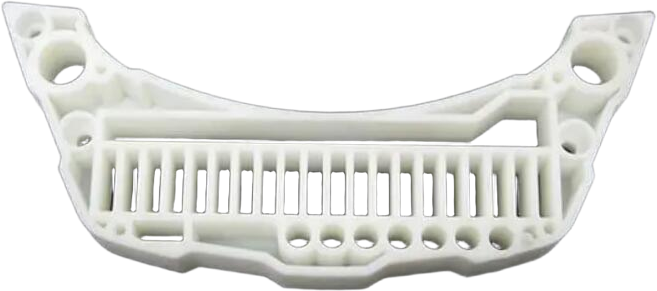
Il PEEK è un tecnopolimero utilizzato per parti lavorate che necessitano di una maggiore resistenza alla temperatura, prestazioni di usura, resistenza chimica, o stabilità dimensionale rispetto alle comuni plastiche.
Grado del materiale, modulo di riserva, disegno della parete, tolleranza, fine, documentazione, e il programma sono confermati durante la richiesta di offerta in base al disegno e al comportamento del materiale plastico.

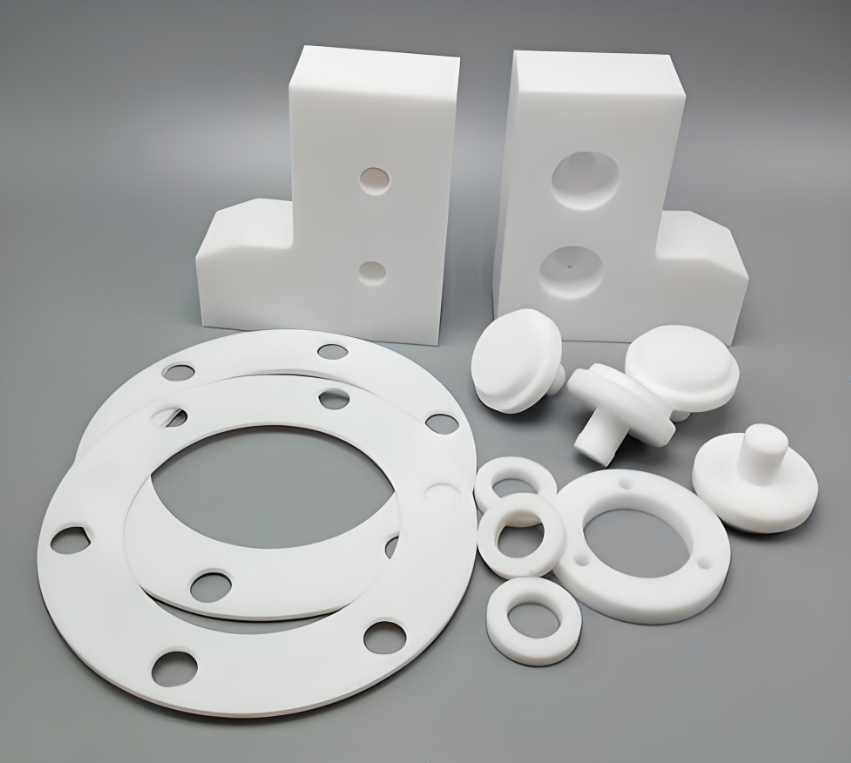
Il PTFE è sempre riservato ad ambienti specializzati che richiedono resistenza a temperature estreme, resistenza agli agenti chimici forti, o proprietà antiaderenti/a bassissimo attrito. Ed è stato utilizzato per i Sigilli, guarnizioni, rivestimenti delle valvole, parti isolanti, articoli da laboratorio, substrato per rivestimenti antiaderenti.
Grado del materiale, modulo di riserva, disegno della parete, tolleranza, fine, documentazione, e il programma sono confermati durante la richiesta di offerta in base al disegno e al comportamento del materiale plastico.
Il PC è sempre stato noto per essere la scelta migliore per le applicazioni che richiedono una combinazione di elevata resistenza agli urti, trasparenza, e stabilità termica. Può essere considerato per parti altamente trasparenti, come gli occhiali di sicurezza, scudi antisommossa, coperture per luci automobilistiche, alloggiamenti per dispositivi elettronici, componenti trasparenti ad alta resistenza.
Grado del materiale, modulo di riserva, disegno della parete, tolleranza, fine, documentazione, e il programma sono confermati durante la richiesta di offerta in base al disegno e al comportamento del materiale plastico.

PMMA ha echiarezza ottica eccezionale (>92%), buona resistenza agli agenti atmosferici, elevata durezza superficiale, e può essere lucidato per una finitura cristallina. È tla scelta migliore in caso di elevata trasparenza, aspetto eccellente, e sono richiesti resistenza ai raggi UV/agenti atmosferici. Potrebbe essere preso in considerazione leggeroprototipi.
Grado del materiale, modulo di riserva, disegno della parete, tolleranza, fine, documentazione, e il programma sono confermati durante la richiesta di offerta in base al disegno e al comportamento del materiale plastico.

Il pannello epossidico è apprezzato nella lavorazione CNC per il suo eccellente isolamento elettrico, buona resistenza meccanica, stabilità dimensionale, e versatilità. Che può essere utilizzato per involucri di apparecchiature elettriche, pannelli strutturali leggeri dove l'isolamento elettrico è fondamentale. Puoi progettarlo per parti strutturali che richiedono maggiore rigidità rispetto all'acrilico ma dove il metallo non è necessario.
Grado del materiale, modulo di riserva, disegno della parete, tolleranza, fine, documentazione, e il programma sono confermati durante la richiesta di offerta in base al disegno e al comportamento del materiale plastico.

POM’L'altro nome è “sostituto del metallo.” quale fpresenta un'elevata rigidità, eccellente stabilità dimensionale, un coefficiente di attrito molto basso, e resistenza al creep superiore. Macchine per un liscio, finitura satinata. POM è pagPerfetto per particolari meccanici di precisione che necessitano di elevata rigidità, basso attrito, e precisione dimensionale, spesso per sostituire il metallo per risparmiare peso o evitare la corrosione. POM può essere utilizzato per pingranaggi di precisione, cuscinetti, camme, valvole, manici di coltello, E serratura componenti.
Grado del materiale, modulo di riserva, disegno della parete, tolleranza, fine, documentazione, e il programma sono confermati durante la richiesta di offerta in base al disegno e al comportamento del materiale plastico.

Il nylon lo è UNno ioAffare materiale per parti in movimento che richiedono elevata resistenza all'usura, basso attrito, e durabilità sotto carico ciclico. Il nylon può essere preso in considerazione Ingranaggi, cuscinetti, rulli, maschere, boccole resistenti all'usura.
Grado del materiale, modulo di riserva, disegno della parete, tolleranza, fine, documentazione, e il programma sono confermati durante la richiesta di offerta in base al disegno e al comportamento del materiale plastico.

PP ha gbuona resistenza alla fatica, ottima resistenza ai solventi chimici, e un buon isolamento elettrico. Fragile alle basse temperature, che è adatto all'appiegare in parti che richiedono leggerezza, resistenza chimica, design della cerniera vivente, o articoli monouso/usa e getta.
Grado del materiale, modulo di riserva, disegno della parete, tolleranza, fine, documentazione, e il programma sono confermati durante la richiesta di offerta in base al disegno e al comportamento del materiale plastico.