


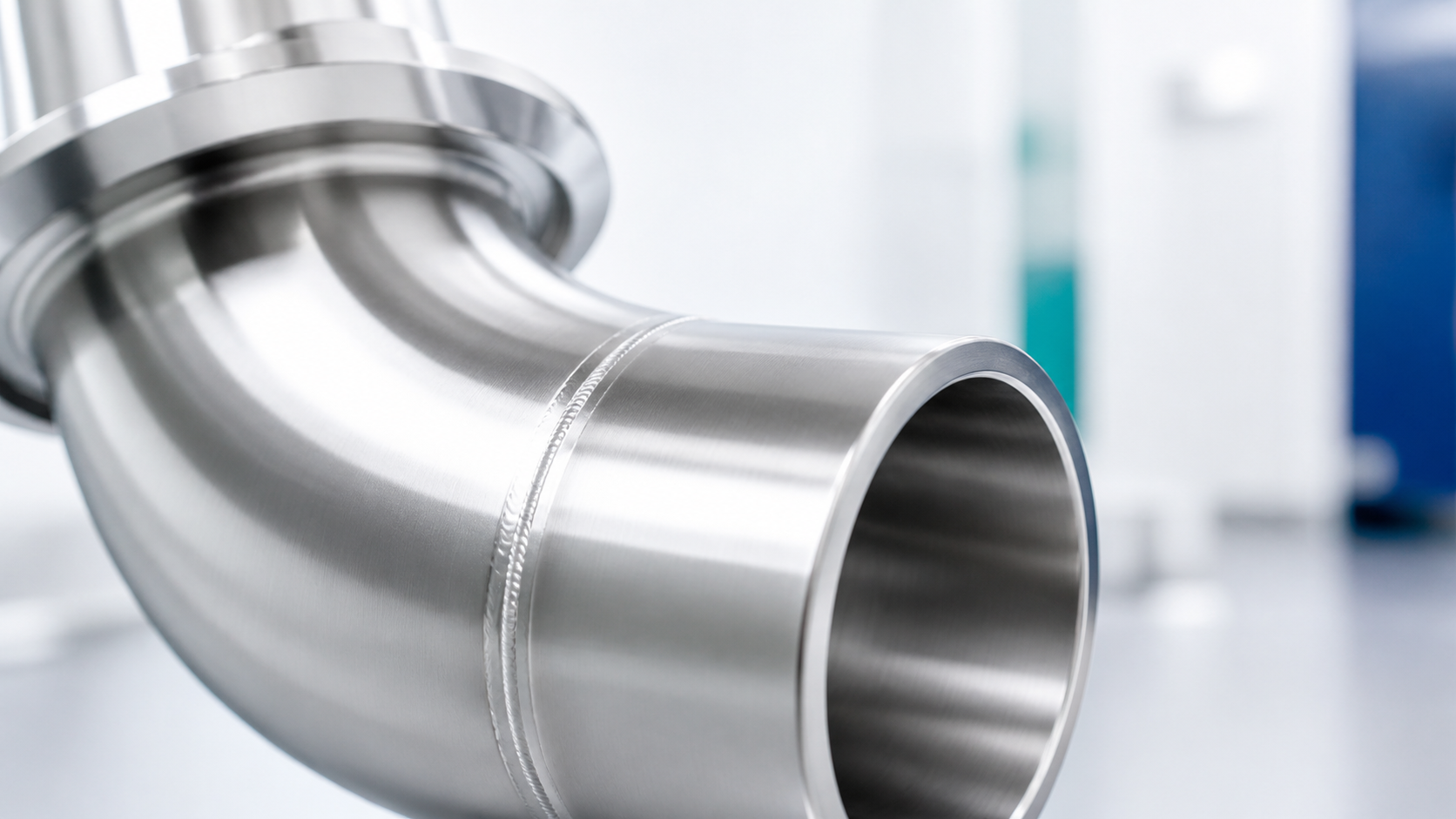
Lavorazione dell'acciaio inossidabile per macchinari alimentari: I requisiti di igiene vengono prima di tutto
La più grande differenza tra le parti in acciaio inossidabile delle macchine alimentari e le parti industriali standard è l'igiene e la pulibilità. Le superfici a contatto con gli alimenti dovrebbero evitare angoli morti, accumulo di residui, crepe, saldature grossolane, e spazi difficili da pulire perché queste aree possono trattenere residui di prodotto e prodotti chimici per la pulizia. Requisiti di contatto alimentare correlati alla FDA, 3-A norme sanitarie, e le linee guida EHEDG sono spesso utilizzate come riferimenti per la sicurezza dei materiali, finitura superficiale, geometria pulibile, e trattamento di saldatura. I dettagli non conformi possono portare a risultati di audit, rilavorazione, o rilascio ritardato dell'attrezzatura.
Questo articolo spiega i requisiti speciali per la lavorazione dell'acciaio inossidabile delle macchine alimentari in cinque aree: selezione del materiale, progettazione sanitaria, processo di saldatura, finitura superficiale, e documentazione di audit. Per conoscenze generali sulla lavorazione dell'acciaio inossidabile, fare riferimento a Lavorazione CNC dell'acciaio inossidabile: La guida completa alla risoluzione dei problemi.
Selezione dei materiali per macchine alimentari: 304 per le zone secche, 316L per zone umide
Diverse zone delle macchine alimentari hanno requisiti di materiali diversi. Zone secche, quali involucri e telai senza contatto con il prodotto o con il lavaggio, spesso usano 304 perché ha una buona disponibilità, costo, e lavorabilità. Zone umide a contatto con l'acqua, cibo, detergenti, oppure i disinfettanti spesso necessitano di 316L perché i detergenti contenenti cloruro possono aumentare il rischio di vaiolatura 304. 316L contiene molibdeno per una migliore resistenza alla corrosione da cloruri e presenta un rischio di corrosione intergranulare inferiore dopo la saldatura.
Utilizzando 304 nelle zone umide può ridurre il costo iniziale del materiale, ma macchie di ruggine, vaiolatura, o la sostituzione sul campo può creare una perdita maggiore in seguito. Per zone umide e parti di contatto saldate di macchinari alimentari, 316L dovrebbe essere rivisto presto durante la selezione del materiale e preventivo.
304 è comunemente usato per molte parti strutturali di attrezzature alimentari, offrendo buon costo e disponibilità. 316 o 316L è più adatto per mezzi corrosivi più forti, ambienti di pulizia contenenti cloro, o condizioni di contatto più rigorose. La selezione del materiale non dovrebbe basarsi solo sul nome della classe; dovrebbe considerare il mezzo di contatto, detergenti, temperatura, saldatura, e finitura superficiale. Per un confronto dettagliato dei materiali, fare riferimento a 304 contro 316 rispetto all'acciaio inossidabile 316L.
Zona | Materiale consigliato | Motivo |
Zona secca (custodia/telaio) | 304 | Nessun contatto con acqua o alimenti; 304 è sufficiente |
Zona umida (contatto acqua/detergente) | 316l | Ambiente cloruro; 304 incline alla vaiolatura |
Superficie a contatto con gli alimenti | 316l | Requisito di livello sanitario; resistente alla corrosione + facile da pulire |
Tubi/serbatoi saldati | 316l | Nessuna corrosione intergranulare dopo la saldatura |
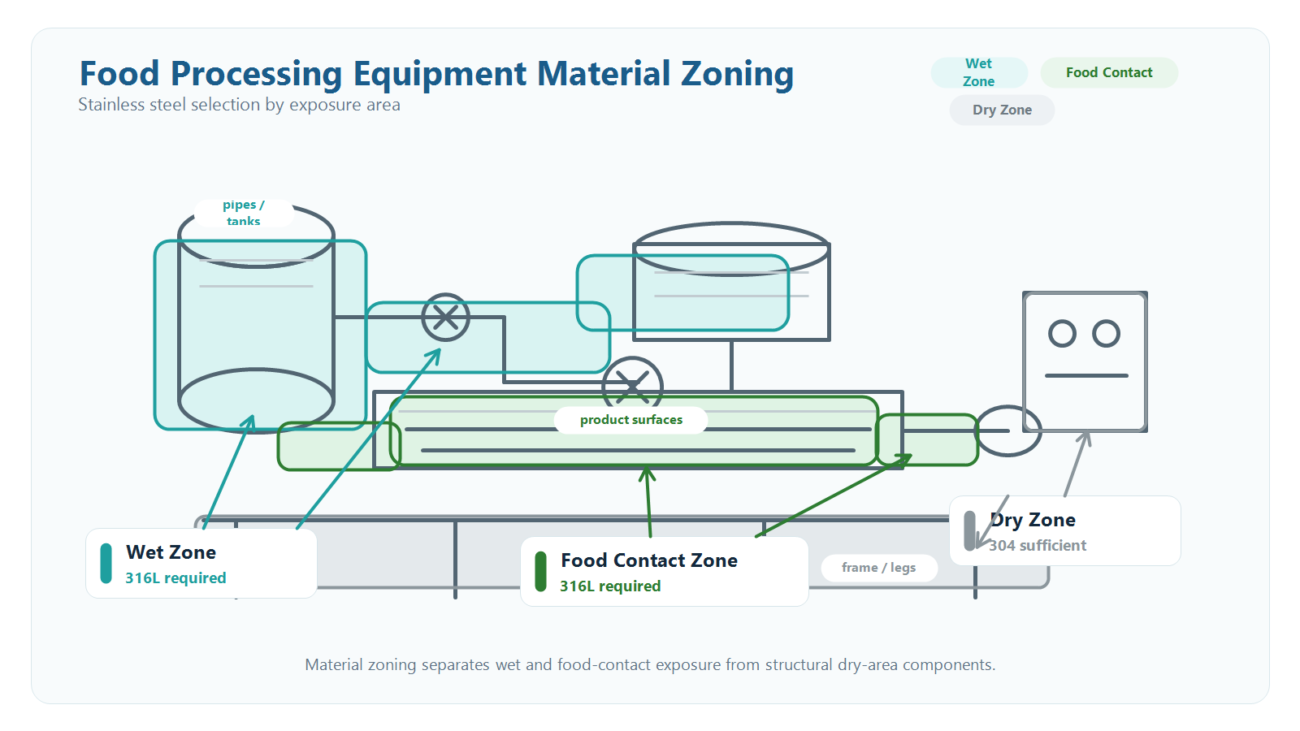
Slot immagine 1: Diagramma di selezione della zonizzazione dei materiali per macchine alimentari
Progettazione sanitaria per parti di macchine alimentari: Nessun angolo morto, Facile da pulire
Il fulcro della progettazione delle macchine alimentari è l'assenza di angoli morti e la facile pulizia. Gli angoli interni dovrebbero utilizzare le transizioni del raggio laddove consentito dal progetto. Gli angoli interni taglienti sono difficili da pulire e possono accumulare residui, mentre gli angoli esterni dovrebbero essere ancora sbavati per una manipolazione e pulizia sicura.
Le saldature sono un elemento chiave della progettazione sanitaria. Le saldature sulle superfici a contatto con gli alimenti devono essere rettificate o rifinite a filo con il materiale di base laddove richiesto dalle specifiche, senza corona di saldatura affilata che può creare un angolo morto di pulizia. La saldatura dei tubi utilizza spesso la saldatura orbitale, e la superficie di saldatura interna può essere elettrolucidata o lucidata meccanicamente per supportare una superficie liscia, interni pulibili.
Quando possibile, le connessioni filettate dovrebbero essere evitate su superfici a contatto con gli alimenti perché gli spazi tra le filettature possono diventare angoli morti dal punto di vista igienico. Quando i fili sono necessari, saldature di tenuta o connessioni sanitarie dedicate come ISO 2852 è possibile utilizzare collegamenti a morsetto. Le superfici delle apparecchiature devono evitare fori ciechi e rientranze non necessarie; fori passanti, caratteristiche drenabili, e le superfici inclinate migliorano la pulibilità e il drenaggio.
Processo di saldatura per macchine alimentari: Saldatura orbitale, Appiattimento interno e passivazione
Per la saldatura di tubi e serbatoi di macchine alimentari, La saldatura TIG orbitale viene spesso scelta per i giunti di tubi e tubature perché il controllo automatico dei parametri migliora la consistenza della saldatura rispetto alla saldatura manuale. I diametri tipici dei tubi da 19 mm a 219 mm possono utilizzare la saldatura orbitale, mentre i tubi più grandi possono utilizzare la saldatura TIG manuale con saldatori qualificati e procedure di saldatura controllate.
Potrebbe essere necessario un appiattimento della saldatura interna per i tubi alimentari quando il rinforzo della saldatura interna o l'ossidazione influiscono sulla pulibilità. Dopo la saldatura, la parete interna può presentare saldature di rinforzo e decolorazioni che dovranno essere trattate con idonee attrezzature di finitura interna, seguita da elettrolucidatura o passivazione secondo specifica. Potrebbe anche essere necessario levigare le saldature esterne per adattarle alla finitura superficiale del materiale di base.
Per il trattamento post-saldatura, 316Le parti saldate a L necessitano comunemente di pulizia e passivazione dopo la saldatura. Per 304 parti saldate utilizzate vicino a zone umide, l'elettrolucidatura e la passivazione possono essere riviste se la resistenza alla corrosione o la pulibilità costituiscono un problema. La passivazione può utilizzare acido citrico ove opportuno, seguito da un risciacquo con acqua purificata per ridurre i residui chimici.
I rischi nelle parti saldate delle macchine alimentari si concentrano generalmente sul lato posteriore della saldatura, zona termicamente alterata, corona di saldatura, e aree insufficientemente terrestri. Per ulteriori informazioni sulla saldatura dell'acciaio inossidabile, fare riferimento a Saldatura dell'acciaio inossidabile per pezzi lavorati a CNC.
Finitura superficiale per parti in acciaio inossidabile a contatto con gli alimenti
Le superfici a contatto con gli alimenti spesso hanno un Ra pari a 0,8um o inferiore, con requisiti di fascia alta che raggiungono Ra 0,4um a seconda dell'attrezzatura e del metodo di pulizia. La lucidatura meccanica standard può raggiungere Ra 0,8um, ma le scanalature di lucidatura incontrollate possono intrappolare residui di prodotto e diventare difficili da pulire. L'elettrolucidatura può ottenere una finitura più liscia, superficie con scanalature ridotte e migliorare la resistenza alla corrosione, quindi viene spesso selezionato per superfici a contatto con gli alimenti dove la pulibilità è fondamentale.
L’elettrolucidatura solitamente costa di più della lucidatura meccanica, ma per le superfici a contatto con gli alimenti la migliore pulibilità e resistenza alla corrosione possono giustificare il costo. Superfici non a contatto con gli alimenti, come gli involucri per zone secche, spesso è possibile utilizzare la lucidatura o la spazzolatura meccanica standard per controllare i costi.
La sabbiatura nei macchinari alimentari è solitamente limitata alle superfici senza contatto perché le superfici sabbiate sono più ruvide e possono trattenere residui. Il rivestimento PVD può essere utilizzato per l'aspetto delle parti decorative, ma deve essere esaminato attentamente prima dell'uso su superfici a contatto con gli alimenti perché danni al rivestimento o delaminazione possono creare rischi di contaminazione.
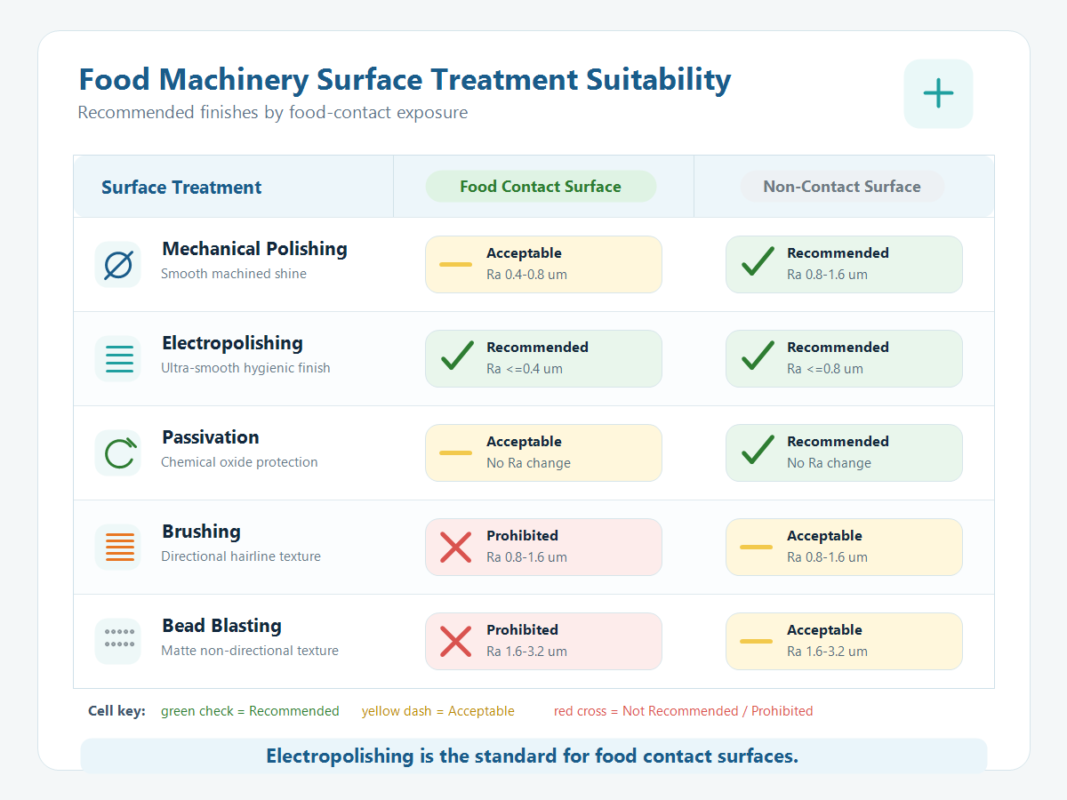
Slot immagine 2: Tabella di selezione della finitura superficiale delle macchine alimentari
Documentazione di audit e standard sanitari: FDA, 3-A ed EHEDG
Macchine alimentari esportate negli Stati Uniti, Europa, oppure le applicazioni sanitarie per latticini e bevande potrebbero dover seguire le specifiche del cliente basate sulle norme sul contatto alimentare relative alla FDA, 3-A norme sanitarie, Guida alla progettazione igienica dell'EHEDG, o altri standard applicabili. Le norme FDA sul contatto alimentare si concentrano sulla sicurezza dei materiali e sulle condizioni d’uso; 3-A ed EHEDG pongono maggiore enfasi sulla progettazione pulibile, giunti saldati, finitura superficiale, e l'igiene delle attrezzature. Il requisito esatto dovrebbe essere confermato dalle specifiche del progetto e dal mercato di destinazione.
JADE-CNC può fornire certificati dei materiali, registrazioni di saldatura, rapporti sulla rugosità superficiale, e record di passivazione o elettrolucidatura per supportare la FDA del cliente, 3-UN, EHEDG, o audit di igiene interna. Specifiche della procedura di saldatura (WPS/PQR) e le qualifiche dei saldatori possono anche essere riviste quando il progetto le richiede.
Problemi e soluzioni comuni nella lavorazione dell'acciaio inossidabile per macchinari alimentari
Un problema comune nei macchinari alimentari è la ruggine sulle saldature. La causa è spesso l'uso 304 nelle zone umide, pulizia incompleta della saldatura, o passivazione insufficiente dopo la saldatura. L'approccio di JADE-CNC è quello di rivedere il 316L per le parti saldate in zone umide e a contatto con gli alimenti, controllare la pulizia e la passivazione post saldatura, e applicare test penetranti per saldature critiche quando richiesto.
Un altro problema sono le depressioni nelle saldature dopo l'elettrolucidatura. La causa è la molatura irregolare della saldatura, che può portare alla concentrazione di corrente nelle depressioni durante l'elettrolucidatura e alla rimozione eccessiva. JADE-CNC rettifica le saldature a filo del materiale base dove richiesto e controlla corrente e tempo durante l'elettrolucidatura.
I fallimenti nei controlli di igiene sono spesso causati dalla pulizia degli angoli morti. Durante la revisione del processo, JADE-CNC controlla i disegni per gli angoli interni vivi, fori ciechi, spazi vuoti del filo, recessi non drenabili, e altri rischi igienici, quindi fornisce suggerimenti sulla producibilità prima della produzione. Ciò riduce il rischio di riscontrare non conformità solo dopo la lavorazione, saldatura, e le finiture sono già state completate.
A proposito di JADE-CNC
JADE-CNC è specializzata nella lavorazione di pezzi di precisione in acciaio inossidabile, con lavorazione a cinque assi, lavorazione composta di tornitura e fresatura, attrezzature per la rettifica di precisione, ISO 9001 certificazione, e un servizio completo dalla lavorazione meccanica e saldatura alla finitura superficiale e all'ispezione. Il materiale in entrata può essere verificato mediante spettrometro, con autoispezione più ispezione dedicata nelle fasi chiave del processo, aiutando a controllare i tempi di consegna, qualità, e consistenza del lotto.
Invia il tuo disegno, Modello CAD, grado del materiale, zona a contatto con gli alimenti, posizione della saldatura, requisito di rugosità superficiale, metodo di pulizia, requisito della documentazione, e quantità di batch per la valutazione del processo e il preventivo, tipicamente all'interno 24 ore.
Articoli correlati sull'acciaio inossidabile

Leone Liang, Fondatore Miglior Partner con R&D
Il fondatore di JADE-CNC LEO, che vanta oltre due decenni di esperienza nel settore, Leo ha iniziato la sua carriera come apprendista e ha messo in pratica le sue competenze nel trattamento superficiale e nella lavorazione CNC.