



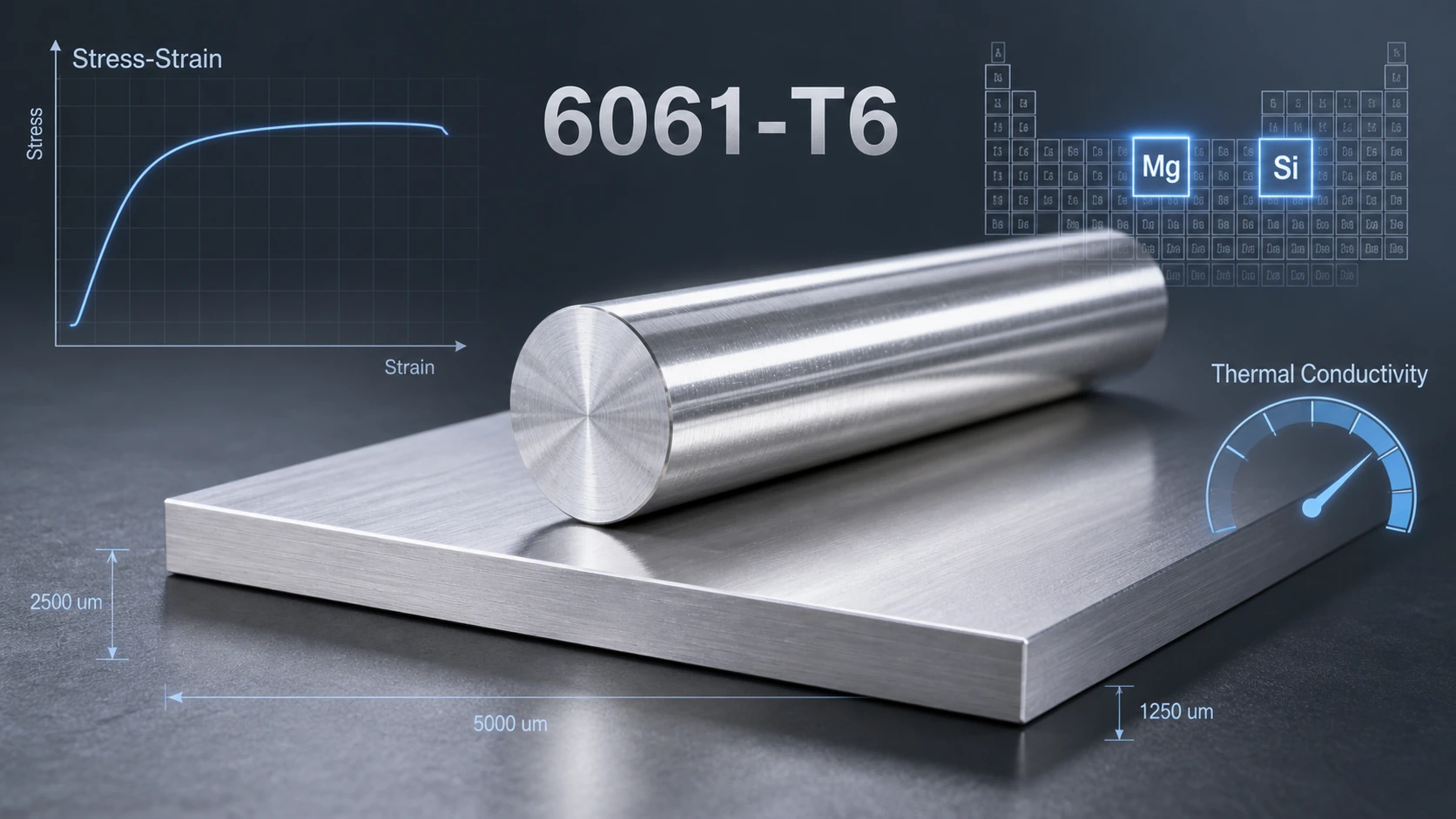
Технический справочник состава 6061-T6., свойства растяжения, жесткость, плотность, тепловое расширение, проводимость, электрическое поведение, изменение формы продукта, и последствия проектирования ЧПУ.
Введение
6061-T6 широко используется для механически обработанных алюминиевых деталей, поскольку он обеспечивает полезный баланс прочности., масса, коррозионная стойкость, проводимость, доступность, завершающий ответ, и стоимость. Эти преимущества легко резюмировать, но для правильного использования сплава требуется нечто большее, чем просто копирование одной таблицы свойств..
Стоимость свойств зависит от формы продукта, толщина, ориентация, термическая обработка, метод испытания, и регулирующая спецификация. Типичное значение, указанное в справочнике, полезно для сравнения., в то время как минимум спецификации используется для покупки и приемки. Допустимое значение конструкции может снова снизиться после достижения температуры., усталость, среда, и факторы безопасности учитываются.
Для полной связи между поведением материала, механическая обработка, отделка, расходы, и ДФМ, увидеть 6061-Полное руководство по обработке алюминия T6 с ЧПУ.
Что означает 6061-T6
The 6061 Обозначение идентифицирует деформируемый алюминиевый сплав серии 6ххх, основная система упрочнения которого основана на магнии и кремнии.. Уровень Т6 означает, что продукт прошел термическую обработку и искусственно состарен.. Это не означает, что каждое изделие 6061-T6 имеет одинаковую прочность или состояние нагрузки..
Всегда указывайте как сплав, так и отпуск.. Такие термины, как 6061-O, 6061-Т4, 6061-Т6, Т651, и T6511 описывают существенно разные условия. T651 и T6511 добавляют операции по снятию напряжений в состояние термообработки и часто выбираются, когда важна стабильность размеров во время обработки..
Т6 против Т651
T651 обычно ассоциируется с пластиной, напряжение которой было снято путем контролируемого растяжения после термообработки на раствор., потом искусственно состарили. Это не более сильная версия Т6 по определению.. Его практическое преимущество заключается в меньшем остаточном напряжении во время операций, при которых удаляется большая часть заготовки.. Точное обозначение и требования должны соответствовать применимой спецификации продукта..
6061 Химический состав
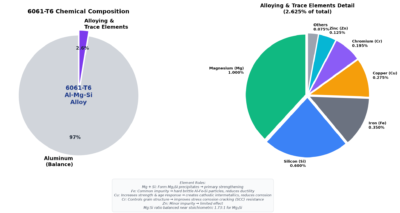
Химический состав привязан к обозначению сплава., не характер Т6. Зарегистрированные пределы ниже представляют собой диапазоны и максимумы состава., не целевые рецепты. Завод может производить соответствующие 6061 в разных точках внутри этих пределов.
Элемент | Состав по весу | Металлургическая роль |
Кремний (И) | 0.40-0.80% | Сочетается с магнием в системе дисперсионного твердения. |
Железо (Фе) | 0.70% максимум | Контролируемые примеси; образует интерметаллические частицы |
Медь (Cu) | 0.15-0.40% | Поддерживает силу и реакцию старения; может влиять на коррозионное поведение |
Марганец (Мин.) | 0.15% максимум | Незначительное добавление и контроль примесей |
Магний (мг) | 0.80-1.20% | Первичная упрочняющая добавка с кремнием |
Хром (Кр) | 0.04-0.35% | Помогает контролировать зернистую структуру и рекристаллизацию. |
Цинк (Зн) | 0.25% максимум | Ограниченное остаточное добавление |
Титан (Из) | 0.15% максимум | Может поддерживать очистку зерна |
Другие элементы | 0.05% каждый; 0.15% общий | Ограничивает неуказанные остаточные элементы |
Алюминий (Ал) | Остаток | Основной металл |
Пределы состава соответствуют зарегистрированным 6061 обозначение. Подтвердите нормативную версию и сертификат материала для закупок..
Алюминиевая ассоциация Международные обозначения сплавов и пределы химического состава являются контрольным эталоном для зарегистрированных кованых алюминиевых композиций.. Спецификации продукта могут воспроизводить эти ограничения при добавлении механических, размерный, маркировка, и требования к качеству.
Как укрепляют магний и кремний 6061
Термическая обработка на раствор растворяет упрочняющие элементы в алюминиевой матрице.. Закалка сохраняет пересыщенное состояние, а искусственное старение образует мелкие выделения силицида магния, затрудняющие движение дислокаций.. Прочность зависит от полной термической истории., эффективность гашения, размер секции, и состояние старения, а не только состав.
Почему сертификаты имеют значение
Сертификат должен идентифицировать сплав, характер, тепло или много, форма продукта, применимая спецификация, химия, и требуемые механические результаты. Для критически важных проектов, подтвердите требования к отслеживаемости и приемке до того, как запасы будут сокращены. Ручная идентификация сплавов может поддерживать входной контроль, но он не проверяет закалку и не заменяет необходимые механические испытания..
Механические свойства 6061-T6
Свойство | Типичный эталонный диапазон | Инженерное использование | Важная квалификация |
Предельная прочность на растяжение | О 290-320 МПа | Максимальное напряжение при испытании на растяжение | Минимальные спецификации зависят от продукта и толщины. |
0.2% компенсационный предел текучести | О 240-280 МПа | Начало остаточной деформации | Используйте применимый стандарт материала для приемки. |
Удлинение | Часто о 8-17% | Пластичность и способность к деформации | Сильно зависит от длины колеи, ориентация, и раздел |
Модуль упругости | О 68-70 ГПа | Упругая жесткость и прогиб | Температура мало влияет на модуль |
Модуль сдвига | О 26 ГПа | Кручение и сдвиговая деформация | Используйте с правильными предположениями об изотропном материале. |
коэффициент Пуассона | О 0.33 | Многоосные упругие расчеты | Типичная стоимость, а не предел приемки партии |
Твердость по Бринеллю | Часто о 90-100 полупансион | Примерное сравнение твердости и износа | Метод, нагрузка, и состояние продукта влияют на результат |
Усталостная прочность | Часто сообщается рядом 90-100 МПа при заявленном количестве циклов | Предварительный скрининг циклической нагрузки | Алюминий не имеет настоящего предела выносливости; используйте кривую S-N и коэффициенты запаса |
Типичные эталоны комнатной температуры. Спецификации продукции и результаты сертифицированных испытаний контролируют закупки; допустимая проектная документация, контрольные расчеты, критичные по безопасности.
Сила зависит от продукта
Знакомые значения примерно 310 предел прочности на разрыв МПа и 276 Предел текучести в МПа – полезные типичные ссылки., но они не являются общепризнанными ценностями. Тарелка, лист, экструдированный стержень, трубка, профиль, и другие продукты могут иметь разные минимумы по толщине и ориентации.. Используйте спецификацию продукта и текущую версию чертежа, если прочность указана в контракте..
Жесткость отличается от прочности
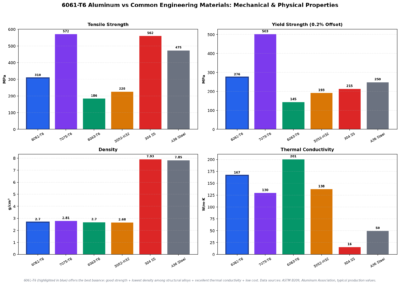
Модуль упругости контролирует прогиб до текучести.. Примерно 69 ГПа, 6061-Т6 примерно на треть жестче обычных сталей.. Переход с 6061-T6 на 7075-T6 существенно повышает прочность, но незначительно меняет модуль упругости., поэтому он редко решает проблему жесткости сам по себе. Увеличение глубины секции, добавление ребер, сокращение пролетов, или выбор более жесткого материала обычно более эффективен.
Для детального выбора сплава, видеть 6061-Т6 против 7075-Т6: Сила, Расходы & Обрабатываемость.
Усталость и переломы
Алюминиевые сплавы не имеют истинного предела выносливости, в отличие от некоторых сталей.. Указанная усталостная прочность имеет смысл только с учетом количества циклов., коэффициент напряжения, образец, состояние поверхности, среда, и статистическая основа. Обработанные края, нити, коррозионные ямы, анодирование, остаточное напряжение, и концентрация напряжения могут изменить усталостные характеристики. Используйте кривую S-N для конкретного приложения и соответствующий метод расчета циклической нагрузки..
Физические и термические свойства
Свойство | Типичное эталонное значение | Значение дизайна |
Плотность | О 2.70 г/см3 | Примерно треть плотности обычных сталей. |
Диапазон плавления | О 582-652 ты С | Диапазон, ни одной точки плавления |
Удельная теплоемкость | О 0.90 Дж/г-К при комнатной температуре | Влияет на переходный нагрев и охлаждение |
Теплопроводность | Часто о 150-170 Вт/м-К | Подходит для корпусов и теплораспределительных конструкций. |
Коэффициент теплового расширения | О 23.6 мкм/м-К при комнатной температуре | Изменение размеров может превышать жесткие допуски при изменении температуры. |
Температуропроводность | О 65-70 мм2/с | Влияет на то, насколько быстро выравниваются температурные градиенты. |
Теплопроводность
6061-Т6 хорошо проводит тепло по сравнению со сталью и многими конструкционными пластиками.. Это поддерживает корпуса, приспособления, холодные тарелки, и механически обработанные теплораспределительные компоненты. Производительность системы по-прежнему зависит от геометрии, прекрасная область, расход воздуха, контактная плоскостность, интерфейсные материалы, состояние поверхности, и монтажное давление. Сама по себе проводимость не определяет производительность радиатора..
Тепловое расширение
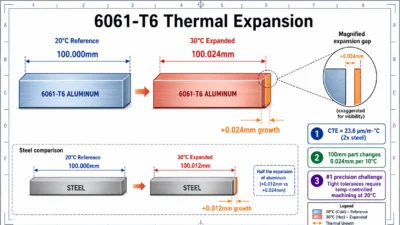
Используя репрезентативный коэффициент 23.6 а/м-К, а 100 Размер мм изменяется примерно 0.0236 мм для 10 изменение температуры градусов Цельсия. Это движение уже превышает многие жесткие допуски обработки.. На чертежах должна быть указана эталонная температура, где это необходимо., детали и калибры должны стабилизироваться перед окончательным контролем..
Сборки из разнородных материалов также заслуживают внимания.. Алюминий расширяется примерно в два раза больше, чем многие стали., поэтому изменения температуры могут изменить предварительную нагрузку, посадка подшипника, сжатие уплотнения, выравнивание, и нагрузка на интерфейс. Анализируйте весь диапазон температур, а не проверяйте только параметры комнатной температуры..
Повышенные и низкие температуры
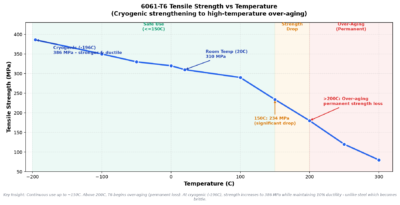
6061-Прочность Т6 снижается с увеличением температуры и времени воздействия., и длительное нагревание может привести к чрезмерному износу затвердевшей от осадков конструкции.. Не существует универсальной температуры непрерывного использования, подходящей для любой нагрузки и срока службы.. Используйте температурно-зависимые допустимые значения из утвержденного источника для проектирования при повышенных температурах.. При низких температурах, многие алюминиевые сплавы сохраняют полезную вязкость, но криогенная работа по-прежнему требует соблюдения основных требований к материалам и сосудам..
Электрические свойства
Свойство | Типичный эталонный диапазон | Инженерное значение |
Электропроводность | О 40-47% МАКО | Подходит для многих корпусов, шасси, и заземляющие конструкции |
Электрическое сопротивление | О 3.7-4.3 микроом-см | Более высокое сопротивление, чем у алюминия или меди электрического класса. |
Температурный коэффициент | О 0.004 за тебя С | Сопротивление увеличивается с повышением температуры |
Анодированная поверхность | Электроизоляционный | Замаскируйте или удалите покрытие там, где требуется проводящий контакт. |
6061-T6 достаточно проводящий для многих шасси, РФ корпуса, заземляющие конструкции, и теплоэлектрические сборки, но это не электропроводный сплав. Контактное сопротивление зависит от оксида, заканчивать, давление, чистота, дизайн застежки, и время в эксплуатации.
Анодный оксид является электроизоляционным.. Заземляющие площадки, разъем сиденья, резьбовые интерфейсы, и зоны контакта с электромагнитными помехами могут нуждаться в маскировке или другой отделке.. The 6061-Направляющая для анодирования алюминия T6 объясняет толщину покрытия, маскировка, и планирование проводящего интерфейса.
Коррозия и поведение поверхности
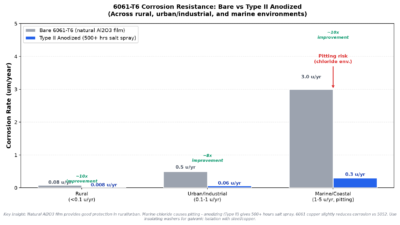
6061-Т6 образует тонкую естественную оксидную пленку и обычно хорошо работает при обычных атмосферных условиях.. Хлориды, щели, сохраняемая влага, щелочные чистящие средства, разнородные металлы, и медь- или частицы, богатые железом, могут увеличить риск локальной коррозии.. Широкий ярлык, такой как «морской’ недостаточно для прогнозирования срока службы.
- Определите фактическое химическое воздействие, температура, цикл влажно-сухой, и способ очистки.
- Избегайте водных ловушек и обеспечьте дренаж и вентиляцию, где это возможно..
- Электрически изолировать алюминий от нержавеющей стали., медь, латунь, или углеродное волокно при эксплуатации в мокрых условиях, когда это необходимо.
- Выберите анодирование, конверсионное покрытие, краска, порошковое покрытие, или другая отделка из требований к окружению и интерфейсу.
- Укажите маскировку, состояние уплотнения, толщина покрытия, испытание на коррозию, и критерии приемки, а не только финишное название.
Форма продукта и характеристики имеют значение
Форма продукта | Обычное состояние | Учет свойств и обработки |
Тарелка | Т6 или Т651 со снятым напряжением | Толщина влияет на гарантированные свойства; T651 может уменьшить перемещение при тяжелой обработке. |
Лист | Т6, если доступен | Тонкие секции могут иметь разные требования к изгибу и удлинению. |
Экструдированный профиль | Т6 или Т6511 | Свойства зависят от толщины профиля, дизайн экструзии, гасить, и растянуть |
Экструдированный стержень или трубка | T6 или родственный ему характер, снимающий стресс | Поток зерна, размеры, и прямолинейность соответствуют спецификации продукта |
Прокатный или холоднодеформированный пруток | Специфический характер продукта | Не предполагайте тех же требований, что и для экструзии или пластины. |
Ковка | Состояние термообработки | Свойства и текучесть зерна зависят от маршрута ковки и спецификации. |
АСТМ Б209/Б209М-21а покрывает лист и пластину из алюминиевого сплава, пока АСТМ Б221-21 покрывает экструдированные стержни, стержни, проволока, профили, и трубки. В заказе на поставку должна быть указана соответствующая спецификация продукта., сплав, характер, размеры, инспекция, сертификация, и любые дополнительные требования.
Не заменяйте пластину экструзией., или Т6 для Т651, только на основе номинального сплава. Зернистая структура, остаточное напряжение, прямолинейность, допуски на размеры, гарантированные механические свойства, и состояние поверхности могут повлиять на готовую деталь..
6061-T6 по сравнению с другими материалами
Материал | Основное преимущество перед 6061-T6 | Главный компромисс | Типичная причина выбора |
7075-Т6 | Гораздо более высокая прочность | Более высокая стоимость и различное поведение в отношении коррозии/отделки. | Высоконагруженные легкие конструкции |
6063-Т6 | Часто лучшая экструзия и термические характеристики. | Меньшая прочность | Сложные профили и множество профилей радиатора. |
5052-H32 | Высокие показатели формовки листов и защиты от морской коррозии. | Не затвердевает от осадков; более низкая прочность конструкции при механической обработке | Корпуса из гнутых листов и работы с морскими листами |
АЦП12 | Почти чистое литье под давлением при стабильном высоком объеме | Более низкая пластичность, возможная пористость, и менее предсказуемое анодирование | Интегрированные литые корпуса и крышки |
304 нержавеющая сталь | Повышенная жесткость и широкая устойчивость к коррозии | Гораздо тяжелее, менее проводящий, и медленнее машина | Жесткий, прочный, коррозионностойкие компоненты |
Медь | Гораздо более высокая тепло- и электропроводность. | Более высокая плотность, расходы, и соображения по механической обработке | Высокопроизводительные тепловые и токовые пути |
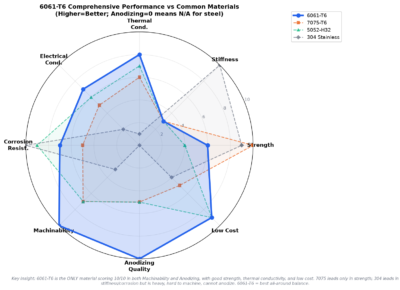
Выбор материала должен соответствовать ограничивающим требованиям.. Более высокая сила указывает на 7075; сложная экструзия может способствовать 6063; сформированный морской щит может благоприятствовать 5052; стабильная геометрия, близкая к сети, при больших объемах может предпочесть ADC12; а жесткость или сильная коррозия могут оправдать использование стали или другого сплава.. The 6061-Сравнение T6 и ADC12 объясняет компромисс между материалом и процессом между кованой заготовкой и литьем под давлением..
Что означают свойства для обработки с ЧПУ
Свойство | Что это значит для части | Практичный дизайн или производственный ответ |
Низкая плотность | Хороший потенциал соотношения силы к весу | Эффективно используйте геометрию, а не сравнивайте только силу |
Модуль упругости вблизи 69 ГПа | Больше прогиба, чем у стали, при одинаковой геометрии и нагрузке. | Увеличить глубину секции, добавить ребрышки, сократить пролеты, или смените материал |
Хорошая обрабатываемость | Возможна высокая скорость удаления | Используйте острые алюминиевые инструменты., достаточная загрузка чипа, и надежная эвакуация |
Высокая теплопроводность | Тепло при резке и обслуживании быстро распространяется. | Контролируйте объемную температуру, когда размеры имеют решающее значение |
Высокое тепловое расширение | Посадка и размеры меняются в зависимости от температуры | Определение эталонной температуры и оценка сборок из разнородных материалов |
Хороший отклик на анодирование | Защитно-декоративная отделка практична. | Планирование роста покрытия, маскировка, следы стойки, и окончательные размеры |
Умеренная твердость | Износ инструмента обычно поддается контролю. | Защитите косметические поверхности от царапин и повреждений при обращении. |
Остаточное напряжение | Большой съем припуска может привести к искажению | Рассмотрим пластину Т651., сбалансированная черновая обработка, стабилизация, и закончить запас |
6061-T6 обычно обрабатывает чисто, острыми инструментами и обеспечивает хороший отвод стружки.. Его теплопроводность помогает распределять тепло резки., в то время как его тепловое расширение делает контроль температуры важным для небольших размеров. Относительно низкий модуль также делает тонкие стенки чувствительными к давлению инструмента и деформации зажима..
Используйте 6061-Руководство по параметрам обработки с ЧПУ T6 для оснастки, скорости, кормит, бурение, постукивание, охлаждение, и проверка. The 6061-T6 Обработка на станке с ЧПУ, рекомендации DFM толщина стенки крышки, карманы, радиусы, дыры, нити, допуски, и припуски на отделку.
Как JADE-CNC использует данные о материалах
JADE-CNC анализирует данные о материале в контексте чертежа, а не рассматривает справочную таблицу как полную спецификацию.. Обзор соединяет сплав, характер, складская форма, последовательность обработки, терпимость, заканчивать, инспекция, количество, и условия обслуживания.
- Подтвердите запрошенный сплав, характер, форма продукта, и область сертификации
- Проверьте, есть ли T6, Т651, или другое состояние лучше соответствует геометрии и плану съема
- Определить жесткость, тепловое расширение, тонкостенный, и риски остаточного напряжения перед механической обработкой
- Согласуйте анодирование или другую отделку с размерами, нити, заземление, и косметические лица
- Определить методы контроля критических размеров, геометрия, нити, и требования к поверхности
- Сравните альтернативные материалы, когда прочность, проводимость, коррозия, объем, или стоимость определяет решение
Отправить CAD-модель, рисунок, количество, спецификация материала, заканчивать, и требования к обслуживанию запросить обзор материала и обработки JADE-CNC.
Часто задаваемые вопросы
Распространенные вопросы о недвижимости 6061-T6
Какова прочность на разрыв 6061-Т6??
Типичная ссылка примерно 290-320 МПа, но гарантированный минимум зависит от формы продукта, толщина, ориентация, и спецификация. Используйте сертификат материала и руководящий стандарт для приемки..
Какой предел текучести у 6061-Т6?
Типичные ссылки часто встречаются вокруг 240-280 МПа. Не принимайте одно значение для каждой пластины., лист, бар, трубка, или экструзия; используйте соответствующую таблицу продуктов и допустимый дизайн.
Насколько жесткая сталь 6061-T6 по сравнению со сталью?
Его модуль упругости составляет около 69 ГПа, примерно одна треть от обычных сталей. При той же нагрузке и геометрии, поэтому алюминиевая деталь прогибается сильнее, даже если ее предел текучести достаточен..
Какова теплопроводность 6061-Т6?
Общий эталонный диапазон составляет около 150-170 Вт/м-К при комнатной температуре. Фактические значения зависят от условий и температуры., и полные тепловые характеристики сильно зависят от геометрии и интерфейсов..
Насколько 6061-T6 расширяется при повышении температуры??
Используя около 23.6 а/м-К, а 100 Размер в мм меняется примерно 0.0236 мм больше 10 ты С. Эталонная температура имеет значение для точной посадки и проверки..
Проводит ли 6061-T6 электричество??
Да, обычно вокруг 40-47% МАКО. Натуральный оксид и анодирование повышают контактное сопротивление., поэтому проводящие интерфейсы нуждаются в продуманной отделке и дизайне контактов..
Устойчив к коррозии 6061-T6?
Он хорошо работает во многих атмосферных условиях, но может вызывать коррозию в хлоридной среде и гальваническую коррозию по отношению к более благородным материалам во влажном состоянии.. Среда, детализация, изоляция, и завершить определение производительности службы.
В чем разница между 6061-T6 и 6061-T651?
Оба подвергнуты термообработке в растворе и искусственно состарены.. T651 также включает в себя снятие напряжения путем растяжения соответствующих продуктов., что может уменьшить движение во время тяжелой обработки.
Заключение
6061-Т6 сочетает в себе умеренную силу, низкая плотность, хорошая обрабатываемость, полезная проводимость, и в целом благоприятный отклик на анодирование. Его основные конструктивные ограничения - меньшая жесткость, чем у стали., значительное тепловое расширение, конечная усталостная долговечность, и изменение свойств в зависимости от формы и спецификации продукта..
Используйте типичные данные для раннего сравнения, пределы спецификации для закупок, сертифицированные результаты приемки материалов, и утвержденные допустимые нормы для критического проектирования. Это различие не позволяет удобному номеру справочника превратиться в неподтвержденное инженерное обещание..
Статьи по теме 6061-T6
- 6061-Полное руководство по обработке алюминия T6 с ЧПУ
- 6061-T6 против 7075-T6 Алюминий: Сила, Расходы & Обрабатываемость
- 6061-T6 Анодирование алюминия: Типы, Цвета, Толщина & Правила проектирования
- 6061-T6 Параметры обработки с ЧПУ: Скорости, Ленты, Оснастка & Управление процессом
- 6061-T6 против ADC12 Алюминий: Обработка с ЧПУ или литье под давлением?
- 6061-T6 Обработка на станке с ЧПУ Рекомендации DFM: Правила проектирования & Контрольный список
- 6061-Свойства алюминия T6: Механический, Термальный & Химические данные

Лео Лян, Основатель, лучший партнер R&Д
Основатель JADE-CNC Лео, который обладает более чем двадцатилетним опытом работы в отрасли, Лео начал свою карьеру в качестве ученика и практиковал свои навыки в области обработки поверхностей и обработки на станках с ЧПУ..