



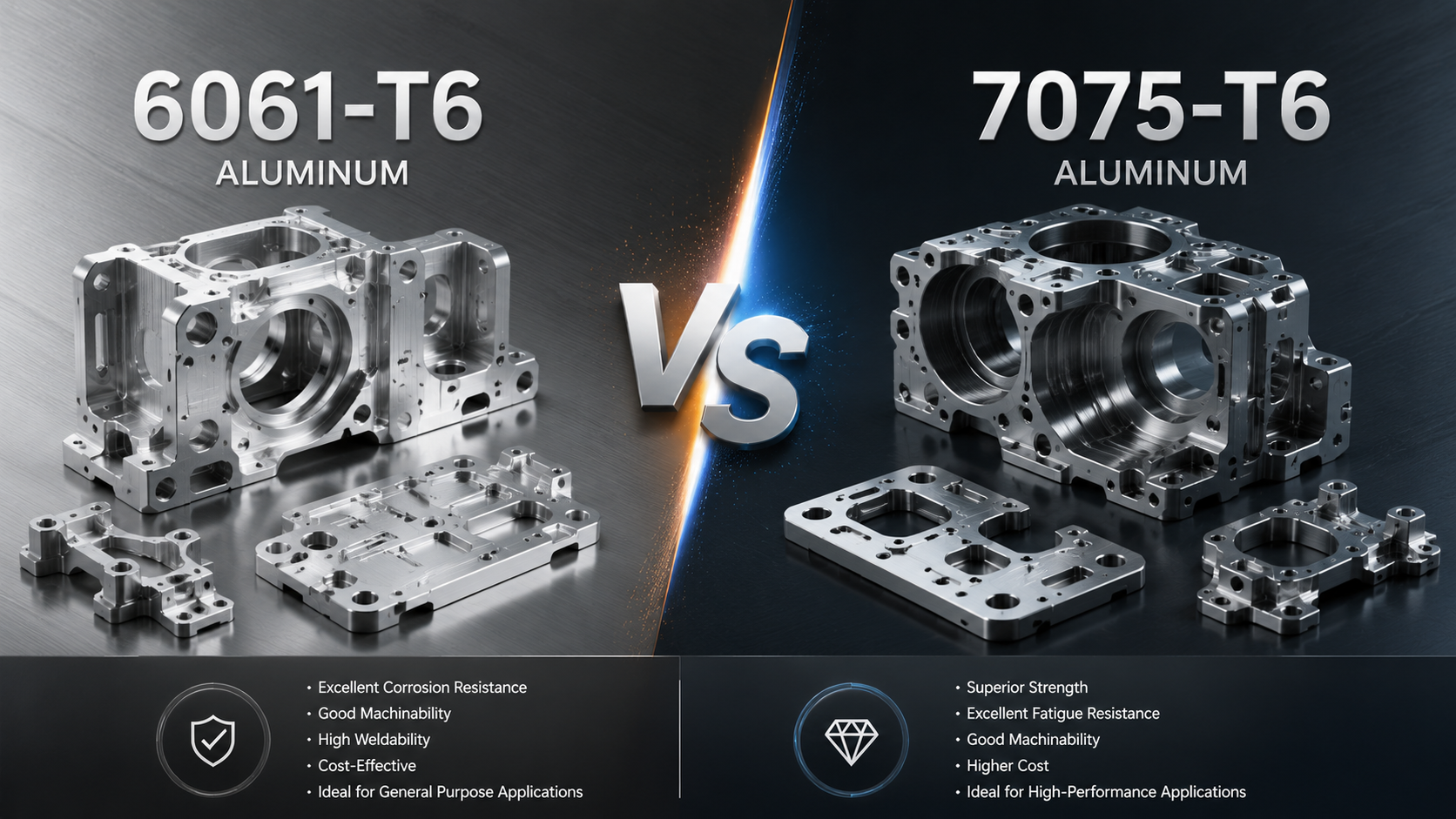
Практическое сравнение сил, жесткость, обрабатываемость, коррозионная стойкость, сварка, анодирование, расходы, и приложение подходит.
Введение
6061-T6 и 7075-T6 — два наиболее часто сравниваемых алюминиевых сплава для прецизионных деталей.. Оба поддаются термической обработке., широко доступен на инженерном складе, и подходит для индивидуальная обработка с ЧПУ. Важное отличие не в том, что один сплав всегда лучше.. Дело в том, что каждый решает свою задачу проектирования..
6061-T6 обычно является более сбалансированным выбором, когда речь идет о коррозионной стойкости., сварка, анодированный внешний вид, доступность, и стоимость всего имеет значение. 7075-T6 или T651 — лучший выбор, когда при принятии решения доминируют грузоподъемность и соотношение прочности к весу.. В этом руководстве объясняется, откуда берутся эти компромиссы и как они влияют на обработку на станках с ЧПУ., отделка, инспекция, и покупка.
6061-T6 против 7075-T6 с первого взгляда
Для многих кронштейнов, корпуса, тарелки, приспособления, и корпуса, 6061-T6 — практический вариант по умолчанию.. Перейти к 7075 когда анализ показывает, что 6061 не может удовлетворить требуемую целевую нагрузку или вес. Не выбирайте 7075 решить проблему с жесткостью: оба сплава имеют почти одинаковый модуль упругости., поэтому деталь с ограниченным прогибом обычно требует изменения геометрии или использования более жесткого материала..
Свойство | 6061-Т6 | 7075-Т6/Т651 | Значение дизайна |
Предельная прочность на растяжение | 310 МПа | 572 МПа | 7075 обеспечивает гораздо более высокую статическую прочность |
Предел текучести | 276 МПа | 503 МПа | 7075 подходит для более высокой нагрузки, детали с ограниченным весом |
Модуль упругости | 68.3 ГПа | 71.7 ГПа | Жесткость почти такая же |
Плотность | 2.70 г/см3 | 2.80 г/см3 | 7075 речь идет о 4% плотнее |
Теплопроводность | 167 Вт/м-К | 130 Вт/м-К | 6061 более эффективно рассеивает тепло |
Коррозионная стойкость | Хороший | Ниже в Т6 | 7075 необходимо более раннее планирование защиты |
Свариваемость плавлением | Хорошо с контролем процесса | Обычно не рекомендуется | 6061 практичный сварной вариант |
Реакция анодирования | Последовательный и косметический | Функциональный, но цвет может отличаться | 6061 проще для деталей, критичных к внешнему виду |
Стоимость материала | Низкий и широко доступный | Выше и зависит от акций | Цитируйте оба, когда сила не имеет решающего значения |
Типичные значения для листа и пластины; форма продукта, толщина, спецификация, и данные поставщика имеют приоритет.
Химический состав и усиление
6061 принадлежит семье Аль-Мг-Си. Во время термической обработки, магний и кремний образуют выделения Mg2Si, которые придают сплаву полезную комбинацию прочности., коррозионная стойкость, и технологичность. 7075 представляет собой сплав Al-Zn-Mg-Cu.. Это цинк- и богатая магнием упрочняющая система обеспечивает гораздо более высокую прочность, в то время как более высокое содержание меди способствует снижению коррозионной стойкости и плохой свариваемости традиционным плавлением..
Элемент | 6061 диапазон (%) | 7075 диапазон (%) | Почему это важно |
Цинк | 0.25 Макс | 5.1-6.1 | Основной усиливающий элемент в 7075 |
Магний | 0.8-1.2 | 2.1-2.9 | Поддерживает дисперсионное затвердевание |
Медь | 0.15-0.40 | 1.2-2.0 | Повышает прочность, но снижает коррозию и свариваемость. |
Кремний | 0.4-0.8 | 0.40 Макс | В сочетании с магнием для укрепления 6061 |
Хром | 0.04-0.35 | 0.18-0.28 | Помогает контролировать структуру зерна |
Пределы состава представляют собой номинальные диапазоны сплавов., не заменяет сертификат на материал, поставляемый с конкретной партией.
Одного номера сплава недостаточно для покупки.. Подтвердить характер, форма продукта, толщина, регулирующая спецификация, и требования к сертификации. JADE-CNC Материалы для обработки с ЧПУ руководство может помочь сформулировать эти проверки перед предложением цены..
Механические и физические свойства
Сила, Усталость, и пластичность
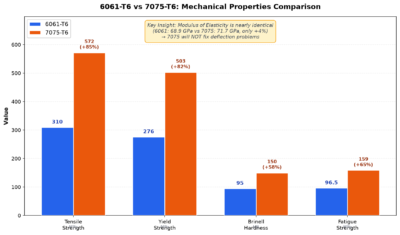
7075-T6 обеспечивает примерно 84% более высокий предел прочности и 82% более высокий предел текучести, чем у типичного листа или пластины 6061-T6. Это существенное преимущество в высоконагруженных деталях., но это не приводит автоматически к улучшению дизайна. Концентрация стресса, спектр усталости, направление зерна, Нагрузки на крепеж, воздействие коррозии, и факторы безопасности по-прежнему влияют на окончательный выбор.
Типичная недвижимость | 6061-Т6/Т651 | 7075-Т6/Т651 | Разница |
Предельная прочность на растяжение | 310 МПа | 572 МПа | 7075 о 84% выше |
Предел текучести | 276 МПа | 503 МПа | 7075 о 82% выше |
Прочность на сдвиг | 207 МПа | 331 МПа | 7075 о 60% выше |
Усталостная прочность | 97 МПа | 159 МПа | 7075 о 64% выше |
Типичное удлинение | 17% | 11% | Зависит от формы и толщины продукта |
Значения типичны, не гарантированные проектные допустимые значения. Используйте применимую спецификацию материала и сертифицированные свойства для окончательных расчетов..
Жесткость, Плотность, и тепловой поток
Модуль упругости отличается примерно 5%. Если пластина слишком сильно прогибается 6061, того же размера 7075 замена не сильно уменьшит прогиб. Увеличение глубины секции, добавление ребер, сокращение неподдерживаемого пролета, или изменение класса материала может иметь гораздо больший эффект.
6061 еще и лучше проводит тепло. Для термически нагруженных корпусов и обработка радиатора на станке с ЧПУ, геометрия плавника, базовая плоскостность, расход воздуха, давление на границе раздела, и обработка поверхности часто имеют большее значение, чем прочность на разрыв.
Типичная недвижимость | 6061-Т6/Т651 | 7075-Т6/Т651 | Инженерное значение |
Твердость по Бринеллю | 95 полупансион | 150 полупансион | 7075 лучше сопротивляется вдавливанию |
Модуль упругости | 68.3 ГПа | 71.7 ГПа | Лишь небольшая разница в жесткости |
Плотность | 2.70 г/см3 | 2.80 г/см3 | Соотношение прочности и веса по-прежнему благоприятствует 7075 |
Теплопроводность | 167 Вт/м-К | 130 Вт/м-К | 6061 обычно лучше для теплового потока |
Показанные термические и механические значения типичны для комнатной температуры..
Обрабатываемость с ЧПУ: Оба хороши, но они ведут себя по-другому
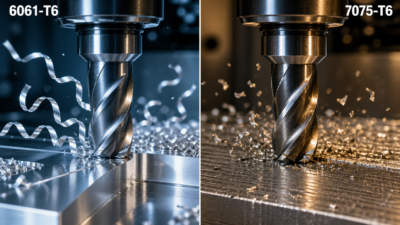
Это заблуждение описывать 7075 просто так же сложно обрабатывать. Оба сплава хорошо обрабатываются современным твердосплавным инструментом.. 6061 мягче и может образовать наросты на кромке, если инструмент трется или плохой отвод стружки. 7075 сложнее, но он часто образует более короткую стружку и может обеспечить превосходную отделку.. Срок службы инструмента и время цикла зависят от геометрии., состояние запаса, возможности шпинделя, подача охлаждающей жидкости, закончиться, и стратегия удаления материала.
Коэффициент обработки | 6061-Т6 | 7075-Т6/Т651 | Практический ответ |
Поведение чипа | Пластичные; может образовывать нарост на краю | Часто короче, более управляемые чипы | Используйте острую алюминиевую геометрию для обоих |
Загрузка инструмента | Может размазываться, если край трется | Более высокая твердость увеличивает режущую нагрузку. | Избегайте общего фиксированного снижения скорости. |
Чистота поверхности | Отлично работает с острыми инструментами | Отлично со стабильным процессом | Контроль биения, перерезка стружки, и охлаждающая жидкость |
Риск искажения | Управляемый; T651 помогает в тарелке | Остаточное напряжение может иметь значение при тяжелом удалении | Грубый, расслабляться, затем доделайте важные функции |
Срок службы инструмента | Обычно благоприятный | Процесс- и зависит от геометрии | Контролируйте износ вместо того, чтобы предполагать фиксированные штрафы |
Практическое руководство по механической обработке
- Используйте острые, полированные режущие кромки и геометрия канавок, предназначенная для алюминия.
- Поддерживайте достаточно высокую нагрузку стружки, чтобы обеспечить чистый рез.; трение способствует нагреву и образованию наростов.
- Обеспечьте эффективную эвакуацию стружки, чтобы повторная резка не повредила поверхность..
- Для тонких стенок или удаления тяжелого материала, разделите черновую и чистовую обработку и дайте детали расслабиться.
- Если важна стабильность размеров, используйте пластину T651 или другую пластину со снятыми напряжениями..
- Рассматривайте скорости и подачи как отправные точки, которые необходимо корректировать в зависимости от диаметра инструмента., счет флейты, вылет, жесткость машины, охлаждающая жидкость, и данные производителя инструментов.
Поставщик с опытом Фрезерование с ЧПУ следует пересмотреть глубокие карманы, тонкие ребра, инструменты с большой досягаемостью, базовая стратегия, и критические допуски перед производством, независимо от того, какой сплав выбран.
Коррозионная стойкость и коррозионное растрескивание под напряжением
6061-T6 обычно обеспечивает лучшую устойчивость к коррозии, чем 7075-T6.. В 7075, компоненты, богатые медью, могут увеличить восприимчивость к точечной коррозии, а состояние Т6 может быть уязвимо к коррозионному растрескиванию под напряжением при длительном растягивающем напряжении в неблагоприятных ориентациях и средах.. Вот почему 7075-T73 или T7351 часто рассматривают, когда важна устойчивость к SCC., даже несмотря на то, что перестаривание снижает прочность.
Фактор воздействия | 6061-Т6 | 7075-Т6/Т651 |
Атмосферное воздействие | В целом хорошо | Более низкое сопротивление; защитить открытые части |
Тенденция к питтингу | Ниже | Выше из-за фаз, богатых медью |
Коррозионное растрескивание под напряжением | Хорошая стойкость в обычных формах продукта | Т6 более чувствителен, особенно при короткопоперечной нагрузке |
Температурный вариант | T6/T651 общий | T73/T7351 улучшает устойчивость к SCC с некоторой потерей прочности. |
Стратегия защиты | Анодирование или покрытие по мере необходимости | Анодирование, покрытие, облицовка, и изоляция заслуживают скорейшего пересмотра |
Избегайте универсальных заявлений о часах эксплуатации в соляном тумане, за исключением случаев, когда сплав, толщина отделки, метод уплотнения, подготовка кромок, геометрия образца, и стандарт приемки определены. Полезный план защиты от коррозии начинается с фактической среды эксплуатации и полной спецификации покрытия..
Свариваемость и соединение
6061-T6 обычно TIG- или сварка MIG, но зона термического воздействия теряет прочность. Поэтому соединение следует проектировать и рассчитывать для состояния сварного шва, а не для исходного значения T6 для основного металла.. Выбор наполнителя зависит от температуры эксплуатации., чувствительность к растрескиванию, пластичность, и послефинишный внешний вид.
Традиционную сварку плавлением 7075-T6 обычно избегают при выполнении строительных работ, поскольку трудно контролировать образование горячих трещин и потерю свойств.. Механическое крепление, клеевое соединение, сварка трением с перемешиванием по аттестованному процессу, или переход на свариваемый сплав может быть более целесообразным.
Фактор сварки | 6061-Т6 | 7075-Т6 |
Обычная сварка плавлением | Обычно сваривается TIG или MIG. | Обычно не рекомендуется для структурных соединений. |
Основная проблема | Потеря прочности в зоне термического влияния | Горячее растрескивание и серьезная потеря имущества |
Выбор наполнителя | ER4043 или ER5356 в зависимости от сервиса и отделки. | Никакой универсальный заполнитель не может сделать структурный шов Т6 эквивалентным. |
Реакция дизайна | Пересчитать состояние сварки | Используйте механическое крепление или измените сплав/маршрут соединения. |
Анодирование и другая обработка поверхности
6061-T6 — надежный выбор для прозрачного, черный, и цветное анодирование типа II. 7075 также может быть анодирован, включая твердое анодирование типа III, но более высокое содержание меди может сделать оксид темнее, а подбор цвета менее предсказуемым.. Для косметических деталей, утвердить репрезентативную пробу и сохранить сплав, характер, предварительная обработка, закончить партию, и текстура поверхности однородная.
Фактор отделки | 6061-Т6 | 7075-Т6/Т651 |
Анодирование типа II | Однородный и подходит для окрашенных косметических покрытий. | Годный к употреблению, но цвет может быть темнее или менее однородным |
Жесткое анодирование типа III. | Хорошо подходит | Хорошо подходит для функциональной защиты от износа. |
Соответствие цветов | Более предсказуемо в контролируемых партиях | Утверждение образцов для работ, критичных к внешнему виду |
Планирование размеров | Обеспечить рост и маскировку покрытия. | То же требование, с повышенным вниманием к реакции сплава |
Обзор варианты отделки поверхности до того, как будет выпущена обработка. Толщина покрытия, маскировка, нити, электрические контактные площадки, сопрягаемые отверстия, и видимые поверхности должны быть указаны на чертеже или в спецификации отделки..
Стоимость и доступность
7075 обычно предполагает существенную премию за сырье, но фиксированный процент ненадежен в разных регионах., складские формы, толщина, сертификаты, и количество заказа. Стоимость обработки также не автоматически 30% или 50% выше. Хорошо продуманный 7075 часть может работать эффективно, пока тонкий, косметический 6061 жилье может быть дорогим из-за установки, контроль искажений, и финишный риск.
Драйвер затрат | 6061-Т6 | 7075-Т6/Т651 |
Сырье | Широкая доступность и более низкая базовая стоимость | Более высокая премия за сплав и меньший выбор акций |
Обработка | Эффективен для прототипов и производства | Время цикла часто одинаковое, но стратегия может измениться |
Отделка | Косметическое анодирование сравнительно предсказуемо. | Контроль отбора проб или нанесения покрытия может увеличить стоимость |
Инспекция | На основе риска рисования | Для приложений с высокой нагрузкой может потребоваться дополнительная сертификация и отслеживаемость. |
Коммерческий риск | Легко заменить стандартные формы | Доступность и сертификация могут повлиять на время выполнения заказа. |
Для прототипов и малообъемная обработка на станке с ЧПУ, сравнить полные предложения, используя одну и ту же версию чертежа, спецификация материала, заканчивать, объем проверки, и требования к доставке. Это дает гораздо более полезное решение, чем просто сравнение цены за килограмм..
Выбор на основе приложения
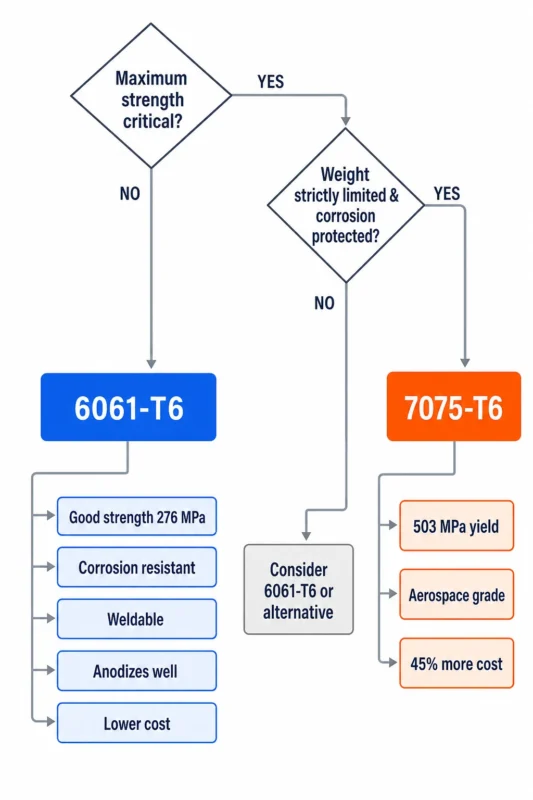
Выбирайте 6061-T6, когда
- Требуемая прочность умеренная и уже соответствует расчетному коэффициенту запаса прочности..
- Коррозионная стойкость, свариваемость, или постоянный анодированный внешний вид имеет значение.
- Часть представляет собой жилье, кронштейн, приспособление, тарелка, ограждение, радиатор, или общий структурный компонент.
- Важны широкая доступность материалов и контроль затрат..
Выберите 7075-T6 или T651, когда
- Предел текучести или усталостная прочность является ограничивающим требованием..
- Вес жестко ограничен, а геометрия не может увеличиться настолько, чтобы ее можно было использовать. 6061.
- Деталь не будет зависеть от традиционной сварки плавлением..
- Можно контролировать защиту от коррозии и отслеживаемость материалов..
- Применение предполагает использование высоконагруженных светильников., автоспорт, робототехника, или прецизионная аэрокосмическая обработка.
Когда другой сплав или процесс подходит лучше
Приоритет проекта | Обычно выбирают | Причина |
Сбалансированная стоимость, коррозия, сварка, и внешний вид | 6061-Т6 | Самый широкий спектр производственных возможностей |
Максимальная статическая прочность при небольшом весе | 7075-Т6/Т651 | Гораздо более высокая текучесть и прочность на разрыв |
Отклонение – это вид отказа | Сначала редизайн | Оба сплава имеют практически одинаковый модуль упругости. |
Морской лист или формованный корпус | Рассмотрим 5052-H32 | Улучшенная формуемость и устойчивость к коррозии |
Косметическая экструзия | Рассмотрим 6063-T6 | Отличная реакция на экструзию и анодирование |
Толстый, высокопрочная аэрокосмическая плита с проблемами SCC | Рассмотрим 7050-T7451 | Улучшенная производительность SCC с коротким поперечным сечением |
Очень большой объем и сложная геометрия. | Оценить кастинг | Оснастка может снизить себестоимость единицы продукции после достижения безубыточности. |
Рисунок, Покупка, и инспекционные проверки
Выбор материала должен завершаться четким чертежом и спецификацией покупки.. Расплывчатые примечания, такие как «AL 7075».’ оставляет слишком много места для интерпретации и может создать проблемы с характером, складская форма, направление зерна, сертификация, и закончить ответ.
- Укажите сплав, характер, форма продукта, и руководящие стандарты материалов.
- Определите, требуется ли пластина для снятия напряжений T651/T7351..
- Государственный заводской сертификат, отслеживание партии, или аэрокосмической документации, прежде чем цитировать.
- Определите требования к направлению волокон для высоконагруженных или критически важных деталей..
- Маркировка косметических поверхностей, тип анодирования, цвет, толщина, уплотнение, и маскировочные зоны.
- Устанавливайте жесткие допуски только на функциональные особенности и четко определяйте исходные данные..
- Согласовать метод проверки, план выборки, и отчетность по критическим параметрам.
JADE-CNC может координировать проверку материалов с Проверка ЧПУ Итак, выбор сплава, план обработки, заканчивать, и метод измерения рассматриваются как один процесс, а не как отдельные этапы закупки..
Как JADE-CNC поддерживает 6061 и 7075 Проекты
JADE-CNC обрабатывает оба 6061 и 7075 для прототипов и серийных деталей. Инженерный обзор фокусируется на чертеже, состояние запаса, геометрия, стек допусков, обработка поверхности, план проверки, и требования к приложению. Это позволяет рекомендациям по материалам отражать фактическую деталь, а не полагаться на общий рейтинг сплавов..
- Проверка материала и состояния перед предложением
- 3-ось, 4-ось, и 5-осевое фрезерование плюс токарная обработка с ЧПУ
- Стратегии обработки тонких стенок, глубокие карманы, прецизионные отверстия, и косметические лица
- Анодирование, дробеструйная обработка, чистка, координация покрытия, и обзор маскировки
- Проверка размеров и составление отчетов на основе требований к чертежам
- Прототип, малообъемный, и повторная поддержка производства
Для сравнения 6061-T6 и 7075-T6 по конкретному компоненту, пришлите 3D модель, 2D рисунок, количество, заканчивать, и условия обслуживания JADE-CNC и запросить обзор обработки.
Часто задаваемые вопросы
Общие инженерные вопросы
Всегда ли 7075-T6 сильнее 6061-T6??
Для типичных листов и пластин T6, 7075 имеет гораздо более высокую текучесть и прочность на разрыв. Это не делает его жестче на тот же предел., потому что модули упругости практически идентичны.
Может ли 6061-T6 заменить 7075-T6 для снижения стоимости??
Только после нагрузки, нестроевой наряд, концентрации напряжений, среда, и коэффициент безопасности были проверены. Замена закупок никогда не должна обходить инженерное одобрение..
Какой сплав легче обрабатывать на станке с ЧПУ?
Обе машины хорошо. 6061 мягче, но более склонен к образованию наростов на краях; 7075 сложнее, но часто дает более короткую стружку. Геометрия детали и контроль процесса обычно имеют большее значение, чем простой рейтинг обрабатываемости..
Может ли 7075-T6 быть анодирован в цвет??
Да, но результат может быть темнее и менее последовательным, чем 6061. Для косметических работ, используйте репрезентативные образцы и определите приемлемый цветовой диапазон, а не предполагайте идеальное визуальное соответствие.
Подходит ли 7075-T6 для морского использования??
T6 требует тщательной защиты и не является случайным стандартом для длительного воздействия морской среды.. Обзор риска SCC, покрытие, изоляция из разнородных металлов, направление зерна, и какой сплав более подходит T73/T7351 или другой?.
Зачем указывать T651 вместо T6 для обработанной пластины??
T651 включает снятие напряжений путем растяжения после термообработки раствора.. Его часто предпочитают для пластин, поскольку снижение остаточных напряжений может улучшить стабильность размеров при тяжелой механической обработке..
Заключение
Выбирайте 6061-T6, когда проекту необходим надежный баланс сил., коррозионная стойкость, сварка, отделка, доступность, и стоимость. Выбирайте 7075-T6 или T651, если необходима более высокая прочность и конструкция способна противостоять коррозии., присоединение, отделка, и ограничения при покупке. Если жесткость контролирует конструкцию, изменение с 6061 к 7075 редко будет достаточно само по себе.
Наиболее оправданное решение по материалу сочетает структурный анализ с формой продукта., характер, стратегия обработки, заканчивать, инспекция, сертификация, и сервисная среда. Это также информация, которая необходима поставщику оборудования для точного ценового предложения детали..
Статьи по теме 6061-T6
- 6061-Полное руководство по обработке алюминия T6 с ЧПУ
- 6061-T6 против 7075-T6 Алюминий: Сила, Расходы & Обрабатываемость
- 6061-T6 Анодирование алюминия: Типы, Цвета, Толщина & Правила проектирования
- 6061-T6 Параметры обработки с ЧПУ: Скорости, Ленты, Оснастка & Управление процессом
- 6061-T6 против ADC12 Алюминий: Обработка с ЧПУ или литье под давлением?
- 6061-T6 Обработка на станке с ЧПУ Рекомендации DFM: Правила проектирования & Контрольный список
- 6061-Свойства алюминия T6: Механический, Термальный & Химические данные
Источники данных о материалах
Диапазоны состава и плотности можно проверить по Бирюзовые листы Алюминиевой Ассоциации. Типичные свойства листов и пластин в этом сравнении соответствуют Кайзер Алюминий 6061 технические данные и Кайзер Алюминий 7075 технические данные. Окончательные расчетные значения должны быть основаны на действующих спецификациях и сертифицированном материале для фактической формы и толщины продукта..

Лео Лян, Основатель, лучший партнер R&Д
Основатель JADE-CNC Лео, который обладает более чем двадцатилетним опытом работы в отрасли, Лео начал свою карьеру в качестве ученика и практиковал свои навыки в области обработки поверхностей и обработки на станках с ЧПУ..