



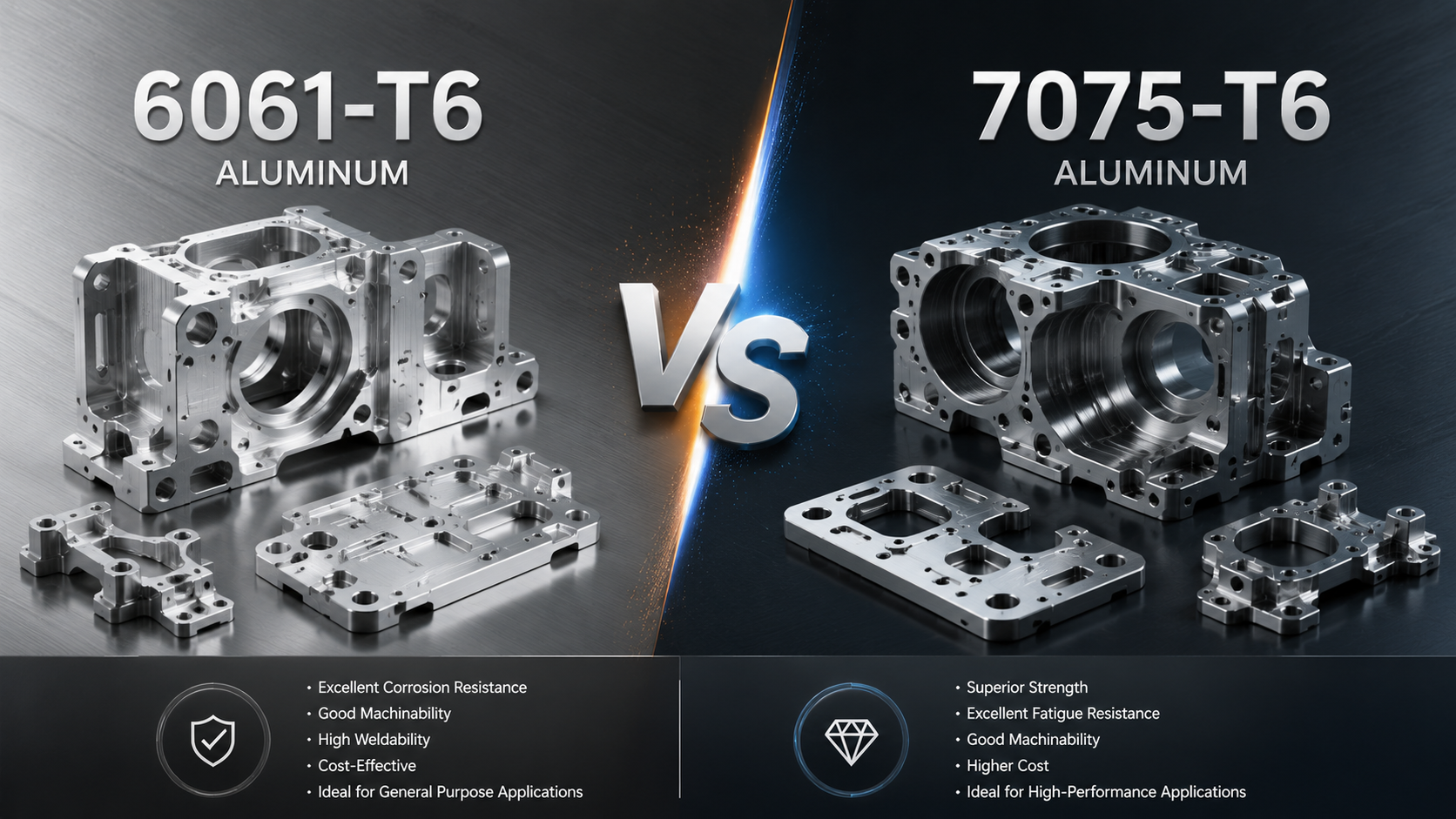
Gücün pratik bir karşılaştırması, sertlik, işlenebilirlik, korozyon direnci, kaynak, anotlama, maliyet, ve uygulama uygunluğu.
giriiş
6061-T6 ve 7075-T6, hassas parçalar için en sık karşılaştırılan alüminyum alaşımlarından ikisidir. Her ikisi de ısıl işleme tabi tutulabilir, mühendislik stoklarında yaygın olarak mevcuttur, ve için uygun özel CNC işleme. Önemli fark, bir alaşımın evrensel olarak daha iyi olması değildir.. Her biri farklı bir tasarım problemini çözüyor.
6061-T6 genellikle korozyon direnci söz konusu olduğunda daha dengeli bir seçimdir., kaynak, anodize görünüm, kullanılabilirlik, ve her şeyin maliyeti. 7075-Kararda yük kapasitesi ve güç-ağırlık oranının hakim olduğu durumlarda T6 veya T651 daha güçlü bir seçimdir. Bu kılavuz, bu ödünleşimlerin nereden geldiğini ve CNC işlemeyi nasıl etkilediğini açıklamaktadır, bitirme, denetleme, ve satın alma.
6061-Bir Bakışta T6 ve 7075-T6
Birçok parantez için, konutlar, plakalar, demirbaşlar, ve muhafazalar, 6061-T6 pratik varsayılandır. Şuraya taşı: 7075 analiz bunu gösterdiğinde 6061 gerekli yük veya ağırlık hedefini karşılayamıyor. seçme 7075 sertlik problemini çözmek için: iki alaşım neredeyse aynı elastik modüle sahiptir, dolayısıyla sapmanın sınırlı olduğu bir parçanın genellikle geometri değişikliğine veya daha sert bir malzemeye ihtiyacı vardır.
Mülk | 6061-T6 | 7075-T6/T651 | Tasarım uygulaması |
Nihai çekme mukavemeti | 310 MPa | 572 MPa | 7075 çok daha yüksek statik güç sağlar |
Verim gücü | 276 MPa | 503 MPa | 7075 daha yüksek yüke uygundur, ağırlığı sınırlı parçalar |
Elastik modül | 68.3 not ortalaması | 71.7 not ortalaması | Sertlik neredeyse aynı |
Yoğunluk | 2.70 g/cm3 | 2.80 g/cm3 | 7075 yaklaşık 4% daha yoğun |
Isı iletkenliği | 167 W/m-K | 130 W/m-K | 6061 ısıyı daha etkili bir şekilde dağıtır |
Korozyon direnci | İyi | T6'da daha düşük | 7075 daha erken koruma planlamasına ihtiyaç var |
Füzyon kaynaklanabilirliği | Proses kontrolü konusunda iyi | Genellikle tavsiye edilmez | 6061 pratik kaynaklı seçenektir |
Eloksal tepkisi | Tutarlı ve kozmetik dostu | Fonksiyonel, ama renk değişebilir | 6061 görünüm açısından kritik parçalar için daha kolaydır |
Malzeme maliyeti | Daha düşük ve yaygın olarak mevcut | Daha yüksek ve hisse senedine bağlı | Gücün belirleyici olmadığı durumlarda her ikisini de alıntılayın |
Sac ve plaka için tipik değerler; ürün formu, kalınlık, Şartname, ve tedarikçi verileri önceliklidir.
Kimyasal Bileşimi ve Güçlendirilmesi
6061 Al-Mg-Si ailesine aittir. Isıl işlem sırasında, magnezyum ve silikon, alaşıma kullanışlı dayanıklılık kombinasyonunu veren Mg2Si çökeltilerini oluşturur, korozyon direnci, ve üretilebilirlik. 7075 bir Al-Zn-Mg-Cu alaşımıdır. Çinko- ve magnezyum açısından zengin güçlendirme sistemi çok daha yüksek mukavemet üretir, yüksek bakır içeriği ise daha düşük korozyon direncine ve zayıf geleneksel ergitme kaynaklanabilirliğine katkıda bulunur.
Öğe | 6061 menzil (%) | 7075 menzil (%) | Neden önemli? |
Çinko | 0.25 maksimum | 5.1-6.1 | Birincil güçlendirme unsuru 7075 |
Magnezyum | 0.8-1.2 | 2.1-2.9 | Yağış sertleşmesini destekler |
Bakır | 0.15-0.40 | 1.2-2.0 | Mukavemeti artırır ancak korozyonu ve kaynaklanabilirliği azaltır |
Silikon | 0.4-0.8 | 0.40 maksimum | Güçlendirmek için magnezyum ile birleşir 6061 |
Krom | 0.04-0.35 | 0.18-0.28 | Tahıl yapısını kontrol etmeye yardımcı olur |
Bileşim sınırları nominal alaşım aralıklarıdır, belirli bir partiyle birlikte verilen malzeme sertifikasının yerine geçmez.
Alaşım numarası tek başına satın alma için yeterli değil. Öfkeyi onayla, ürün formu, kalınlık, geçerli spesifikasyon, ve sertifikasyon gereksinimleri. JADE-CNC’ler CNC işleme malzemeleri rehberlik, teklif vermeden önce bu kontrollerin çerçevelenmesine yardımcı olabilir.
Mekanik ve Fiziksel Özellikler
Kuvvet, Tükenmişlik, ve Süneklik
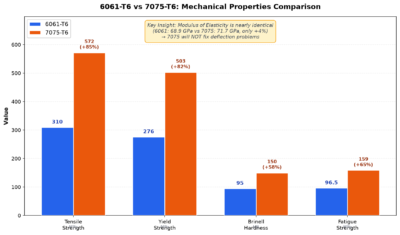
7075-T6 kabaca sağlar 84% daha yüksek nihai çekme mukavemeti ve 82% tipik 6061-T6 levha veya levhadan daha yüksek akma dayanımı. Bu, yüksek yüklü parçalarda anlamlı bir avantajdır, ancak otomatik olarak daha iyi bir tasarıma dönüşmez. Stres konsantrasyonu, yorulma spektrumu, tane yönü, bağlantı elemanı yükleri, korozyona maruz kalma, ve güvenlik faktörleri hala nihai seçimi kontrol ediyor.
Tipik özellik | 6061-T6/T651 | 7075-T6/T651 | Fark |
Nihai çekme mukavemeti | 310 MPa | 572 MPa | 7075 hakkında 84% daha yüksek |
Verim gücü | 276 MPa | 503 MPa | 7075 hakkında 82% daha yüksek |
Kesme mukavemeti | 207 MPa | 331 MPa | 7075 hakkında 60% daha yüksek |
Yorulma mukavemeti | 97 MPa | 159 MPa | 7075 hakkında 64% daha yüksek |
Tipik uzama | 17% | 11% | Ürün formuna ve kalınlığına göre değişiklik gösterir |
Değerler tipiktir, garanti edilmeyen tasarım izinleri. Nihai hesaplamalar için geçerli malzeme özelliklerini ve sertifikalı özellikleri kullanın.
Sertlik, Yoğunluk, ve Isı Akışı
Elastik modül sadece yaklaşık olarak farklılık gösterir. 5%. Plaka çok fazla bükülürse 6061, aynı boyutta 7075 değiştirme sapmayı fazla azaltmaz. Bölüm derinliğini artırma, kaburga ekleme, desteklenmeyen bir açıklığın kısaltılması, veya malzeme sınıfını değiştirmek çok daha büyük bir etkiye sahip olabilir.
6061 ayrıca ısıyı daha iyi iletir. Termal olarak yüklenen muhafazalar için ve ısı emici CNC işleme, kanat geometrisi, taban düzlüğü, hava akışı, arayüz basıncı, ve yüzey işlemi genellikle çekme mukavemetinden daha önemlidir.
Tipik özellik | 6061-T6/T651 | 7075-T6/T651 | Mühendislik anlamı |
Brinell sertliği | 95 HB | 150 HB | 7075 girintiye daha iyi direnir |
Elastik modül | 68.3 not ortalaması | 71.7 not ortalaması | Sadece küçük bir sertlik farkı |
Yoğunluk | 2.70 g/cm3 | 2.80 g/cm3 | Güç/ağırlık hâlâ avantajlı 7075 |
Isı iletkenliği | 167 W/m-K | 130 W/m-K | 6061 genellikle ısı akışı açısından daha iyidir |
Gösterilen termal ve mekanik değerler oda sıcaklığındaki tipik değerlerdir.
CNC İşlenebilirlik: İkisi de İyi, ama Farklı Davranıyorlar
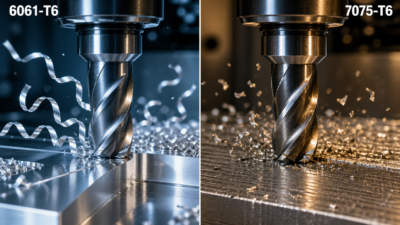
Açıklamak yanıltıcıdır 7075 işlenmesi bir o kadar zor. Her iki alaşım da modern karbür takımlarla iyi işlenir. 6061 daha yumuşaktır ve takımın sürtünmesi veya talaş tahliyesinin zayıf olması durumunda talaş birikmesi oluşabilir. 7075 daha zor, ancak genellikle daha kısa talaşlar oluşturur ve mükemmel bir yüzey elde edilebilir. Takım ömrü ve çevrim süresi geometriye bağlıdır, stok durumu, iş mili kapasitesi, soğutma sıvısı dağıtımı, salgı, ve malzeme kaldırma stratejisi.
İşleme faktörü | 6061-T6 | 7075-T6/T651 | Pratik yanıt |
Çip davranışı | Sünekler; yerleşik kenar oluşturabilir | Genellikle daha kısa, daha yönetilebilir çipler | Her ikisi için de keskin alüminyum geometri kullanın |
Takım yükleme | Kenar sürtünürse lekelenebilir | Daha yüksek sertlik kesme yükünü artırır | Genel sabit hız azaltımlarından kaçının |
Yüzey kalitesi | Keskin aletlerle mükemmel | İstikrarlı bir süreçle mükemmel | Kontrol salgısı, talaş yeniden kesme, ve soğutma sıvısı |
Bozulma riski | Yönetilebilir; T651 tabakta yardımcı oluyor | Ağır kaldırma işlerinde artık gerilim önemli olabilir | Kaba, rahatlamak, ardından kritik özellikleri tamamlayın |
Takım ömrü | Genellikle olumlu | İşlem- ve geometriye bağlı | Sabit bir ceza varsaymak yerine aşınmayı izleyin |
Pratik İşleme Kılavuzu
- Keskin kullanın, alüminyuma yönelik cilalı kesici kenarlar ve kanal geometrisi.
- Talaş yükünü temiz kesmeye yetecek kadar yüksek tutun; sürtünme ısıyı ve kenarda birikmeyi artırır.
- Yeniden kesmenin yüzeye zarar vermemesi için etkili talaş tahliyesi sağlayın.
- İnce duvarlar veya ağır malzemelerin kaldırılması için, kaba işleme ve ince talaş işlemeyi ayırın ve parçanın gevşemesine izin verin.
- Boyutsal kararlılığın önemli olduğu durumlarda T651 veya gerilimi azaltılmış başka bir plaka koşulunu kullanın.
- Hızları ve ilerlemeleri takım çapına göre ayarlanması gereken başlangıç noktaları olarak değerlendirin, flüt sayısı, dışarı çıkma, makine sertliği, soğutucu, ve takım üreticisi verileri.
Deneyimli bir tedarikçi CNC frezeleme derin cepleri gözden geçirmeli, ince kaburga, uzun erişimli aletler, veri stratejisi, ve üretim öncesi kritik toleranslar, Hangi alaşımın seçildiğine bakılmaksızın.
Korozyon Direnci ve Gerilim-Korozyon Çatlaması
6061-T6 genellikle 7075-T6'ya göre daha iyi korozyon direnci sunar. İçinde 7075, bakır açısından zengin bileşenler çukurlaşma duyarlılığını artırabilir, ve T6 durumu, uygun olmayan yönlerde ve ortamlarda sürekli çekme gerilimi altında gerilim-korozyon çatlamasına karşı savunmasız olabilir. Bu nedenle SCC direnci önemli olduğunda genellikle 7075-T73 veya T7351 dikkate alınır., aşırı yaşlanma gücü azaltsa da.
Pozlama faktörü | 6061-T6 | 7075-T6/T651 |
Atmosfere maruz kalma | Genel olarak iyi | Daha düşük direnç; açıktaki parçaları koruyun |
Çukurlaşma eğilimi | Daha düşük | Bakır açısından zengin fazlar nedeniyle daha yüksek |
Gerilim-korozyon çatlaması | Yaygın ürün formlarında iyi direnç | T6 daha hassastır, özellikle kısa enine yüklemede |
Temperleme seçeneği | T6/T651 ortak | T73/T7351, bir miktar güç kaybıyla birlikte SCC direncini artırır |
Koruma stratejisi | Gerektiği gibi eloksal veya kaplama | Eloksal, kaplama, kaplama, ve izolasyon erken incelemeyi hak ediyor |
Alaşım olmadığı sürece evrensel tuz püskürtme saati iddialarından kaçının, bitiş kalınlığı, sızdırmazlık yöntemi, kenar hazırlığı, numune geometrisi, ve kabul standardının tümü tanımlanmıştır. Yararlı bir korozyon planı, gerçek servis ortamı ve tam kaplama spesifikasyonuyla başlar.
Kaynaklanabilirlik ve Birleştirme
6061-T6 genellikle TIG'dir- veya MIG kaynaklı, ancak ısıdan etkilenen bölge gücünü kaybeder. Bu nedenle bağlantı, orijinal T6 ana metal değeri yerine kaynak durumuna göre tasarlanmalı ve hesaplanmalıdır.. Dolgu maddesi seçimi servis sıcaklığına bağlıdır, çatlama hassasiyeti, süneklik, ve bitiş sonrası görünüm.
Sıcak çatlama ve özellik kaybının kontrol edilmesi zor olduğundan, yapısal işlerde 7075-T6'nın geleneksel ergitme kaynağından genellikle kaçınılır.. Mekanik sabitleme, yapıştırıcı yapıştırma, Nitelikli bir proses altında sürtünme karıştırma kaynağı, veya kaynaklanabilir bir alaşımda değişiklik yapılması daha uygun olabilir.
Kaynak faktörü | 6061-T6 | 7075-T6 |
Geleneksel ergitme kaynağı | Genellikle TIG veya MIG ile kaynaklanır | Genellikle yapısal derzler için önerilmez |
Ana endişe | Isıdan etkilenen bölgede mukavemet kaybı | Sıcak çatlama ve ciddi mal kaybı |
Dolgu seçimi | Servis ve kaplamaya bağlı olarak ER4043 veya ER5356 | Hiçbir evrensel dolgu maddesi T6 yapısal derz eşdeğeri olamaz |
Tasarım yanıtı | Kaynaklı durumu yeniden hesaplayın | Mekanik sabitleme kullanın veya alaşım/birleştirme rotasını değiştirin |
Eloksal ve Diğer Yüzey İşlemleri
6061-T6 netlik için güvenilir bir seçimdir, siyah, ve renkli Tip II eloksal. 7075 ayrıca anodize edilebilir, Tip III sert eloksal dahil, ancak daha yüksek bakır içeriği oksidi daha koyu hale getirebilir ve renk eşleşmesini daha az öngörülebilir hale getirebilir. Kozmetik parçalar için, temsili bir numuneyi onaylayın ve alaşımı saklayın, öfke, ön arıtma, toplu işi bitir, ve yüzey dokusu tutarlı.
Bitirme faktörü | 6061-T6 | 7075-T6/T651 |
Tip II eloksal | Tekdüze ve boyalı kozmetik yüzeyler için uygundur | Kullanılabilir, ancak renk daha koyu veya daha az tekdüze olabilir |
Tip III sert eloksal | Çok uygun | Fonksiyonel aşınma koruması için çok uygundur |
Renk eşleştirme | Kontrollü partiler arasında daha öngörülebilir | Görünüm açısından kritik işler için numuneleri onaylayın |
Boyutsal planlama | Kaplama büyümesine ve maskelemeye izin verin | Aynı gereksinim, alaşım tepkisine daha fazla dikkat edilerek |
Gözden geçirmek yüzey bitirme seçenekleri işleme yayınlanmadan önce. Kaplama kalınlığı, maskeleme, Konular, elektriksel temas alanları, çiftleşme delikleri, ve görünür yüzlerin tümü çizimde veya bitiş spesifikasyonunda tanımlanmalıdır..
Maliyet ve Kullanılabilirlik
7075 genellikle önemli miktarda hammadde primi taşır, ancak bölgeler arasında sabit bir yüzde güvenilir değildir, stok formları, kalınlıklar, sertifikalar, ve sipariş miktarları. İşleme maliyeti de otomatik olarak düşmez 30% veya 50% daha yüksek. İyi tasarlanmış 7075 parça verimli bir şekilde çalışabilir, inceyken, kozmetik 6061 kurulum nedeniyle konut pahalı olabilir, distorsiyon kontrolü, ve riski bitirme.
Maliyet etkeni | 6061-T6 | 7075-T6/T651 |
Ham stok | Geniş kullanılabilirlik ve daha düşük temel maliyet | Daha yüksek alaşım primi ve daha az stok seçeneği |
İşleme | Prototipler ve üretim için verimli | Döngü süresi genellikle benzerdir, ancak strateji değişebilir |
Bitirme | Kozmetik eloksallama nispeten öngörülebilir | Numune alma veya kaplama kontrolleri maliyeti artırabilir |
Denetleme | Çekme riskine dayalı | Yüksek yüklü uygulamalar daha fazla sertifikasyon ve izlenebilirlik gerektirebilir |
Ticari risk | Stok formlarının değiştirilmesi kolaydır | Kullanılabilirlik ve sertifikasyon teslim süresini etkileyebilir |
Prototipler için ve düşük hacimli CNC işleme, aynı çizim revizyonunu kullanarak tüm teklifleri karşılaştırın, malzeme özellikleri, sona ermek, muayene kapsamı, ve teslimat zorunluluğu. Bu, yalnızca kilogram başına fiyatı karşılaştırmaktan çok daha yararlı bir karar verir.
Uygulama Bazlı Seçim
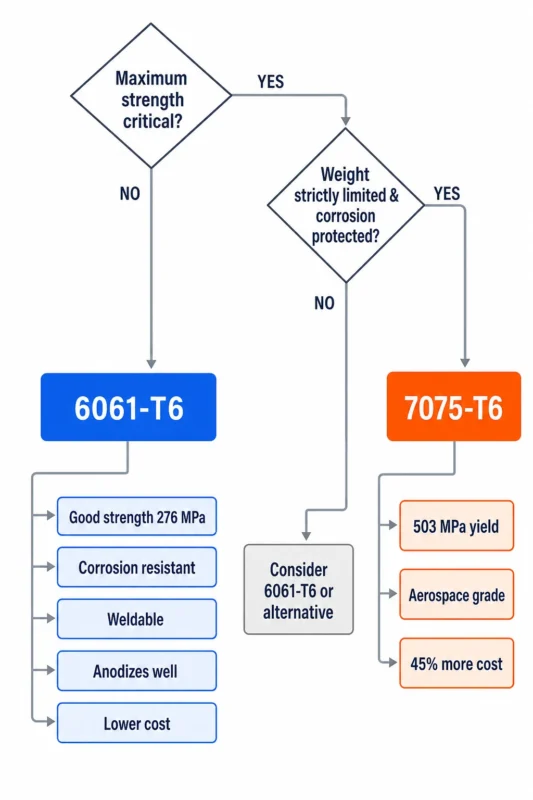
Ne zaman 6061-T6'yı seçin
- Gerekli güç orta düzeydedir ve tasarım güvenlik faktörünü halihazırda karşılamaktadır.
- Korozyon direnci, kaynaklanabilirlik, veya tutarlı bir anodize görünüm önemlidir.
- Parça bir muhafazadır, braket, fikstür, plaka, muhafaza, soğutucu, veya genel yapısal bileşen.
- Geniş malzeme kullanılabilirliği ve maliyet kontrolü önemlidir.
7075-T6 veya T651'i Seçin
- Akma mukavemeti veya yorulma mukavemeti sınırlayıcı gerekliliktir.
- Ağırlık sıkı bir şekilde sınırlandırılmıştır ve geometri kullanılacak kadar artamaz 6061.
- Parça geleneksel ergitme kaynağına dayanmayacak.
- Korozyon koruması ve malzeme izlenebilirliği kontrol edilebilir.
- Uygulama yüksek yüklü armatürleri içerir, motor sporları, robotik, veya hassas havacılık işleme.
Başka Bir Alaşım veya Proses Daha İyi Uyduğunda
Proje önceliği | Genellikle seç | Sebep |
Dengeli maliyet, korozyon, kaynak, ve görünüm | 6061-T6 | En geniş kapsamlı üretim uyumu |
Düşük ağırlıkta maksimum statik güç | 7075-T6/T651 | Çok daha yüksek akma ve çekme mukavemeti |
Sapma başarısızlık modudur | Önce yeniden tasarlayın | Her iki alaşım da neredeyse aynı elastik modüle sahiptir |
Deniz levhası veya oluşturulmuş muhafaza | 5052-H32'yi düşünün | Daha iyi şekillendirilebilirlik ve korozyon direnci |
Kozmetik ekstrüzyon | 6063-T6'yı düşünün | Mükemmel ekstrüzyon ve eloksal tepkisi |
Kalın, SCC endişelerine sahip yüksek mukavemetli havacılık plakası | 7050-T7451'i düşünün | Daha iyi kısa çapraz SCC performansı |
Çok yüksek hacim ve karmaşık geometri | Dökümü değerlendirin | Takımlama, başabaş noktasından sonra birim maliyeti azaltabilir |
Çizim, Satın alma, ve Muayene Kontrolleri
Malzeme seçimi net bir çizim ve satın alma spesifikasyonuyla bitmelidir. 'AL 7075' gibi belirsiz notlar’ Yoruma çok fazla yer bırakır ve öfkeyle ilgili sorunlar yaratabilir, stok formu, tane yönü, sertifikasyon, ve yanıtı bitir.
- Alaşımı belirtin, öfke, ürün formu, ve geçerli malzeme standardı.
- T651/T7351 gerilimi giderilmiş plakanın gerekli olup olmadığını belirleyin.
- Devlet değirmen sertifikası, parti-izlenebilirlik, veya havacılık ve uzay dokümantasyonu ihtiyaçları için teklif vermeden önce.
- Yüksek yüklü veya yorulma açısından kritik parçalar için tane yönü gereksinimlerini tanımlayın.
- Kozmetik yüzeyleri işaretleyin, eloksal tipi, renk, kalınlık, sızdırmazlık, ve maskeleme alanları.
- Yalnızca işlevsel özelliklere sıkı toleranslar koyun ve verileri net bir şekilde tanımlayın.
- Denetim yöntemi üzerinde anlaşmaya varın, örnekleme planı, ve kritik boyutlar için raporlama.
JADE-CNC malzeme incelemesini koordine edebilir CNC denetimi yani alaşım seçimi, işleme planı, sona ermek, ve ölçüm yöntemi ayrı satın alma adımlarından ziyade tek bir süreç olarak kabul edilir.
JADE-CNC Nasıl Desteklenir? 6061 Ve 7075 Projeler
JADE-CNC makineleri hem 6061 Ve 7075 prototipler ve üretim parçaları için. Mühendislik incelemesi çizime odaklanır, stok durumu, geometri, tolerans yığını, yüzey kalitesi, denetim planı, ve başvuru koşulları. Bu, malzeme önerisinin genel bir alaşım sıralamasına güvenmek yerine gerçek parçayı yansıtmasına olanak tanır.
- Teklif öncesi malzeme ve öfke incelemesi
- 3-eksen, 4-eksen, ve 5 eksenli frezeleme artı CNC tornalama
- İnce duvarlar için işleme stratejileri, derin cepler, hassas delikler, ve kozmetik yüzler
- Eloksal, boncuk patlatma, fırçalama, kaplama koordinasyonu, ve maskeleme incelemesi
- Çizim gereksinimlerine göre boyutsal inceleme ve raporlama
- Prototip, düşük hacimli, ve üretim desteğini tekrarla
Belirli bir bileşen için 6061-T6 ve 7075-T6'yı karşılaştırmak için, 3D modeli gönder, 2çizim, miktar, sona ermek, ve JADE-CNC'ye hizmet koşulları ve işleme incelemesi talep edin.
Sıkça Sorulan Sorular
Ortak Mühendislik Soruları
7075-T6 her zaman 6061-T6'dan daha mı güçlüdür??
Tipik T6 levha ve levha için, 7075 çok daha yüksek akma ve çekme mukavemetine sahiptir. Bu onu aynı oranda daha sert yapmaz, çünkü elastik modüller neredeyse aynı.
Maliyeti azaltmak için 6061-T6, 7075-T6'nın yerini alabilir mi??
Sadece yüklerden sonra, yorulma görevi, stres konsantrasyonları, çevre, ve güvenlik faktörü kontrol edildi. Bir satın alma ikamesi hiçbir zaman mühendislik onayını atlamamalıdır.
Hangi alaşımın CNC makinesinde işlenmesi daha kolaydır?
Her iki makine de iyi. 6061 daha yumuşaktır ancak talaş birikmesine daha yatkındır; 7075 daha zordur ancak çoğunlukla daha kısa talaşlar üretir. Parça geometrisi ve süreç kontrolü genellikle basit işlenebilirlik sıralamasından daha önemlidir.
7075-T6 renkli eloksallanabilir mi??
Evet, ancak sonuç şundan daha koyu ve daha az tutarlı olabilir: 6061. Kozmetik işler için, Mükemmel bir görsel eşleşme varsaymak yerine temsili örnekler kullanın ve kabul edilebilir bir renk aralığı tanımlayın.
7075-T6 denizde kullanıma uygun mudur??
T6 dikkatli bir koruma gerektirir ve sürekli deniz maruziyeti için sıradan bir varsayılan değildir. SCC riskini inceleyin, kaplama, farklı metallerden izolasyon, tane yönü, ve T73/T7351'in mi yoksa başka bir alaşımın mı daha uygun olduğu.
İşlenmiş bir plaka için neden T6 yerine T651 belirtilmelidir??
T651, çözelti ısıl işleminden sonra gerdirme yoluyla gerilim gidermeyi içerir. Plaka için sıklıkla tercih edilir çünkü azaltılmış artık gerilim, ağır işleme sırasında boyutsal stabiliteyi geliştirebilir.
Çözüm
Projenin güvenilir bir güç dengesine ihtiyacı olduğunda 6061-T6'yı seçin, korozyon direnci, kaynak, bitirme, kullanılabilirlik, ve maliyet. Daha yüksek mukavemet gerektiğinde ve tasarımın korozyona dayanabileceği durumlarda 7075-T6 veya T651'i seçin, katılmak, bitirme, ve satın alma kısıtlamaları. Eğer sertlik tasarımı kontrol ediyorsa, den değişiyor 6061 ile 7075 nadiren tek başına yeterli olacaktır.
En savunulabilir malzeme kararı yapısal analizi ürün formuyla birleştirir, öfke, işleme stratejisi, sona ermek, denetleme, sertifikasyon, ve hizmet ortamı. Bu aynı zamanda bir işleme tedarikçisinin parçayı doğru bir şekilde teklif etmesi için ihtiyaç duyduğu bilgidir.
İlgili 6061-T6 Makaleleri
- 6061-T6 Alüminyum CNC İşleme Komple Kılavuz
- 6061-T6 ve 7075-T6 Alüminyum: Kuvvet, Maliyet & İşlenebilirlik
- 6061-T6 Alüminyum Eloksal: Türler, Renkler, Kalınlık & Tasarım Kuralları
- 6061-T6 CNC İşleme Parametreleri: Hızlar, Yayınlar, Takımlama & Proses Kontrolü
- 6061-T6 ve ADC12 Alüminyum: CNC İşleme veya Döküm?
- 6061-T6 CNC İşleme DFM Yönergeleri: Tasarım Kuralları & Kontrol listesi
- 6061-T6 Alüminyum Özellikleri: Mekanik, Termal & Kimyasal Veriler
Önemli Veri Kaynakları
Bileşim ve yoğunluk aralıkları aşağıdakilere göre kontrol edilebilir: Alüminyum Derneği Deniz Mavisi Levhalar. Bu karşılaştırmadaki tipik levha ve levha özellikleri, Kaiser Alüminyum 6061 teknik veriler Ve Kaiser Alüminyum 7075 teknik veriler. Nihai tasarım değerleri, gerçek ürün formu ve kalınlığı için geçerli spesifikasyondan ve sertifikalı malzemeden gelmelidir.

Leo Liang, Kurucu R ile En İyi Ortak&D
JADE-CNC Kurucusu LEO, yirmi yıldan fazla endüstri uzmanlığını getiren, Leo kariyerine çırak olarak başladı ve yüzey işleme ve CNC işleme konusundaki becerilerini geliştirdi.