



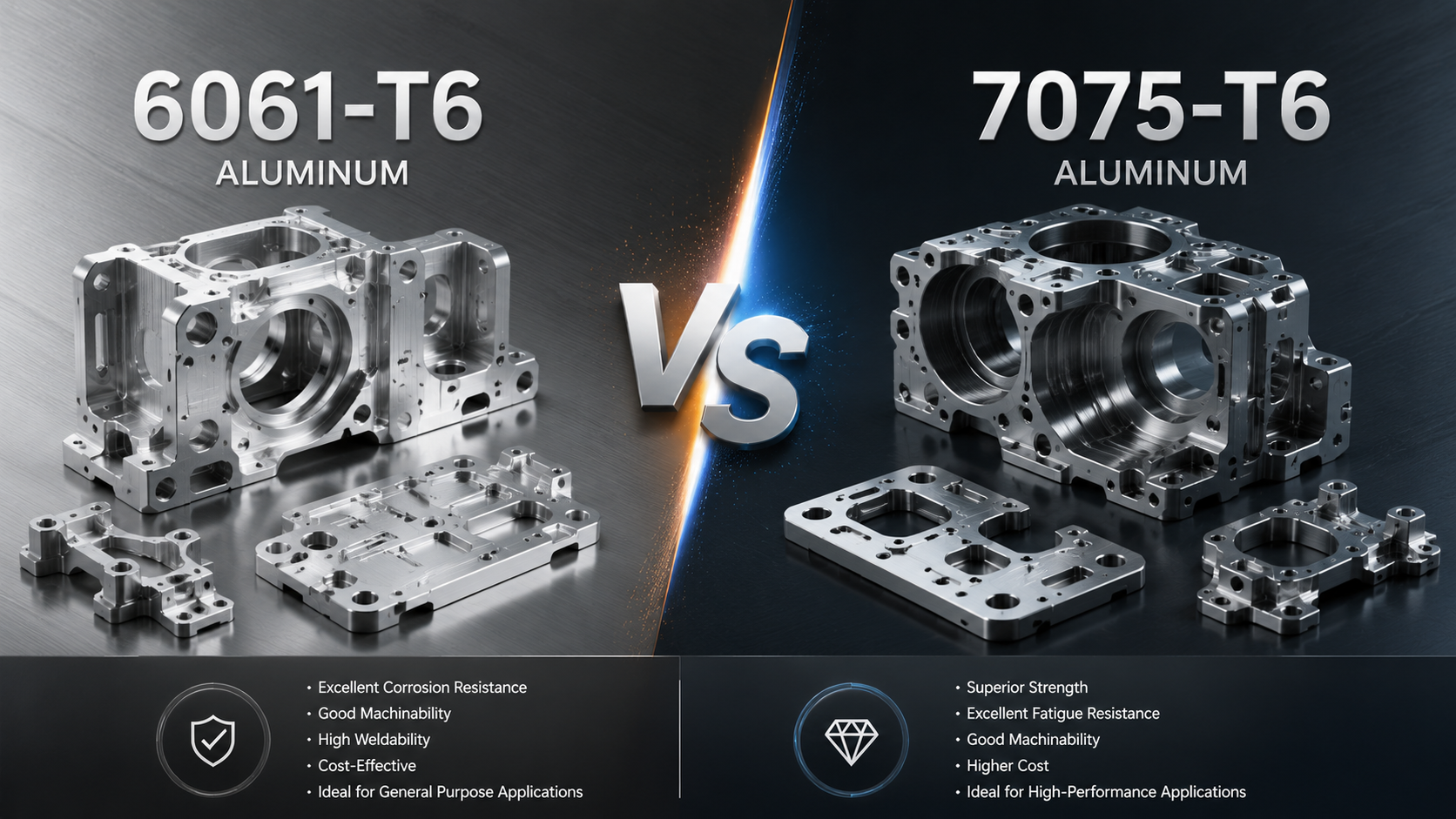
مقارنة عملية للقوة, صلابة, القدرة على الماكينات, مقاومة التآكل, لحام, أنودة, يكلف, وتناسب التطبيق.
مقدمة
6061-T6 و7075-T6 هما من سبائك الألومنيوم الأكثر مقارنة للأجزاء الدقيقة. وكلاهما قابل للعلاج بالحرارة, متاحة على نطاق واسع في المخزون الهندسي, ومناسبة ل التصنيع باستخدام الحاسب الآلي المخصصة. الفرق المهم ليس أن سبيكة واحدة هي الأفضل عالميًا. وهو أن كل واحد يحل مشكلة تصميم مختلفة.
6061-T6 عادة ما يكون الخيار الأكثر توازناً عند مقاومة التآكل, لحام, مظهر بأكسيد, التوفر, وتكلف كل هذه المسألة. 7075-يعد T6 أو T651 هو الخيار الأقوى عندما تهيمن سعة الحمولة ونسبة القوة إلى الوزن على القرار. يشرح هذا الدليل من أين تأتي هذه المقايضات وكيف تؤثر على التصنيع باستخدام الحاسب الآلي, التشطيب, تقتيش, والشراء.
6061-T6 مقابل 7075-T6 في لمحة
للعديد من الأقواس, المساكن, لوحات, تركيبات, والمرفقات, 6061-T6 هو الافتراضي العملي. انتقل الى 7075 عندما يظهر التحليل ذلك 6061 لا يمكن أن تلبي هدف الحمل أو الوزن المطلوب. لا تختار 7075 لحل مشكلة تصلب: تتمتع السبائكتين بنفس معامل المرونة تقريبًا, لذا فإن الجزء المحدود الانحراف يحتاج عادة إلى تغيير هندسي أو مادة أكثر صلابة.
ملكية | 6061-T6 | 7075-T6/T651 | الآثار المترتبة على التصميم |
قوة الشد في نهاية المطاف | 310 MPa | 572 MPa | 7075 يوفر قوة ثابتة أعلى بكثير |
قوة العائد | 276 MPa | 503 MPa | 7075 يناسب الحمل العالي, أجزاء محدودة الوزن |
معامل مرن | 68.3 المعدل التراكمي | 71.7 المعدل التراكمي | الصلابة هي نفسها تقريبًا |
كثافة | 2.70 جم/سم3 | 2.80 جم/سم3 | 7075 هو على وشك 4% أكثر كثافة |
الموصلية الحرارية | 167 ث/م-ك | 130 ث/م-ك | 6061 يبدد الحرارة بشكل أكثر فعالية |
مقاومة التآكل | جيد | أقل في T6 | 7075 يحتاج إلى تخطيط مبكر للحماية |
قابلية اللحام الانصهار | جيد مع التحكم في العملية | عموما لا ينصح | 6061 هو الخيار الملحوم العملي |
استجابة أنودة | متناسق وصديق لمستحضرات التجميل | وظيفية, ولكن يمكن أن يختلف اللون | 6061 أسهل بالنسبة للأجزاء المهمة للمظهر |
تكلفة المواد | أقل ومتوفرة على نطاق واسع | أعلى ويعتمد على المخزون | اقتبس كلاهما عندما لا تكون القوة حاسمة |
القيم النموذجية للورقة واللوحة; شكل المنتج, سماكة, مواصفة, وبيانات الموردين لها الأسبقية.
التركيب الكيميائي والتقوية
6061 ينتمي إلى عائلة المغ سي. أثناء المعالجة الحرارية, يشكل المغنيسيوم والسيليكون رواسب Mg2Si التي تعطي السبيكة مزيجها المفيد من القوة, مقاومة التآكل, وقابلية التصنيع. 7075 عبارة عن سبيكة Al-Zn-Mg-Cu. الزنك- ونظام التقوية الغني بالمغنيسيوم ينتج قوة أعلى بكثير, بينما يساهم المحتوى العالي من النحاس في تقليل مقاومة التآكل وضعف قابلية اللحام بالصهر التقليدي.
عنصر | 6061 يتراوح (%) | 7075 يتراوح (%) | لماذا يهم |
الزنك | 0.25 الأعلى | 5.1-6.1 | عنصر التعزيز الأساسي في 7075 |
المغنيسيوم | 0.8-1.2 | 2.1-2.9 | يدعم تصلب هطول الأمطار |
نحاس | 0.15-0.40 | 1.2-2.0 | يزيد من القوة ولكنه يقلل من التآكل وقابلية اللحام |
السيليكون | 0.4-0.8 | 0.40 الأعلى | يتحد مع المغنيسيوم لتقويته 6061 |
الكروم | 0.04-0.35 | 0.18-0.28 | يساعد على التحكم في بنية الحبوب |
حدود التركيب هي نطاقات السبائك الاسمية, لا تعد بديلاً عن شهادة المادة المرفقة مع دفعة محددة.
رقم السبيكة وحده لا يكفي للشراء. تأكيد المزاج, شكل المنتج, سماكة, المواصفات الحاكمة, ومتطلبات الشهادة. اليشم باستخدام الحاسب الآلي مواد التصنيع باستخدام الحاسب الآلي يمكن أن تساعد الإرشادات في تأطير تلك الشيكات قبل عرض الأسعار.
الخواص الميكانيكية والفيزيائية
قوة, تعب, والمرونة
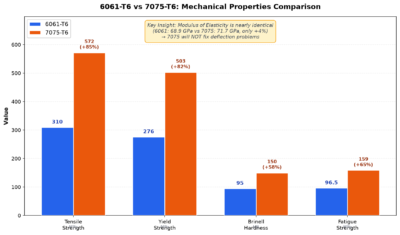
7075-يوفر T6 تقريبًا 84% أعلى قوة الشد في نهاية المطاف و 82% قوة إنتاج أعلى من الصفائح أو الألواح النموذجية 6061-T6. هذه ميزة ذات مغزى في الأجزاء المحملة للغاية, لكنه لا يترجم تلقائيًا إلى تصميم أفضل. تركيز الإجهاد, طيف التعب, اتجاه الحبوب, الأحمال السحابة, التعرض للتآكل, ولا تزال عوامل السلامة تسيطر على الاختيار النهائي.
ملكية نموذجية | 6061-T6/T651 | 7075-T6/T651 | اختلاف |
قوة الشد في نهاية المطاف | 310 MPa | 572 MPa | 7075 عن 84% أعلى |
قوة العائد | 276 MPa | 503 MPa | 7075 عن 82% أعلى |
قوة القص | 207 MPa | 331 MPa | 7075 عن 60% أعلى |
قوة التعب | 97 MPa | 159 MPa | 7075 عن 64% أعلى |
استطالة نموذجية | 17% | 11% | يختلف حسب شكل المنتج وسمكه |
القيم نموذجية, غير مضمونة المسموحات التصميم. استخدم مواصفات المواد المعمول بها والخصائص المعتمدة لإجراء الحسابات النهائية.
صلابة, كثافة, والتدفق الحراري
يختلف المعامل المرن بمقدار حوالي 5%. إذا انحنت اللوحة أكثر من اللازم 6061, نفس الحجم 7075 الاستبدال لن يقلل الانحراف كثيرًا. زيادة عمق القسم, إضافة الأضلاع, تقصير فترة غير معتمدة, أو يمكن أن يكون لتغيير فئة المادة تأثير أكبر بكثير.
6061 كما أنه يوصل الحرارة بشكل أفضل. للمساكن المحملة حراريا و التصنيع باستخدام الحاسب الآلي بالوعة الحرارة, هندسة الزعانف, التسطيح الأساسي, تدفق الهواء, ضغط الواجهة, وغالبًا ما تكون المعالجة السطحية أكثر أهمية من قوة الشد.
ملكية نموذجية | 6061-T6/T651 | 7075-T6/T651 | معنى هندسي |
صلابة برينل | 95 غ.ب | 150 غ.ب | 7075 يقاوم المسافة البادئة بشكل أفضل |
معامل مرن | 68.3 المعدل التراكمي | 71.7 المعدل التراكمي | فقط اختلاف بسيط في الصلابة |
كثافة | 2.70 جم/سم3 | 2.80 جم/سم3 | القوة إلى الوزن لا تزال تفضل 7075 |
الموصلية الحرارية | 167 ث/م-ك | 130 ث/م-ك | 6061 عادة ما يكون أفضل لتدفق الحرارة |
القيم الحرارية والميكانيكية الموضحة تعتبر نموذجية في درجة حرارة الغرفة.
إمكانية التصنيع باستخدام الحاسب الآلي: كلاهما جيد, لكنهم يتصرفون بشكل مختلف
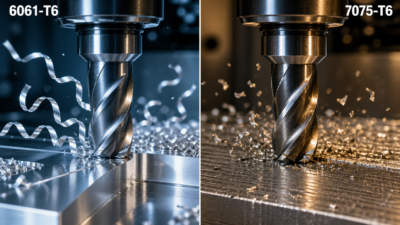
ومن المضلل أن نصف 7075 ببساطة من الصعب تشغيل الآلة. يتم تصنيع كلتا السبائك جيدًا باستخدام أدوات كربيد حديثة. 6061 أكثر ليونة ويمكن أن تتطور إلى حافة مدمجة إذا كانت الأداة تحتك أو كان إخلاء الشريحة ضعيفًا. 7075 أصعب, ولكنها غالبًا ما تشكل رقائق أقصر ويمكن أن تنتج لمسة نهائية ممتازة. يعتمد عمر الأداة ووقت الدورة على الهندسة, حالة المخزون, قدرة المغزل, تسليم المبرد, نفد, واستراتيجية إزالة المواد.
عامل التصنيع | 6061-T6 | 7075-T6/T651 | استجابة عملية |
سلوك الشريحة | مواد مطيلة; يمكن أن تشكل حافة مبنية | في كثير من الأحيان أقصر, رقائق أكثر قابلية للإدارة | استخدم هندسة الألومنيوم الحادة لكليهما |
تحميل الأداة | يمكن تشويه إذا فرك الحافة | تزيد الصلابة العالية من حمل القطع | تجنب تخفيضات السرعة الثابتة العامة |
الانتهاء من السطح | ممتاز مع الأدوات الحادة | ممتاز مع عملية مستقرة | نفاذ السيطرة, إعادة قطع الرقاقة, والمبرد |
خطر التشويه | يمكن التحكم فيه; T651 يساعد في اللوحة | يمكن أن يكون الإجهاد المتبقي مهمًا في عمليات الإزالة الثقيلة | خشن, يستريح, ثم قم بإنهاء الميزات المهمة |
حياة الأداة | مواتية عادة | عملية- وتعتمد على الهندسة | مراقبة التآكل بدلاً من افتراض عقوبة ثابتة |
إرشادات عملية للتصنيع
- استخدم حادة, حواف القطع المصقولة وهندسة الفلوت المخصصة للألمنيوم.
- حافظ على حمل الرقاقة مرتفعًا بدرجة كافية لقطعها بشكل نظيف; فرك يعزز الحرارة والحافة المبنية.
- توفير عملية إخلاء فعالة للرقاقة بحيث لا يؤدي إعادة القطع إلى الإضرار بالسطح.
- للجدران الرقيقة أو إزالة المواد الثقيلة, فصل التخشين والتشطيب والسماح للجزء بالاسترخاء.
- استخدم T651 أو أي حالة أخرى للوحة مخففة للضغط عندما يكون ثبات الأبعاد مهمًا.
- تعامل مع السرعات والأعلاف كنقاط بداية يجب تعديلها لتناسب قطر الأداة, عدد الناي, التمسك بها, صلابة الآلة, المبرد, وبيانات صانع الأدوات.
مورد من ذوي الخبرة في الطحن باستخدام الحاسب الآلي ينبغي مراجعة جيوب عميقة, أضلاعه رقيقة, أدوات بعيدة المدى, استراتيجية المسند, والتفاوتات الحرجة قبل الإنتاج, بغض النظر عن السبائك التي تم اختيارها.
مقاومة التآكل وتكسير الإجهاد والتآكل
6061-يوفر T6 بشكل عام مقاومة أفضل للتآكل من 7075-T6. في 7075, يمكن للمكونات الغنية بالنحاس أن تزيد من قابلية التنقر, ويمكن أن تكون حالة T6 عرضة لتكسير الإجهاد والتآكل تحت إجهاد الشد المستمر في التوجهات والبيئات غير المواتية. وهذا هو السبب وراء أخذ 7075-T73 أو T7351 في الاعتبار غالبًا عندما تكون مقاومة SCC مهمة, على الرغم من أن الإفراط في الشيخوخة يقلل من القوة.
عامل التعرض | 6061-T6 | 7075-T6/T651 |
التعرض للغلاف الجوي | جيدة عموما | مقاومة أقل; حماية الأجزاء المكشوفة |
تأليب الميل | أدنى | أعلى بسبب المراحل الغنية بالنحاس |
تكسير الإجهاد والتآكل | مقاومة جيدة في أشكال المنتجات الشائعة | T6 أكثر حساسية, خاصة في التحميل العرضي القصير |
خيار المزاج | T6/T651 مشترك | يعمل T73/T7351 على تحسين مقاومة SCC مع فقدان بعض القوة |
استراتيجية الحماية | أنودة أو طلاء كما هو مطلوب | أنودة, طلاء, الكسوة, والعزلة تستحق المراجعة المبكرة |
تجنب المطالبات العالمية بساعة رش الملح إلا إذا كانت السبيكة, سمك النهاية, طريقة الختم, إعداد الحافة, هندسة العينة, ويتم تعريف جميع معايير القبول. تبدأ خطة التآكل المفيدة ببيئة الخدمة الفعلية ومواصفات الطلاء الكاملة.
قابلية اللحام والانضمام
6061-T6 عادة ما يكون TIG- أو ملحومة MIG, لكن المنطقة المتضررة بالحرارة تفقد قوتها. لذلك يجب تصميم الوصلة وحسابها وفقًا لحالة اللحام بدلاً من القيمة الأصلية للمعدن الأساسي T6. يعتمد اختيار الحشو على درجة حرارة الخدمة, حساسية التكسير, ليونة, والمظهر بعد الانتهاء.
يتم تجنب لحام الانصهار التقليدي لـ 7075-T6 عمومًا في الأعمال الإنشائية نظرًا لصعوبة التحكم في التشقق الساخن وفقدان الممتلكات. التثبيت الميكانيكي, الترابط اللاصق, لحام الاحتكاك تحت عملية مؤهلة, أو قد يكون التغيير إلى سبيكة قابلة للحام أكثر ملاءمة.
عامل اللحام | 6061-T6 | 7075-T6 |
اللحام الانصهار التقليدي | ملحومة عادة بواسطة TIG أو MIG | عموما لا ينصح به للمفاصل الهيكلية |
القلق الرئيسي | فقدان القوة في المنطقة المتضررة من الحرارة | تكسير ساخن وخسارة فادحة في الممتلكات |
اختيار الحشو | ER4043 أو ER5356 حسب الخدمة والتشطيب | لا يوجد حشو عالمي يجعل المفصل الهيكلي T6 مكافئًا |
استجابة التصميم | إعادة حساب حالة اللحام | استخدم التثبيت الميكانيكي أو قم بتغيير طريق السبائك/الانضمام |
أنودة والتشطيبات السطحية الأخرى
6061-T6 هو خيار موثوق للوضوح, أسود, والأكسدة الملونة من النوع الثاني. 7075 ويمكن أيضا أن يكون بأكسيد, بما في ذلك النوع الثالث من الأنودة الصلبة, لكن محتواه العالي من النحاس يمكن أن يجعل الأكسيد أغمق ومطابقة الألوان أقل قابلية للتنبؤ بها. للأجزاء التجميلية, الموافقة على عينة تمثيلية والاحتفاظ بالسبائك, حِدّة, المعالجة المسبقة, دفعة النهاية, وملمس السطح متناسق.
عامل التشطيب | 6061-T6 | 7075-T6/T651 |
أنودة النوع الثاني | موحدة ومناسبة للتشطيبات التجميلية المصبوغة | صالحة للاستعمال, ولكن قد يكون اللون أغمق أو أقل تجانساً |
النوع الثالث أنودة صلبة | مناسب تمامًا | مناسب تمامًا للحماية الوظيفية من التآكل |
مطابقة الألوان | أكثر قابلية للتنبؤ عبر الدفعات الخاضعة للرقابة | الموافقة على عينات للأعمال ذات المظهر الحرج |
التخطيط الأبعاد | السماح لنمو الطلاء والإخفاء | نفس الشرط, مع الاهتمام الإضافي باستجابة السبائك |
مراجعة خيارات التشطيب السطحي قبل الافراج عن الآلات. سمك الطلاء, اخفاء, المواضيع, مناطق الاتصال الكهربائية, تجاويف التزاوج, ويجب تحديد جميع الوجوه المرئية في الرسم أو مواصفات النهاية.
التكلفة والتوافر
7075 عادة ما تحمل علاوة كبيرة من المواد الخام, لكن النسبة المئوية الثابتة لا يمكن الاعتماد عليها عبر المناطق, أشكال الأسهم, سمك, الشهادات, وطلب الكميات. تكلفة التصنيع ليست أيضًا تلقائيًا 30% أو 50% أعلى. مصممة بشكل جيد 7075 قد يعمل الجزء بكفاءة, بينما رقيقة, مستحضرات التجميل 6061 يمكن أن يكون السكن باهظ الثمن بسبب الإعداد, السيطرة على التشويه, ومخاطر التشطيب.
سائق التكلفة | 6061-T6 | 7075-T6/T651 |
مخزون خام | توافر واسع النطاق وتكلفة أساسية أقل | علاوة أعلى للسبائك وخيارات أقل للأسهم |
بالقطع | كفاءة للنماذج الأولية والإنتاج | وقت الدورة غالبا ما يكون مماثلا, لكن الاستراتيجية قد تتغير |
التشطيب | أنودة مستحضرات التجميل يمكن التنبؤ بها نسبيًا | يمكن أن تؤدي ضوابط أخذ العينات أو الطلاء إلى زيادة التكلفة |
تقتيش | على أساس رسم المخاطر | قد تتطلب التطبيقات عالية التحميل المزيد من الشهادات وإمكانية التتبع |
المخاطر التجارية | من السهل استبدال نماذج الأسهم | يمكن أن يؤثر التوفر والشهادة على المهلة الزمنية |
للنماذج الأولية و التصنيع باستخدام الحاسب الآلي ذات الحجم المنخفض, مقارنة الاقتباسات الكاملة باستخدام نفس مراجعة الرسم, مواصفات المواد, ينهي, نطاق التفتيش, ومتطلبات التسليم. وهذا ينتج عنه قرار أكثر فائدة من مقارنة سعر الكيلوغرام وحده.
الاختيار على أساس التطبيق
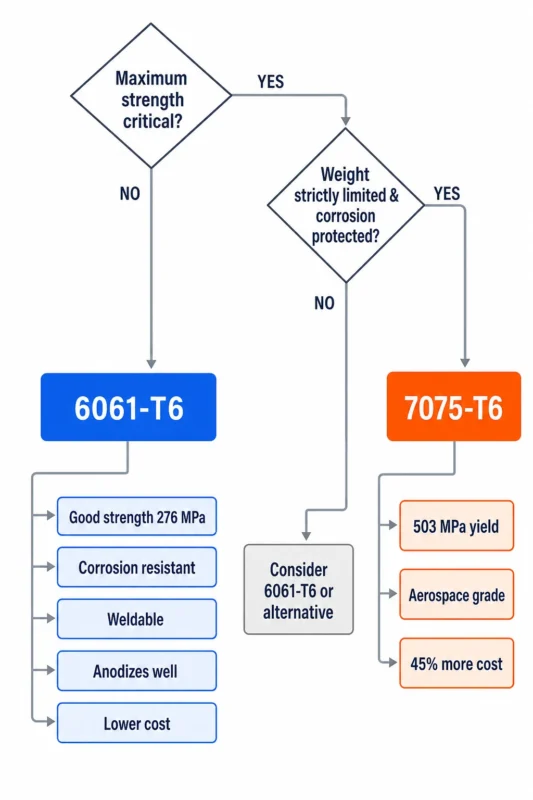
اختر 6061-T6 متى
- القوة المطلوبة معتدلة وتفي بالفعل بعامل أمان التصميم.
- مقاومة التآكل, قابلية اللحام, أو المظهر المؤكسد المتسق مهم.
- الجزء هو السكن, قوس, تركيبات, طبق, الضميمة, تقليل الحرارة, أو المكون الهيكلي العام.
- يعد توافر المواد على نطاق واسع والتحكم في التكاليف أمرًا مهمًا.
اختر 7075-T6 أو T651 متى
- قوة الخضوع أو قوة التعب هي الشرط المقيد.
- الوزن مقيد بإحكام ولا يمكن للهندسة أن تزيد بما يكفي للاستخدام 6061.
- لن يعتمد الجزء على اللحام الانصهار التقليدي.
- يمكن التحكم في الحماية من التآكل وتتبع المواد.
- يتضمن التطبيق تركيبات عالية التحميل, رياضة السيارات, الروبوتات, أو الآلات الفضائية الدقيقة.
عندما تكون سبيكة أو عملية أخرى مناسبة بشكل أفضل
أولوية المشروع | عادة ما تختار | سبب |
التكلفة المتوازنة, تآكل, لحام, والمظهر | 6061-T6 | أوسع تناسب التصنيع الشامل |
أقصى قوة ثابتة عند الوزن المنخفض | 7075-T6/T651 | إنتاجية أعلى بكثير وقوة شد |
الانحراف هو وضع الفشل | إعادة التصميم أولاً | كلا السبائك لها نفس معامل المرونة تقريبًا |
ورقة البحرية أو الضميمة المشكلة | النظر في 5052-H32 | قابلية أفضل للتشكيل ومقاومة للتآكل |
قذف مستحضرات التجميل | النظر في 6063-T6 | استجابة ممتازة للبثق والأنودة |
سميك, لوحة فضائية عالية القوة مع مخاوف SCC | النظر في 7050-T7451 | أداء أفضل لـ SCC قصير العرض |
حجم كبير جدًا وهندسة معقدة | تقييم الصب | قد تؤدي الأدوات إلى تقليل تكلفة الوحدة بعد التعادل |
رسم, شراء, وفحوصات التفتيش
يجب أن ينتهي اختيار المواد برسم واضح ومواصفات الشراء. ملاحظات غامضة مثل "AL 7075".’ ترك مجالًا كبيرًا للتفسير ويمكن أن يخلق مشاكل في المزاج, شكل المخزون, اتجاه الحبوب, شهادة, والانتهاء من الرد.
- تحديد سبيكة, حِدّة, شكل المنتج, ومعيار المواد الحاكمة.
- تحديد ما إذا كانت لوحة تخفيف الضغط T651/T7351 مطلوبة.
- شهادة مطحنة الدولة, إمكانية تتبع الكثير, أو احتياجات وثائق الطيران قبل الاقتباس.
- تحديد متطلبات اتجاه الحبوب للأجزاء ذات الأحمال العالية أو الأجزاء الحرجة للتعب.
- وضع علامة على الأسطح التجميلية, نوع أنودة, لون, سماكة, ختم, واخفاء المناطق.
- ضع تفاوتات مشددة فقط على الميزات الوظيفية وحدد مرجع الإسناد بوضوح.
- الاتفاق على طريقة التفتيش, خطة أخذ العينات, والإبلاغ عن الأبعاد الحرجة.
يمكن لـ JADE-CNC تنسيق مراجعة المواد معها التفتيش باستخدام الحاسب الآلي وبالتالي فإن اختيار السبائك, خطة التصنيع, ينهي, وطريقة القياس تعتبر عملية واحدة وليست خطوات شراء منفصلة.
كيف يدعم JADE-CNC 6061 و 7075 المشاريع
آلات JADE-CNC على حد سواء 6061 و 7075 للنماذج الأولية وأجزاء الإنتاج. تركز المراجعة الهندسية على الرسم, حالة المخزون, هندسة, كومة التسامح, الانتهاء من السطح, خطة التفتيش, ومتطلبات التطبيق. يتيح ذلك للتوصية المادية أن تعكس الجزء الفعلي بدلاً من الاعتماد على تصنيف عام للسبائك.
- مراجعة المواد والمزاج قبل الاقتباس
- 3-محور, 4-محور, والطحن ذو 5 محاور بالإضافة إلى الخراطة باستخدام الحاسب الآلي
- استراتيجيات التصنيع للجدران الرقيقة, جيوب عميقة, ثقوب دقيقة, والوجوه التجميلية
- أنودة, تفجير حبة, تنظيف الأسنان بالفرشاة, تنسيق الطلاء, ومراجعة الإخفاء
- فحص الأبعاد وإعداد التقارير بناءً على متطلبات الرسم
- النموذج الأولي, حجم منخفض, وتكرار دعم الإنتاج
لمقارنة 6061-T6 و7075-T6 لمكون معين, أرسل النموذج ثلاثي الأبعاد, 2رسم د, كمية, ينهي, وشروط الخدمة لـ JADE-CNC و طلب مراجعة الآلات.
الأسئلة المتداولة
الأسئلة الهندسية الشائعة
هل 7075-T6 أقوى دائمًا من 6061-T6?
لورقة ولوحة T6 النموذجية, 7075 لديها إنتاجية أعلى بكثير وقوة الشد. وهذا لا يجعلها أكثر صلابة بنفس الهامش, لأن معاملات المرونة متطابقة تقريبًا.
يمكن أن يحل 6061-T6 محل 7075-T6 لتقليل التكلفة?
فقط بعد الأحمال, واجب التعب, تركيزات الإجهاد, بيئة, وتم فحص عامل الأمان. يجب ألا يتجاوز استبدال الشراء أبدًا الموافقة الهندسية.
ما هي السبائك الأسهل لآلة CNC?
كلا الجهازين بشكل جيد. 6061 أكثر ليونة ولكنها أكثر عرضة للحافة المبنية; 7075 أصعب ولكنه غالبًا ما ينتج رقائق أقصر. عادةً ما تكون هندسة الأجزاء والتحكم في العمليات أكثر أهمية من مجرد تصنيف قابلية التشغيل الآلي.
يمكن أن يكون 7075-T6 بأكسيد اللون?
نعم, ولكن النتيجة يمكن أن تكون أكثر قتامة وأقل اتساقا من 6061. للعمل التجميلي, استخدم عينات تمثيلية وحدد نطاق ألوان مقبولًا بدلاً من افتراض التطابق البصري المثالي.
هل 7075-T6 مناسب للاستخدام البحري?
يتطلب T6 حماية دقيقة ولا يعد تقصيرًا عرضيًا للتعرض البحري المستمر. مراجعة مخاطر SCC, طلاء, العزلة من المعادن المختلفة, اتجاه الحبوب, وما إذا كان T73/T7351 أو سبيكة أخرى أكثر ملاءمة.
لماذا تحديد T651 بدلاً من T6 للوحة المُشكَّلة?
يتضمن T651 تخفيف التوتر عن طريق التمدد بعد المعالجة الحرارية للمحلول. غالبًا ما يُفضل استخدام اللوحة لأن الضغط المتبقي المنخفض يمكن أن يحسن استقرار الأبعاد أثناء التشغيل الآلي الثقيل.
خاتمة
اختر 6061-T6 عندما يحتاج المشروع إلى توازن قوة يمكن الاعتماد عليه, مقاومة التآكل, لحام, التشطيب, التوفر, والتكلفة. اختر 7075-T6 أو T651 عندما تكون القوة الأعلى ضرورية ويمكن أن يستوعب التصميم تآكله, الانضمام, التشطيب, وقيود الشراء. إذا كانت الصلابة تسيطر على التصميم, يتغير من 6061 ل 7075 ونادرا ما يكون كافيا من تلقاء نفسه.
يجمع القرار المادي الأكثر دفاعًا بين التحليل الهيكلي وشكل المنتج, حِدّة, استراتيجية التصنيع, ينهي, تقتيش, شهادة, وبيئة الخدمة. وهذه أيضًا هي المعلومات التي يحتاجها مورد الآلات لعرض الجزء بدقة.
مقالات ذات صلة بـ 6061-T6
- 6061-T6 الألومنيوم التصنيع باستخدام الحاسب الآلي الدليل الكامل
- 6061-T6 مقابل 7075-T6 الألومنيوم: قوة, يكلف & القدرة على التصنيع
- 6061-أنودة الألومنيوم T6: أنواع, الألوان, سماكة & قواعد التصميم
- 6061-معلمات التصنيع باستخدام الحاسب الآلي T6: سرعات, يغذي, الأدوات & التحكم في العمليات
- 6061-T6 مقابل ADC12 الألومنيوم: التصنيع باستخدام الحاسب الآلي أو يموت الصب?
- 6061-T6 التصنيع باستخدام الحاسب الآلي المبادئ التوجيهية لسوق دبي المالي: قواعد التصميم & قائمة التحقق
- 6061-خصائص الألمنيوم T6: ميكانيكية, الحرارية & البيانات الكيميائية
مصادر البيانات المادية
يمكن التحقق من نطاقات التركيب والكثافة مقابل صفائح البط البري من جمعية الألومنيوم. تتماشى خصائص الورقة واللوحة النموذجية في هذه المقارنة مع كايزر للألمنيوم 6061 البيانات الفنية و كايزر للألمنيوم 7075 البيانات الفنية. يجب أن تأتي قيم التصميم النهائية من المواصفات الحاكمة والمواد المعتمدة لشكل المنتج الفعلي وسمكه.

ليو ليانغ, أفضل شريك مؤسس مع R&د
JADE-CNC مؤسس LEO, الذي يجلب أكثر من عقدين من الخبرة في الصناعة, بدأ ليو حياته المهنية كمتدرب ومارس مهاراته في معالجة الأسطح والتصنيع باستخدام الحاسب الآلي.