



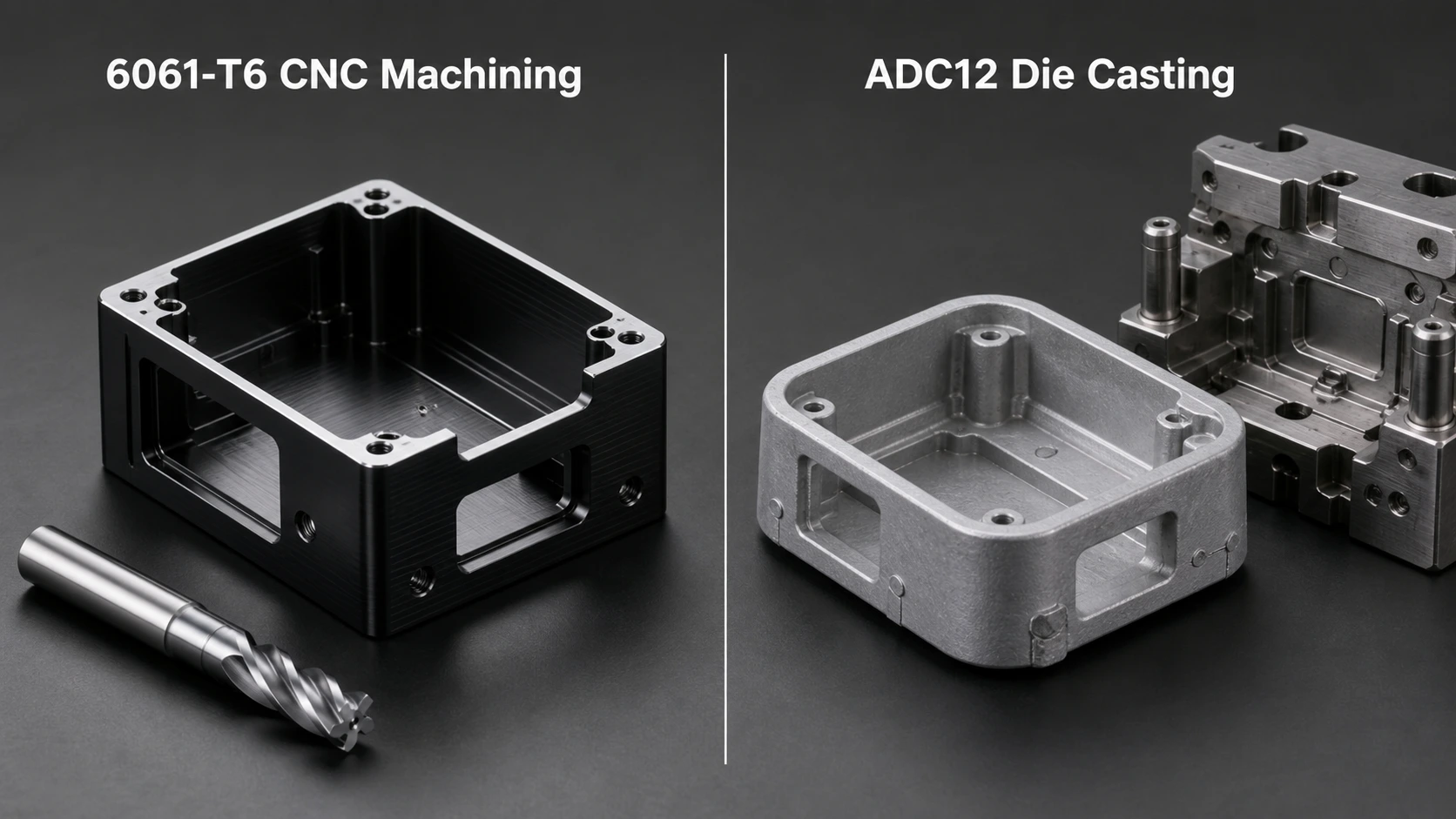
Dövme 6061-T6 CNC işleme ve ADC12 yüksek basınçlı dökümün mühendislik karşılaştırması, kaplama özellikleri, takımlama, hacim ekonomisi, toleranslar, gözeneklilik, bitirme, ve süreç seçimi.
giriiş
6061-T6 CNC işleme ve ADC12 basınçlı döküm arasında seçim yapmak sadece maddi bir karar değildir. Dövme alaşım ile döküm alaşımı arasında bir seçimdir, ve esnek bir çıkarma işlemi ile yoğun alet kullanımıyla net şekle yakın bir işlem arasında. En iyi rota geometriye bağlıdır, performans, üretim hacmi, tasarım olgunluğu, sona ermek, denetleme, ve rotayı değiştirmenin maliyeti.
CNC işleme, üretim kalıbı olmadan hassas parçalar üretebilir ve prototiplere çok uygundur, revizyonlar, ve hassas özellikler. Yüksek basınçlı döküm, takım tasarımı ve kalifikasyon gerektirir, ancak duvarları entegre edebilir, kaburga, patronlar, ve diğer özellikler, talep istikrarlı hale geldikten sonra verimli bir şekilde. Her iki sürecin de otomatik olarak ucuzlayacağı evrensel bir miktar eşiği yoktur..
Alaşım davranışına daha geniş bir bakış için, toleranslar, bitirme, ve tasarım, ile başla 6061-T6 Alüminyum CNC İşleme Komple Kılavuz. Bu makale işleme ve döküm arasındaki karara odaklanmaktadır.
6061-Bir Bakışta T6 CNC İşleme ve ADC12 Basınçlı Döküm Karşılaştırması
Karar faktörü | 6061-T6 CNC işleme | ADC12 yüksek basınçlı döküm |
Üretim rotası | Malzeme dövme levhadan kesilir, çubuk, veya ekstrüzyon | Erimiş alaşım sertleştirilmiş çelik kalıba enjekte edilir |
Ön yatırım | Programlama, kurmak, ve demirbaşlar; üretim kalıbı yok | Kalıp tasarımı, takımlama, denemeler, ve süreç kalifikasyonu |
Birim ekonomisi | Prototipler için rekabetçi, tasarımları değiştirme, ve birçok düşük hacimli parça | Takımlama amortismana tabi tutulduktan sonra sabit hacimde çekici olabilir |
Tasarım özgürlüğü | Hassas özellikler ve revizyonlar için iyi; araç erişimiyle sınırlı | Entegre kaburgalar için iyi, patronlar, ve ince kesitler; DFM dökümü gerektirir |
Malzeme davranışı | Dövme, ısıl işlem görmüş, sünek, ve nispeten iletken | Daha düşük sünekliğe ve olası gözenekliliğe sahip dökülebilir Al-Si-Cu alaşımı |
Hoşgörü stratejisi | Kritik özellikler genellikle doğrudan CNC işleminde tamamlanabilir | Döküm özellikleri döküm yeteneğini takip eder; kritik alanların işlenmesi gerekebilir |
Bitirme stratejisi | Genellikle dekoratif ve koruyucu anotlamaya iyi yanıt verir | Genellikle kaplama veya boyamaya daha uygundur; Eloksallama numune doğrulaması gerektirir |
Tasarım değişiklikleri | Genellikle CAD aracılığıyla işlenir, KAM, ve fikstür güncellemeleri | Kalıp modifikasyonu veya değiştirilmesi gerekebilir |
İşlenmiş bir 6061-T6 parçasının revize edilmesi ve nitelendirilmesi genellikle daha kolaydır, kalıp döküm ADC12 parçasının değişken maliyeti, takımlama ve proses kanıtlandıktan sonra daha düşük olabilir. Doğru karşılaştırma, gerekli kalite seviyesinde toplam iniş maliyetidir, kütük fiyatı değil döküm fiyatı.
Malzeme Özellikleri: 6061-T6 ve ADC12
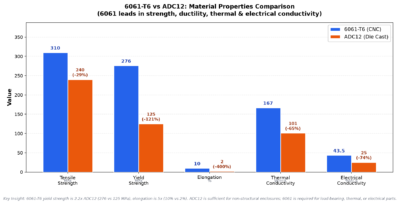
6061-T6, ısıl işlem görmüş bir Al-Mg-Si dövme alaşımıdır. ADC12, basınçlı döküm için geliştirilmiş yüksek silikonlu bir Al-Si-Cu alaşımıdır. Silikon akışkanlığı ve kalıp dolumunu iyileştirir, 6061-T6'nın işlenmiş ve ısıl işlem görmüş yapısı genellikle daha iyi süneklik sağlar, iletkenlik, ve öngörülebilir yapısal özellikler.
Mülk | 6061-T6 dövme alüminyum | ADC12 döküm alüminyum | Mühendislik uygulaması |
Alaşım ailesi | Al-Mg-Si, yağışla sertleştirilmiş | Al-Si-Cu döküm alaşımı | İki malzeme birbirinin yerine geçebilecek kaliteler değildir |
Yoğunluk | Hakkında 2.70 g/cm3 | Hakkında 2.7-2.8 g/cm3 | Parça ağırlığı genellikle eşit hacimde benzerdir |
Çekme mukavemeti | Genellikle hakkında 290-320 MPa | Genellikle hakkında 220-310 MPa | ADC12 değerleri büyük oranda bölüme ve prosese bağlıdır |
Verim gücü | Genellikle hakkında 240-280 MPa | İşlem- ve teste bağlı; genellikle 6061-T6'nın altında | Tasarım için sertifikalı veya test edilmiş döküm verilerini kullanın |
Uzama | Genellikle hakkında 8-12% | Genellikle hakkında 1-3% | 6061-T6 genellikle deformasyona karşı daha toleranslıdır |
Isı iletkenliği | Genellikle hakkında 150-170 W/m-K | Genellikle hakkında 90-110 W/m-K | 6061-T6 genellikle ısı yayan parçalara daha iyi uyar |
Elektrik iletkenliği | Genellikle hakkında 40-47% IACS | Genellikle daha düşük | 6061-İletken yollar için genellikle T6 tercih edilir |
İç bütünlük | İşlenmiş stok normalde yoğundur | Gaz ve büzülme gözenekliliği proses riskleridir | Sızdırmaz veya yorulma açısından kritik dökümlerin tanımlanmış bir kalite planına ihtiyacı vardır |
Tipik referans aralıkları ürün formuna göre değişir, kesit kalınlığı, döküm işlemi, test örneği, ve tedarikçi. Tasarım değerleri için sertifikaları ve projeye özel testleri kullanın.
The 6061-T6 alüminyum özellikler kılavuzu kimyasalların daha derin bir incelemesini sağlar, mekanik, ve termal veriler. Tasarımın 6061-T6'dan daha fazla güce ihtiyacı varsa, yayınlanan 6061-T6 ve 7075-T6 karşılaştırması başka bir dövme alüminyum seçeneğini kapsar.
Mukavemet ve Süneklik
6061-T6 normalde daha yüksek ve daha tutarlı bir akma mukavemeti ile birlikte önemli ölçüde daha fazla uzama sunar. Bu kombinasyon yük taşıyan braketler için kullanışlıdır, kelepçeli düzenekler, ve darbeye veya yerel deformasyona maruz kalan parçalar. ADC12 kapaklar için tamamen uygun olabilir, konutlar, ve orta derecede yüklü yapılar, ancak döküm özellikleri onaylı alaşım kaynağından ve temsili bir üretim sürecinden alınmalıdır..
Termal ve Elektrik Performansı
6061-T6 genellikle ısı ve elektriği ADC12'den daha iyi iletir. Döküm mahfaza yine de yeterli termal performansı sağlayabilir çünkü basınçlı döküm ince duvarlar oluşturabilir, yüzgeçler, ve entegre geometri. Tam termal yolu doğrulayın, temas direnci, hava akışı, Yalnızca iletkenlikten seçim yapmak yerine yüzey işleme.
Gözeneklilik ve Sızdırmazlık
Dövme 6061 Stok normalde yoğundur. Yüksek basınçlı dökümler sıkışmış gaz içerebilir, büzülme gözenekliliği, oksit filmler, veya yerel süreksizlikler, ve işleme yüzey altındaki gözenekleri ortaya çıkarabilir. Basınç içeren veya sızdırmaz dökümler bu nedenle üzerinde anlaşmaya varılan bir sürece ihtiyaç duyar, Gerektiğinde röntgen veya BT stratejisi, işleme ödeneği, sızıntı testi, kabul kriterleri, ve onaylanmış herhangi bir emprenye adımı.
CNC İşleme ve Basınçlı Döküm için Tasarım Kuralları
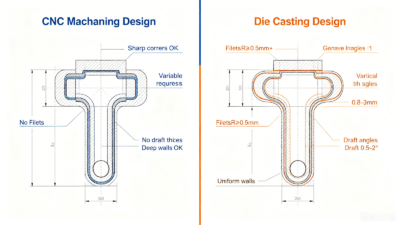
Tasarım özelliği | 6061-T6 CNC yaklaşımı | ADC12 basınçlı döküm yaklaşımı | Soruyu gözden geçir |
Taslak | Normalde gerekli değildir | Çizim yüzeylerinde gereklidir | Parça sürüklenmeden veya kalıptan hasar görmeden serbest bırakılabilir mi?? |
Duvar kalınlığı | Değişebilir, alet erişimine ve bozulmaya tabidir | Pratik olduğu kadar tekdüze olmalı | Kalından inceye geçişler dolgu veya büzülme sorunlarına neden olur mu?? |
İç köşeler | Yarıçap, kesici boyutunu ve erişimi takip eder | Cömert filetolar akışı ve kalıp ömrünü destekler | Fonksiyonu etkilemeden yarıçaplar arttırılabilir mi?? |
Kaburgalar ve patronlar | Aletler onlara ulaşabildiğinde işlenebilir | Dengelendiğinde ve tekdüze duvarlara bağlandığında verimlidir | Kaburgalar mı, patronlar, ve süreç için orantılı duvarlar? |
Alttan kesmeler | Ekstra kurulumlar veya özel aletlerle mümkün | Slayt gerektir, kaldırıcılar, ekler, veya yeniden tasarlayın | Bu özellik, ilave araç karmaşıklığını haklı çıkarıyor mu?? |
Delikler | delinmiş, sıkılmış, raybalanmış, veya enterpolasyonlu | Bazıları çekirdeklenebilir; kritik delikler sıklıkla işlenir | Hangi deliklerin son boyuta ihtiyacı var, konum, veya iplik kontrolü? |
Konular | Kılavuzlu veya diş frezelenmiş | Genellikle işlenmiş veya kesici uçlarla üretilmiştir | Hangi iş parçacığı sınıfı, derinlik, ve çekme kuvveti gereklidir? |
Ayırma ve ejektörler | Uygulanamaz | Ayrılık çizgisi, kapılar, taşmalar, ve ejektör işaretleri yerleştirilmelidir | Hangi yüzler kozmetik veya işlevseldir?? |
Bir CNC prototipi otomatik olarak basınçlı döküm aleti modeli haline gelmemelidir. Taslak, ayrılık yönü, kapılar, taşmalar, ejektörler, slaytlar, duvar geçişleri, ve işleme verilerinin bilinçli olarak tasarlanması gerekir. The 6061-T6 CNC işleme DFM yönergeleri işlenmiş versiyon için faydalıdır, ancak döküm tedarikçisi ayrı bir kalıp doldurma ve kalıplama incelemesini tamamlamalıdır.
Üretim Geçişini Erken Planlayın
- Beklenen yıllık hacmi belirleyin, program hayatı, ve talep belirsizliği.
- İşlevsel yüzeyleri döküm olarak kalabilecek özelliklerden ayırın.
- Tercih edilen ayırma yönünü ve kabul edilebilir ayırma hattı konumunu tanımlayın.
- Kalıp düzeni donmadan önce pratik taslak ve filetolar ekleyin.
- Duvarları işlevin izin verdiği ölçüde tekdüze tutun ve büzülme riski için kalın bağlantı noktalarını gözden geçirin.
- Kritik döküm sonrası özellikler için işleme verileri ve stok tahsisleri oluşturun.
- Kapılar için yer ayırtın, taşmalar, ejektör işaretleri, ve tanık hatlarını düzeltin.
Maliyet ve Başabaş Analizi
CNC maliyetine malzeme hakimdir, programlama, kurmak, döngü süresi, aletler, denetleme, bitirme, ve hurda. Kalıp döküm maliyeti kalıp tasarımını artırır, kalıp imalatı, denemeler, örnekler, vasıf, Bakım, ve sonunda değiştirme, yinelenen maliyeti alaşımı da içeriyor, makine zamanı, düzeltme, hurda, ikincil işleme, bitirme, ve muayene.
Başabaş Formülü
Başabaş miktarı = (basınçlı döküm sabit maliyeti – CNC sabit maliyeti) / (Parça başına CNC değişken maliyeti – parça başına döküm değişken maliyeti)
Örneğin, CNC sabit maliyetini varsayalım $500 ve değişken bir maliyet $18 parça başına, döküm sabit maliyetiyle karşılaştırıldığında $12,000 ve yinelenen bir maliyet $5.50 parça başına. Modellenen başabaş noktası yaklaşık olarak 920 parçalar. Kalıbı şu şekilde değiştir: $35,000, eklemek $4 işleme sonrası, veya CNC çevrim süresini kısalttığınızda yanıt keskin bir şekilde hareket eder. Örnek yöntemi göstermektedir, piyasa fiyatı veya teklifi değil.
Miktar | Açıklayıcı 6061 CNC toplamı | Açıklayıcı ADC12 döküm toplamı | Tercüme |
100 | $2,300 | $12,550 | CNC kalıp yatırımından kaçınır |
500 | $9,500 | $14,750 | CNC bu örnekte daha düşük kalıyor |
1,000 | $18,500 | $17,500 | Modellenen rotalar yakın |
2,500 | $45,500 | $25,750 | Amortisman faydalarının dökümü |
5,000 | $90,500 | $39,500 | Döküm, daha düşük modellenmiş toplam değere sahiptir |
Açıklayıcı model: CNC = $500 + $18 x miktar; ADC12 = $12,000 + $5.50 x miktar. Vergiler hariç, navlun, finansman, envanter, ve projeye özel kalite maliyetleri.
Erken Tahminlerde Genellikle Gözden Kaçan Maliyetler
- Kalıp bakımı, yedek uçlar, tamirat, ve program ömrü boyunca değiştirme
- Döküm denemeleri, yetenek çalışmaları, ilk makale onayı, ve yıkıcı testler
- Döküm parçalar için işleme sonrası fikstürler ve veri kontrolü
- Gözenekliliğin yarattığı hurda, Kusurları doldurun, çarpıtma, veya kozmetik reddi
- Kaplama, maskeleme, çapak alma, emprenye etme, sızıntı testi, ve paketleme
- Tasarım değişirse mühendislik değişikliği maliyeti ve eski envanter
- Kapasite, minimum sipariş miktarı, kurşun zamanı, navlun, ve işletme sermayesi
Toleranslar ve İkincil CNC İşleme
CNC işleme ve basınçlı döküm süreçleri tanımlar, otomatik tolerans dereceleri değil. Küçük işlenmiş bir delik, büyük ince bir kapak, bir döküm duvarı, ve sonradan işlenmiş sızdırmazlık yüzeyinin her biri farklı kapasiteye sahiptir. Boyutlar döküm veya makinede işlenmiş durumlara atanmalıdır, datumlu, muayene yöntemleri, ve çizimde tanımlanan kabul kriterleri.
Gereklilik | 6061-T6'dan CNC | ADC12 döküm artı ikincil çalışma |
Yakın delik veya yatak yuvası | Deliği veya raybayı kontrollü bir kurulumla bitirin | Dökme stok ödeneği, daha sonra kararlı verilerden makine |
Dişli delik | Doğrudan kılavuz çekin veya diş frezeleyin | Uygun olduğunda bir pilotun çekirdeğini çıkarın veya yayınlayın, ardından bir eke dokunun veya yükleyin |
Düz sızdırmazlık yüzeyi | Yüzey frezeleme ve inceleme | Döküm verilerini işleyin ve gözeneklilik veya emprenye gereksinimlerini yönetin |
GD&T-kritik model | Kurulumları en aza indirin ve çizimi inceleyin | Döküm verilerini belirleyin, ardından kritik özellikleri işleyin ve inceleyin |
Sızdırmaz boşluk | Yoğun işlenmiş stok riski basitleştirir | Döküm sürecini belirtin, sızıntı testi, gözeneklilik kabulü, ve herhangi bir emprenye |
Kozmetik dış | Takım yolunu ve ön işlemi kontrol edin | Kalıp dokusunu kontrol edin, akış işaretleri, kapılar, düzeltme, ve kaplama hazırlığı |
ISO 8062-3:2023 uygun şekilde referans verildiğinde dökümler için genel boyutsal ve geometrik toleransları ve işleme toleranslarını ele alır. Basınçlı döküme özgü yetenek, tedarikçinin proses kanıtları ve ilgili mevzuata göre de gözden geçirilmelidir. NADCA teknik standartları.
Kritik döküm sonrası delikler için, yüzler, ve iplikler, kesme stratejisi hâlâ önemli. The 6061-T6 CNC işleme parametreleri kılavuzu araç erişiminin aynı temellerini açıklıyor, çip kontrolü, bitirme stoku, sıcaklık, Alüminyum dökümlerin ikincil işlenmesinde uygulanan muayene ve muayene.
Yüzey İşlemi ve Eloksal
Sona ermek | 6061-T6 | ADC12 | Planlama notu |
İşlenmiş haliyle / oyuncu kadrosu olarak | Düzgün kesici doku belirlenebilir | ayrılık, geçit, ejektör, ve akış işaretleri kalabilir | Kozmetik bölgeleri ve kabul edilen proses işaretlerini tanımlayın |
Eloksal | Genellikle daha düzgün bir dekoratif sonuç üretir | Yüksek silikon ve bakır, gri veya benekli görünüme neden olabilir | Kozmetik üretime geçmeden önce fiziksel numuneleri onaylayın |
Toz kaplama | Uygun ön işlemden sonra uygundur | Tekdüze renk ve kapsama alanı için ortak seçim | Uyumlarda kalınlığa izin verin, Konular, ve topraklama alanları |
Tablo / e-kaplama | Bariyer kaplamanın tercih edildiği yerlerde mevcuttur | Genellikle döküm muhafazalar ve kapaklar için pratiktir | Yapışmayı tanımlayın, korozyon, renk, ve maskeleme gereksinimleri |
Dönüşüm kaplaması | Korozyona karşı koruma ve elektrik arayüzleri için kullanışlıdır | Alaşıma uygun proses kontrolü ile mümkün | Yönetim sürecini ve gerekli performansı adlandırın |
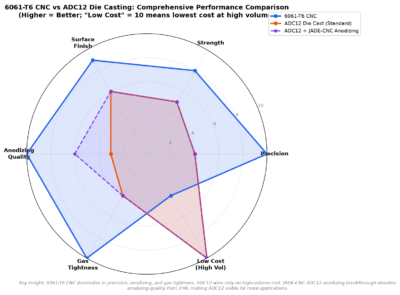
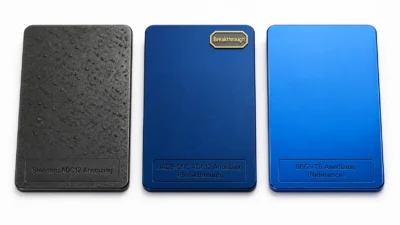
6061-T6 genellikle parlak bir ekran için daha güvenli bir seçimdir., tutarlı dekoratif anodize görünüm. ADC12 çok daha fazla silikon ve bakır içerir, böylece geleneksel eloksal kaplama daha koyu görünebilir, daha gri, veya benekli. Ön tedavi sonucu iyileştirebilir, ancak alt tabakanın tam olarak işlenmiş 6061-T6 gibi davranmasını sağlayamaz.
JADE-CNC, ADC12 döküm alüminyum için olgun bir yüzey işleme yeteneği geliştirmiştir, ADC12 anotlamanın geleneksel sınırlamalarına göre önemli bir gelişme elde etmek. Optimize edilmiş ön arıtma sayesinde, süreç kontrolü, ve eloksal parametreleri, daha düzgün bir ürün üretebiliriz, yarı parlak, ve ADC12 parçalarında görsel olarak stabil kaplama, Tipik olarak 6061-T6 alüminyumla ilişkilendirilen görünüm kalitesine yaklaşıyor. Bu buluş yalnızca bir laboratuvar sonucu değil: süreci seri üretilen bileşenlere zaten uyguladık ve son müşterilere bitmiş ADC12 eloksallı ürünler sağlıyoruz.
The 6061-T6 alüminyum eloksal kılavuzu kalınlığı açıklıyor, renk, maskeleme, ve çizim gereksinimleri daha ayrıntılı olarak.
ADC12 Basınçlı Dökümler için Kalite Planlama
Bir döküm kalite planı parçanın arıza risklerini takip etmelidir. Kozmetik kapaklar, mühürlü muhafazalar, yapısal braketler, ve basınç içeren gövdeler aynı kontrollere ihtiyaç duymaz. Çizim ve satın alma spesifikasyonunda alaşım tanımı belirtilmelidir, döküm süreci, kritik özellikler, işleme durumu, gözeneklilik veya sızıntı gereksinimleri, sona ermek, örnekleme planı, ve gerekli kayıtlar.
- Belirtilen ADC12 veya onaylı eşdeğeri için malzeme kimyası ve izlenebilirlik
- Kalıp durumu, işlem penceresi, atış izleme, ve ilk onay
- Soğuk kapatmalar için görsel kriterler, akış işaretleri, kabarcıklar, çatlaklar, ve trim kusurları
- İşlev ve işleme derinliğine bağlı gözeneklilik kabulü
- Belirtilen ortamla sızıntı testi, basınç, kalma süresi, ve izin verilen sızıntı
- röntgen, BT, bölümleme, veya yalnızca riskin haklı kıldığı durumlarda mekanik testler
- Kritik döküm ve işlenmiş özellikler üzerine boyutsal yetenek çalışmaları
- Kaplama yapışması, kalınlık, renk, korozyon, ve gerektiği gibi maskeleme kontrolleri
ASTM B85/B85M-25 alüminyum alaşımlı basınçlı dökümleri kapsar ve ASTM alaşım tanımı belirtildiğinde geçerli olabilir. ADC12 genellikle Japonca ve tedarikçi sistemleri aracılığıyla belirtilir, bu nedenle çizimde tam tanım belirtilmelidir, geçerli standart, ve eşdeğer bir alaşımın kabul edilebilir olup olmadığı.
Karar Çerçevesi
Proje durumu | Genellikle 6061-T6 CNC'yi tercih eder | Genellikle ADC12 basınçlı dökümü tercih eder |
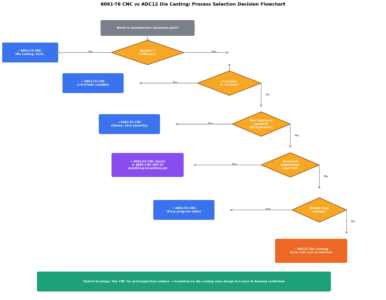
Prototip veya belirsiz talep | Evet | HAYIR, Yumuşak takımlama veya döküm denemesi haklı gösterilmedikçe |
Sık tasarım revizyonları | Evet | HAYIR |
İstikrarlı yüksek yıllık hacim | Döngü süresini ve otomasyonu değerlendirin | Evet, tam bir maliyet ve kapasite incelemesinden sonra |
Yüksek süneklik veya yapısal marj | Genellikle | Uygulamaya özel doğrulama gerektirir |
Yüksek termal veya elektriksel performans | Genellikle | Performans marjı yeterli olduğunda kabul edilebilir |
Entegre kaburgalar, patronlar, ve ağa yakın geometri | Mümkün ama yavaş olabilir | Sıklıkla |
Birçok yakın tolerans özelliği | Genellikle | Kapsamlı işleme sonrası işlemler gerektirebilir |
Birinci sınıf dekoratif eloksal | Genellikle | Örnekleri kullanın; başka bir bitiş düşünün |
Sızdırmaz veya basınç içeren parça | Genellikle daha düşük malzeme bütünlüğü riski | Tanımlanmış bir döküm ve sızıntı testi planı gerektirir |
Ne Zaman 6061-T6 CNC İşlemeyi Seçin
- Talep düşük, belirsiz, veya değişmesi muhtemel.
- Parçanın geometrisinin büyük bölümünde yakın tolerans özelliklerine ihtiyacı var.
- Süneklik, iletkenlik, veya dövme stok bütünlüğü önemlidir.
- Birinci sınıf anodize görünüm birincil gereksinimdir.
- Teslim süresi, amortize edilmiş yüksek hacimli birim maliyetten daha önemlidir.
- Tasarım halen gelişmektedir veya birden fazla varyant aynı platformu paylaşmaktadır.
Ne zaman ADC12 Basınçlı Dökümü Seçin?
- Talep, takımlama ve kalifikasyonu haklı çıkaracak kadar istikrarlı.
- Entegre kaburgalar, patronlar, duvarlar, ve ağa yakın özellikler montaj veya işlemeyi azaltır.
- Tasarım taslağı barındırabilir, ayrılık, kapılar, ejektörler, ve döküm yarıçapları.
- Yalnızca seçilen veriler, sıkıcı, yüzler, veya dişlerin ikincil işlemeye ihtiyacı var.
- Kalite planı gözenekliliği yönetebilir, çarpıtma, kırpma, ve riskleri bitir.
- Modellenen program maliyeti kalıplamadan sonra da uygun kalır, Bakım, hurda, ve ikincil çalışma.
Hibrit Geliştirme Stratejisi Kullanın
Yaygın bir yol, 6061-T6'nın ilk prototiplerini işlemektir, işlevi ve montajı doğrulamak, basınçlı döküm için olgun geometriyi yeniden tasarlayın, daha sonra üretim dökümlerinde yalnızca kritik özellikleri işleyin. Prototip malzemesi ve proses farklılıkları belgelenmelidir: 6061-T6 prototipi ADC12'nin gücünü kanıtlamıyor, gözeneklilik, yüzey görünümü, termal davranış, veya uzun süreli dayanıklılık.
JADE-CNC Proses Seçimini Nasıl Destekler?
JADE-CNC, bir proje takımlamaya başlamadan önce döküm artı işleme konseptine göre 6061-T6 işleme rotasını inceleyebilir. İnceleme özellik erişimine odaklanıyor, tolerans bölgeleri, işleme süresi, döküm yeniden tasarımı, ikincil işlemler, sona ermek, denetleme, miktar, ve tasarım kararlılığı.
- Tasarım doğrulaması için işlenmiş 6061-T6 prototipleri ve düşük hacimli parçalar
- Duvarlar için DFM incelemesi, cepler, Konular, iç yarıçap, tarih, ve araç erişimi
- Döküm olarak kalabilecek unsurların ve işleme gerektiren unsurların tanımlanması
- Kritik döküm verileri için fikstür ve işleme planlaması, sıkıcı, yüzler, ve iplikler
- Eloksallama için bitirme ve maskeleme incelemesi, dönüşüm kaplama, tablo, veya toz kaplama
- Fonksiyonel riske ve mutabakata varılan proje kayıtlarına dayalı denetim planlaması
- Gerçek CAD modelini kullanarak maliyet karşılaştırması, miktarlar, bitirir, ve kalite kapsamı
CAD modelini gönder, 2çizim, yıllık hacim, program hayatı, alaşım gereksinimi, sona ermek, ve denetim kapsamı JADE-CNC üretim incelemesi talep edin.
Sıkça Sorulan Sorular
Yaygın Süreç Seçimi Soruları
ADC12 basınçlı döküm, CNC işlemeden hangi hacimde daha ucuz hale gelir??
Evrensel bir miktar yoktur. Projeye özel kalıptan başabaş noktasını hesaplayın, vasıf, birim işleme, döküm, ikincil işlem, bitirme, hurda, Bakım, navlun, ve maliyetleri değiştirin.
ADC12 6061-T6 kadar güçlü mü??
ADC12 faydalı güç sağlayabilir, ancak 6061-T6 genel olarak daha yüksek ve daha tutarlı akma dayanımı ve çok daha fazla süneklik sunar. Gerçek bölüm ve proses için sertifikalı veya test edilmiş döküm verilerini kullanın.
ADC12 anodize edilebilir mi??
Evet, ancak yüksek silikon ve bakır parlak bir görünüm sağlar, tekdüze dekoratif sonuç 6061-T6'ya göre daha zordur. Üretimi temsil eden numuneleri onaylayın ve toz kaplamayı değerlendirin, tablo, veya görünüm tutarlılığının kritik olduğu durumlarda dönüşüm kaplaması.
Bir CNC tasarımı doğrudan basınçlı döküme geçebilir mi??
Genellikle incelemeden olmaz. Taslak, ayrılık yönü, fileto, duvar bütünlüğü, kapılar, ejektörler, taşmalar, slaytlar, ve işleme verileri döküm prosesine göre tasarlanmalıdır.
Pres döküm parçalar CNC düzeyindeki toleransları koruyabilir mi??
Seçilen özellikler dökümden sonra işlenebilir. Parçanın çoğunda yakın toleransların gerekli olması, basınçlı dökümün ekonomik avantajını ortadan kaldırabilir, bu nedenle döküm ve işlenmiş gereksinimleri birbirinden ayırın.
Kapalı bir muhafaza için hangi süreç daha iyidir??
Yoğun 6061-T6 stoğu genellikle daha az gözeneklilik riski taşır. ADC12 döküm işleminde kullanılabilir, işleme derinliği, sızıntı testi, gözeneklilik kabulü, ve herhangi bir emprenye işleminin uygun şekilde belirtildiği ve doğrulandığı.
Prototipler ADC12 üretiminden önce 6061-T6 kullanmalı mı??
Geometri ve montaj doğrulaması için genellikle evet. Test planı farklı mukavemetleri hesaba katmalıdır., süneklik, iletkenlik, gözeneklilik, ve nihai dökümün bitirme davranışı.
Çözüm
Esneklik için 6061-T6 CNC işlemeyi seçin, kesinlik, süneklik, iletkenlik, yoğun stok, veya dekoratif eloksal kararı taşır. İstikrarlı talep ve döküm dostu geometri takımlamayı haklı çıkardığında ve kalite planı gözenekliliği yönetebildiğinde ADC12 basınçlı dökümü seçin, ikincil işleme, ve bitirme.
En güçlü karar, aynı CAD modelinden ve kabul kriterlerinden oluşturulan iki eksiksiz süreç planından alınır.. Takımları karşılaştırın, yinelenen maliyet, tasarım değişiklikleri, hurda, işleme sonrası, sona ermek, denetleme, lojistik, ve rotayı seçmeden önce program ömrü.
İlgili 6061-T6 Makaleleri
- 6061-T6 Alüminyum CNC İşleme Komple Kılavuz
- 6061-T6 ve 7075-T6 Alüminyum: Kuvvet, Maliyet & İşlenebilirlik
- 6061-T6 Alüminyum Eloksal: Türler, Renkler, Kalınlık & Tasarım Kuralları
- 6061-T6 CNC İşleme Parametreleri: Hızlar, Yayınlar, Takımlama & Proses Kontrolü
- 6061-T6 ve ADC12 Alüminyum: CNC İşleme veya Döküm?
- 6061-T6 CNC İşleme DFM Yönergeleri: Tasarım Kuralları & Kontrol listesi
- 6061-T6 Alüminyum Özellikleri: Mekanik, Termal & Kimyasal Veriler
Leo Liang, Kurucu R ile En İyi Ortak&D
JADE-CNC Kurucusu LEO, yirmi yıldan fazla endüstri uzmanlığını getiren, Leo kariyerine çırak olarak başladı ve yüzey işleme ve CNC işleme konusundaki becerilerini geliştirdi.