



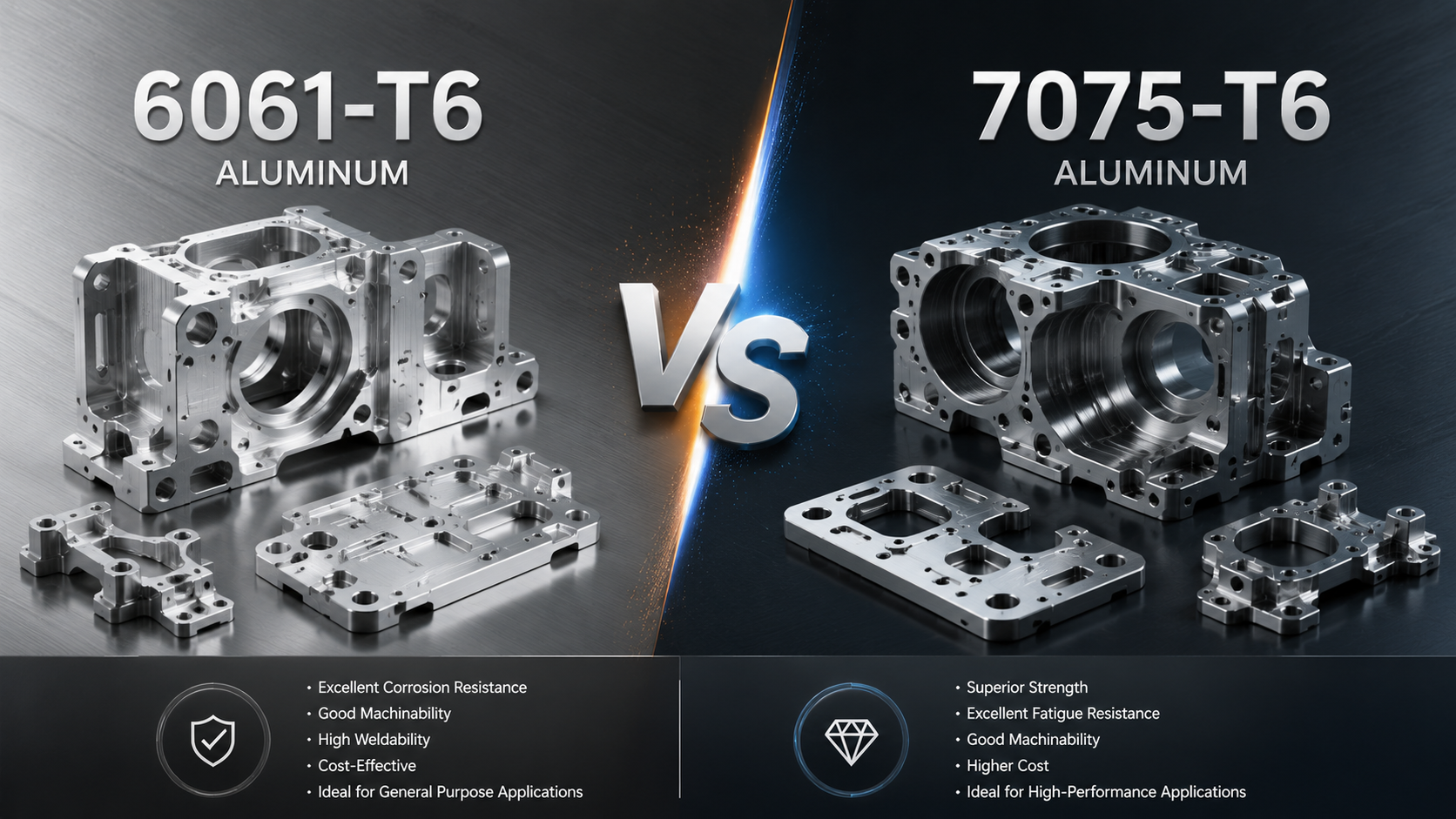
Un confronto pratico di forza, rigidità, lavorabilità, resistenza alla corrosione, saldatura, anodizzazione, costo, e adattamento dell'applicazione.
Introduzione
6061-T6 e 7075-T6 sono due delle leghe di alluminio più frequentemente confrontate per le parti di precisione. Entrambi sono trattabili termicamente, ampiamente disponibile in stock di ingegneria, e adatto a lavorazione CNC personalizzata. La differenza importante non è che una lega sia universalmente migliore. Il fatto è che ognuno risolve un problema di progettazione diverso.
6061-T6 è solitamente la scelta più equilibrata in termini di resistenza alla corrosione, saldatura, aspetto anodizzato, disponibilità, e costa tutta la questione. 7075-T6 o T651 sono la scelta migliore quando la capacità di carico e il rapporto resistenza/peso dominano la decisione. Questa guida spiega da dove provengono questi compromessi e come influiscono sulla lavorazione CNC, finitura, ispezione, e acquisto.
6061-T6 contro 7075-T6 in breve
Per molte parentesi, alloggiamenti, piatti, infissi, e recinzioni, 6061-T6 è l'impostazione predefinita pratica. Spostati in 7075 quando l'analisi lo dimostra 6061 non è in grado di soddisfare il carico richiesto o l'obiettivo di peso. Non scegliere 7075 per risolvere un problema di rigidità: le due leghe hanno quasi lo stesso modulo elastico, quindi una parte con deflessione limitata di solito necessita di una modifica della geometria o di un materiale più rigido.
Proprietà | 6061-T6 | 7075-T6/T651 | Implicazioni progettuali |
Massima resistenza alla trazione | 310 MPa | 572 MPa | 7075 fornisce una resistenza statica molto più elevata |
Forza di rendimento | 276 MPa | 503 MPa | 7075 adatto a carichi più elevati, parti con peso limitato |
Modulo elastico | 68.3 GPa | 71.7 GPa | La rigidità è quasi la stessa |
Densità | 2.70 g/cm3 | 2.80 g/cm3 | 7075 riguarda 4% più denso |
Conduttività termica | 167 W/m-K | 130 W/m-K | 6061 dissipa il calore in modo più efficace |
Resistenza alla corrosione | Bene | Più basso nel T6 | 7075 necessita di una pianificazione preventiva della protezione |
Saldabilità per fusione | Buono con il controllo del processo | Generalmente non raccomandato | 6061 è la pratica opzione saldata |
Risposta di anodizzazione | Coerente e adatto ai cosmetici | Funzionale, ma il colore può variare | 6061 è più semplice per le parti critiche dal punto di vista estetico |
Costo del materiale | Inferiore e ampiamente disponibile | Più alto e dipendente dalle scorte | Citarli entrambi quando la forza non è decisiva |
Valori tipici per lamiera e lamiera; forma del prodotto, spessore, specifica, e i dati dei fornitori hanno la precedenza.
Composizione chimica e rafforzamento
6061 appartiene alla famiglia Al-Mg-Si. Durante il trattamento termico, magnesio e silicio formano precipitati Mg2Si che conferiscono alla lega la sua utile combinazione di resistenza, resistenza alla corrosione, e producibilità. 7075 è una lega Al-Zn-Mg-Cu. È zinco- e il sistema di rinforzo ricco di magnesio produce una resistenza molto più elevata, mentre il contenuto di rame più elevato contribuisce a ridurre la resistenza alla corrosione e a scarsa saldabilità per fusione convenzionale.
Elemento | 6061 allineare (%) | 7075 allineare (%) | Perché è importante |
Zinco | 0.25 massimo | 5.1-6.1 | Elemento di rinforzo primario in 7075 |
Magnesio | 0.8-1.2 | 2.1-2.9 | Supporta l'indurimento dovuto alle precipitazioni |
Rame | 0.15-0.40 | 1.2-2.0 | Aumenta la resistenza ma riduce la corrosione e la saldabilità |
Silicio | 0.4-0.8 | 0.40 massimo | Si combina con il magnesio per rinforzare 6061 |
Cromo | 0.04-0.35 | 0.18-0.28 | Aiuta a controllare la struttura del grano |
I limiti di composizione sono intervalli nominali delle leghe, non sostituisce il certificato del materiale fornito con un lotto specifico.
Il solo numero di lega non è sufficiente per l'acquisto. Conferma il temperamento, forma del prodotto, spessore, specifica disciplinante, e requisiti di certificazione. JADE-CNC Materiali per la lavorazione CNC la guida può aiutare a strutturare tali controlli prima del preventivo.
Proprietà meccaniche e fisiche
Forza, Fatica, e duttilità
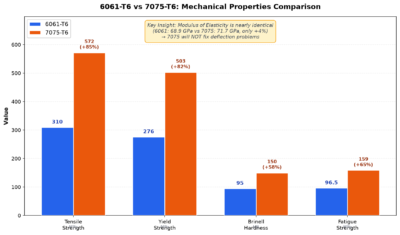
7075-T6 fornisce approssimativamente 84% maggiore carico di rottura e 82% resistenza allo snervamento più elevata rispetto alla tipica lamiera o lamiera 6061-T6. Questo è un vantaggio significativo nelle parti altamente caricate, ma ciò non si traduce automaticamente in un design migliore. Concentrazione dello stress, spettro di fatica, direzione della grana, carichi di fissaggio, esposizione alla corrosione, e i fattori di sicurezza controllano ancora la scelta finale.
Proprietà tipica | 6061-T6/T651 | 7075-T6/T651 | Differenza |
Massima resistenza alla trazione | 310 MPa | 572 MPa | 7075 Di 84% più alto |
Forza di rendimento | 276 MPa | 503 MPa | 7075 Di 82% più alto |
Resistenza al taglio | 207 MPa | 331 MPa | 7075 Di 60% più alto |
Resistenza alla fatica | 97 MPa | 159 MPa | 7075 Di 64% più alto |
Allungamento tipico | 17% | 11% | Varia in base alla forma e allo spessore del prodotto |
I valori sono tipici, ammissibili di progettazione non garantiti. Utilizzare le specifiche dei materiali applicabili e le proprietà certificate per i calcoli finali.
Rigidità, Densità, e flusso di calore
Il modulo elastico differisce solo di circa 5%. Se un piatto si piega troppo 6061, una stessa dimensione 7075 la sostituzione non ridurrà di molto la deflessione. Profondità della sezione crescente, aggiungendo le costole, accorciando una campata non supportata, oppure il cambiamento della classe del materiale può avere un effetto molto più ampio.
6061 inoltre conduce meglio il calore. Per alloggiamenti caricati termicamente e lavorazione CNC del dissipatore di calore, geometria delle pinne, planarità della base, flusso d'aria, pressione di interfaccia, e il trattamento superficiale spesso conta più della resistenza alla trazione.
Proprietà tipica | 6061-T6/T651 | 7075-T6/T651 | Significato ingegneristico |
Durezza Brinell | 95 HB | 150 HB | 7075 resiste meglio alla rientranza |
Modulo elastico | 68.3 GPa | 71.7 GPa | Solo una piccola differenza di rigidità |
Densità | 2.70 g/cm3 | 2.80 g/cm3 | Il rapporto forza-peso è ancora a favore 7075 |
Conduttività termica | 167 W/m-K | 130 W/m-K | 6061 di solito è migliore per il flusso di calore |
I valori termici e meccanici indicati sono tipici a temperatura ambiente.
Lavorabilità CNC: Entrambi sono buoni, ma si comportano diversamente
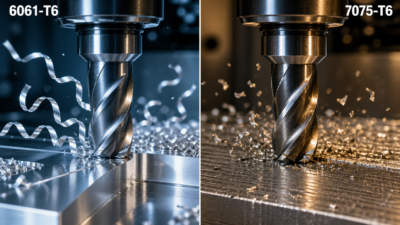
È fuorviante da descrivere 7075 semplicemente altrettanto difficile da lavorare. Entrambe le leghe si lavorano bene con i moderni utensili in metallo duro. 6061 è più morbido e può sviluppare tagliente di riporto se l'utensile sfrega o se l'evacuazione del truciolo è scarsa. 7075 è più difficile, ma spesso forma trucioli più corti e può produrre un'ottima finitura. La durata dell'utensile e il tempo ciclo dipendono dalla geometria, condizione di magazzino, capacità del mandrino, mandata del liquido refrigerante, esaurire, e strategia di rimozione del materiale.
Fattore di lavorazione | 6061-T6 | 7075-T6/T651 | Risposta pratica |
Comportamento del chip | Duttili; può formare un bordo di riporto | Spesso più breve, chip più gestibili | Utilizza la geometria affilata dell'alluminio per entrambi |
Caricamento degli strumenti | Può sbavare se il bordo si sfrega | Una maggiore durezza aumenta il carico di taglio | Evitare riduzioni generiche della velocità fissa |
Finitura superficiale | Eccellente con strumenti affilati | Eccellente con un processo stabile | Eccentricità di controllo, ritaglio del truciolo, e refrigerante |
Rischio di distorsione | Gestibile; T651 aiuta nella piastra | Lo stress residuo può avere importanza in caso di rimozione pesante | Ruvido, relax, quindi completare le funzionalità critiche |
Durata dell'utensile | Solitamente favorevole | Processo- e dipendente dalla geometria | Monitorare l'usura invece di prevedere una penalità fissa |
Guida pratica alla lavorazione
- Usa forte, taglienti lucidati e geometria della scanalatura destinata all'alluminio.
- Mantenere il carico di trucioli sufficientemente alto per tagliare in modo pulito; lo sfregamento favorisce il calore e il bordo di riporto.
- Fornire un'efficace evacuazione del truciolo in modo che il taglio successivo non danneggi la superficie.
- Per pareti sottili o rimozione di materiale pesante, separare la sgrossatura e la finitura e lasciare che la parte si rilassi.
- Utilizzare T651 o un'altra condizione di piastra con distensione quando la stabilità dimensionale è importante.
- Trattare velocità e avanzamenti come punti di partenza che devono essere regolati in base al diametro dell'utensile, conteggio dei flauti, sporgere, rigidità della macchina, refrigerante, e dati del produttore di utensili.
Un fornitore esperto in Fresatura CNC dovrebbe rivedere le tasche profonde, costole sottili, strumenti a lunga portata, strategia dei dati, e tolleranze critiche prima della produzione, indipendentemente dalla lega scelta.
Resistenza alla corrosione e tensocorrosione
6061-T6 offre generalmente una migliore resistenza alla corrosione rispetto a 7075-T6. In 7075, i costituenti ricchi di rame possono aumentare la suscettibilità alla vaiolatura, e la condizione T6 può essere vulnerabile alla tensocorrosione sotto sollecitazione di trazione sostenuta in orientamenti e ambienti sfavorevoli. Questo è il motivo per cui 7075-T73 o T7351 vengono spesso presi in considerazione quando la resistenza SCC è importante, anche se l'invecchiamento eccessivo riduce la forza.
Fattore di esposizione | 6061-T6 | 7075-T6/T651 |
Esposizione atmosferica | Generalmente buono | Resistenza inferiore; proteggere le parti esposte |
Tendenza alla vaiolatura | Inferiore | Maggiore a causa delle fasi ricche di rame |
Cracking da tensocorrosione | Buona resistenza nelle forme di prodotto comuni | T6 è più sensibile, soprattutto nel carico trasversale corto |
Opzione temperamento | T6/T651 comune | T73/T7351 migliora la resistenza all'SCC con una certa perdita di resistenza |
Strategia di protezione | Anodizzazione o rivestimento secondo necessità | Anodizzazione, rivestimento, rivestimento, e l’isolamento meritano una revisione anticipata |
Evitare le affermazioni universali sulle ore di nebbia salina a meno che non si tratti di lega, spessore della finitura, metodo di sigillatura, preparazione dei bordi, geometria del campione, e lo standard di accettazione sono tutti definiti. Un utile piano di corrosione inizia con l'effettivo ambiente di servizio e le specifiche complete del rivestimento.
Saldabilità e giunzione
6061-T6 è comunemente TIG- o saldato MIG, ma la zona termicamente alterata perde forza. Il giunto dovrebbe quindi essere progettato e calcolato per la condizione saldata piuttosto che per il valore originale del metallo base T6. La scelta del riempitivo dipende dalla temperatura di servizio, sensibilità alla rottura, duttilità, e l'aspetto post-finitura.
La saldatura per fusione convenzionale del 7075-T6 viene generalmente evitata per i lavori strutturali perché la fessurazione a caldo e la perdita di proprietà sono difficili da controllare. Fissaggio meccanico, incollaggio adesivo, saldatura per attrito secondo un processo qualificato, oppure potrebbe essere più appropriato passare a una lega saldabile.
Fattore di saldatura | 6061-T6 | 7075-T6 |
Saldatura per fusione convenzionale | Comunemente saldato mediante TIG o MIG | Generalmente sconsigliato per giunti strutturali |
Preoccupazione principale | Perdita di resistenza nella zona influenzata dal calore | Cracking a caldo e grave perdita di proprietà |
Selezione del riempitivo | ER4043 o ER5356 a seconda del servizio e della finitura | Nessun riempitivo universale rende equivalente un giunto strutturale T6 |
Risposta progettuale | Ricalcolare la condizione di saldatura | Utilizzare il fissaggio meccanico o modificare la lega/il percorso di giunzione |
Anodizzazione e altre finiture superficiali
6061-T6 è una scelta affidabile per il clear, nero, e anodizzazione colorata di Tipo II. 7075 può anche essere anodizzato, inclusa l'anodizzazione dura di tipo III, ma il suo contenuto di rame più elevato può rendere l'ossido più scuro e la corrispondenza dei colori meno prevedibile. Per parti cosmetiche, approvare un campione rappresentativo e conservare la lega, temperare, pretrattamento, lotto finito, e consistenza superficiale coerente.
Fattore di finitura | 6061-T6 | 7075-T6/T651 |
Anodizzazione di tipo II | Uniforme ed adatto per finiture cosmetiche colorate | Utilizzabile, ma il colore può essere più scuro o meno uniforme |
Anodizzazione dura di tipo III | Adatto | Adatto per la protezione funzionale dall'usura |
Abbinamento dei colori | Più prevedibile tra lotti controllati | Approvare campioni per lavori critici per l'aspetto |
Progettazione dimensionale | Consentire la crescita e il mascheramento del rivestimento | Stesso requisito, con maggiore attenzione alla risposta della lega |
Revisione opzioni di finitura superficiale prima che la lavorazione venga rilasciata. Spessore del rivestimento, mascheramento, discussioni, aree di contatto elettrico, fori di accoppiamento, e le facce visibili dovrebbero essere tutte identificate nel disegno o nelle specifiche di finitura.
Costo e disponibilità
7075 di solito comporta un sostanziale premio in materia di materie prime, ma una percentuale fissa non è affidabile tra le regioni, moduli di scorta, spessori, certificazioni, e quantità dell'ordine. Anche i costi di lavorazione non vengono calcolati automaticamente 30% O 50% più alto. Un ben progettato 7075 la parte può funzionare in modo efficiente, mentre un sottile, cosmetico 6061 l'alloggio può essere costoso a causa della configurazione, controllo della distorsione, e rischio di finire.
Determinante dei costi | 6061-T6 | 7075-T6/T651 |
Brodo grezzo | Ampia disponibilità e costi di base inferiori | Premio di lega più elevato e minore scelta di titoli |
Lavorazione | Efficiente per prototipi e produzione | Il tempo di ciclo è spesso simile, ma la strategia potrebbe cambiare |
Finitura | L'anodizzazione cosmetica è relativamente prevedibile | I controlli di campionamento o rivestimento possono aumentare i costi |
Ispezione | Basato sul rischio di disegno | Le applicazioni a carico elevato potrebbero richiedere maggiore certificazione e tracciabilità |
Rischio commerciale | Moduli in stock facili da sostituire | La disponibilità e la certificazione possono influire sui tempi di consegna |
Per prototipi e lavorazione CNC a basso volume, confrontare preventivi completi utilizzando la stessa revisione del disegno, specifica del materiale, fine, ambito di ispezione, e requisito di consegna. Ciò produce una decisione molto più utile rispetto al confronto del solo prezzo per chilogrammo.
Selezione basata sull'applicazione
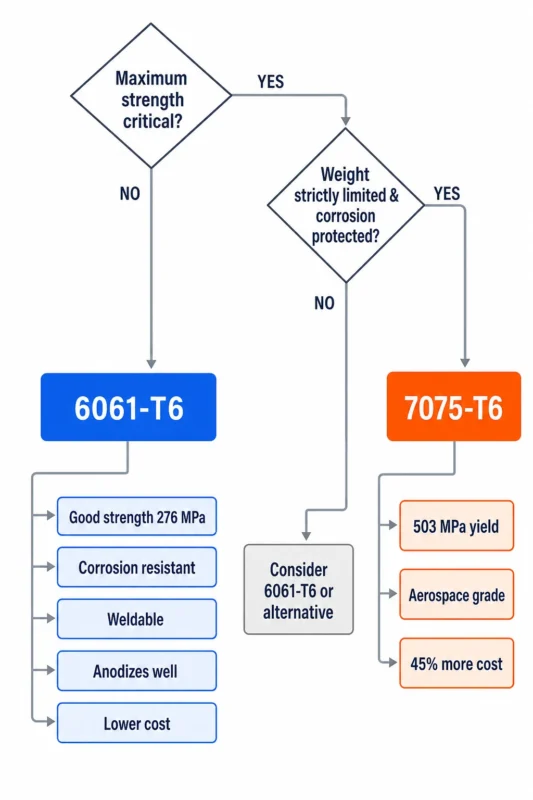
Scegli 6061-T6 Quando
- La resistenza richiesta è moderata e soddisfa già il fattore di sicurezza del progetto.
- Resistenza alla corrosione, saldabilità, oppure conta un aspetto anodizzato coerente.
- La parte è un alloggiamento, staffa, apparecchio, piatto, allegato, radiatore, o componente strutturale generale.
- Sono importanti un’ampia disponibilità di materiale e il controllo dei costi.
Scegli 7075-T6 o T651 Quando
- Il limite di snervamento o resistenza alla fatica è il requisito limitante.
- Il peso è strettamente limitato e la geometria non può aumentare abbastanza da poter essere utilizzata 6061.
- La parte non si baserà sulla saldatura per fusione convenzionale.
- È possibile controllare la protezione dalla corrosione e la tracciabilità dei materiali.
- L'applicazione prevede apparecchi ad alto carico, sport motoristici, robotica, O lavorazioni aerospaziali di precisione.
Quando un'altra lega o processo si adatta meglio
Priorità del progetto | Di solito scegli | Motivo |
Costo equilibrato, corrosione, saldatura, e aspetto | 6061-T6 | La più ampia vestibilità di produzione a tutto tondo |
Massima resistenza statica con peso ridotto | 7075-T6/T651 | Resa e resistenza alla trazione molto più elevate |
La deflessione è la modalità di fallimento | Riprogettare prima | Entrambe le leghe hanno quasi lo stesso modulo elastico |
Telo marino o recinzione sagomata | Considera 5052-H32 | Migliore formabilità e resistenza alla corrosione |
Estrusione cosmetica | Considera 6063-T6 | Eccellente risposta all'estrusione e all'anodizzazione |
Spesso, piastra aerospaziale ad alta resistenza con problemi di SCC | Considera 7050-T7451 | Migliori prestazioni SCC a breve trasversalità |
Volume molto elevato e geometria complessa | Valuta il casting | Gli utensili possono ridurre il costo unitario dopo il pareggio |
Disegno, Acquisto, e controlli ispettivi
La selezione del materiale dovrebbe terminare con un disegno chiaro e specifiche di acquisto. Note vaghe come "AL 7075".’ lasciano troppo spazio all'interpretazione e possono creare problemi di carattere, modulo di riserva, direzione della grana, certificazione, e terminare la risposta.
- Specificare la lega, temperare, forma del prodotto, e norme sui materiali che disciplinano.
- Identificare se è necessaria la piastra di distensione T651/T7351.
- Certificato statale, tracciabilità del lotto, o necessità di documentazione aerospaziale prima del preventivo.
- Definisci i requisiti della direzione delle fibre per parti altamente caricate o critiche per la fatica.
- Contrassegnare le superfici cosmetiche, tipo di anodizzazione, colore, spessore, sigillatura, e aree di mascheramento.
- Applicare tolleranze strette solo sulle caratteristiche funzionali e definire chiaramente i riferimenti.
- Concordare il metodo di ispezione, piano di campionamento, e reporting per le dimensioni critiche.
JADE-CNC può coordinare la revisione dei materiali con Ispezione CNC quindi la scelta della lega, piano di lavorazione, fine, e il metodo di misurazione sono considerati come un processo anziché come fasi di acquisto separate.
Come supporta JADE-CNC 6061 E 7075 Progetti
JADE-CNC lavora entrambe 6061 E 7075 per prototipi e parti di produzione. La revisione ingegneristica si concentra sul disegno, condizione di magazzino, geometria, pila di tolleranza, finitura superficiale, piano di ispezione, e requisiti dell'applicazione. Ciò consente alla raccomandazione del materiale di riflettere la parte effettiva invece di fare affidamento su una classificazione generica delle leghe.
- Revisione dei materiali e delle finiture prima del preventivo
- 3-asse, 4-asse, e fresatura a 5 assi più tornitura CNC
- Strategie di lavorazione per pareti sottili, tasche profonde, fori di precisione, e volti cosmetici
- Anodizzazione, sabbiatura, spazzolatura, coordinamento del rivestimento, e revisione del mascheramento
- Controllo dimensionale e reportistica in base ai requisiti del disegno
- Prototipo, a basso volume, e ripetere il supporto alla produzione
Per confrontare 6061-T6 e 7075-T6 per un componente specifico, inviare il modello 3D, 2disegno D, quantità, fine, e condizioni di servizio a JADE-CNC e richiedere una revisione della lavorazione.
Domande frequenti
Domande comuni di ingegneria
Il 7075-T6 è sempre più potente del 6061-T6?
Per lamiere e piastre tipiche T6, 7075 ha una resa e una resistenza alla trazione molto più elevate. Ciò non lo rende più rigido dello stesso margine, perché i moduli elastici sono quasi identici.
Può 6061-T6 sostituire 7075-T6 per ridurre i costi?
Solo dopo i carichi, dovere di fatica, concentrazioni di stress, ambiente, e il fattore di sicurezza sono stati controllati. Una sostituzione d'acquisto non dovrebbe mai aggirare l'approvazione tecnica.
Quale lega è più facile da lavorare con la macchina CNC?
Entrambi lavorano bene. 6061 è più morbido ma più incline al tagliente di riporto; 7075 è più duro ma spesso produce trucioli più corti. La geometria della parte e il controllo del processo di solito contano più di una semplice classifica di lavorabilità.
Il 7075-T6 può essere anodizzato a colori?
SÌ, ma il risultato può essere più scuro e meno coerente di 6061. Per lavori cosmetici, utilizzare campioni rappresentativi e definire una gamma di colori accettabile anziché presumere una corrispondenza visiva perfetta.
Il 7075-T6 è adatto per l'uso marino?
T6 richiede un'attenta protezione e non è un valore predefinito casuale per l'esposizione marina prolungata. Esaminare il rischio SCC, rivestimento, isolamento da metalli diversi, direzione della grana, e se è più appropriata la lega T73/T7351 o un'altra lega.
Perché specificare T651 invece di T6 per una lamiera lavorata?
T651 include la riduzione dello stress mediante allungamento dopo il trattamento termico della soluzione. È spesso preferito per la lamiera perché la riduzione dello stress residuo può migliorare la stabilità dimensionale durante la lavorazione pesante.
Conclusione
Scegli 6061-T6 quando il progetto necessita di un equilibrio di forza affidabile, resistenza alla corrosione, saldatura, finitura, disponibilità, e costo. Scegli 7075-T6 o T651 quando è necessaria una resistenza maggiore e il design può sopportarne la corrosione, unendosi, finitura, e vincoli di acquisto. Se la rigidità controlla il design, cambiando da 6061 A 7075 raramente sarà sufficiente da solo.
La decisione materiale più difendibile combina l’analisi strutturale con la forma del prodotto, temperare, strategia di lavorazione, fine, ispezione, certificazione, e ambiente di servizio. Queste sono anche le informazioni di cui un fornitore di lavorazioni meccaniche ha bisogno per quotare accuratamente il pezzo.
Articoli 6061-T6 correlati
- 6061-Guida completa alla lavorazione CNC dell'alluminio T6
- 6061-T6 rispetto all'alluminio 7075-T6: Forza, Costo & Lavorabilità
- 6061-Anodizzazione dell'alluminio T6: Tipi, Colori, Spessore & Regole di progettazione
- 6061-Parametri di lavorazione CNC T6: Velocità, Feed, Utensileria & Controllo del processo
- 6061-T6 contro ADC12 alluminio: Lavorazione CNC o pressofusione?
- 6061-Linee guida DFM per lavorazione CNC T6: Regole di progettazione & Lista di controllo
- 6061-Proprietà dell'alluminio T6: Meccanico, Termico & Dati chimici
Fonti dei dati materiali
Gli intervalli di composizione e densità possono essere confrontati con Fogli di alluminio dell'associazione verde acqua. Le proprietà tipiche di lamiere e piastre in questo confronto sono allineate Kaiser alluminio 6061 dati tecnici E Kaiser alluminio 7075 dati tecnici. I valori di progettazione finali devono provenire dalle specifiche applicabili e dal materiale certificato per la forma e lo spessore effettivi del prodotto.

Leone Liang, Fondatore Miglior Partner con R&D
Il fondatore di JADE-CNC LEO, che vanta oltre due decenni di esperienza nel settore, Leo ha iniziato la sua carriera come apprendista e ha messo in pratica le sue competenze nel trattamento superficiale e nella lavorazione CNC.