


17-4PH Paslanmaz Çelik: Yüksek Mukavemetli Parçalar İçin İşleme ve Isıl İşlem Kararları
Ne zaman 304 veya 316 paslanmaz çelik yeterli güç sağlamıyor, mühendisler sıklıkla 17-4PH'yi değerlendirir, olarak da bilinir 630 paslanmaz çelik. 17-4PH çökelmeyle sertleşen bir paslanmaz çeliktir. Çözüm tedavisi ve yaşlanma yoluyla, faydalı korozyon direncini ve işlenebilirliği korurken yüksek mukavemet sağlayabilir. Genellikle havacılıkta kullanılır, tıbbi aletler, üst düzey mekanik parçalar, ve yüksek yüklü bağlantı bileşenleri.
17-4PH'nin işlenmesi, işlemeden daha karmaşıktır 304 veya 316 çünkü ısıl işlem rotası son boyutları etkiler, sertlik, kuvvet, ve parti tutarlılığı. Önemli kararlar çözüm tedavisinin ne zaman gerçekleştirileceğidir, yaşlandırma ne zaman yapılır, ve son işlemenin ısıl işlemden önce mi yoksa sonra mı yapılması gerektiği. Ortak parçalar arasında hassas miller bulunur, kilitleme bileşenleri, valf makaraları, robotik tutucu yapılar, havacılıkla ilgili parantez, ve yüksek yük konnektörleri.
Bu makale ısıl işlem sırasına odaklanmaktadır, işleme ödeneği, yaşlanma distorsiyonu, işlemeyi bitirmek, Ve denetleme 17-4PH paslanmaz çelik CNC işleme için zamanlama. Daha geniş paslanmaz çelik işleme rotası için, malzeme seçimi, işleme sorunları, ve bitirme kararları, gör paslanmaz çelik CNC işleme kılavuzu.
17-4PH Malzeme Özellikleri: Dengeleme Gücü, Sertlik ve Korozyon Direnci
17-4PH, Cr-Ni-Cu çökeltmeyle sertleşen paslanmaz çeliktir. Bakır çökelmeyle sertleşen ana elementtir. Solüsyon tedavisinden sonra, malzeme nispeten yumuşaktır ve makineyle veya yarı finişte kaba işlenmesi daha kolaydır. Yaşlanmadan sonra, çökelme güçlendirmesi sertliği ve mukavemeti artırır. Çünkü her durumun farklı sertliği vardır, kuvvet, korozyon davranışı, ve işlenebilirlik, süreç sıradan östenitik paslanmaz çelik gibi planlanmamalıdır.
17-4PH'nin korozyon direnci genellikle 304 ve daha düşük 316, bu nedenle deniz suyu veya güçlü klorür ortamları için iyi bir ilk tercih değildir. Ana değeri yönetilebilir boyut kontrolü ile yüksek mukavemettir, yük taşıma açısından kullanışlı hale getirir, kilitleme, konumlandırma, ve aşınmaya bağlı yapılar. Kaynak mümkün, ancak kaynak performansı ve ısıl işlem durumu üretimden önce doğrulanmalıdır..
Durum | Sertlik HRC | Çekme Dayanımı MPa | Notlar |
Çözelti işlenmiş, Durum A | <=30 | >=930 | Daha yumuşak durum, işlenebilir |
H900, 480C'de yaşlandırılmış | 40-44 | >=1310 | En yüksek güç, korozyon direnci azalabilir |
H1025, 550C'de yaşlandırılmış | 35-40 | >=1070 | Dengeli güç ve korozyon direnci |
H1150, 620C'de yaşlandırılmış | 28-33 | >=860 | Daha yüksek tokluk ve daha iyi korozyon direnci |
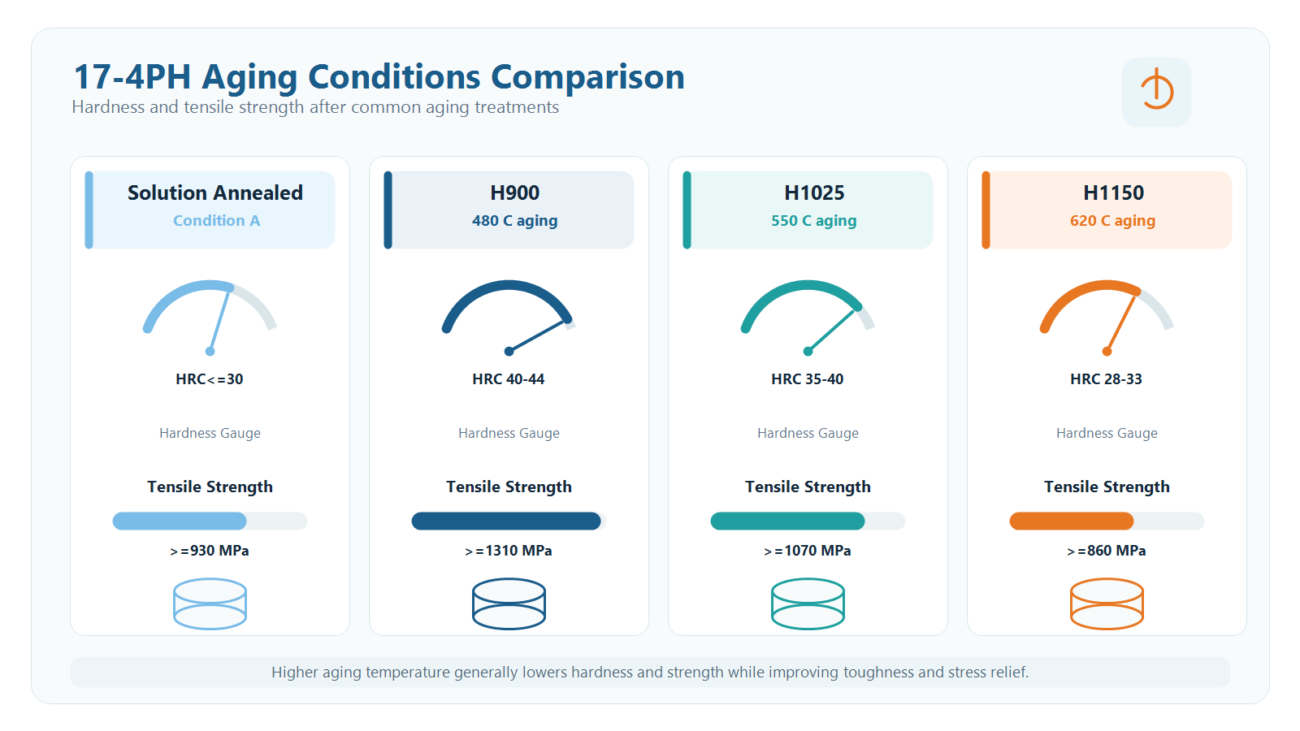
Resim yuvası 1: 17-4Yaşlanma durumuna göre PH performans karşılaştırması.
Isıl İşlem Rotası: Çözüm Tedavisi, Yaşlandırma ve Son İşleme Sırası
Yaygın bir 17-4PH proses rotası kaba işlemedir, çözüm tedavisi, yarı terbiye, yaşlanma, ve işlemeyi bitir. Kaba işleme genellikle daha yumuşak bir durumda yapılır çünkü işlenebilirlik daha iyidir ve ısıl işlem ve son bitirme için yeterli stok bırakılabilir.. Yaşlanmadan sonra, malzeme zorlaşıyor, yani kalan iş genellikle taşlamadır, hafif frezeleme, tornalamayı bitir, veya yoğun talaş kaldırma yerine yerel düzeltme.
Başka bir yol ise kaba işlemedir, çözüm tedavisi artı yaşlanma, ve ardından işlemeyi bitirin. Bu rota bir taşıma adımını azaltır, ancak eskimiş malzeme daha zordur, bitiş payı daha küçük olmalıdır, ve takım aşınma riski daha yüksektir. Basit geometriler için daha uygundur, küçük bitirme payı, ve istikrarlı tolerans gereksinimleri.
Kilit nokta, son kritik boyutların genellikle yaşlanmadan sonra tamamlanmasıdır.. Yaşlanma hafif boyutsal harekete neden olabilir. Gibi bir aralık 0.05-0.15 mm belirli yapılar için tipik bir planlama referansı olarak değerlendirilmelidir, garanti edilmiş bir değer olarak değil. JADE-CNC normalde eskime sonrasında önemli boyutları kontrol eder, daha sonra bitiş payını ayarlar, fikstür, ve ölçülen harekete dayalı işleme parametreleri.
CNC İşleme Stratejisi: Farklı Koşullar Farklı Kesim Planlarına İhtiyaç Duyar
Çözelti ile işlenmiş durumda, 17-4PH makineleri biraz benziyor 304, ama yine de bir miktar sağlamlık ve işi sertleştirme eğilimi var. TiAlN kaplı karbür takımlar sıklıkla kullanılır, ve Vc 80-120 m/dak ilk dönüş referansı olarak kullanılabilir. Kesme derinliği sertleşmiş bir yüzey katmanına sürtünmeyi önlemelidir. Kaba işleme payı parça boyutuna bağlıdır, duvar kalınlığı, ısıl işlem durumu, ve tolerans gereksinimleri.
Yaşlı durumda, 17-4PH daha yüksek sertliğe sahiptir, daha güçlü kesme yükü, ve daha fazla alet aşınması. Frezeleme karbür kullanabilir, sermet, veya haklı olduğu durumlarda PCBN araçları. Kesme hızı genellikle azalır, ve istikrarlı besleme, küçük kesme derinliği, ve yeterli soğutma daha önemli hale geliyor. Sondajda kobalt HSS veya karbür matkaplar kullanılabilir; derin delikler ve küçük delikler gagalama ve talaş tahliye kontrolü gerektirir. Kılavuz çekme doğru kılavuz tipiyle planlanmalıdır, kılavuz yağı, ve kontrollü pilot delik boyutu.
Öğütme, 17-4PH yaşları için önemli bir bitirme yöntemidir. Silindirik taşlama, yüzey taşlama, ve jig taşlama kritik boyutları düzeltmek için kullanılabilir. Tekerlek seçimi ve soğutma stratejisi taşlama yanmasını önlemelidir. Öfke rengi veya yanık görünüyorsa, yüzey sertliği, korozyon direnci, ve yorgunluk performansı etkilenebilir, bu nedenle taşlama ısısı kritik yüzeyler için proses incelemesinin bir parçası olmalıdır.
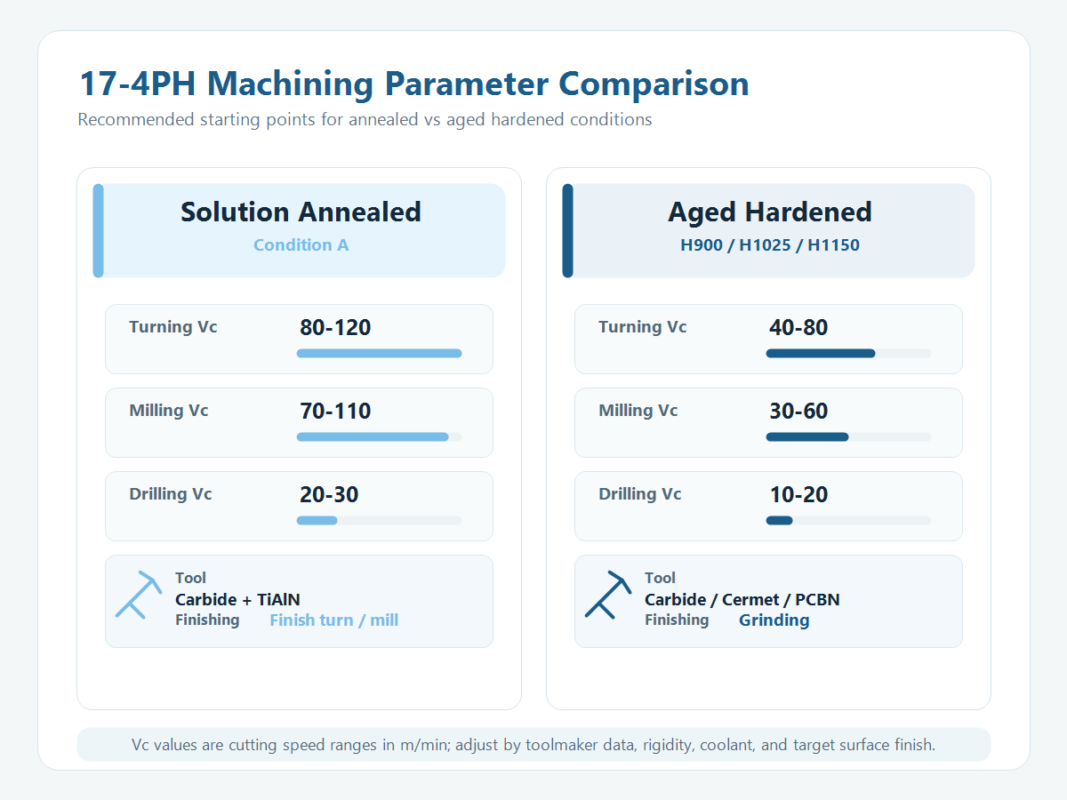
Resim yuvası 2: Farklı koşullarda 17-4PH için işleme parametresi karşılaştırması.
Distorsiyon Kontrolü: Isıl İşlem Harcırahı, Fikstürleme ve Muayene Zamanlaması
17-4PH ısıl işlem distorsiyonu çoğu zaman olduğundan daha fazla dikkat gerektirir. 304 veya 316 çünkü çökelme sertleşmesi yapısal ve boyutsal değişikliklere neden olur. İnce duvarlar, uzun miller, karmaşık boşluklar, eksantrik özellikler, ve eşit olmayan duvar kalınlığı bükülmeye neden olabilir, eğrilme, veya yerel boyut kayması. Distorsiyon kontrolü, ısıl işlem öncesi işleme toleransına bağlıdır, ısıl işlem desteği, fikstür, ve yaşlanmadan sonra muayene zamanlaması.
Uzun şaftlar, kendi ağırlığından kaynaklanan bükülmeyi azaltmak için dikey asma veya destekli ısıl işlem için değerlendirilebilir. İnce plakalar ve ince duvarlı parçalar, bükülmeyi azaltmak için özel fikstürler veya destek yöntemleri kullanabilir. Karmaşık parçalar genellikle çözelti işleminden sonra yarı mamul haline getirilir ve yaşlandırmanın ardından son işlem yapılır., Yaşlanma hareketini düzeltmek için son işlemeyi kullanma. Yaşlanma hareketi 0.05-0.15 mm ve bitiş payı 0.2-0.3 mm erken planlama referansı olarak kullanılabilir, ancak nihai pay parça geometrisinden onaylanmalıdır, ısıl işlem parti davranışı, ve tolerans gereksinimleri.
Distorsiyon mevcut bitiş toleransını aşarsa, ekibin düzeltmeyi değerlendirmesi gerekebilir, yeniden ısıl işlem, yerel düzeltme, veya riski yeniden yarat. 17-4PH yaşını düzeltmek daha zordur ve daha zordur, bu nedenle daha iyi yaklaşım, parça hala çözeltiyle işlenmiş veya yarı mamul durumdayken geometriyi kontrol etmektir.. Bu nedenle proses planlaması düzeltme konumunu da içermelidir, muayene noktası, ve son işleme ödeneği.
Yaygın İşleme Sorunları ve Takım Kontrolü
Karşılaştırıldığında 304 veya 316, 17-4PH belirli koşullarda daha yüksek kesme yükü oluşturabilir, ve takım aşınması ısıl işlemden sonra daha belirgin hale gelir. Küçük iç köşeler, derin oluklar, ince duvarlar, yüksek yüzey kalitesi gereksinimleri, ve kesintiye uğrayan kesintilerin tümü riski artırıyor. Takım seçimi, kesme verileri, soğutucu, talaş tahliyesi, ve iş parçası tutma sertliği birlikte gözden geçirilmelidir. Bitişikteki paslanmaz işleme sorunları için, Görmek Paslanmaz Çelik CNC İşleme Sorunları & Çözümler.
Başvurular ve Seçim Rehberi
17-4PH, bir parçanın yüksek mukavemete ve orta düzeyde korozyon direncine ihtiyaç duyduğu durumlarda uygundur: havacılık yapısal bileşenleri, yüksek mukavemetli tıbbi aletler veya bileşenler, birinci sınıf mekanik parçalar, dişliler, miller, vanalar, kilitleme parçaları, ve petrol ve gazla ilgili bileşenler. Servis ortamı deniz suyunu içeriyorsa, güçlü klorüre maruz kalma, veya agresif korozyon ortamı, 316, dubleks paslanmaz çelik, veya başka bir korozyona dayanıklı alaşım, yalnızca dayanıma bakmak yerine gözden geçirilmelidir. Yüksek mukavemet gerekmiyorsa, 304 veya 316 genellikle daha ekonomiktir ve işlenmesi daha kolaydır.
Yaşlanma durumu aynı zamanda bir seçim kararıdır. H900 genellikle yüksek mukavemetin öncelikli olduğu yerlerde kullanılır, ancak tokluk ve korozyon direnci gözden geçirilmelidir. H1025 genellikle mukavemetli olduğunda kullanılır, dayanıklılık, ve korozyon direncinin dengeye ihtiyacı var. H1150 daha iyi dayanıklılık sağlar ve darbeli yükleme veya tokluğa duyarlı parçalar için kullanışlıdır. JADE-CNC, işleme rotasını yüke göre değerlendirir, çevre, boyutsal doğruluk, ısıl işlem görmüş durum, ve muayene gereklilikleri.
JADE-CNC Hakkında
JADE-CNC hassas paslanmaz çelik parça işlemeye odaklanıyor, ile beş eksenli işleme, torna-freze bileşik işleme, hassas taşlama ekipmanları, ISO 9001 sertifikasyon, ve CNC işlemeden tek elden hizmet, kaynak, ısıl işlem koordinasyonu, yüzey bitirme, muayeneye. Gelen malzeme spektrometre ile doğrulanabilir, ve temel süreçler, kendi kendini denetlemeyi özel denetimle birleştirerek teslim süresini kontrol etmeye yardımcı olur, kalite, ve parti tutarlılığı.
Çiziminizi gönderin, 3D modeli, 17-4PH malzeme durumu, yaşlanma durumunu hedefleyin, ısıl işlem gereksinimi, kritik boyutlar, toleranslar, yüzey işleme, süreç değerlendirmesi için parti miktarı ve alıntı yapmak, tipik olarak içinde 24 saat.
İlgili Paslanmaz Çelik Makaleler
– 304 vs 316 316L Paslanmaz Çelik vs: CNC İşleme İçin Hangisini Seçmelisiniz?
– CNC İşlenmiş Parçalar için Paslanmaz Çelik Kaynak: TIG, Lazer Kaynak ve Distorsiyon Kontrolü

Leo Liang, Kurucu R ile En İyi Ortak&D
JADE-CNC Kurucusu LEO, yirmi yıldan fazla endüstri uzmanlığını getiren, Leo kariyerine çırak olarak başladı ve yüzey işleme ve CNC işleme konusundaki becerilerini geliştirdi.