


17-4PH Acier inoxydable: Décisions d'usinage et de traitement thermique pour les pièces à haute résistance
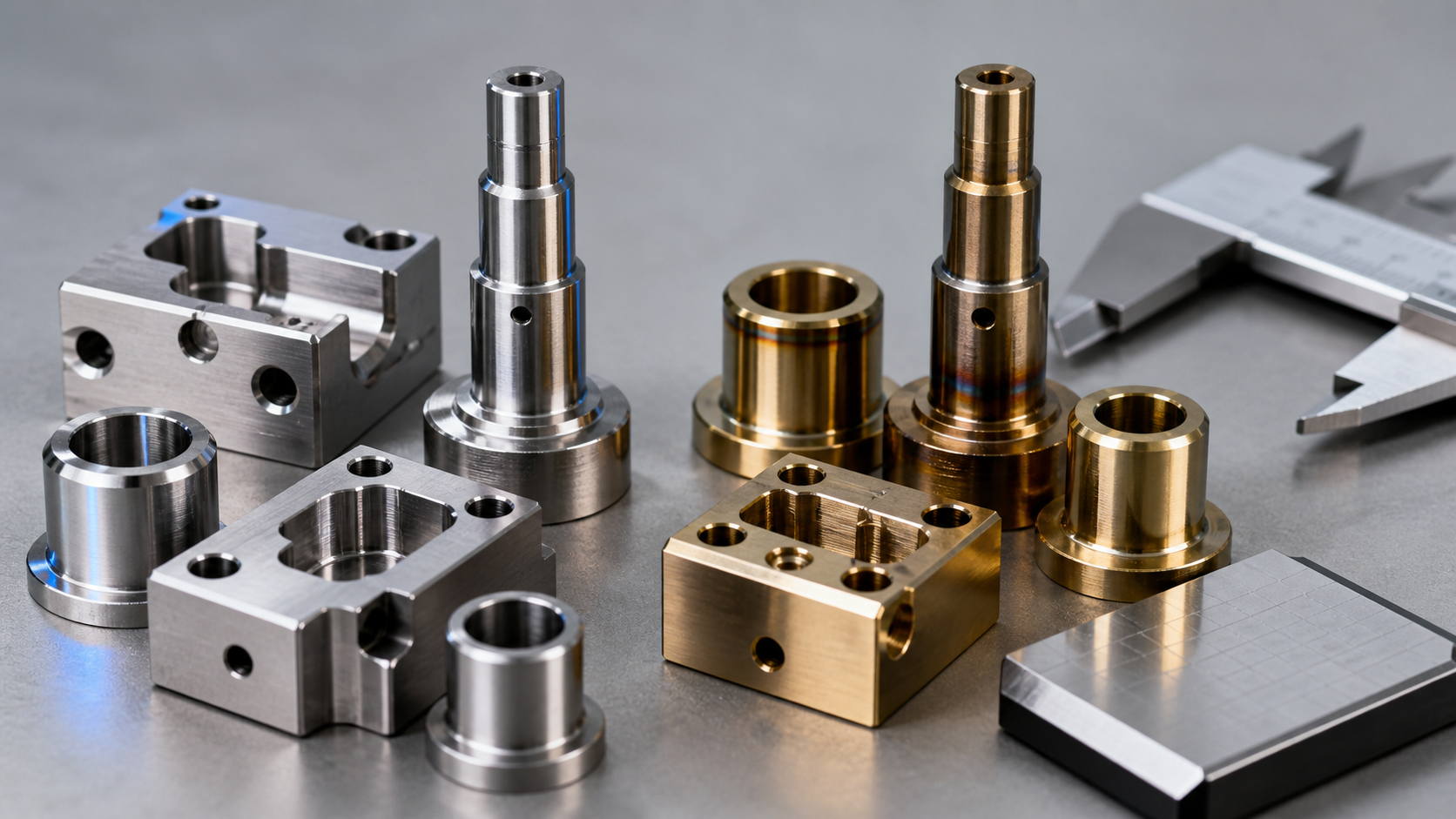
Quand 304 ou 316 l'acier inoxydable n'offre pas assez de résistance, les ingénieurs évaluent souvent le 17-4PH, également connu sous le nom 630 acier inoxydable. 17-4PH est un acier inoxydable à durcissement par précipitation. Par traitement en solution et vieillissement, il peut offrir une résistance élevée tout en conservant une résistance à la corrosion et une usinabilité utiles. Il est souvent utilisé dans l'aérospatiale, instruments médicaux, pièces mécaniques haut de gamme, et composants de connexion à forte charge.
L'usinage du 17-4PH est plus complexe que l'usinage 304 ou 316 car le traitement thermique affecte les dimensions finales, dureté, force, et la cohérence des lots. Les décisions clés sont de savoir quand effectuer le traitement par solution, quand effectuer le vieillissement, et si l'usinage final doit être effectué avant ou après le traitement thermique. Les pièces communes incluent des arbres de précision, composants de verrouillage, tiroirs de valve, structures de préhension robotisées, supports liés à l'aérospatiale, et connecteurs haute charge.
Cet article se concentre sur la séquence de traitement thermique, surépaisseur d'usinage, distorsion due au vieillissement, finition de l'usinage, et inspection synchronisation pour l'usinage CNC en acier inoxydable 17-4PH. Pour le parcours plus large d’usinage de l’acier inoxydable, sélection des matériaux, problèmes d'usinage, et finaliser les décisions, voir le guide d'usinage CNC en acier inoxydable.
17-4Propriétés du matériau PH: Force d’équilibrage, Dureté et résistance à la corrosion
17-4PH est un acier inoxydable Cr-Ni-Cu à durcissement par précipitation. Le cuivre est le principal élément durcissant par précipitation. Après traitement en solution, le matériau est relativement mou et plus facile à ébaucher ou à semi-finir. Après vieillissement, le renforcement par précipitation augmente la dureté et la résistance. Parce que chaque condition a une dureté différente, force, comportement à la corrosion, et usinabilité, le processus ne doit pas être planifié comme l'acier inoxydable austénitique ordinaire.
La résistance à la corrosion du 17-4PH est généralement proche de 304 et inférieur à 316, ce n'est donc pas un bon premier choix pour l'eau de mer ou les environnements fortement chlorés. Sa principale valeur est une haute résistance avec un contrôle dimensionnel gérable, ce qui le rend utile pour supporter des charges, verrouillage, positionnement, et structures liées à l'usure. Soudage est possible, mais les performances de la soudure et l'état du traitement thermique doivent être confirmés avant la production.
Condition | Dureté HRC | Résistance à la traction MPa | Remarques |
Solution traitée, État A | <=30 | >=930 | État plus doux, usinable |
H900, vieilli à 480C | 40-44 | >=1310 | La plus haute résistance, la résistance à la corrosion peut diminuer |
H1025, vieilli à 550C | 35-40 | >=1070 | Résistance équilibrée et résistance à la corrosion |
H1150, vieilli à 620C | 28-33 | >=860 | Une ténacité plus élevée et une meilleure résistance à la corrosion |
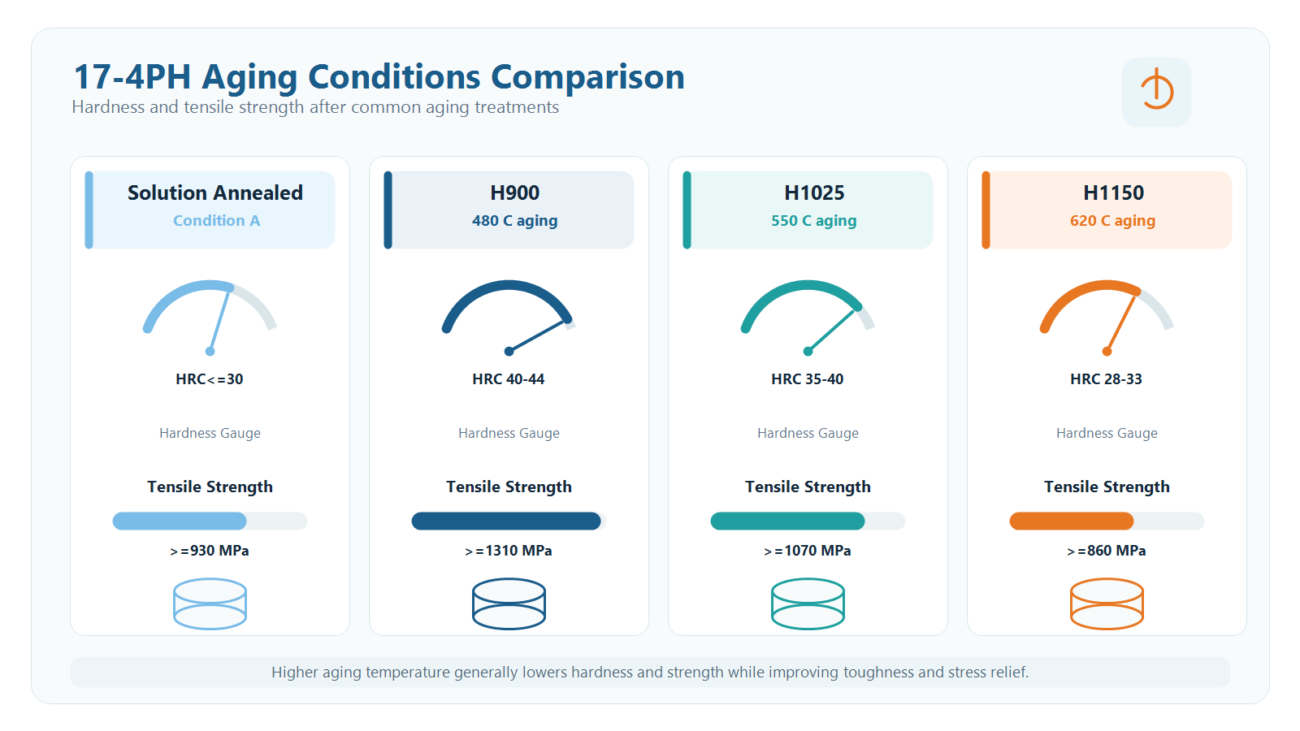
Emplacement pour images 1: 17-4Comparaison des performances du PH par condition de vieillissement.
Voie de traitement thermique: Traitement en solution, Séquence d'usinage de vieillissement et de finition
Un processus courant du 17-4PH est l'usinage grossier., traitement en solution, semi-finition, vieillissement, et finition de l'usinage. L'usinage grossier est généralement effectué dans des conditions plus douces car l'usinabilité est meilleure et il est possible de laisser suffisamment de stock pour le traitement thermique et la finition finale.. Après vieillissement, le matériau devient plus dur, donc le travail restant consiste généralement à broyer, fraisage léger, finir de tourner, ou une correction locale plutôt qu'un enlèvement de matière important.
Une autre voie est l'usinage grossier, traitement en solution plus vieillissement, puis terminer l'usinage. Cet itinéraire réduit une étape de manipulation, mais le matériau vieilli est plus dur, la surépaisseur de finition doit être plus petite, et le risque d'usure des outils est plus élevé. Il est plus adapté aux géométries simples, petite surépaisseur de finition, et exigences de tolérance stables.
Le point clé est que les dimensions critiques finales sont généralement complétées après vieillissement.. Le vieillissement peut provoquer de légers mouvements dimensionnels. Une gamme telle que 0.05-0.15 mm doit être considéré comme une référence de planification typique pour certaines structures, pas comme valeur garantie. JADE-CNC vérifie normalement les dimensions clés après vieillissement, puis ajuste la surépaisseur de finition, montage, et paramètres d'usinage basés sur le mouvement mesuré.
Stratégie d'usinage CNC: Différentes conditions nécessitent différents plans de coupe
Dans l'état traité en solution, 17-4Les machines PH un peu comme 304, mais il a encore une certaine ténacité et tendance à l'écrouissage. Les outils en carbure revêtus de TiAlN sont souvent utilisés, et Vc 80-120 m/min peut être utilisé comme référence de tournage initiale. La profondeur de coupe doit éviter de frotter sur une couche de surface durcie. La surépaisseur d'usinage grossier dépend de la taille de la pièce, épaisseur de paroi, état du traitement thermique, et exigences de tolérance.
Dans l'état âgé, 17-4Le PH a une dureté plus élevée, charge de coupe plus forte, et plus d'usure des outils. Le fraisage peut utiliser du carbure, cermet, ou outils PCBN lorsque cela est justifié. La vitesse de coupe est généralement réduite, et une alimentation stable, petite profondeur de coupe, et un refroidissement suffisant devient plus important. Le perçage peut utiliser des forets HSS au cobalt ou en carbure; les trous profonds et les petits trous nécessitent un contrôle du débourrage et de l'évacuation des copeaux. Le taraudage doit être planifié avec le bon type de taraudage, puiser de l'huile, et taille de trou pilote contrôlée.
Le meulage est une méthode de finition importante pour les 17-4PH âgés. Rectification cylindrique, meulage de surface, et le meulage au gabarit peut être utilisé pour corriger les dimensions critiques. La sélection des meules et la stratégie de refroidissement doivent éviter les brûlures de meulage. Si une couleur de trempe ou une brûlure apparaît, dureté superficielle, résistance à la corrosion, et les performances en fatigue peuvent être affectées, la chaleur de meulage devrait donc faire partie de l'examen du processus pour les surfaces critiques.
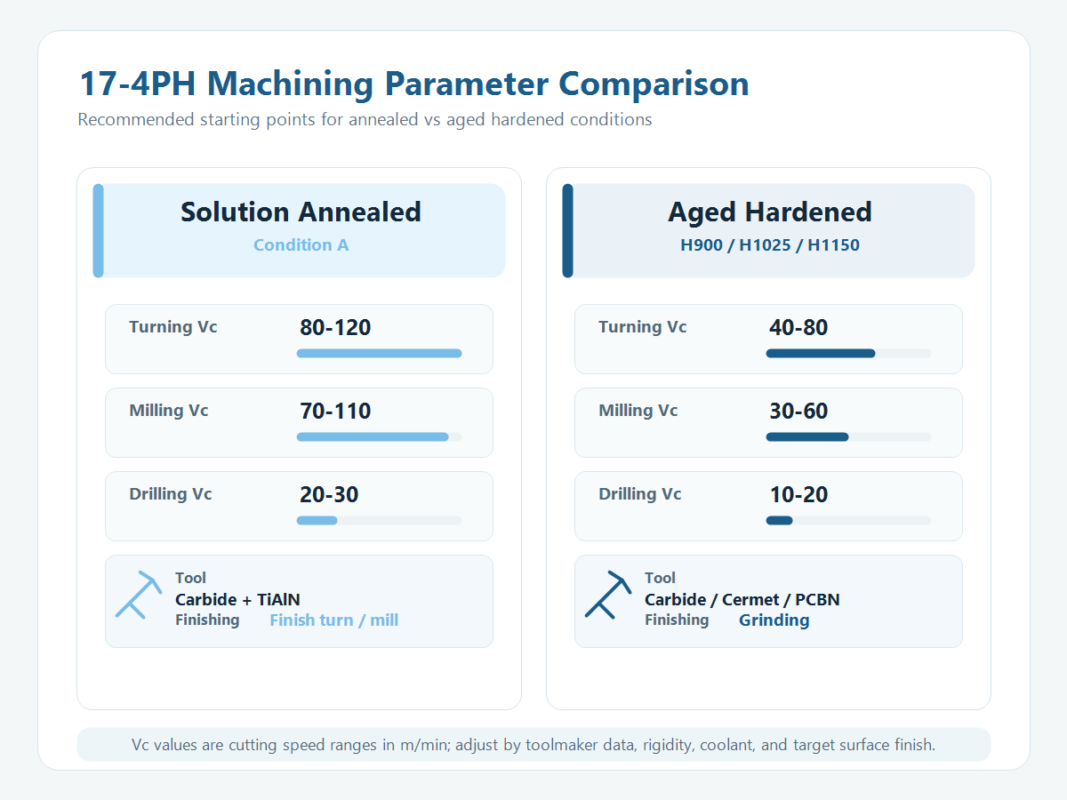
Emplacement pour images 2: comparaison des paramètres d'usinage pour 17-4PH dans différentes conditions.
Contrôle de la distorsion: Allocation de traitement thermique, Calendrier de montage et d’inspection
17-4La distorsion du pH par traitement thermique nécessite souvent plus d'attention que 304 ou 316 car le durcissement par précipitation provoque des changements structurels et dimensionnels. Parois minces, arbres longs, cavités complexes, caractéristiques excentriques, et une épaisseur de paroi inégale peut entraîner une flexion, gauchissement, ou changement dimensionnel local. Le contrôle de la déformation dépend de la surépaisseur d'usinage avant traitement thermique, support de traitement thermique, montage, et calendrier d'inspection après vieillissement.
Les arbres longs peuvent être évalués pour une suspension verticale ou un traitement thermique supporté afin de réduire la flexion due au poids propre.. Les plaques minces et les pièces à paroi mince peuvent utiliser des fixations ou des méthodes de support dédiées pour réduire la déformation.. Les pièces complexes sont souvent semi-finies après traitement en solution et usinées après vieillissement., utiliser l'usinage final pour corriger le mouvement de vieillissement. Mouvement vieillissant de 0.05-0.15 mm et surépaisseur de finition de 0.2-0.3 mm peut être utilisé comme référence de planification précoce, mais la tolérance finale doit être confirmée à partir de la géométrie de la pièce, comportement du lot de traitement thermique, et exigences de tolérance.
Si la distorsion dépasse la tolérance de finition disponible, l'équipe devra peut-être évaluer le redressement, traitement de réchauffage, correction locale, ou refaire le risque. 17-4PH est plus dur et plus difficile à redresser, la meilleure approche consiste donc à contrôler la géométrie alors que la pièce est encore dans un état traité en solution ou semi-fini. La planification du processus doit donc inclure la position de redressage, point de contrôle, et surépaisseur finale d'usinage.
Problèmes d'usinage courants et contrôle des outils
Par rapport à 304 ou 316, 17-4Le PH peut générer une charge de coupe plus élevée dans certaines conditions, et l'usure des outils devient plus évidente après le traitement thermique. Petits coins internes, rainures profondes, parois minces, exigences élevées en matière d'état de surface, et les coupures interrompues augmentent toutes le risque. Choix de l'outil, données de coupe, liquide de refroidissement, évacuation des copeaux, et la rigidité du maintien de la pièce doivent être examinées ensemble. Pour les problèmes d’usinage adjacents de l’acier inoxydable, voir Problèmes d'usinage CNC en acier inoxydable & Solutions.
Candidatures et conseils de sélection
17-4PH convient lorsqu’une pièce nécessite une résistance élevée et une résistance modérée à la corrosion: composants structurels aérospatiaux, outils ou composants médicaux à haute résistance, pièces mécaniques haut de gamme, engrenages, arbres, vannes, pièces de verrouillage, et composants liés au pétrole et au gaz. Si l'environnement de service comprend de l'eau de mer, forte exposition au chlorure, ou des milieux corrosifs agressifs, 316, duplex en acier inoxydable, ou un autre alliage résistant à la corrosion devrait être revu au lieu de s'intéresser uniquement à la résistance. Si une résistance élevée n'est pas requise, 304 ou 316 est généralement plus économique et plus facile à usiner.
La condition de vieillissement est aussi une décision de sélection. Le H900 est souvent utilisé là où une résistance élevée est la priorité, mais la ténacité et la résistance à la corrosion sont à revoir. H1025 est couramment utilisé lorsque la force, dureté, et la résistance à la corrosion doit être équilibrée. H1150 offre une meilleure ténacité et est utile pour les charges d'impact ou les pièces sensibles à la ténacité. JADE-CNC évalue l'itinéraire d'usinage en fonction de la charge, environnement, précision dimensionnelle, état de traitement thermique, et les exigences en matière d'inspection.
À propos de JADE-CNC
JADE-CNC se concentre sur l'usinage de précision des pièces en acier inoxydable, avec usinage cinq axes, usinage composé de tour-fraisage, équipement de meulage de précision, OIN 9001 attestation, et un service à guichet unique pour l'usinage CNC, soudage, coordination du traitement thermique, finition de surface, à l'inspection. Le matériel entrant peut être vérifié par spectromètre, et les processus clés combinent l'auto-inspection avec une inspection dédiée pour aider à contrôler les délais de livraison., qualité, et la cohérence des lots.
Envoyez votre dessin, 3Modèle D, 17-4État du matériau PH, condition de vieillissement cible, exigence de traitement thermique, dimensions critiques, tolérances, traitement de surface, et la quantité de lots pour l'évaluation du processus et citation, généralement dans 24 heures.
Articles connexes sur l'acier inoxydable
Léo Liang, Fondateur Meilleur partenaire avec R&D
LEO, fondateur de JADE-CNC, qui apporte plus de deux décennies d'expertise dans l'industrie, Leo a commencé sa carrière en tant qu'apprenti et met en pratique ses compétences en traitement de surface et en usinage CNC..