


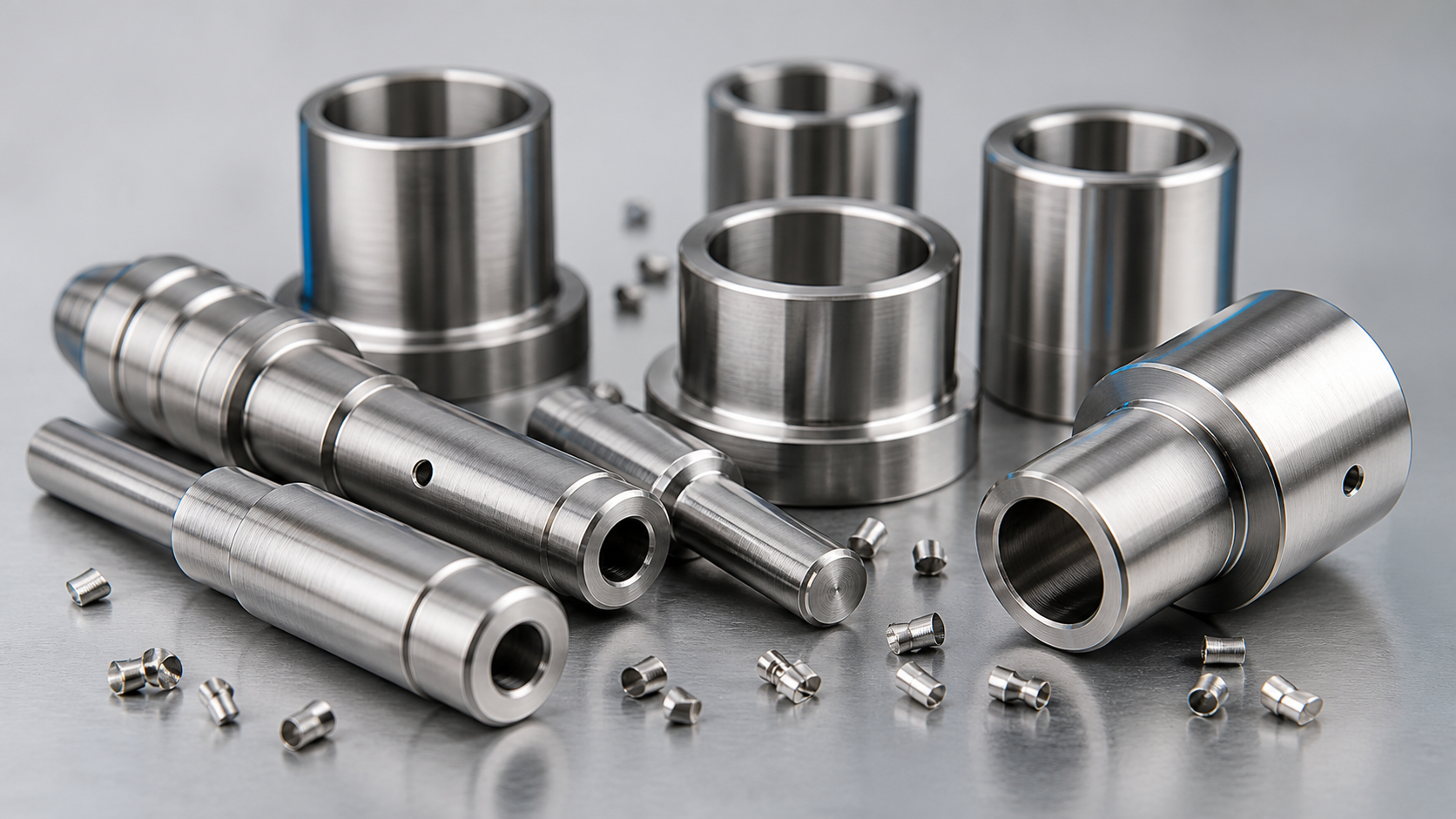
Стоимость серийной обработки нержавеющей стали: Является 304 Всегда самый экономичный выбор?
Серийная обработка нержавеющей стали, 304 имеет меньшую стоимость материала, но это может создать застроенное преимущество, более быстрый износ инструмента, более медленное время цикла, и нестабильный контроль стружки. Однажды стоимость инструмента, остановки очистки чипов, риск использования, и время обработки включены, самая низкая цена материала не всегда означает самую низкую стоимость детали. Если деталь не нуждается в сварке и не будет работать в агрессивной среде, 303 нержавеющая сталь, подвергнутая механической обработке, может быть более экономичным выбором.
303 представляет собой автоматную нержавеющую сталь на основе 304 с повышенным содержанием серы. Сера соединяется с марганцем, образуя включения сульфида марганца., которые помогают стружколоманию и местной смазке. Это делает резку более плавной, срок службы инструмента дольше, и поверхность более стабильна. В этой статье объясняются преимущества механической обработки., ограничения, и случаи применения 303 чтобы ты мог решить, когда 303 может заменить 304 и когда этого не следует.
Для серийной обработки деталей, маленькие валы, орехи, арматура, установочные штифты, и резьбовые детали, 303 может снизить общую стоимость обработки. Но 303 не является универсальной заменой 304, особенно для сварки, воздействие коррозии, еда или медицинский контакт, и высокие требования к внешнему виду, стойкости к коррозии.
В этой статье основное внимание уделяется практической 303 против 304 решение по обработке. Для полного сравнения коррозионной стойкости и свариваемости среди 304, 316, и 316Л, видеть 304 против 316 по сравнению с нержавеющей сталью 316L. Для более широкого выбора материалов и маршрутов обработки из нержавеющей стали, увидеть направляющая для обработки нержавеющей стали с ЧПУ.
Что такое 303 Нержавеющая сталь?
303 нержавеющая сталь, также известный как AISI 303 или Y12Cr18Ni9 в некоторых стандартах, увеличивает содержание серы и фосфора по сравнению с 304. Сера и марганец образуют включения MnS.. Во время резки, эти включения помогают струге разбиваться на более короткие сегменты и обеспечивают локальный смазочный эффект между инструментом и стружкой., снижение трения и износа инструмента.
Механические свойства 303 близки к 304, но коррозионная стойкость обычно ниже. Включения MnS могут стать отправной точкой для питтинговой коррозии., особенно во влажном состоянии, хлористый, или агрессивные среды. Свариваемость также плохая, поскольку сера увеличивает риск образования горячих трещин в сварном шве.. Детали, требующие сварки, обычно не следует использовать. 303.
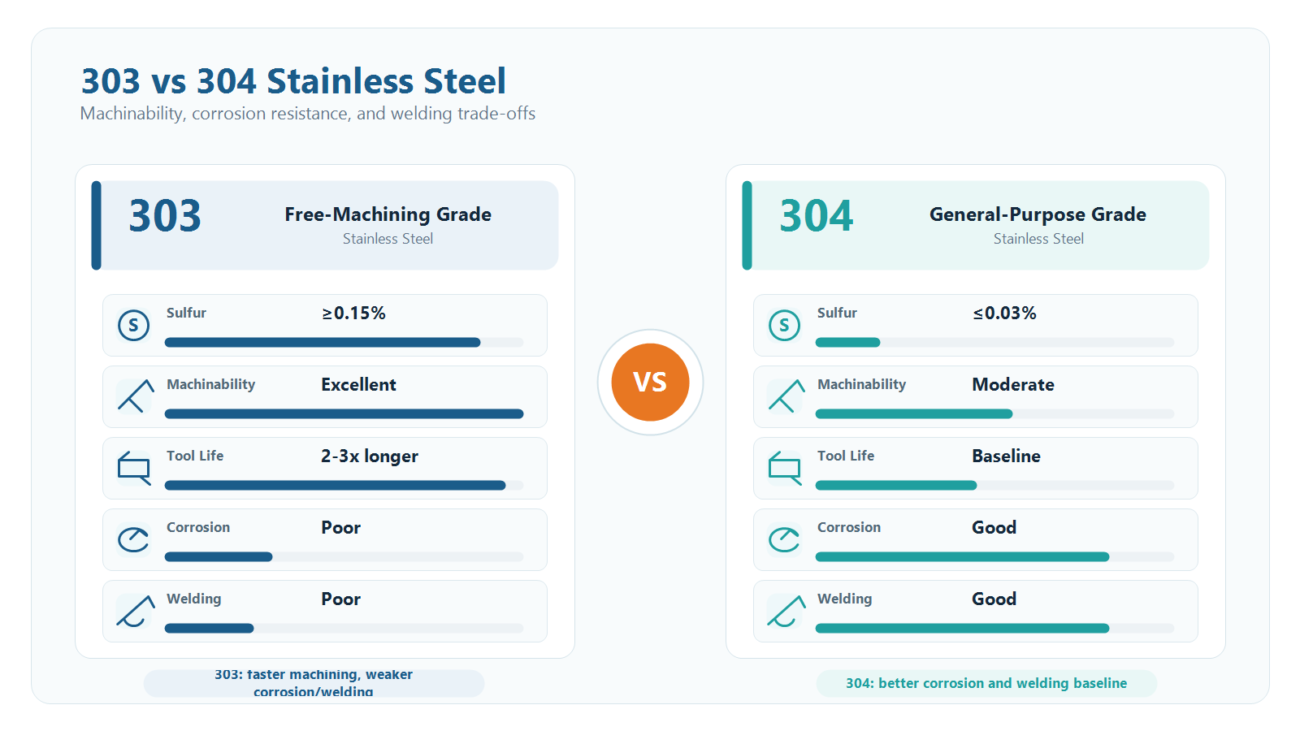
Изображение слота 1: ключевые различия между 303 и 304 нержавеющая сталь.
Преимущества обработки: Лучшее стружколомание, Время цикла и срок службы инструмента
Преимущество механической обработки 303 становится более ценным в серийное производство. В повороте, 303 часто может работать на более высокой скорости резания, чем 304 с более стабильной подачей. Время цикла может быть сокращено, и одна и та же пластина обычно обрабатывает больше 303 части, чем 304 части. Стоимость инструмента и простои при смене инструмента могут снизиться.. Фактическое улучшение зависит от геометрии детали., оснастка, жесткость машины, охлаждающая жидкость, и данные партии.
303 производит более короткую стружку, которая с меньшей вероятностью наматывается на инструмент или заготовку. Это снижает простои станка для очистки стружки.. Для Токарная обработка с ЧПУ с барными питателями, стабильное стружкодробление напрямую влияет на время цикла и риск необслуживаемого производства. Качество поверхности также обычно лучше, чем 304, поэтому в некоторых проектах можно уменьшить полировку или вторичную отделку.
Сверление и нарезание резьбы часто бывают там, где 303 показывает наибольшую ценность. Стружка легче удаляется во время сверления, и перфорационное сверление часто можно оптимизировать в зависимости от глубины и диаметра отверстия.. Крутящий момент резьбы ниже, и риск поломки крана обычно ниже, чем при 304. Для партийных деталей с большим количеством отверстий, нити, и небольшие точеные детали, эта стабильность может иметь большее значение, чем цена сырья.
Метод обработки | 303 Параметры | 304 Параметры | Влияние на эффективность |
Поворот ВК | 120-180 м/мин | 90-130 м/мин | +30%-50% |
Фрезерование ВК | 100-150 м/мин | 80-110 м/мин | +25%-40% |
бурение вч | 25-40 м/мин | 20-30 м/мин | +25%-33% |
Срок службы инструмента, поворот | 150-200 шт. | 60-80 шт. | +150% |
Чистота поверхности | Ра 0.8-1.6 один | Ра 1.6-3.2 один | На один уровень лучше |
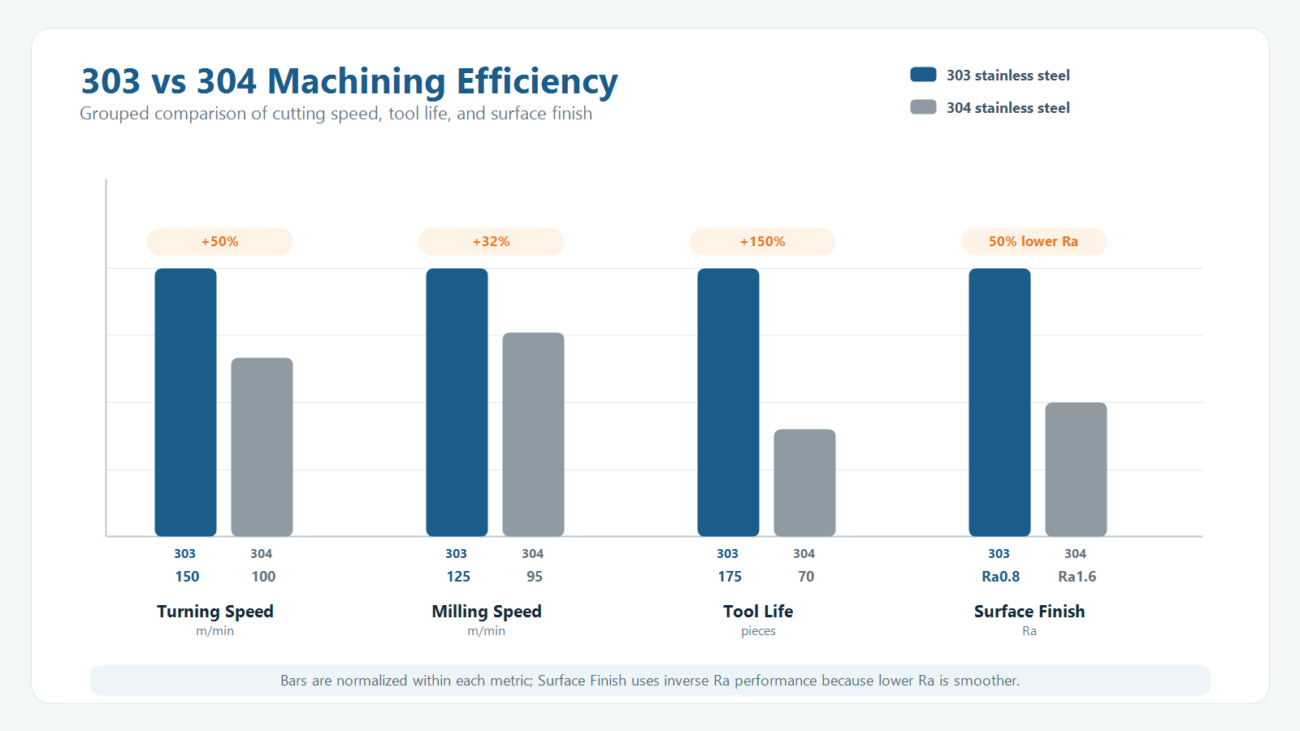
Изображение слота 2: Сравнение параметров обработки и производительности для 303 против 304.
Используйте ограничения: Сварка, Коррозия, Медицинский и пищевой контакт требует осторожности
303 имеет явные преимущества, но его ограничения должны быть частью решения о выборе материала.. Первый, 303 не пригоден для сварки, поскольку сера увеличивает риск образования горячих трещин.. Сварные конструкции обычно следует оценивать 304, 316, или 316Л. Второй, 303 имеет меньшую коррозионную стойкость, чем 304, такой влажный, открытый, морской, хлоридная очистка, или агрессивные среды требуют осторожности. Третий, Детали, контактирующие с медицинскими и пищевыми продуктами, обычно не следует использовать 303 и должен оцениваться по чертежу, нормативный маршрут, и контактная среда.
303 также имеет плохую холодную формуемость, чем 304, поэтому это не лучший выбор для деталей, требующих сильного изгиба., растяжка, или клепающая деформация. После холодной обработки, 303 также может показывать немного более высокий магнетизм, который следует проверить для приборов, чувствительных к магнетизму, датчики, или сборки.
Приложение подходит: Когда 303 Более экономичный
303 наиболее подходит для больших партий, без сварки, сухое обслуживание в помещении, и прецизионные детали, где важны время цикла и стойкость инструмента.. Типичные области применения включают в себя:
– Валы токарной обработки, рукава, резьбовые фитинги, и расположение деталей.
– Механические детали с умеренными требованиями к коррозии и без сильных агрессивных сред..
– Детали с множеством отверстий, нити, или внешние токарные детали, где важны время цикла и стойкость инструмента.
– Детали, которым требуется стабильное стружкодробление для поддержки автоматизированной обработки..
Чтобы решить, использовать ли 303, задать три вопроса: Нужна ли деталь сварке?? Будет ли он использоваться во влажной среде?, хлористый, или агрессивная среда? Будет ли он контактировать с пищей или медицинской средой?? Если все три ответа отрицательные, 303 может быть более экономичным, чем 304. Если какой-либо ответ да, материал должен быть повторно оценен по чертежу, спецификация, и сервисная среда.
303 материал обычно дороже 304, но стоимость серийной обработки на станке с ЧПУ зависит не только от цены материала. Время цикла, срок службы инструмента, контроль чипа, процент успеха при прослушивании, и риск брака - все это влияет на себестоимость единицы продукции.. Цифры стоимости в этой статье следует рассматривать как типичную ссылку на проект, а не как гарантию на каждую деталь.. Чем больше и повторяемее партия, тем более вероятно, что преимущество 303 в обработке может компенсировать премию за материал.
Сценарий | Рекомендуемый материал | Причина |
Пакетные валы / рукава / крепежные детали | 303 | Высокая эффективность и низкая стоимость инструмента |
Прецизионные детали инструмента | 303 | Хорошая отделка и стабильные размеры |
Детали, требующие сварки | 304 / 316л | 303 не подходит для сварки |
Морской / уличное оборудование | 316 / 316л | 303 имеет меньшую коррозионную стойкость |
Медицинский / части, контактирующие с пищевыми продуктами | 316л | 303 обычно не соответствует требованиям к контактам |
Прототип / низкий объем | 304 | Снижение стоимости материала и ограниченное влияние времени цикла |
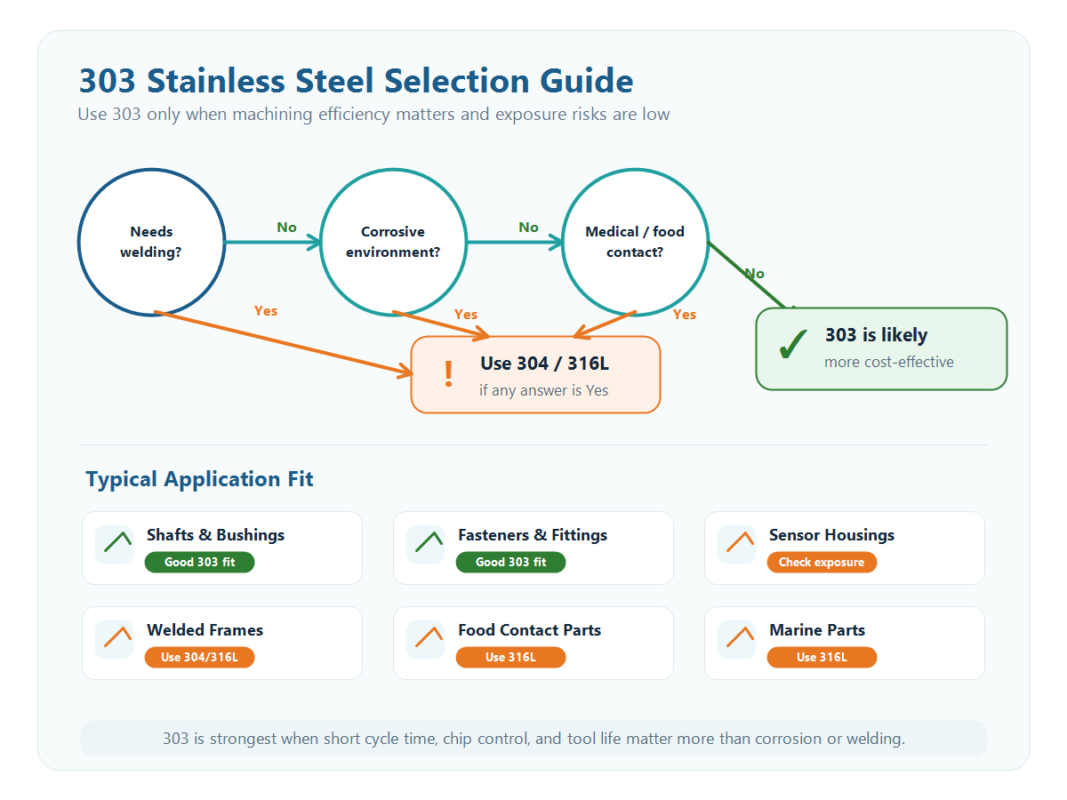
Изображение слота 3: таблица решений для 303 применение нержавеющей стали.
Экономическая ценность 303 происходит из времени цикла, срок службы инструмента, стабильность чипа, процент успеха при прослушивании, и снизить риск брака партии. Для простых прототипов, разница может быть небольшой. Для тысяч деталей или долгосрочных повторных заказов, время цикла и расход инструмента могут существенно повлиять на общую стоимость. Для более цитата логика, увидеть Руководство по стоимости обработки нержавеющей стали на станке с ЧПУ.
Заводской корпус: Снижение затрат на втулку вала партии 304 к 303
Для проекта прецизионного прибора потребовалось серийное производство втулок вала из нержавеющей стали.: диаметр 20 мм, длина 50 мм, терпимость +/-0.01 мм, и ежемесячная потребность 2,000 куски. Исходный материал был 304. В 304, время поворота было около 4.5 минут на часть, вкладыши менялись примерно каждые 80 части, ежемесячная стоимость инструмента составляла около юаней 1,200, и общая стоимость единицы составила около юаней 18.
После рассмотрения среды обслуживания и составления требований, материал был изменен на 303. Затраты на материалы увеличились примерно 15%, но скорость резания увеличилась примерно с Vc 100 м/мин до примерно Vc 150 м/мин. Время цикла сократилось примерно до 2.8 минуты, стойкость инструмента увеличилась примерно до 180 части, и ежемесячная стоимость инструмента упала примерно до юаней 400. Стоимость единицы продукции снизилась примерно до юаней. 13.5, о 25% ниже, экономия на юанях 9,000 помесячно. Деталь не требовала сварки и использовалась в оборудовании помещений., так 303 выполнил требования проекта.
303 Примечания по обработке и закупкам
Хотя 303 бесплатная обработка, контроль процесса по-прежнему важен. Нагартование ниже, чем 304 но все еще присутствует, поэтому глубина резания должна избегать трения о затвердевший поверхностный слой.. Твердосплавные инструменты с покрытием — практичная отправная точка, и можно использовать эмульсионную охлаждающую жидкость или смазочно-охлаждающую жидкость.. 303 обычно требует менее агрессивного охлаждения, чем 316, но стабильное охлаждение по-прежнему улучшает качество поверхности и постоянство размеров..
Проверка материала важна для 303. Рынок включает в себя 303, 303Cu, и эквивалентные сорта по различным стандартам, и химические различия влияют на обрабатываемость, коррозионная стойкость, и цитата. Поступающий материал должен быть проверен на сортность., стандарт материала, ССО, номер плавки, и содержание серы. JADE-CNC может проверять каждую входящую партию с помощью спектрометра и предоставлять сертификаты на материалы при отправке..
О JADE-CNC
JADE-CNC специализируется на точной обработке деталей из нержавеющей стали., с пятиосной обработкой, токарно-фрезерная комбинированная обработка, прецизионное шлифовальное оборудование, ИСО 9001 сертификация, и комплексное обслуживание от обработки с ЧПУ, сварка, отделка поверхности, к инспекция. Для 303, 304, 316, и детали 316L, JADE-CNC оценивает материальную среду, время цикла, срок службы инструмента, согласованность партии, и требования к постобработке, чтобы рекомендовать практический маршрут обработки..
Отправьте свой рисунок, 3Модель D, сорт материала, среда обслуживания, требования к сварке, обработка поверхности, ключевые допуски, количество прототипов, и количество партии для оценки процесса и предложения, обычно внутри 24 часы.
Сопутствующие статьи о нержавеющей стали
– 17-4PH обработка нержавеющей стали: Лечение раствором, Старение и чистовая обработка

Лео Лян, Основатель, лучший партнер R&Д
Основатель JADE-CNC Лео, который обладает более чем двадцатилетним опытом работы в отрасли, Лео начал свою карьеру в качестве ученика и практиковал свои навыки в области обработки поверхностей и обработки на станках с ЧПУ..