


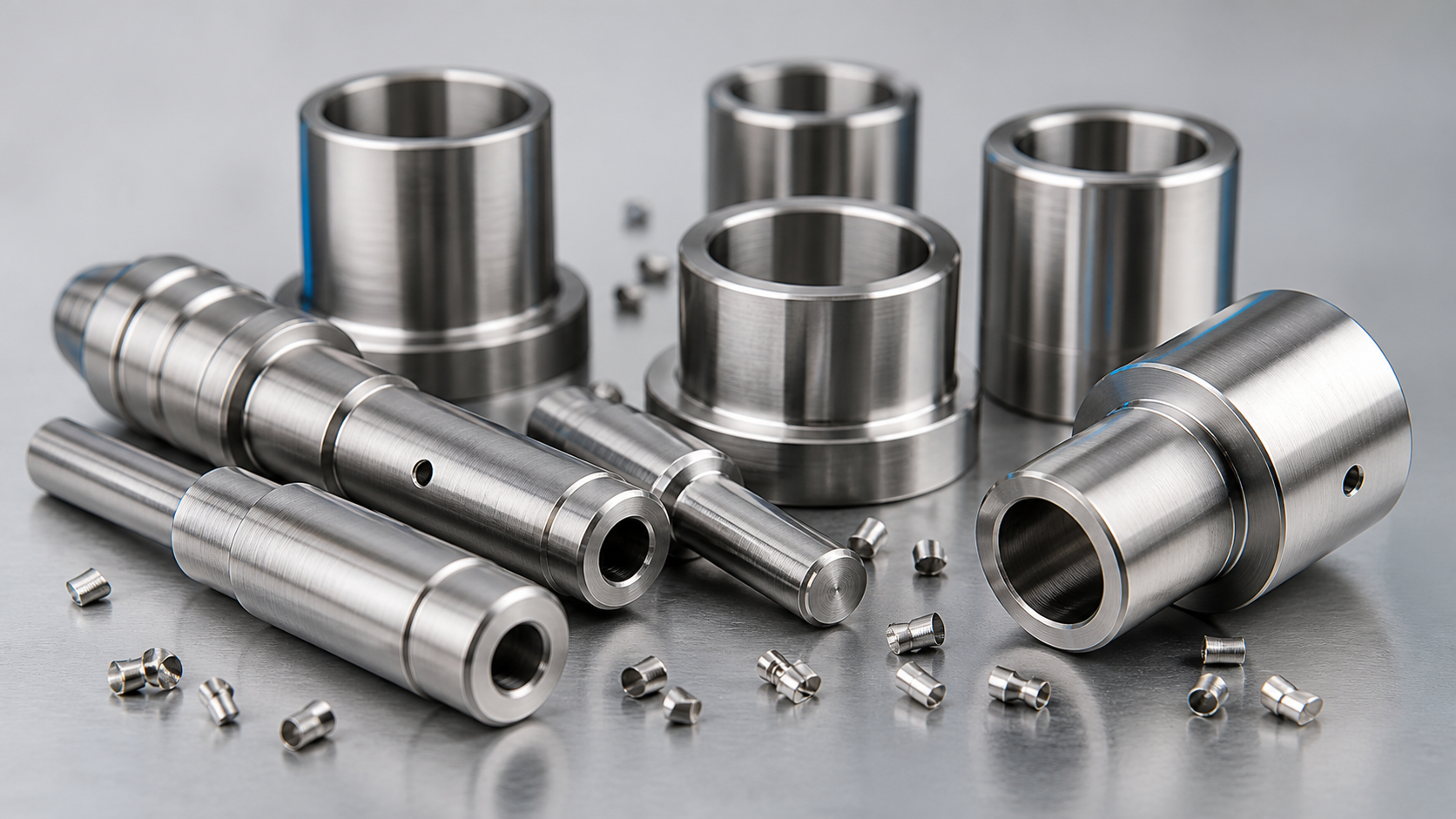
دفعة تكلفة تصنيع الفولاذ المقاوم للصدأ: يكون 304 دائما الخيار الأكثر اقتصادا?
في دفعة تصنيع الفولاذ المقاوم للصدأ, 304 لديها تكلفة مادية أقل, ولكنها يمكن أن تخلق حافة مبنية, ارتداء أداة أسرع, وقت دورة أبطأ, والتحكم في الرقاقة غير المستقرة. مرة واحدة تكلفة الأداة, توقفات إزالة الرقائق, استغلال المخاطر, ويتم تضمين الوقت بالقطع, أدنى سعر للمادة لا يعني دائمًا أقل تكلفة للجزء. إذا كان الجزء لا يحتاج إلى لحام ولن يعمل في بيئة قابلة للتآكل, 303 قد يكون الفولاذ المقاوم للصدأ ذو التصنيع الحر هو الخيار الأكثر اقتصادا.
303 عبارة عن فولاذ مقاوم للصدأ يمكن تصنيعه مجانًا يعتمد على 304 مع زيادة محتوى الكبريت. يتحد الكبريت مع المنغنيز لتكوين شوائب كبريتيد المنغنيز, والتي تساعد على كسر الرقاقة والتشحيم المحلي. وهذا يجعل القطع أكثر سلاسة, عمر الأداة أطول, والانتهاء من السطح أكثر استقرارا. تشرح هذه المقالة مزايا المعالجة, القيود, وحالات تطبيق 303 لذلك يمكنك أن تقرر متى 303 يمكن أن يحل محل 304 ومتى لا ينبغي ذلك.
لأجزاء تحول الدفعة, مهاوي صغيرة, المكسرات, التجهيزات, تحديد موقع دبابيس, والمكونات الخيوط, 303 يمكن أن تقلل من التكلفة الإجمالية للتصنيع. لكن 303 ليس بديلا عالميا ل 304, خاصة بالنسبة للحام, التعرض للتآكل, الغذاء أو الاتصال الطبي, ومتطلبات المظهر عالية المقاومة للتآكل.
تركز هذه المقالة على الجانب العملي 303 مقابل 304 قرار التصنيع. لإجراء مقارنة كاملة لمقاومة التآكل وقابلية اللحام بين 304, 316, و 316 ل, يرى 304 مقابل 316 مقابل 316L الفولاذ المقاوم للصدأ. من أجل اختيار أوسع لمواد الفولاذ المقاوم للصدأ ومسار التصنيع, انظر دليل التصنيع باستخدام الحاسب الآلي الفولاذ المقاوم للصدأ.
ما هو 303 الفولاذ المقاوم للصدأ?
303 الفولاذ المقاوم للصدأ, المعروف أيضًا باسم AISI 303 أو Y12Cr18Ni9 في بعض المعايير, يزيد محتوى الكبريت والفوسفور مقارنة مع 304. الكبريت والمنغنيز يشكلان شوائب MnS. أثناء القطع, تساعد هذه الشوائب على تقسيم الرقائق إلى أجزاء أقصر وتوفير تأثير تشحيم محلي بين الأداة والشريحة, تقليل الاحتكاك وارتداء الأدوات.
الخواص الميكانيكية 303 قريبة من 304, ولكن مقاومة التآكل عادة ما تكون أقل. قد تصبح شوائب MnS نقطة انطلاق للتأليب, وخاصة في الرطبة, كلوريد, أو البيئات المسببة للتآكل. كما أن قابلية اللحام ضعيفة أيضًا لأن الكبريت يزيد من خطر التكسير الساخن في اللحام. عادة لا ينبغي استخدام الأجزاء التي تتطلب اللحام 303.
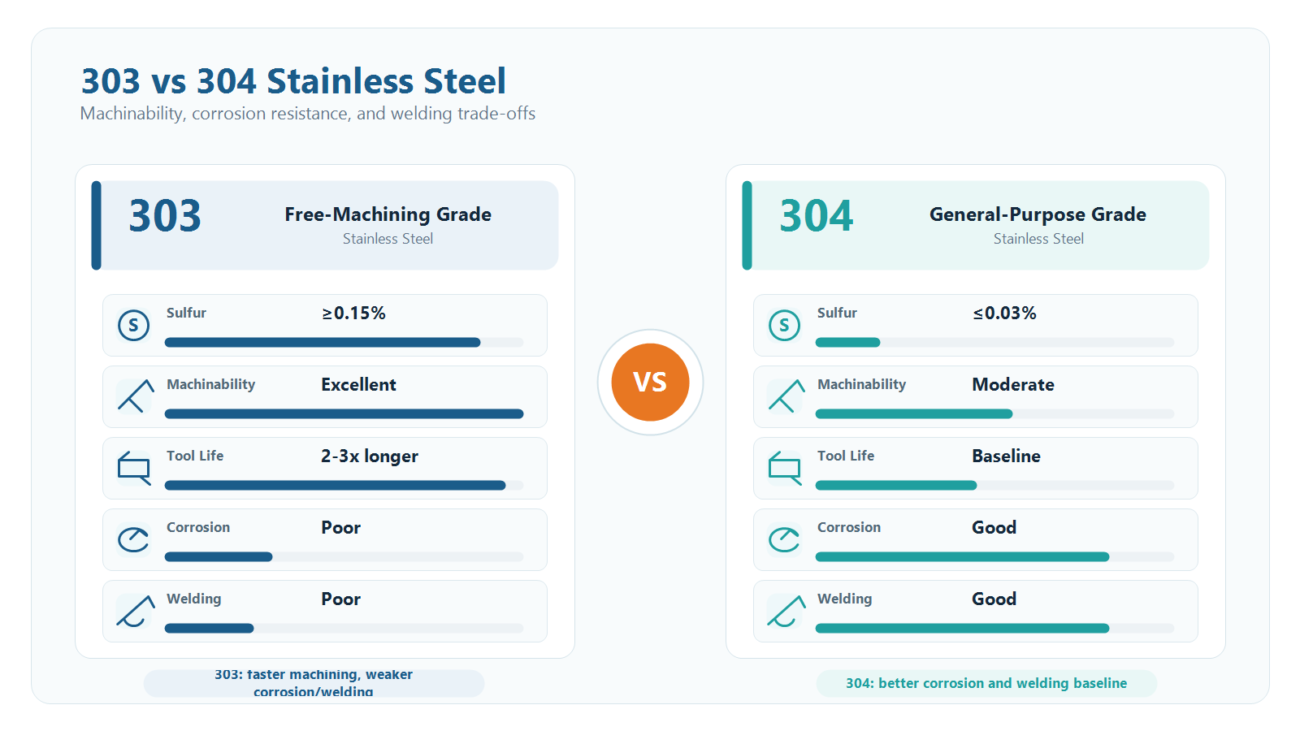
فتحة الصورة 1: الاختلافات الرئيسية بين 303 و 304 الفولاذ المقاوم للصدأ.
مزايا الآلات: كسر رقاقة أفضل, دورة الوقت وعمر الأداة
ميزة الآلات 303 يصبح أكثر قيمة في إنتاج دفعة. في الدوران, 303 يمكن تشغيله غالبًا بسرعة قطع أعلى من 304 مع تغذية أكثر استقرارا. قد يتم تقليل وقت الدورة, ونفس الإدخال عادة ما يكون أكثر 303 أجزاء من 304 أجزاء. يمكن أن تنخفض تكلفة الأداة وتوقفات تغيير الأداة. يعتمد التحسين الفعلي على هندسة الأجزاء, الأدوات, صلابة الآلة, المبرد, والبيانات الدفعية.
303 تنتج شرائح أقصر تقل احتمالية التفافها حول الأداة أو قطعة العمل. وهذا يقلل من توقف الماكينة لإزالة الرقائق. ل تحول باستخدام الحاسب الآلي مع مغذيات شريط, يؤثر كسر الرقاقة المستقر بشكل مباشر على وقت الدورة ومخاطر الإنتاج غير المراقبة. عادة ما يكون تشطيب السطح أفضل من 304, لذلك يمكن لبعض المشاريع تقليل التلميع أو التشطيب الثانوي.
الحفر والتنصت في كثير من الأحيان حيث 303 يظهر أكبر قيمة. يتم إخلاء الرقائق بسهولة أكبر أثناء الحفر, ويمكن في كثير من الأحيان تحسين الحفر بالنقر بناءً على عمق الثقب وقطره. التنصت على عزم الدوران أقل, وعادة ما يكون خطر كسر الصنبور أقل من خطر الصنبور المكسور 304. لأجزاء الدفعة ذات الثقوب العديدة, المواضيع, والميزات الصغيرة المتحولة, وهذا الاستقرار يمكن أن يكون أكثر أهمية من سعر المواد الخام.
طريقة التصنيع | 303 حدود | 304 حدود | تأثير الكفاءة |
تحول في سي | 120-180 م/دقيقة | 90-130 م/دقيقة | +30%-50% |
طحن VC | 100-150 م/دقيقة | 80-110 م/دقيقة | +25%-40% |
حفر VC | 25-40 م/دقيقة | 20-30 م/دقيقة | +25%-33% |
حياة الأداة, تحول | 150-200 جهاز كمبيوتر شخصى | 60-80 جهاز كمبيوتر شخصى | +150% |
الانتهاء من السطح | رع 0.8-1.6 واحد | رع 1.6-3.2 واحد | مستوى واحد أفضل |
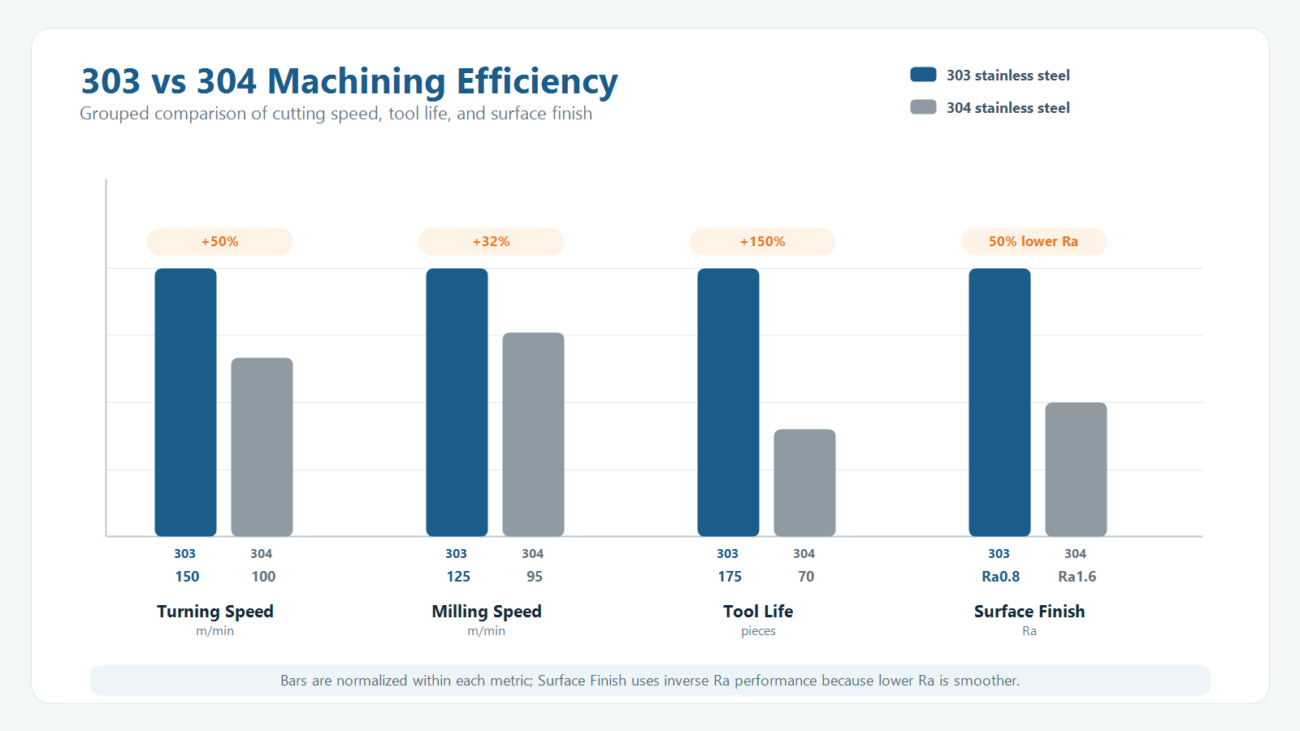
فتحة الصورة 2: معلمة التصنيع ومقارنة الإنتاجية لـ 303 مقابل 304.
استخدام القيود: لحام, تآكل, الاتصال الطبي والغذائي يتطلب الحذر
303 له مزايا واضحة, لكن حدودها يجب أن تكون جزءًا من قرار اختيار المواد. أولاً, 303 غير مناسب للحام لأن الكبريت يزيد من خطر التشقق الساخن. ينبغي عادة تقييم الهياكل الملحومة 304, 316, أو 316 ل. ثانية, 303 لديها مقاومة أقل للتآكل من 304, رطب جدا, في الهواء الطلق, البحرية, تنظيف بالكلوريد, أو البيئات المسببة للتآكل تحتاج إلى الحذر. ثالث, عادةً لا ينبغي استخدام الأجزاء الطبية والغذائية الملامسة 303 ويجب تقييمها مقابل الرسم, الطريق التنظيمي, وبيئة الاتصال.
303 كما أن قابلية التشكيل على البارد أضعف من 304, لذلك فهو ليس اختيارًا جيدًا للأجزاء التي تحتاج إلى ثني ثقيل, تمتد, أو تشوه التثبيت. بعد العمل البارد, 303 قد تظهر أيضًا مغناطيسية أعلى قليلاً, والتي يجب فحصها بحثًا عن أدوات حساسة للمغناطيسية, أجهزة الاستشعار, أو المجالس.
صالح التطبيق: متى 303 أكثر اقتصادا
303 هو الأكثر ملاءمة لدفعات أكبر, لا لحام, خدمة داخلية جافة, والأجزاء الدقيقة التي يكون فيها وقت الدورة وعمر الأداة مهمًا. وتشمل التطبيقات النموذجية:
– دفعة تحولت مهاوي, الأكمام, تركيبات مترابطة, وتحديد أماكن الأجزاء.
– الأجزاء الميكانيكية ذات متطلبات تآكل معتدلة ولا تحتوي على وسائط قوية تسبب التآكل.
– الأجزاء ذات الثقوب العديدة, المواضيع, أو الميزات الخارجية التي يكون فيها وقت الدورة وعمر الأداة مهمين.
– الأجزاء التي تحتاج إلى كسر ثابت للرقاقة لدعم التشغيل الآلي.
لتقرر ما إذا كنت تريد استخدامها 303, اطرح ثلاثة أسئلة: هل الجزء يحتاج لحام? هل سيتم استخدامه في مكان رطب, كلوريد, أو البيئة المسببة للتآكل? هل سيتصل بالطعام أو البيئة الطبية? إذا كانت الإجابات الثلاثة كلها لا, 303 قد يكون أكثر اقتصادا من 304. إذا كانت الإجابة بنعم, يجب إعادة تقييم المادة مقابل الرسم, مواصفة, وبيئة الخدمة.
303 المواد عادة ما تكون أكثر تكلفة من 304, لكن تكلفة التصنيع باستخدام الحاسب الآلي مدفوعة بأكثر من سعر المواد. وقت الدورة, حياة الأداة, التحكم في الرقاقة, التنصت معدل النجاح, ومخاطر الخردة كلها تؤثر على تكلفة الوحدة. يجب التعامل مع أرقام التكلفة الواردة في هذه المقالة كمرجع نموذجي للمشروع وليس كضمان لكل جزء. الدفعة أكبر وأكثر تكرارًا, يمكن لميزة التصنيع 303 الأكثر ترجيحًا أن تعوض علاوة المواد.
سيناريو | المواد الموصى بها | سبب |
مهاوي دفعة / الأكمام / السحابات | 303 | كفاءة عالية وتكلفة أقل للأداة |
الأجزاء الدقيقة للأداة | 303 | تشطيب جيد وأبعاد مستقرة |
الأجزاء التي تتطلب اللحام | 304 / 316ل | 303 غير مناسب للحام |
البحرية / المعدات في الهواء الطلق | 316 / 316ل | 303 لديها مقاومة أقل للتآكل |
طبي / الأجزاء الملامسة للطعام | 316ل | 303 عادة لا يتناسب مع متطلبات الاتصال |
النموذج الأولي / حجم منخفض | 304 | انخفاض تكلفة المواد وتأثير محدود على وقت الدورة |
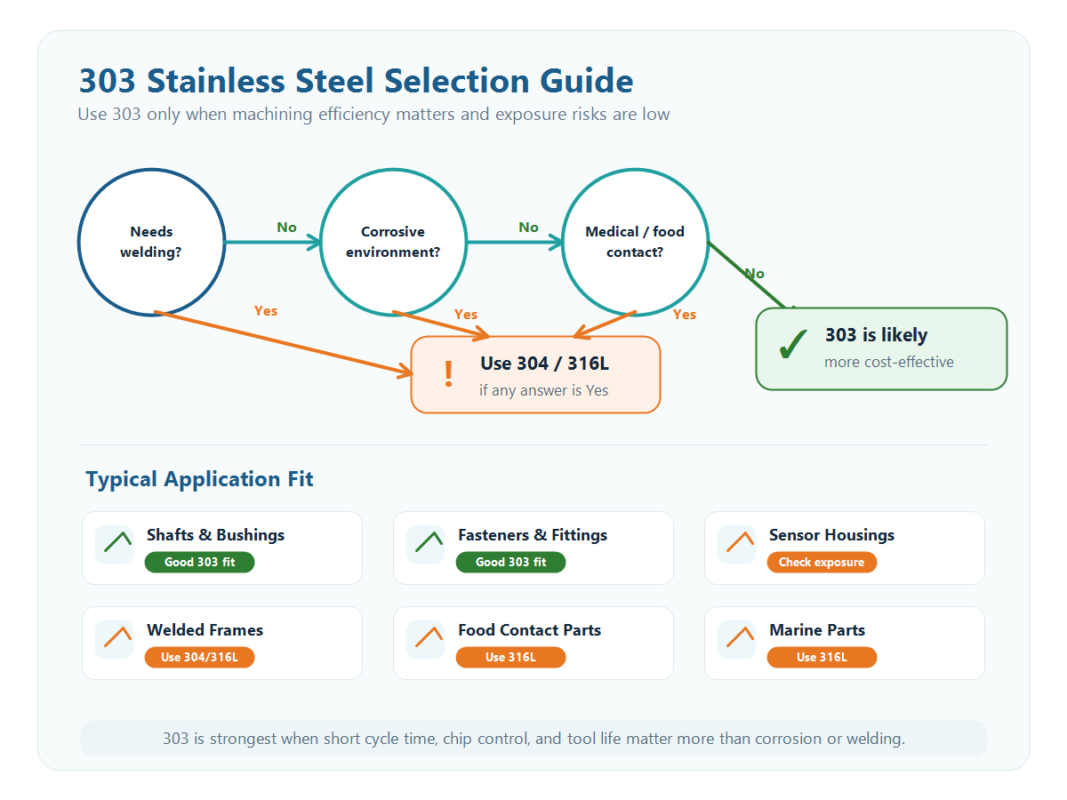
فتحة الصورة 3: جدول القرار ل 303 تطبيقات الفولاذ المقاوم للصدأ.
قيمة توفير التكاليف 303 يأتي من وقت الدورة, حياة الأداة, استقرار الشريحة, التنصت معدل النجاح, وتقليل مخاطر الخردة الدفعية. للنماذج البسيطة, قد يكون الفرق صغيرا. لآلاف القطع أو الطلبات المتكررة على المدى الطويل, يمكن أن يؤثر وقت الدورة واستهلاك الأداة بشكل كبير على التكلفة الإجمالية. للمزيد اقتباس منطق, انظر دليل تكلفة التصنيع باستخدام الحاسب الآلي الفولاذ المقاوم للصدأ.
حالة المصنع: تخفيض تكلفة جلبة العمود من 304 ل 303
يتطلب مشروع الأدوات الدقيقة إنتاجًا جماعيًا لأغطية العمود غير القابل للصدأ: القطر 20 مم, طول 50 مم, تسامح +/-0.01 مم, والطلب الشهري 2,000 قِطَع. وكانت المادة الأصلية 304. في 304, كان وقت التحول على وشك 4.5 دقائق لكل جزء, تم تغيير الإدخالات تقريبًا في كل مرة 80 أجزاء, كانت تكلفة الأداة الشهرية حوالي يوان 1,200, وكانت التكلفة الإجمالية للوحدة حوالي يوان 18.
بعد مراجعة بيئة الخدمة ومتطلبات الرسم, تم تغيير المادة إلى 303. ارتفعت تكلفة المواد بنحو 15%, لكن سرعة القطع زادت من حوالي Vc 100 م/دقيقة إلى حوالي Vc 150 م/دقيقة. انخفض وقت الدورة إلى حوالي 2.8 دقائق, زاد عمر الأداة إلى حوالي 180 أجزاء, وانخفضت تكلفة الأداة الشهرية إلى حوالي الرنمينبي 400. انخفضت تكلفة الوحدة إلى حوالي يوان 13.5, عن 25% أدنى, توفير حوالي يوان 9,000 كل شهر. الجزء لا يحتاج إلى لحام وتم استخدامه في المعدات الداخلية, لذا 303 استوفت متطلبات المشروع.
303 ملاحظات التصنيع والمشتريات
بالرغم من 303 هو بالقطع الحرة, التحكم في العملية لا يزال مهما. تصلب العمل أقل من 304 ولكن لا يزال موجودا, لذلك يجب أن يتجنب عمق القطع الاحتكاك بطبقة سطحية صلبة. تعتبر أدوات الكربيد المطلية نقطة انطلاق عملية, ويمكن استخدام سائل التبريد المستحلب أو زيت القطع. 303 عادة ما يحتاج إلى تبريد أقل عدوانية من 316, لكن التبريد المستقر لا يزال يساعد في تشطيب السطح واتساق الأبعاد.
التحقق من المواد مهم ل 303. يشمل السوق 303, 303النحاس, والدرجات المعادلة وفقا لمعايير مختلفة, والاختلافات الكيميائية تؤثر على إمكانية التشغيل الآلي, مقاومة التآكل, والاقتباس. يجب فحص المواد الواردة للحصول على الدرجة, معيار المواد, استعراض منتصف المدة, رقم الحرارة, ومحتوى الكبريت. يمكن لـ JADE-CNC التحقق من كل دفعة واردة بواسطة مقياس الطيف وتقديم شهادات المواد مع الشحن.
حول اليشم باستخدام الحاسب الآلي
يركز JADE-CNC على تصنيع الأجزاء الدقيقة من الفولاذ المقاوم للصدأ, مع التصنيع بخمسة محاور, التصنيع المركب لطاحونة الدوران, معدات طحن الدقة, ايزو 9001 شهادة, وخدمة الشباك الواحد من التصنيع باستخدام الحاسب الآلي, لحام, التشطيب السطحي, ل تقتيش. ل 303, 304, 316, وأجزاء 316L, يقوم JADE-CNC بتقييم البيئة المادية, وقت الدورة, حياة الأداة, اتساق الدفعة, ومتطلبات ما بعد المعالجة للتوصية بطريق المعالجة العملي.
أرسل الرسم الخاص بك, 3نموذج د, الصف المادي, بيئة الخدمة, متطلبات اللحام, المعالجة السطحية, التسامح الرئيسية, كمية النموذج الأولي, وكمية الدفعة لتقييم العملية والاقتباس, عادة داخل 24 ساعات.
مقالات ذات صلة بالفولاذ المقاوم للصدأ
– 17-4تصنيع الفولاذ المقاوم للصدأ PH: علاج الحل, الشيخوخة والانتهاء من الآلات

ليو ليانغ, أفضل شريك مؤسس مع R&د
JADE-CNC مؤسس LEO, الذي يجلب أكثر من عقدين من الخبرة في الصناعة, بدأ ليو حياته المهنية كمتدرب ومارس مهاراته في معالجة الأسطح والتصنيع باستخدام الحاسب الآلي.