



Aluminum CNC Machining Services for Precision Custom Parts
JADE-CNC provides aluminum CNC machining for custom aluminum parts that need lightweight structure, good machinability, corrosion resistance, stable dimensions, and clean surface finishing.
We support common aluminum alloys such as 6061, 7075, 2024, 5052, 6063, and MIC-6 tooling plate based on customer drawings, tolerance requirements, finish needs, and production quantity.
- Cost review before quotation
- Fast delivery options after drawing review
- Prototype and low-volume orders supported

Custom Aluminum CNC Machining Services in China
Aluminum offers an excellent strength-to-weight ratio, good machinability, corrosion resistance, thermal conductivity, and a wide range of surface finishing options. we supports aluminum prototypes, fixtures, enclosures, heat sinks, brackets, housings, and production parts with CNC milling, turning, drilling, tapping, anodizing, CAD to CNC machining, inspection, and RFQ machining review.

Common Aluminum Alloys for CNC Machining
|
Aluminum Grade |
Typical Use |
JADE-CNC Review Focus |
|---|---|---|
|
6061 Aluminum |
Brackets, housings, fixtures, plates, and general machined components |
Balanced strength, machinability, corrosion resistance, anodizing compatibility, and tolerance requirements |
|
7075 Aluminum |
High-strength structural parts, aerospace components, robotics parts, and load-bearing components |
Strength-to-weight ratio, machining stress, thin-wall risk, surface finish, and critical feature tolerance |
|
2024 Aluminum |
Aerospace parts, structural components, and fatigue-sensitive applications |
Mechanical performance, fatigue resistance, corrosion protection, finish selection, and inspection requirements |
|
5052 Aluminum |
Sheet metal parts, covers, panels, enclosures, and formed components |
Corrosion resistance, bending or forming condition, machining after fabrication, cosmetic surfaces, and finish compatibility |
|
6063 Aluminum |
Extrusions, profiles, frames, heat sink structures, and appearance-focused parts |
Extrusion condition, surface appearance, anodizing response, flatness, and dimensional consistency |
|
MIC-6 Tooling Plate |
Fixtures, base plates, inspection plates, tooling plates, and flat precision components |
Dimensional stability, flatness, plate thickness, machining allowance, and inspection method |
Aluminum DFM Guidelines & Design Tips
Minimum Wall Thickness
- Recommended: >=1.0mm for 6061-T6, >=1.5mm for 7075-T6
- Absolute minimum: 0.5mm (6061, short walls <10mm height)
- Height-to-thickness ratio: <=8:1 to avoid chatter and deflection
- Design tip: Increase wall thickness at base for tall ribs; use gussets
Internal Corner Radii
- Recommended: >=1.0mm (preferably >=1.5mm)
- Why: Smaller radii require smaller tools, slower feeds, cause vibration
- Cost impact: R0.5mm vs R1.5mm can increase machining time by 30-50%
- Design tip: Use largest internal radius your design allows; standard end mills O1-O12mm
Thread Depth & Hole
- Tapped hole depth: <=2.5xD for through holes, <=1.5xD for blind holes
- Thread engagement: 1.5xD minimum for aluminum
- Hole diameter: Minimum O0.5mm (micro drilling), standard >=O1.0mm
- Hole depth-to-diameter ratio: <=3:1 standard, <=5:1 with peck drilling
- Design tip: Add 0.5xD clearance at bottom of blind tapped holes
Anodizing Dimensional Allowance
- Type II (5-25um): Part grows ~2.5-12.5um per surface
- Type III (25-100um): Part grows 12.5-50um per surface
- Critical fits: Mask precision surfaces or design with clearance
- Threaded holes: Anodize before tapping, or mask threads
Other DFM Recommendations
- Cavity depth-to-width ratio: <=4:1 for milling
- Undercuts: Avoid if possible; require special tooling
- Part size: Maximum 500x400x300mm (3-axis)
- Flatness: MIC-6 cast plate offers superior flatness stability
Aluminum Surface Finishes Comparison
Surface Finish | Process | Thickness | Hardness | Corrosion Resist. | Cost Adder | Best For |
As-Machined | CNC mill/turn | N/A | N/A | Low | $0 | Prototypes, internal parts |
Type II Anodize (Clear) | Sulfuric acid | 5-15um | 300-400HV | Good | $0.5-2 | General purpose, corrosion protection |
Type II Anodize (Color) | Sulfuric acid+dye | 5-25um | 300-400HV | Good | $1-5 | Cosmetic parts, consumer products |
Type III Hard Anodize | Low-temp sulfuric | 25-100um | 600-800HV | Excellent | $2-10 | Wear parts, industrial, military |
Chromate Conversion | Chemical immersion | 0.5-2um | N/A | Moderate | $0.3-1 | Pre-paint primer, electrical conductivity |
Bead Blasting | Glass bead media | N/A | N/A | Low | $0.5-3 | Uniform matte, hide tool marks |
Brushing | Abrasive belt | N/A | N/A | Low | $1-5 | Decorative grain, consumer electronics |
Mirror Polishing | Buffing+compound | N/A | N/A | Low | $2-20 | Optical, reflective surfaces |
Powder Coating | Electrostatic+cure | 50-120um | 2H-4H | Excellent | $1-10 | Thick coating, outdoor use, colors |
Wet Painting | Spray+cure | 20-50um | H-2H | Good | $1-8 | Custom colors, logos, multi-color |
Electroless Nickel | Auto-catalytic Ni-P | 5-25um | 500-900HV | Excellent | $2-15 | Wear resistance, solderability, EMI |
Laser Marking | Laser engraving | N/A | N/A | N/A | $0.2-1 | Logos, part numbers, QR codes |
Vibratory Finishing | Tumbling | N/A | N/A | Low | $0.3-2 | Deburring, radius,批量 parts |
Passivation | Nitric/citric acid | <0.1um | N/A | Moderate | $0.2-0.5 | Remove free iron, pre-plating |
Aluminum CNC Machining Capability Review
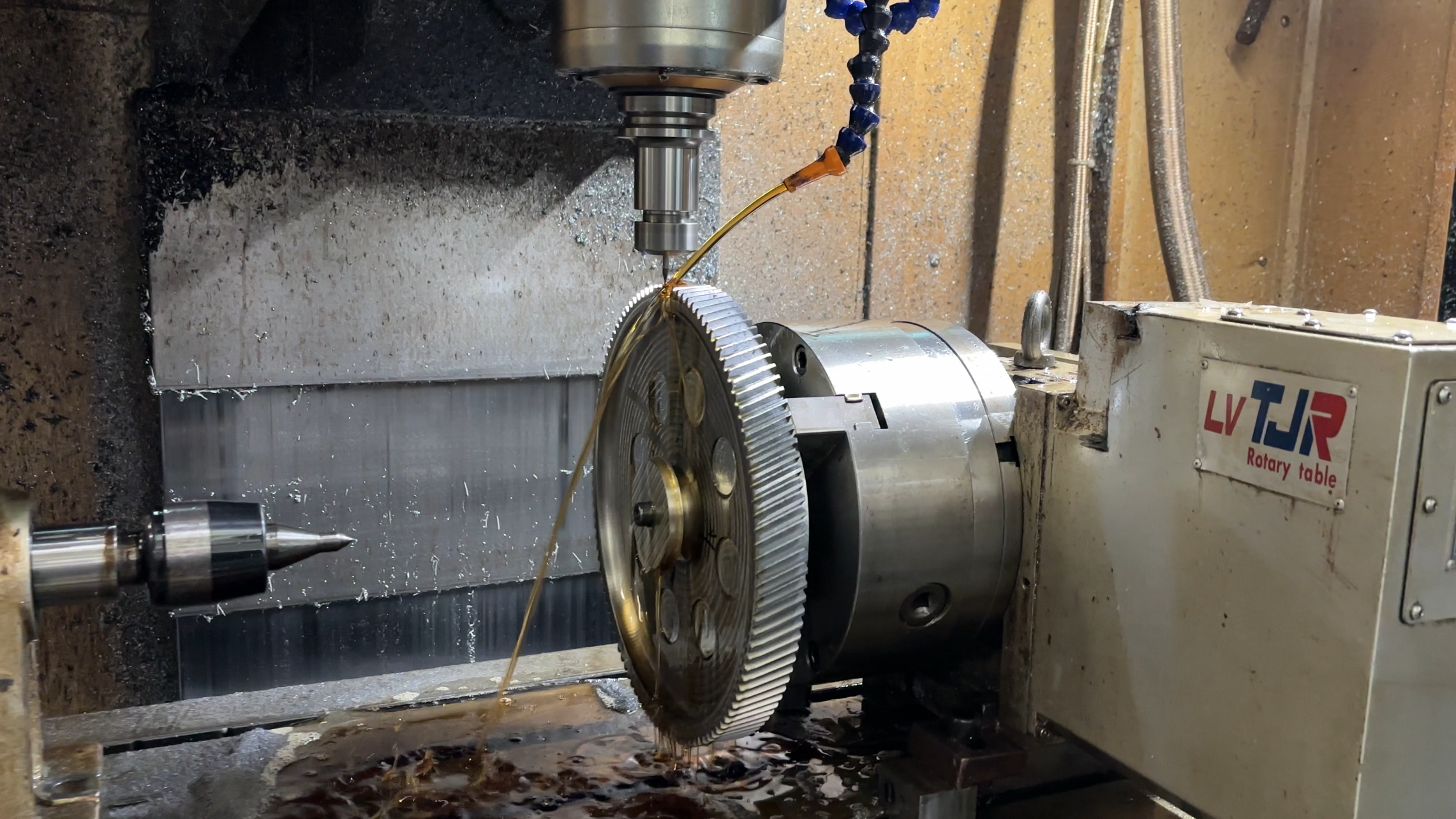
Aluminum CNC machining is often selected for lightweight parts, housings, brackets, fixtures, heat sinks, plates, and structural components. Before machining, the key question is not only whether the part can be cut, but whether the alloy, wall thickness, tolerance zones, surface finish, and inspection method are suitable for the final application.
- Aluminum alloy review
- Machining process selection
- Tolerance and feature control
- Finish and inspection planning
Common Aluminum Machining Risks
Aluminum parts can be affected by thin-wall deformation, tool marks, burrs, surface scratches, anodizing variation, and tolerance movement after material removal. These risks are reviewed before quotation so the machining plan, fixture method, inspection scope, and finish requirements can match the actual part design.
|
Risk Area |
What May Happen |
JADE-CNC Review Focus |
|---|---|---|
|
Thin Walls and Pockets |
Thin sections may vibrate, deform, or show visible tool marks during machining. |
Review wall thickness, pocket depth, fixture support, tool access, and machining sequence. |
|
Flatness and Large Surfaces |
Plates, covers, and housings may move after material removal. |
Review material condition, stock allowance, clamping method, stress relief needs, and inspection plan. |
|
Threads and Critical Holes |
Thread fit, hole position, and mating features may affect assembly. |
Review hole tolerance, thread depth, datum references, mating surfaces, and plug gauge or CMM checks. |
|
Surface Finish and Anodizing |
Scratches, machining marks, color variation, or masking issues may appear after finishing. |
Review cosmetic faces, Ra requirement, anodizing type, masking zones, and finish approval needs. |
What to Prepare for an Aluminum CNC Machining Quote
- 3D CAD file, 2D drawing
- material grade, quantity, tolerance notes
- surface finish requirements
- any cosmetic or functional areas that need closer control
Our engineering team provides:
- Material selection guidance
- Design for manufacturability (DFM) analysis
- Prototyping through serial production
- Quality assurance & testing validation
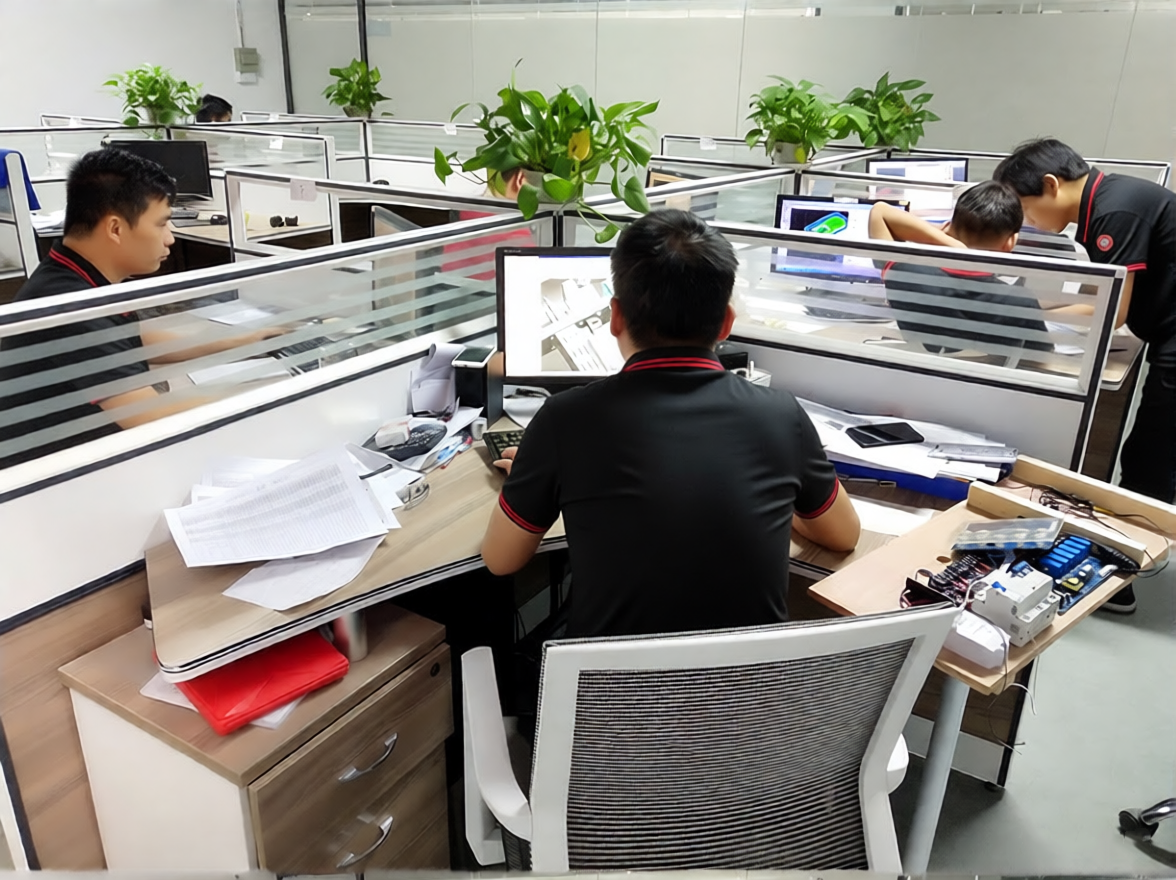
What JADE-CNC Reviews Before Aluminum Machining
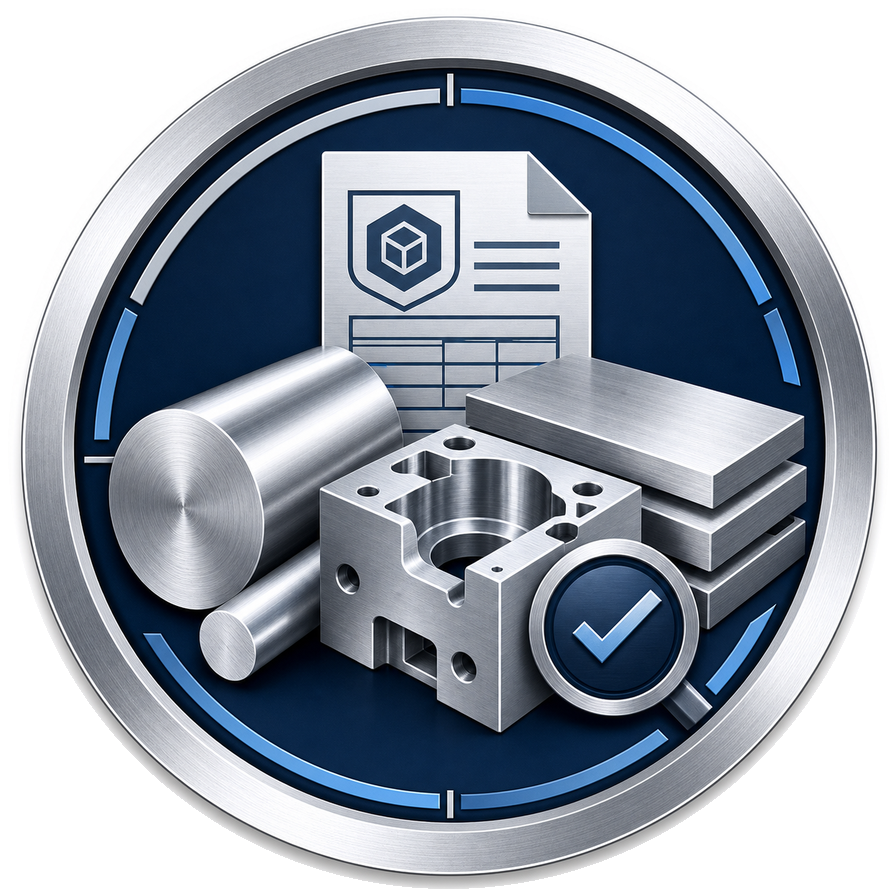
Material Grade
JADE-CNC reviews the requested aluminum grade, equivalent material options, stock form, and finish compatibility before machining.
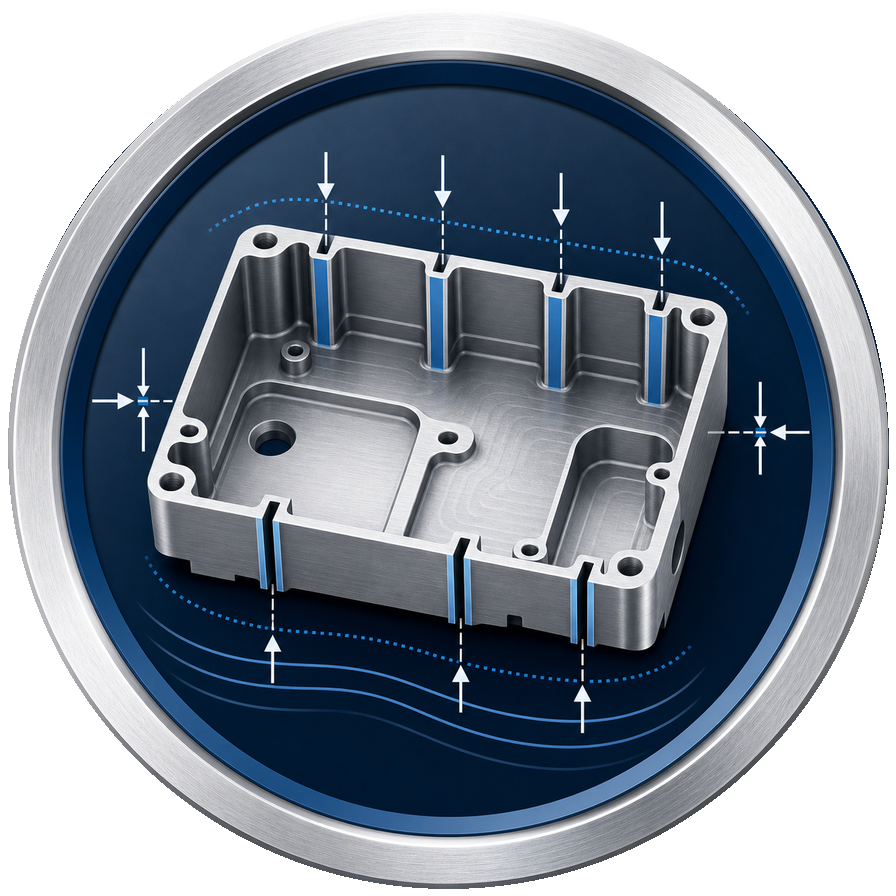
Wall Thickness
Thin walls, pockets, ribs, and lightweight structures are checked for deformation risk, vibration, and machining stability.
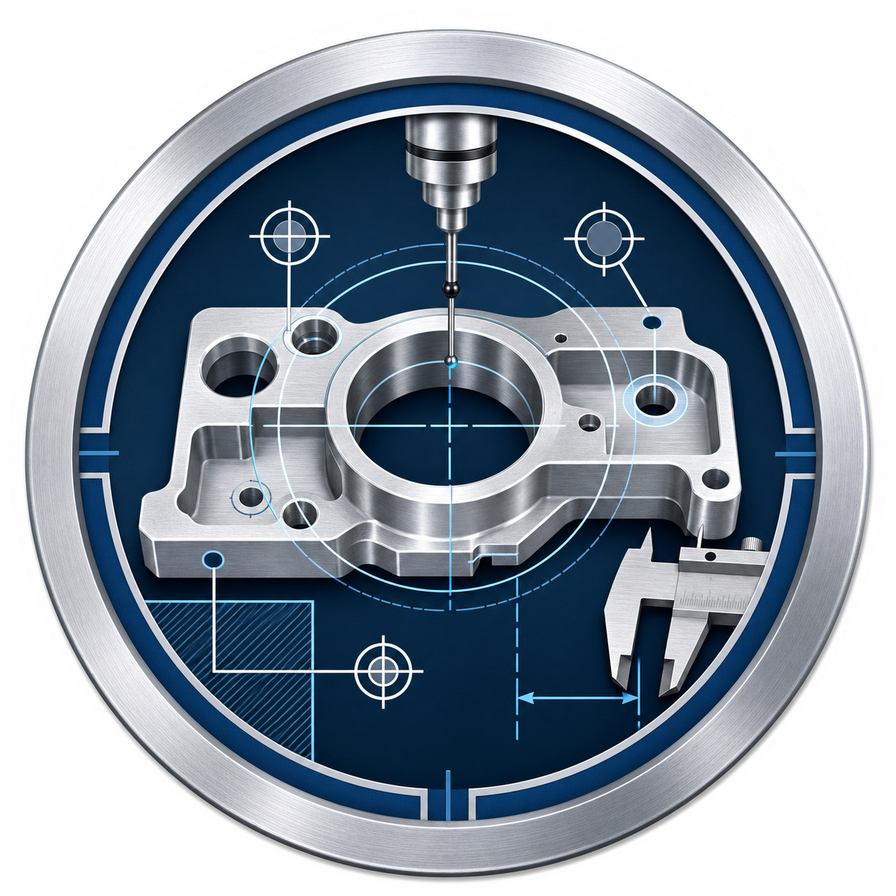
Tolerance Features
Critical holes, mating surfaces, datum references, flatness, threads, and tight tolerance zones are reviewed before quotation.
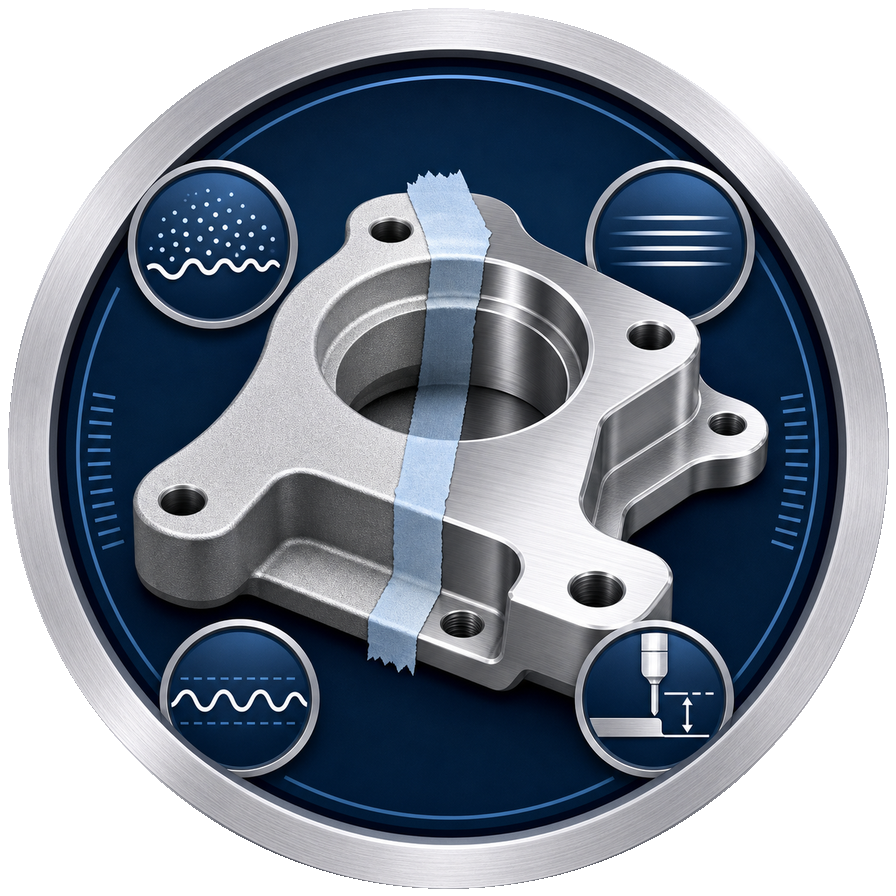
Surface Finish
Anodizing, bead blasting, polishing, painting, and cosmetic face requirements are checked against the drawing and material condition.
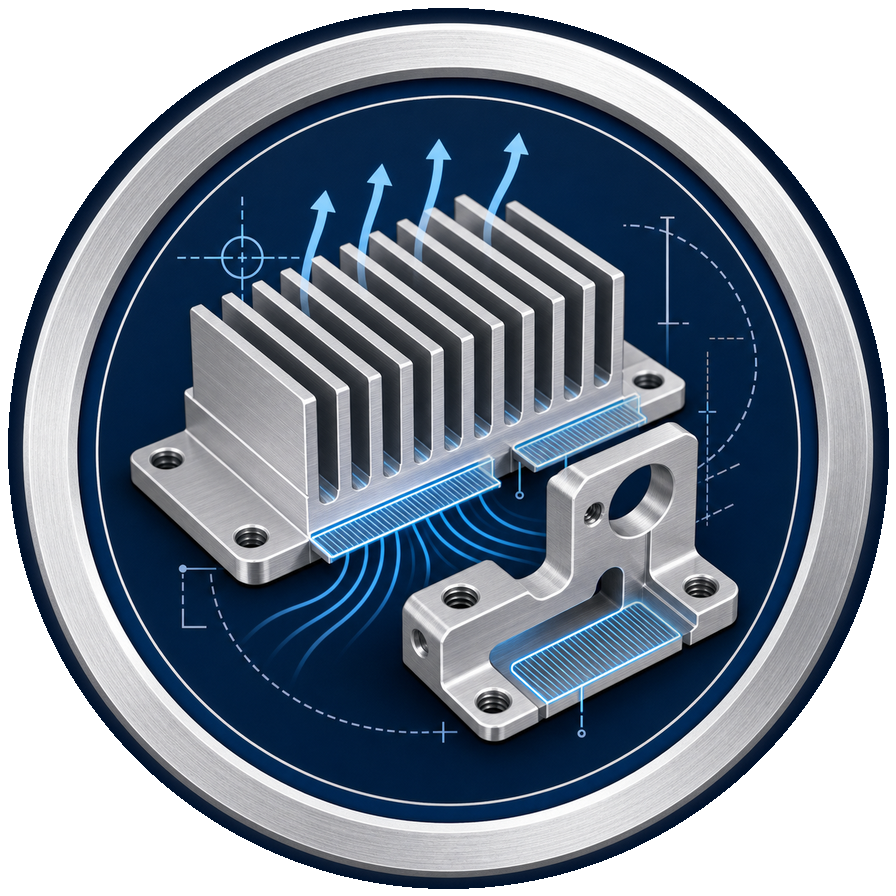
Thermal and Functional Use
For heat sinks, enclosures, brackets, and electronic parts, JADE-CNC reviews thermal contact surfaces, mounting areas, and functional fit.
Industrial Applications of Aluminum CNC Machining
Aluminum CNC machining is widely used for lightweight structural parts, electronic housings, heat sinks, brackets, robotics components, automation fixtures, medical device prototypes, communication parts, and custom industrial components.
The final machining approach depends on the aluminum grade, part geometry, tolerance requirements, surface finish, inspection needs, and expected production quantity.

Aerospace
Aerospace brackets, housings, fixtures, and lightweight structural parts

communication
RF enclosures, heat sinks, LED housings, and thermal management parts

Industrial
Automation plates, machine guards, jigs, fixtures, and robot components

Medical & Automotive
Medical device prototypes, bicycle parts, automotive components, and consumer hardware
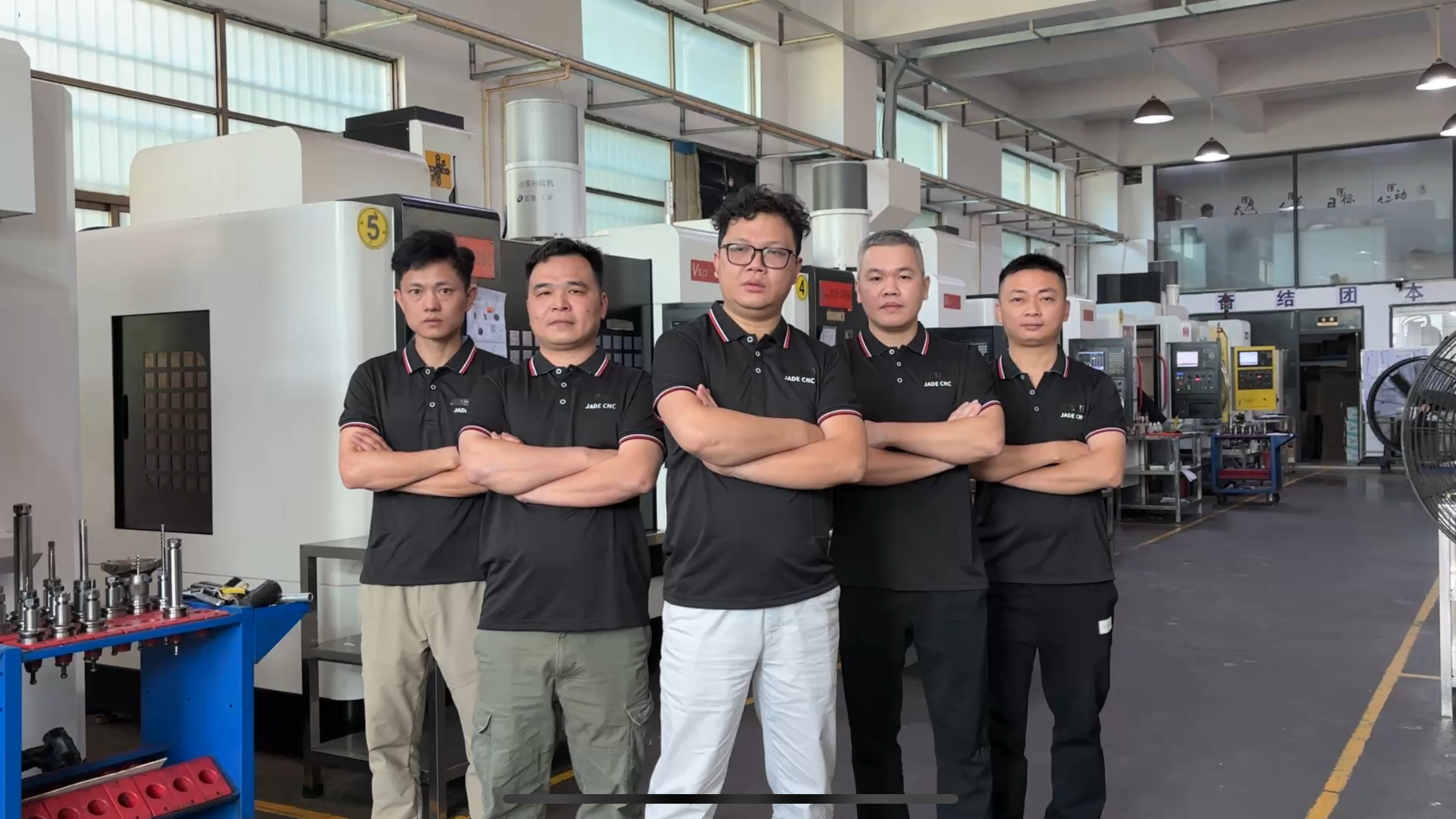
Request a Review for Your Aluminum CNC Machining Project
Send your aluminum part drawings, material grade, quantity, tolerance notes, and finish requirements. JADE-CNC will review machinability, inspection needs, surface finish, and delivery options before quotation.
FAQ
6061-T6 is the most versatile and widely used aluminum alloy for CNC machining, offering an excellent balance of strength (310 MPa tensile), machinability, corrosion resistance, and cost-effectiveness. For higher strength requirements, 7075-T6 (572 MPa tensile) is preferred for aerospace and structural applications. For parts requiring excellent formability or corrosion resistance, 5052-H32 is a good choice. At JADE-CNC, we stock 6061-T6, 7075-T6, 5052, 6063, 2024, and MIC-6 cast aluminum plate for immediate machining.
6061-T6: Tensile strength 310 MPa, yield 276 MPa, good machinability, excellent corrosion resistance, lower cost (~$2.5-3.5/kg). 7075-T6: Tensile strength 572 MPa, yield 503 MPa, more difficult to machine, lower corrosion resistance, higher cost (~$5-7/kg). 7075 is nearly 2x stronger but costs ~2x more. Choose 6061 unless high strength is specifically required.
Yes. We offer Type II (sulfuric acid, 5-25um, color options), Type III (hard anodizing, 25-100um, excellent wear resistance), and Type I (chromic acid, thin coating for aerospace). Important: anodizing increases dimensions by ~50% of coating thickness per surface. For tight tolerance parts, design with anodizing allowance or mask critical surfaces.
Learn more about anodizing types, colors, and process in our Complete Anodizing Guide.
General dimensions: +/-0.05mm. Critical dimensions: +/-0.01mm. High-precision features: +/-0.005mm with grinding. Hole diameters: H7/H8 fits. Surface finish: Ra 0.8um standard, Ra 0.2um with polishing. Aluminum is one of the easiest metals to machine to tight tolerances.
6061-T6: 0.5mm minimum for short walls (<10mm), 1.0mm recommended for walls over 20mm. 7075-T6: 0.8mm minimum, 1.5mm recommended. Keep height-to-thickness ratio <=8:1 to avoid chatter. We recommend >=1.0mm wall thickness for most functional parts.
Yes, we regularly machine 7075-T6 for aerospace and robotics. We use TiAlN-coated carbide tools, optimized speeds (300-500 SFM), high-pressure coolant, and sharp tools to avoid work hardening. We stock 7075-T6 in plate (6-100mm) and round bar (O6-O100mm).
Tolerance depends on geometry, wall thickness, material grade, feature size, and inspection access. Critical tolerance requirements should be shown on the 2D drawing.
We offer 30+ finishes: Type II/III anodizing (clear, black, colors), bead blasting, brushing, mirror polishing, powder coating, chromate conversion (Alodine), electroless nickel, and laser marking. Most popular: clear/black anodizing and bead blast + anodize combination.
Yes. We stock 6061-T6 (plate 3-150mm, bar O3-O200mm), 7075-T6 (plate 6-100mm, bar O6-O100mm), 5052-H32, 6063-T5, 2024-T351, and MIC-6 cast plate. All material comes with mill test certificates (MTC).
Prototypes: 3-5 days (simple), 5-7 days (complex). Low volume (10-100pcs): 7-14 days. Production (100+): 14-21 days. Anodizing adds 3-5 days. Rush 24-48h service available. Aluminum machines 2-3x faster than steel.