


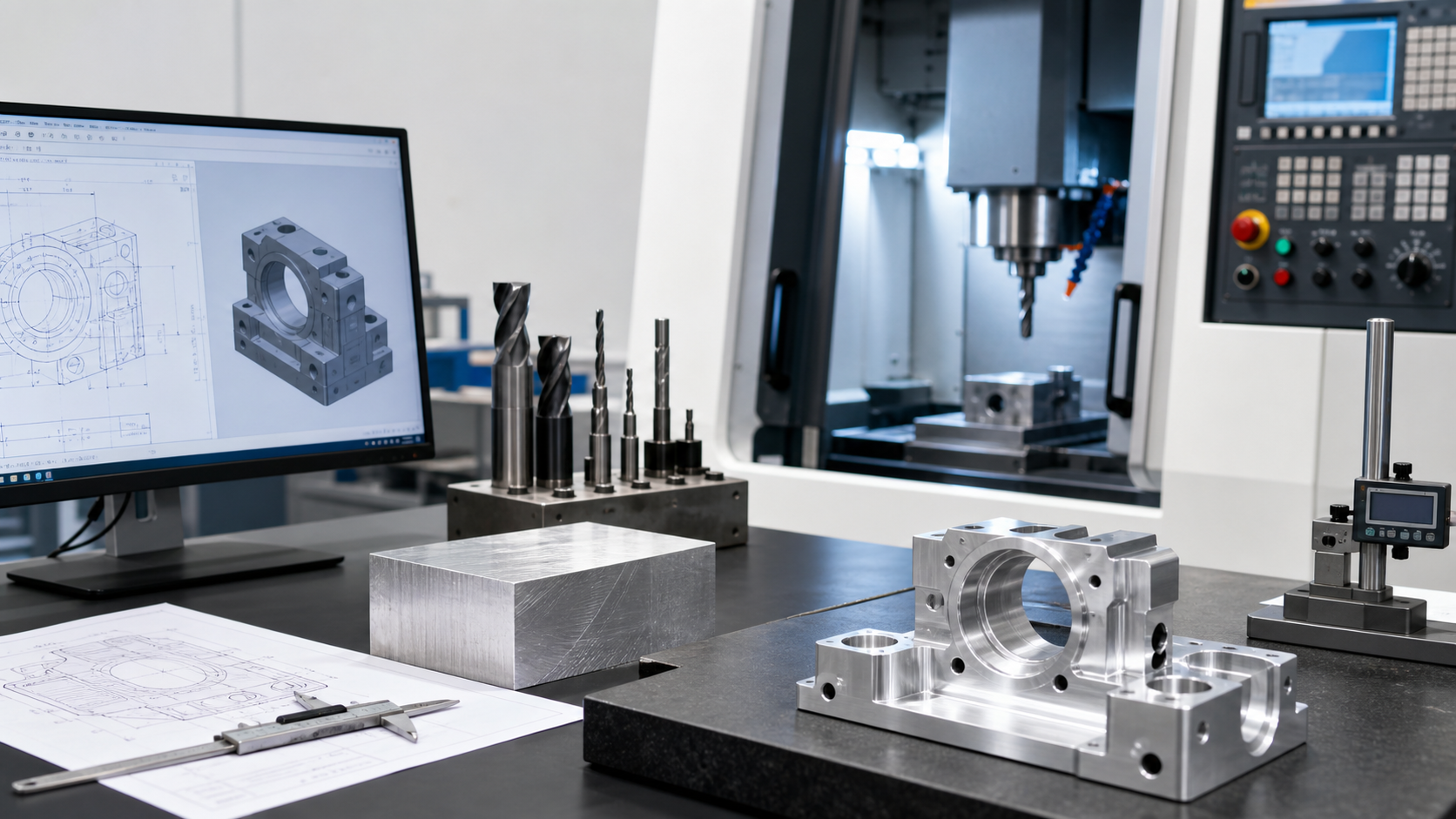
Many customers have heard the term CNC, but they may not fully understand what happens behind a finished precision part. A CNC part is not made by simply putting material into a machine and pressing a button. Behind every machined component, there is drawing review, برمجة, workholding, بالقطع, إزالة الأزيز, التشطيب السطحي, والتفتيش.
في هذه المقالة, we will explain what CNC machining means and how JADE-CNC turns a customer’s drawing or 3D model into a reliable physical part.
What Does CNC Mean?
CNC stands for التحكم العددي بالكمبيوتر.
In simple terms, CNC machining means using computer-controlled machines to remove material from a workpiece according to a programmed tool path. The machine follows digital instructions, while the cutting tool removes material in a controlled way.
These instructions control details such as:
- Tool movement
- Cutting depth
- Feed rate
- Spindle speed
- Tool changes
- Machining sequence
- Work coordinate position
Compared with manual machining, CNC machining provides better repeatability, higher efficiency, and more stable precision. Once the process is correctly prepared, the machine can produce the same feature repeatedly with controlled accuracy.
CNC Starts With the Customer Drawing or 3D Model
Every CNC machined part starts with a design.
The customer usually provides a 2D drawing, 3نموذج د, أو كليهما. These files tell the supplier what the part should look like and how it should function.
Before production begins, JADE-CNC reviews the drawing carefully. Important information includes:
- مادة
- تسامح
- Surface finish
- المواضيع
- Hole sizes
- أبعاد حرجة
- Datum references
- كمية
- Application requirements
This step is very important. If the drawing is unclear, the final part may not meet the customer’s assembly or performance requirements.
على سبيل المثال, a hole may look simple, but it may need a specific tolerance, thread depth, countersink, or surface finish. A flat surface may need to be cosmetic, sealing-related, or used as a mounting reference. These details must be confirmed before machining.
Engineering Review Helps Prevent Manufacturing Problems

CNC machining is not just about reading dimensions.
During engineering review, the team checks whether the part can be machined efficiently and accurately. This may include tool access, سمك الجدار, deep pockets, sharp internal corners, tolerance feasibility, clamping method, ومتطلبات التشطيب.
A good engineering review can help identify potential issues before production.
على سبيل المثال:
- A deep narrow slot may require a special tool.
- A thin wall may deform during machining.
- A tight tolerance may require additional inspection.
- A surface treatment may affect final dimensions.
- A threaded hole may need enough depth for assembly.
في JADE-CNC, understanding the drawing is the first step toward controlling quality.
CAM Programming Turns the Design Into Tool Paths
After the drawing and model are reviewed, the engineer creates tool paths in CAM software.
CAM stands for Computer-Aided Manufacturing. It is the software process used to convert the 3D model into machining instructions that the CNC machine can follow.
The CAM engineer decides:
- Which tools to use
- How the tool enters the material
- How much material to remove in each pass
- Which surfaces to machine first
- How to avoid collision
- How to control surface quality
- How to leave machining allowance
- How to finish critical features
This stage has a direct impact on machining quality. A good tool path can improve surface finish, reduce burrs, control deformation, and protect tool life.
The Program Is Sent to the CNC Machine
Once the tool path is ready, the machining program is sent to the CNC machine.
The operator checks the machine control panel, confirms the program, prepares the tools, and verifies the setup before cutting begins.
This step connects the digital design with the physical manufacturing process.
Although CNC machines are computer-controlled, skilled operators are still essential. They check the setup, confirm tool length, set coordinates, monitor cutting conditions, and make sure the process runs safely and accurately.
عقد العمل: Clamping the Material Correctly
Before machining starts, the raw material must be clamped securely.
Workholding is the process of fixing the material in the correct position so the cutting tool can machine it accurately. This may involve a vise, clamps, فكي ناعمة, fixture plates, vacuum workholding, or custom fixtures.
Good workholding must keep the part stable without causing deformation.
If the material moves during machining, dimensions may shift. If clamping force is too strong, thin or delicate parts may deform. If positioning is not repeatable, features from different setups may not align.
في JADE-CNC, workholding and positioning are important parts of the machining process.
Tool Installation and Work Coordinate Setup
After the material is clamped, the operator installs cutting tools and sets the work coordinate.
The work coordinate tells the CNC machine where the part is located. If the coordinate is wrong, the machine may cut in the wrong position even if the program itself is correct.
Tool installation is equally important. Each tool must match the program, and tool length compensation must be set correctly.
This preparation affects:
- Dimensional accuracy
- موضع الثقب
- Surface finish
- Tool safety
- Machining stability
Accurate setup helps ensure that the machine follows the tool path exactly as planned.
CNC Machining Removes Material in a Controlled Way
Once everything is prepared, machining begins.
The cutting tool removes material according to the programmed path. اعتمادا على الجزء, CNC machining may include milling, حفر, التنصت, ممل, contouring, pocket machining, or 5-axis machining.
Different materials require different cutting strategies. الألومنيوم, الفولاذ المقاوم للصدأ, نحاس, التيتانيوم, بوم, ABS, and PC can all be machined, but each material behaves differently.
على سبيل المثال:
- Aluminum machines efficiently but still needs burr control.
- Stainless steel requires careful heat and tool wear control.
- Copper can be sticky and may need specific tooling.
- Titanium requires stable cutting and heat management.
- Engineering plastics may deform or melt if heat is not controlled.
The value of CNC machining is material flexibility, controlled accuracy, and repeatable production.
Deburring and Cleaning After Machining
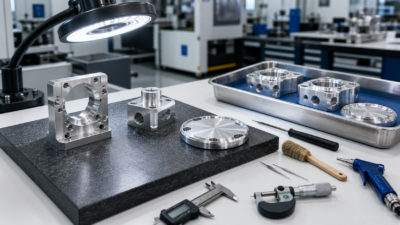
بعد المعالجة, the part is usually not ready for delivery immediately.
Small burrs may remain around holes, حواف, فتحات, المواضيع, and pockets. Cutting fluid, رقائق, or dust may also stay on the surface or inside internal features.
JADE-CNC may perform deburring and cleaning after machining to prepare the part for inspection, التشطيب, or assembly.
Deburring helps remove sharp edges and small unwanted material. Cleaning helps remove chips, زيت, and residue.
This step is important because burrs can affect assembly, surface treatment, and customer experience.
Surface Finishing Improves Function and Appearance
Some CNC parts require additional surface finishing.
Common finishing options include:
- أنودة
- السفع الرملي
- تلوين
- Powder coating
- تلميع
- Brushing
- تصفيح
- التخميل
Surface finishing can improve corrosion resistance, صلابة, مظهر, مقاومة التآكل, or coating performance.
لكن, finishing must be considered together with machining. Some coatings add thickness. Some surfaces need masking. Some cosmetic faces need special protection during clamping and handling.
For high-quality CNC parts, machining and finishing should be planned as one complete process.
Final Inspection Confirms Quality
Before delivery, the part must be inspected.
Final inspection may include checking dimensions, المواضيع, الانتهاء من السطح, نتوءات, الثقوب, مظهر, and critical features. Depending on the part requirement, inspection tools may include calipers, ميكرومتر, مقاييس, height gauges, CMM equipment, or visual inspection under lighting.
للعملاء, the most important thing is not only how many machines a supplier has. It is whether the supplier understands drawings, التسامح, and quality control.
A reliable CNC machining supplier should be able to control the full process from design review to final inspection.
Why CNC Machining Is Valuable
CNC machining is widely used because it offers three major advantages:
Accuracy
CNC machines can produce precise features according to programmed tool paths and drawing requirements.
التكرار
Once the process is controlled, CNC machining can produce consistent parts across prototypes, small batches, ويسير الإنتاج.
Material Flexibility
CNC machining can process many materials, including aluminum, الفولاذ المقاوم للصدأ, نحاس, التيتانيوم, بوم, ABS, جهاز كمبيوتر, and other engineering materials depending on the design.
This makes CNC machining suitable for robotics, معدات الاتصالات, الأتمتة, إلكترونيات, الأجهزة الطبية, aerospace components, الآلات الصناعية, and custom precision parts.
خاتمة
When you see a small CNC machined part, it may look simple. But behind it is a complete manufacturing process.
A reliable CNC part goes through engineering review, CAM programming, workholding, machine setup, tool installation, بالقطع, إزالة الأزيز, تنظيف, التشطيب السطحي, and final inspection.
That is what turns a customer’s drawing or 3D model into a reliable physical part.
في JADE-CNC, we focus not only on machining equipment, but also on drawing understanding, tolerance control, process planning, تنسيق التشطيب, and quality inspection.
الحث على اتخاذ إجراء
Need custom CNC machined parts from your drawing or 3D model?
Send JADE-CNC your CAD files, 2رسومات د, متطلبات المواد, كمية, tolerance needs, and surface finish requirements. Our team can help review your project and provide a practical CNC machining solution.

ليو ليانغ, Founder Best Partner with R&D
JADE-CNC مؤسس LEO, الذي يجلب أكثر من عقدين من الخبرة في الصناعة, بدأ ليو حياته المهنية كمتدرب ومارس مهاراته في معالجة الأسطح والتصنيع باستخدام الحاسب الآلي.