



Copper CNC Machining Services for Precision Custom Parts
JADE-CNC provides high-precision copper CNC machining services for electrical, thermal, and industrial applications. With 15+ years of experience machining copper alloys including C11000, C36000, C26000, and beryllium copper, we deliver tight-tolerance copper parts with premium surface finishes and plating options.
- High Conductivity
- Tight Tolerance ±0.005mm
- 30+ Surface Finishes
- No MOQ

Why Choose Copper for CNC Machining?
Exceptional Electrical Conductivity
Copper is the industry standard for electrical conductivity (100% IACS for pure copper), making it ideal for busbars, connectors, terminals, and electrical contacts. Only silver conducts better, but copper offers superior cost-effectiveness and mechanical strength.
Outstanding Thermal Conductivity
With thermal conductivity of 401 W/(m·K), copper efficiently dissipates heat in heat sinks, RF cavities, power electronics, and LED cooling applications. Copper heat sinks outperform aluminum by 2.4× in thermal performance.
Natural Corrosion Resistance
Copper forms a protective patina layer (verdigris) when exposed to the environment, providing excellent long-term corrosion resistance without additional coating. Ideal for outdoor, marine, and plumbing applications.
Antimicrobial Properties
Copper naturally kills bacteria, viruses, and fungi on contact (EPA-registered antimicrobial material). Perfect for medical devices, food processing equipment, and high-touch surfaces.
Excellent Plating Compatibility
Copper accepts a wide range of decorative and functional platings including nickel, gold, silver, tin, and chrome. Plated copper parts combine copper's conductivity with premium surface protection and solderability.
Good Ductility & Formability
Copper is highly ductile and malleable, allowing complex geometries, deep draws, and fine features without cracking. It can be machined, bent, stamped, and formed into intricate shapes.
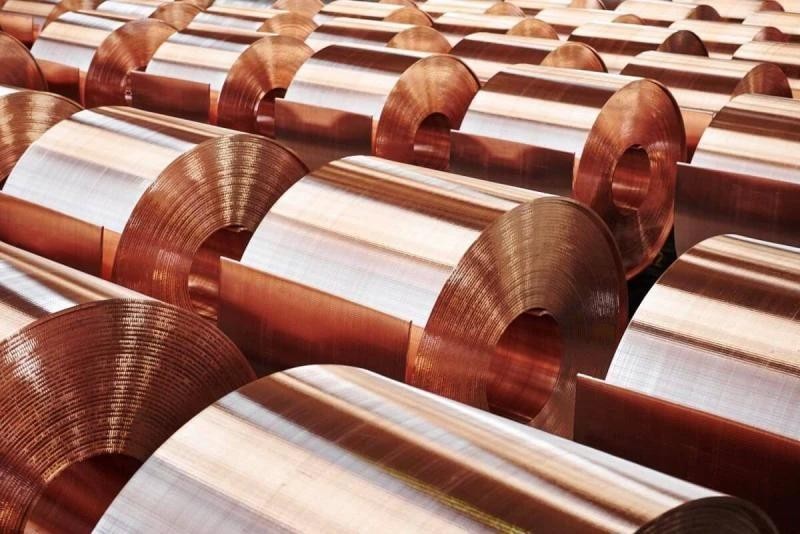
Copper Properties & Performance Parameters
Property | Value (C11000 Pure Copper) | Unit | Notes |
Density | 8.96 | g/cm³ | ~12% heavier than steel |
Thermal Conductivity | 401 | W/(m·K) | 2.4× aluminum, 5× stainless steel |
Electrical Conductivity | 100 | %IACS | Industry reference standard |
Electrical Resistivity | 1.72 | μΩ·cm | at 20°C |
CTE | 16.5 | ×10⁻⁶/K | at 20-100°C |
Melting Point | 1085 | °C | 1984°F |
Tensile Strength (annealed) | 220 | MPa | 32 ksi |
Tensile Strength (cold worked) | 350-400 | MPa | 51-58 ksi |
Yield Strength (annealed) | 70 | MPa | 10 ksi |
Elongation | 45-60 | % | Highly ductile |
Hardness | 35-80 | HB | Depends on temper |
Specific Heat | 0.385 | J/(g·K) |
|
Modulus of Elasticity | 117 | GPa | 17 Msi |
Poisson's Ratio | 0.34 | - |
|
Machinability Rating | 20-40 | % | Difficult (gummy), C36000 = 100% |
Copper Alloys JADE-CNC can Machine
Alloy | UNS Number | Key Characteristics | Typical Applications | Machinability |
C11000 (ETP Copper) | C11000 | 99.9% pure, highest conductivity, soft & ductile | Busbars, electrical contacts, heat sinks, conductors | 20% (gummy) |
C10100 (OFE Copper) | C10100 | 99.99% pure, oxygen-free, highest conductivity | High-end electronics, vacuum applications, waveguide | 20% |
C36000 (Free Machining Brass) | C36000 | 60% Cu / 40% Zn, leaded, excellent machinability | Connectors, terminals, valves, fittings, fasteners | 100% (best) |
C26000 (Cartridge Brass) | C26000 | 70% Cu / 30% Zn, good ductility, corrosion resistant | Tubes, shells, stampings, radiator parts | 60% |
C46400 (Naval Brass) | C46400 | 60% Cu / 39% Zn / 1% Sn, excellent corrosion resistance | Marine hardware, propellers, valve bodies, pumps | 70% |
C93200 (Bearing Bronze) | C93200 | 83% Cu / 7% Sn / 7% Pb / 3% Zn, wear resistant | Bearings, bushings, gears, wear plates | 80% |
C17200 (Beryllium Copper) | C17200 | Cu + 1.8-2% Be, high strength + conductivity, age-hardenable | Springs, contacts, connectors, non-sparking tools, molds | 40% |
C17510 (BeCu Ni) | C17510 | Cu + 0.4-0.7% Be + 1.4-2.2% Ni, high conductivity | High-current contacts, relay blades, electrodes | 50% |
C51000 (Phosphor Bronze) | C51000 | 95% Cu / 5% Sn, excellent fatigue & corrosion resistance | Springs, diaphragms, electrical contacts, fasteners | 50% |
C63000 (Ni-Al Bronze) | C63000 | 82% Cu / 10% Al / 5% Ni / 3% Fe, high strength & corrosion | Marine components, valves, gears, heavy-duty parts | 60% |

Custom Copper CNC Machining Manufacturer in China
Why Choose Copper for CNC Machining?
- Precise CTE Matching – Ensures compatibility with glass/ceramic sealing
- Excellent Hermetic Seal Reliability – Leak-tight and durable under thermal cycling
- Good Ductility & Formability – Suitable for deep drawing and complex geometries
- High Curie Temperature – Maintains magnetic stability in demanding environments
|
Property |
Typical Value |
Notes |
|---|---|---|
|
CTE (20–400°C) |
~5.1 × 10⁻⁶/K |
Matches borosilicate glass & alumina ceramics |
|
Density |
8.35 g/cm³ |
Heavier than aluminum, lighter than stainless steel |
|
Thermal Conductivity |
17–18 W/(m·K) |
Requires careful thermal management in machining |
|
Machinability |
Moderate to Difficult |
Gummy, work-hardening, requires sharp tooling |
Copper Machining Capabilities of JADE-CNC
Machining Processes
- CNC Milling: 3-axis, 4-axis, and 5-axis milling for complex copper geometries
- CNC Turning: High-precision turning for cylindrical copper parts, shafts, and sleeves
- Swiss Machining: For small, complex copper parts with tight tolerances
- Wire EDM: For intricate shapes and hard-to-machine beryllium copper
- Drilling & Tapping: Precise holes and threads in copper components
- Surface Grinding: For flatness and critical surface finish requirements
Typical Copper Parts We Manufacture
Part Type | Materials | Applications |
Busbars & Conductors | C11000, C10100 | Power distribution, switchgear, battery packs |
Heat Sinks & Thermal Components | C11000 | LED cooling, power electronics, RF amplifiers |
RF Cavities & Resonators | C11000, C10100 | Communication equipment, radar, test instruments |
Connectors & Terminals | C36000, C26000, C17200 | Automotive, aerospace, industrial electronics |
Electrical Contacts | C17200, C17510, C51000 | Relays, switches, circuit breakers |
Valves & Fittings | C46400, C36000, C63000 | Plumbing, marine, industrial fluid systems |
Bearings & Bushings | C93200 | Industrial machinery, automotive, aerospace |
Springs & Elastic Components | C17200, C51000 | Electrical contacts, precision instruments |
Waveguide & Microwave Components | C10100, C11000 | Satellite, radar, communication systems |
Custom Copper Components | All alloys | Per customer specifications |
Precision Capabilities
- Tolerances: ±0.005mm (±0.0002") for critical dimensions
- Surface Finish: Ra 0.4μm (16 μin) standard, Ra 0.1μm (4 μin) with polishing
- Maximum Part Size: 500mm × 400mm × 300mm (milling), Ø300mm × 500mm (turning)
- Minimum Feature Size: 0.1mm holes, 0.2mm wall thickness
- Thread Standards: Metric, UNC, UNF, NPT, BSP, custom
Key Challenges in Copper CNC Machining

Softness and Burr Control
Pure copper and some copper alloys can form burrs or smear during machining, so sharp tooling and controlled feeds are required for clean edges and stable dimensions.
Poor Heat Dissipation
Low thermal conductivity causes heat to concentrate in the cutting zone, easily leading to tool overheating, reduced tool life, and potential thermal distortion of the workpiece.
Stringent Precision Requirements
Often used for precision seals, demanding extremely tight dimensional tolerances (typically under ±0.025mm). Any vibration or tool deflection during machining can render the part out of specification.
Residual Stress and Distortion
Internal stresses induced during machining may cause subsequent part distortion, affecting final dimensional stability and the flatness of sealing surfaces.
Demanding Post-Processing Requirements
Parts frequently require electroplating (e.g., nickel, gold) to ensure solderability and corrosion resistance. This necessitates a uniform, clean, defect-free machined surface, adding complexity to the process.
Copper Machining Challenges & Solutions
Problem:
Pure copper (C11000) is extremely soft and ductile, causing material to weld to the cutting edge (built-up edge). This results in poor surface finish, dimensional inaccuracy, and rapid tool wear.
Solution:
- Use sharp, polished carbide tools with high rake angles (15-25°)
- Apply high-pressure flood coolant (1000+ PSI) to reduce friction and flush chips
- Use uncoated or diamond-like carbon (DLC) coated tools to prevent BUE
- Optimize cutting speeds: 300-500 SFM for roughing, 500-800 SFM for finishing
- Separate roughing and finishing operations with fresh tools for finishing passes
Problem:
Copper’s excellent thermal conductivity (401 W/m·K) means heat rapidly transfers from the cutting zone to the workpiece, causing thermal expansion and dimensional drift. Copper also resists localized heating needed for efficient chip formation.
Solution:
- Use high cutting speeds to generate sufficient heat in the shear zone
- Apply generous coolant flow to maintain consistent workpiece temperature
- Allow thermal stabilization time between roughing and finishing
- Finish machining at controlled ambient temperatures (20±2°C)
- Use climb milling to reduce cutting forces and heat generation
Problem:
Copper’s ductility causes significant burr formation, especially on edges, holes, and thin walls. Deburring copper is labor-intensive and can damage delicate features.
Solution:
- Program lead-in/lead-out toolpaths to minimize exit burrs
- Use sharp tools and proper chip load to reduce burr formation
- Implement in-process deburring with chamfer mills and deburring tools
- Offer tumbling, vibratory finishing, and manual deburring for critical edges
- Design parts with chamfers and radii to eliminate sharp burr-prone edges
Problem:
Copper oxidizes quickly, and surface contaminants (oils, oxides, fingerprints) can cause plating defects such as blistering, peeling, or uneven coverage.
Solution:
- Use clean, lint-free handling with gloves after final machining
- Implement ultrasonic cleaning and acid activation before plating
- Partner with certified plating vendors with copper-specific processes
- Offer plating thickness verification and adhesion testing
- Provide passivation and chromate conversion for temporary corrosion protection
Problem:
Copper’s low yield strength (70 MPa annealed) causes thin walls and fine features to deflect under cutting forces, resulting in dimensional errors and surface chatter.
Solution:
- Use low-depth-of-cut, high-feed strategies for thin walls
- Implement step-down machining with multiple light passes
- Use fixturing with support for thin sections (soft jaws, wax, ice fixturing)
- Apply climb milling with sharp tools to reduce cutting forces
- Finish walls from both sides to equalize stress and minimize deflection
Surface Finishes & Plating for Copper Parts
Surface Finish | Process Description | Typical Thickness | Applications | Notes |
Nickel Plating (Electroless) | Auto-catalytic nickel-phosphorus deposition | 5-25 μm | Corrosion protection, wear resistance, solderability | Uniform coverage, hardness 500-900 HV |
Nickel Plating (Electrolytic) | Electroplated pure nickel | 5-50 μm | Decorative, corrosion protection, undercoat for gold | Bright or matte finish options |
Gold Plating | Electroplated gold over nickel strike | 0.5-5 μm | Electrical contacts, connectors, RF components | Excellent conductivity & corrosion resistance |
Silver Plating | Electroplated silver over copper | 5-25 μm | High-current contacts, busbars, RF applications | Highest conductivity, tarnishes over time |
Tin Plating | Electroplated tin or tin-lead | 5-20 μm | Solderability, corrosion protection | Matte or bright, RoHS compliant pure tin available |
Chrome Plating | Electroplated chromium over nickel | 0.5-10 μm | Decorative, wear resistance | Hard, durable, mirror finish |
Mechanical Polishing | Abrasive buffing to mirror finish | N/A (material removal) | Decorative, optical, low-friction surfaces | Ra 0.05-0.4 μm achievable |
Passivation | Chemical treatment to remove free iron | <0.1 μm | Corrosion protection, pre-plating prep | Citric or nitric acid based |
Chromate Conversion | Chemical conversion coating (iridescent/clear) | 0.5-2 μm | Temporary corrosion protection, paint primer | Also called "chem film" or "alodine" for copper |
Black Oxide (Patina) | Chemical blackening (selenium dioxide) | 1-3 μm | Decorative, anti-glare, corrosion resistance | Also called "liver of sulfur" for copper |
Bead Blasting | Media blasting with glass beads | N/A | Uniform matte finish, hide tool marks | Various media sizes for different textures |
Brushing / Linishing | Abrasive belt brushing | N/A | Decorative uniform grain pattern | Directional finish, various grits |
Vibratory Finishing | Tumbling with media | N/A | Deburring, radius formation, uniform finish | For批量 parts, various media types |
Laser Marking | Laser engraving for logos & markings | N/A | Part identification, branding | Permanent, high-contrast markings |
Quality Assurance for Copper Parts

Incoming Material Control
- Material certificates (mill test reports) for every copper alloy batch
- Positive material identification (PMI) via XRF analyzer
- Alloy verification before machining begins
- Traceability from raw material to finished part
In-Process Inspection
- First Article Inspection (FAI) with full dimensional report
- In-process dimensional checks at 20% intervals
- Surface finish verification with profilometer
- Plating thickness measurement (XRF or magnetic method)
- Electrical conductivity testing (eddy current)
Final Inspection & Documentation
- 100% dimensional inspection for critical features
- CMM (Coordinate Measuring Machine) verification
- Visual inspection for surface defects and burrs
- Material certificates, inspection reports, and COC included
- Clean packaging to prevent oxidation and damage during transit
Industrial Applications of Copper CNC Machining

electronics
Electrical contacts, busbars, terminals, and conductive hardware

Optoelectronics
Heat sinks, cold plates, thermal blocks, and power electronics parts

Defense
RF shielding, microwave components, connectors, and sensor housings

Communication
Electrodes, precision fixtures, grounding parts, and custom copper prototypes
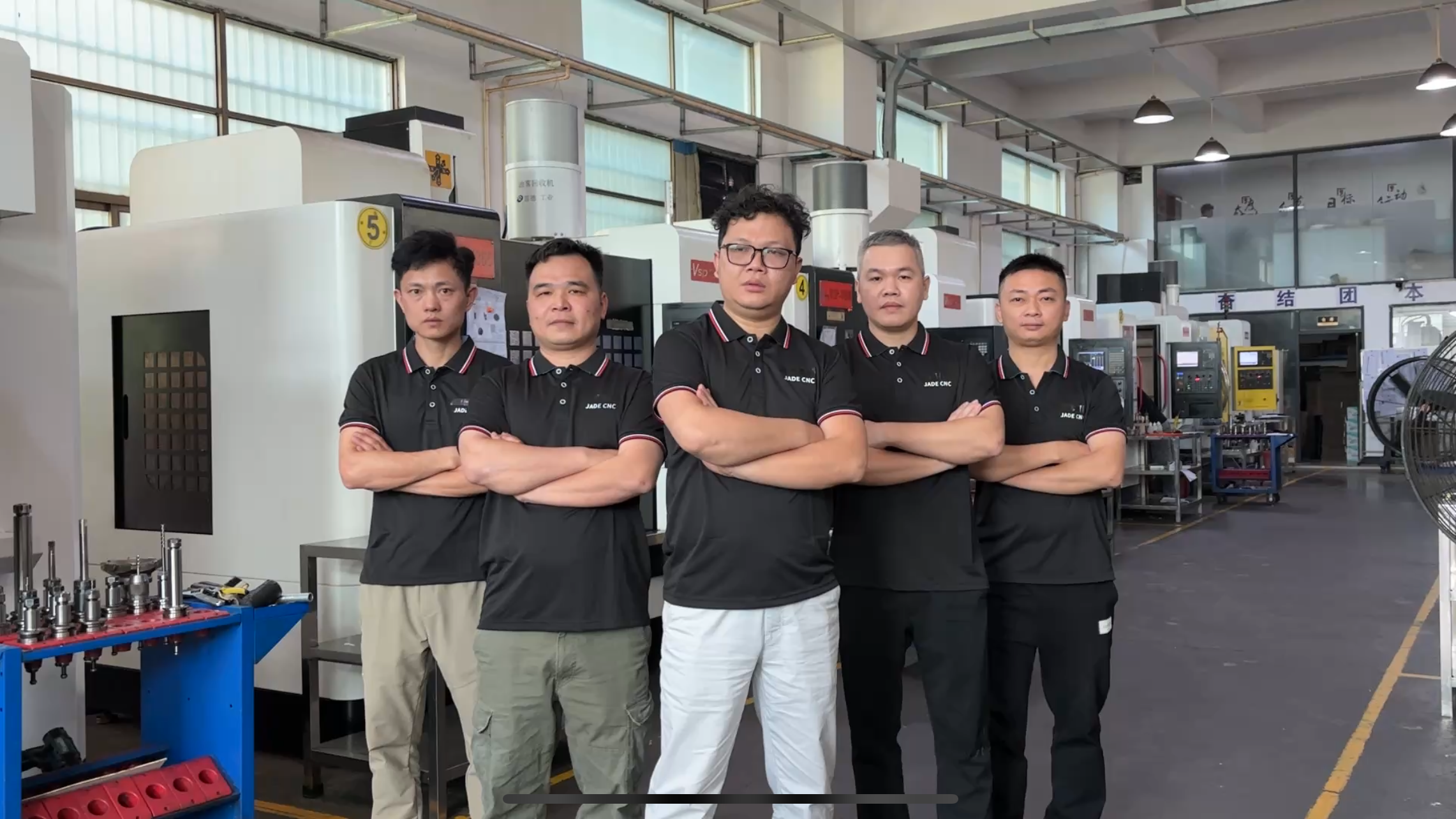
Get Your Custom Copper Machining Parts Today!
From concept to final product, JADE-CNC is committed to delivering exceptional quality and an impeccable delivery experience for every order. Whether you need a small quantity of custom parts, prototype fabrication, or high-volume, high-precision components, our experienced engineering team is ready to assist you at any time. Contact us today to get a free sample or a quote for your project. Let’s establish a partnership to make your CNC milled parts precise, durable, and cost-effective.
FAQ
Pure copper (C11000) is challenging due to its soft, gummy nature that causes built-up edge and burrs. However, free-machining brasses like C36000 are among the easiest materials to machine. At JADE-CNC, we use specialized tooling, high-pressure coolant, and optimized parameters to achieve excellent results with all copper alloys.
C36000 free-machining brass is the easiest copper alloy to machine (100% machinability rating) and is ideal for connectors, fittings, and valves. For maximum conductivity, C11000 pure copper is preferred despite its machining difficulty. For high-strength applications, C17200 beryllium copper offers the best combination of strength and conductivity.
Yes, copper accepts a wide range of platings including nickel, gold, silver, tin, and chrome. Plating provides corrosion protection, improved solderability, enhanced conductivity, and decorative finishes. We partner with certified plating vendors and can verify plating thickness and adhesion quality.
We offer 30+ surface finishes for copper including electroless/electrolytic nickel, gold, silver, tin plating, mechanical polishing, passivation, chromate conversion, black oxide, bead blasting, brushing, and vibratory finishing. The choice depends on your application requirements for conductivity, corrosion resistance, and aesthetics.
Copper’s low hardness and high ductility cause material to pressure-weld to the cutting edge, forming a built-up edge. BUE degrades surface finish, causes dimensional errors, and accelerates tool wear. We mitigate this with sharp polished tools, high rake angles, high-pressure coolant, and optimized cutting speeds.
We routinely hold ±0.01mm (±0.0004″) for general copper parts and ±0.005mm (±0.0002″) for critical features. Copper’s high thermal conductivity requires careful temperature control and thermal stabilization between operations to achieve tight tolerances.
Yes, we machine C17200 and C17510 beryllium copper alloys. BeCu offers an exceptional combination of high strength (up to 1400 MPa after age hardening) and good conductivity (20-60% IACS). We follow proper safety protocols for BeCu machining, including dust extraction and personal protective equipment.
Copper machining costs depend on alloy type, part complexity, quantity, tolerances, and surface finish. Pure copper (C11000) is more expensive to machine due to its difficulty, while C36000 brass is more cost-effective. Material costs range from $5-15/kg for brasses to $30-80/kg for beryllium copper. Contact us for a detailed quote within 24 hours.
C11000 electrolytic tough pitch copper has a thermal conductivity of 401 W/(m·K) at 20°C, which is the industry reference standard (100% IACS for electrical conductivity). This makes copper 2.4× more thermally conductive than 6061 aluminum (167 W/m·K) and ideal for heat sink and thermal management applications.
No, copper cannot be anodized like aluminum. Anodizing is an electrochemical process that works only on aluminum, titanium, magnesium, and their alloys. For copper, we use alternative protective finishes including plating (nickel, gold, silver, tin), passivation, chromate conversion coating, and black oxide to provide corrosion protection and aesthetic appeal.