



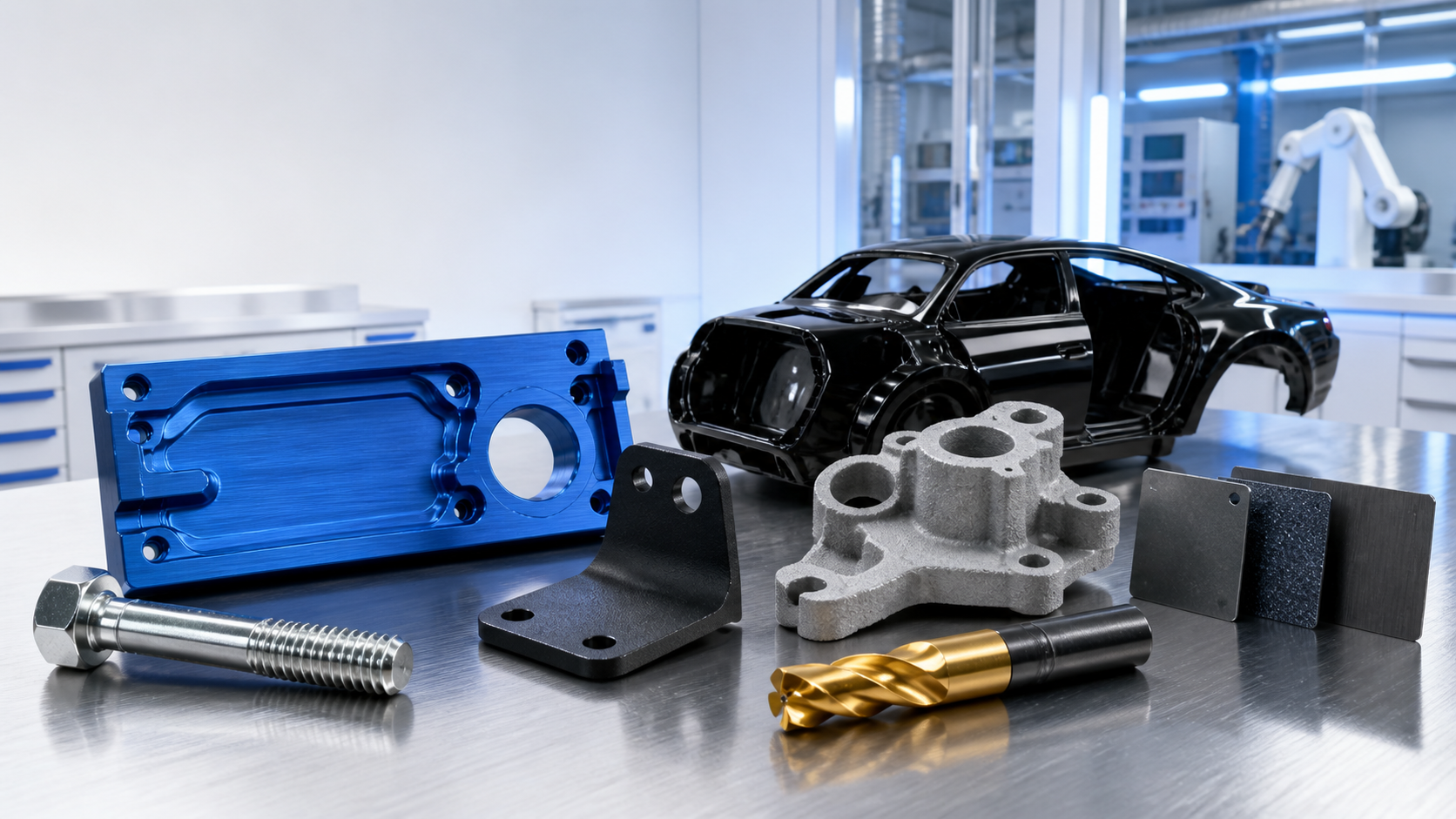
El tratamiento de superficies no se trata sólo de la apariencia. Cambia la forma en que una pieza resiste la corrosión., tener puesto, calor, humedad, quimicos, contacto eléctrico, y daños mecánicos. Esta guía compara siete procesos de tratamiento de superficies ampliamente utilizados y explica cuándo elegir cada uno..
Descripción general de los procesos de tratamiento de superficies.
Tabla de contenido
- Por qué es importante el tratamiento de superficies
- galvanoplastia: Depositar una capa metálica
- Anodizado: Cultivo de una película de óxido a partir de aluminio
- Recubrimiento por pulverización: Creando una barrera protectora orgánica
- Recubrimiento electroforético: Formación de una película de imprimación uniforme
- Oxidación por microarco: Creación de una película cerámica sobre aleaciones ligeras
- Recubrimiento al vacío PVD: Depositar películas delgadas funcionales
- Recubrimientos de conversión química: Cambiar la superficie por reacción química
- Cómo elegir el tratamiento superficial adecuado
- Por qué las pruebas de niebla salina no son suficientes
- Pensamientos finales
Por qué es importante el tratamiento de superficies
En fabricación mecánica, ingeniería automotriz, electrónica de consumo, aeroespacial, y otras industrias de alta confiabilidad, El tratamiento de la superficie puede determinar directamente cuánto tiempo dura una pieza en servicio..
El mismo material base puede funcionar de manera muy diferente después de diferentes tratamientos superficiales.. Resistencia a la corrosión, resistencia al desgaste, conductividad eléctrica, aislamiento, comportamiento de fricción, y la apariencia puede cambiar significativamente.
En otras palabras, El tratamiento de superficies no es simplemente un paso cosmético.. Crea una capa superficial funcional manteniendo las propiedades generales del sustrato lo más inalteradas posible..
No existe un tratamiento de superficie universalmente “mejor”. La elección correcta depende del sustrato., geometría, función requerida, entorno de servicio, tolerancia dimensional, montaje aguas abajo, costo, y restricciones regulatorias.
Hoy, Las decisiones sobre el acabado de superficies también están determinadas por requisitos medioambientales y de cumplimiento más estrictos.. Estos incluyen el reemplazo de cromo hexavalente., pasivación trivalente o libre de cromo, sistemas de recubrimiento con bajo contenido de COV, recubrimientos en polvo de baja temperatura, pretratamientos de circonio o silano, Revisiones relacionadas con PFAS, y auditorías de procesos especiales automotrices más estrictas.
galvanoplastia: Depositar una capa metálica
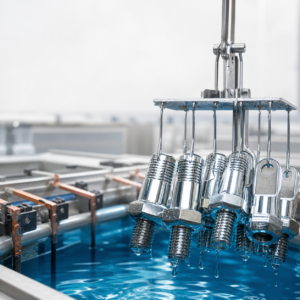
Proceso de galvanoplastia
La galvanoplastia utiliza un campo externo de corriente continua para reducir los iones metálicos de un electrolito a la superficie de una pieza de trabajo.. La pieza de trabajo suele ser el cátodo., mientras que el ánodo puede ser soluble o insoluble dependiendo de la química del baño.
Las capas galvanizadas comunes incluyen zinc., aleación de zinc-níquel, níquel, cobre, cromo, plata, oro, cromo duro, y sistemas compuestos como el níquel químico seguido de galvanoplastia.
Diferentes capas plateadas sirven para diferentes propósitos:
- El revestimiento de zinc se utiliza principalmente para la protección contra la corrosión del acero..
- El revestimiento de zinc-níquel se utiliza a menudo para sujetadores automotrices de alto rendimiento y piezas resistentes a la corrosión..
- El niquelado puede proporcionar protección, resistencia al desgaste, y apariencia decorativa.
- El revestimiento de cobre se utiliza a menudo como capa base., capa conductora, o capa de transición.
- El baño de oro y plata es común en contactos eléctricos y piezas decorativas de primera calidad..
- El cromo duro se utiliza para resistencia al desgaste y reparación dimensional., aunque su uso está cada vez más afectado por la regulación medioambiental.
Flujo de proceso típico:
Limpieza → enjuague → eliminación de óxido o decapado → activación → huelga o capa base opcional → revestimiento principal → enjuague → pasivación o sellado → secado → inspección.
El tratamiento previo es fundamental. Aceite, escala de óxido, óxido, o los residuos de compuesto de pulido pueden causar ampollas, poros, y delaminación local.
Riesgos clave:
- Espesor de revestimiento desigual.
- Mala cobertura en agujeros profundos, surcos, y caries.
- Fragilización por hidrógeno después del decapado o enchapado de acero de alta resistencia.
- Presión ambiental de los metales pesados., aguas residuales, y mantenimiento del baño.
- Reemplazo continuo de sistemas de cromo hexavalente con cromo trivalente o alternativas sin cromo.
Llevar:
La galvanoplastia es adecuada cuando una pieza necesita una capa funcional metálica para protegerla contra la corrosión., conductividad, soldabilidad, resistencia al desgaste, reparar, o decoración. Para piezas portantes de alta resistencia, El control de la fragilidad por hidrógeno debe especificarse claramente..
Anodizado: Cultivo de una película de óxido a partir de aluminio
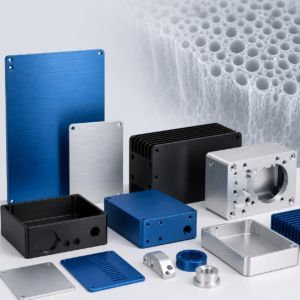
Proceso de anodizado
El anodizado se utiliza principalmente para aluminio y aleaciones de aluminio.. También se puede aplicar al titanio., magnesio, y otros metales de válvulas en condiciones específicas.
La diferencia clave con la galvanoplastia es que la anodización no deposita una capa metálica externa.. En cambio, convierte la superficie del sustrato en una película de óxido mediante oxidación electroquímica.
Para aleaciones de aluminio, la película anódica es principalmente óxido de aluminio. Puede mejorar la resistencia a la corrosión., resistencia al desgaste, aislamiento eléctrico, y apariencia.
Flujo de proceso típico:
Trasiego → limpieza → enjuague → grabado alcalino o abrillantado químico → desmutado → anodizado → teñido o coloración electrolítica → sellado → inspección.
No todos los productos requieren grabado, tintura, o pulido químico. El proceso debe seleccionarse según la apariencia., función, aleación, tolerancia, y costo.
Las películas anódicas nuevas son porosas.. Esto los hace adecuados para la absorción de tintes., pero también los hace vulnerables a la contaminación. Por lo tanto, el sellado es esencial para la resistencia a la corrosión y la estabilidad del color..
El anodizado convencional se utiliza a menudo para:
- Carcasas para electrónica de consumo.
- Perfiles arquitectónicos de aluminio..
- Instrumentos y componentes estructurales..
- Protección general y coloración decorativa..
El anodizado duro se utiliza a menudo para:
- Pistones, cilindros, y carriles guía.
- Componentes hidráulicos.
- Piezas de aluminio que requieren mayor resistencia al desgaste..
Las películas anódicas duras pueden ser muy duras., pero también son relativamente frágiles. No deben tratarse como un reemplazo de la resistencia del material base..
Riesgos clave:
- Diferentes aleaciones de aluminio pueden producir diferentes colores., brillo, y uniformidad de la película.
- Las películas anódicas crecen tanto hacia adentro como hacia afuera., afectando los agujeros, encaja, y hilos de precisión.
- Un sellado deficiente reduce la resistencia a la corrosión.
- La alta consistencia del color requiere control del lote de aleación, pretratamiento, y rugosidad de la superficie.
Llevar:
El anodizado es especialmente adecuado para piezas de aluminio que necesitan protección., aislamiento, resistencia al desgaste, o color decorativo. Para componentes de precisión, El espesor de la película y el crecimiento dimensional deben considerarse durante el diseño..
Recubrimiento por pulverización: Creando una barrera protectora orgánica
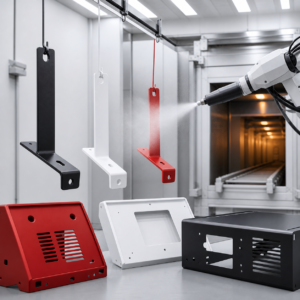
Proceso de recubrimiento por pulverización
El recubrimiento por pulverización industrial aplica pintura líquida o recubrimiento en polvo a una pieza de trabajo y forma una película continua mediante evaporación., reacción química, calefacción, o una combinación de estos mecanismos.
El recubrimiento por pulverización se utiliza ampliamente en estructuras de acero., piezas automotrices, maquinaria, carcasas de electrodomésticos, productos de aluminio, muebles, y componentes de construcción.
No debe verse simplemente como “agregar color”. En muchos casos, La vida útil depende más del pretratamiento., sistema de imprimación, espesor de la película, cobertura de borde, y calidad de curado que en el color de la capa superior.
Ventajas del recubrimiento líquido:
- Amplia gama de químicas de recubrimiento.
- colores flexibles, brillo, y control de apariencia.
- Adecuado para imprimación, aparejador, capa base, capa transparente, y acabados altamente decorativos.
- Algunos sistemas pueden curar a temperatura ambiente o a baja temperatura..
El principal inconveniente es que los sistemas líquidos pueden generar COV., Requiere un diseño de stand adecuado., ventilación, protección contra explosiones, y tratamiento de escape.
Ventajas del recubrimiento en polvo:
- Alta utilización de materiales.
- Generalmente no hay solvente tradicional.
- Película relativamente gruesa.
- Buena resistencia al impacto y resistencia a la corrosión..
- Adecuado para producción en masa automatizada.
El recubrimiento en polvo normalmente requiere curado por calor. El sustrato, inserciones, adhesivos, y las piezas ensambladas deben poder tolerar la temperatura real de la pieza..
Puntos de control clave:
- Limpieza y rugosidad de la superficie..
- Calidad del recubrimiento de conversión.
- Viscosidad del recubrimiento, contenido de sólidos, y condición del polvo.
- Distancia de la pistola pulverizadora, ángulo, presión de atomización, y voltaje electrostático.
- Espesor de película húmeda y seca.
- Temperatura real de la parte metálica y tiempo de curado.
Defectos comunes:
Cráteres, cáscara de naranja, hundimiento, suciedad, poros, pobre escondite, adherencia débil, variación de color, falta de coincidencia de brillo, subcurado, y sobrecurado.
Llevar:
El recubrimiento por pulverización es adecuado para la protección contra la corrosión., decoración, y resistencia a la intemperie. Sistemas bajos en COV, recubrimientos a base de agua, recubrimientos con alto contenido de sólidos, y las tecnologías de polvo de bajo curado son cada vez más importantes.
Recubrimiento electroforético: Formación de una película de imprimación uniforme
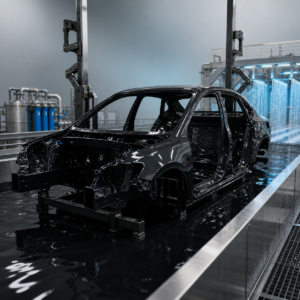
Proceso de recubrimiento electroforético
Recubrimiento electroforético, a menudo llamado e-coat, sumerge una pieza de trabajo conductora en un baño de revestimiento a base de agua. Un campo eléctrico de corriente continua mueve partículas cargadas de resina y pigmento a la superficie de la pieza de trabajo., donde se depositan y forman una película.
El recubrimiento electrónico catódico se usa ampliamente en la industria automotriz para proporcionar una imprimación anticorrosión uniforme para carrocerías de vehículos y componentes metálicos..
En comparación con la pulverización convencional, e-coat tiene mejor poder de lanzamiento. Puede cubrir costuras, caries, y estructuras complejas que son difíciles de alcanzar para las pistolas pulverizadoras.
Flujo de proceso típico:
Desengrasado → enjuague → acondicionamiento de superficies o tratamiento de conversión → enjuague con agua desionizada → recubrimiento electrónico → enjuague de recuperación de ultrafiltrado → enjuague con agua desionizada → horneado → inspección.
El pretratamiento es extremadamente importante.. Aceite, óxido, escala de óxido, o una película de conversión anormal puede provocar cráteres, poros, mala adherencia, y corrosión temprana.
Parámetros clave:
- Sólidos del baño, pH, y conductividad.
- Temperatura del baño.
- Tensión y tiempo de energización..
- Método de entrada de la pieza de trabajo.
- Sistema de ánodo y sistema de ultrafiltración..
- Temperatura de horneado, tiempo de horneado, y espesor de la película.
Problemas comunes:
- Película demasiado fina o demasiado gruesa.
- Cobertura insuficiente de la cavidad.
- Poros, cráteres, y partículas.
- Marcas de capa electrónica y marcas de contacto con la rejilla.
- Sub-cocción.
- Corrosión a partir de los bordes., soldaduras, y áreas internas débiles.
Llevar:
E-coat es muy eficaz como imprimación resistente a la corrosión para piezas metálicas conductoras, especialmente estructuras automotrices. No es adecuado para plásticos no conductores ordinarios a menos que se utilice una preparación conductora adicional..
Oxidación por microarco: Creación de una película cerámica sobre aleaciones ligeras
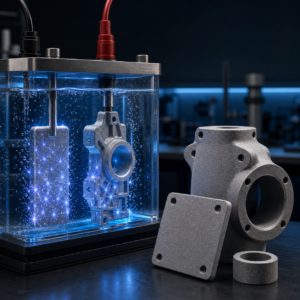
Proceso de oxidación por microarco.
Oxidación por microarco, también conocido como oxidación electrolítica de plasma o PEO, se utiliza en aluminio, magnesio, titanio, y otros metales de válvulas.
Bajo voltaje relativamente alto, Se producen microdescargas en la superficie del metal.. electroquímico, termoquímico, y las reacciones asistidas por plasma forman una película de óxido cerámico.
Comparado con el anodizado convencional, La oxidación por microarco produce una capa más parecida a la cerámica.. Puede proporcionar mayor dureza., resistencia al desgaste, resistencia al calor, y rendimiento dieléctrico.
Flujo de proceso típico:
Limpieza → trasiego → inmersión en electrolito → rampa de voltaje o potencia pulsada → oxidación por microarco → enjuague → sellado o tratamiento compuesto → inspección.
Una película de oxidación de microarco generalmente incluye:
- Una capa interna densa cerca del sustrato..
- Una capa intermedia funcional.
- Una capa exterior relativamente porosa.
La capa exterior porosa puede reducir el rendimiento frente a la corrosión si no se trata.. Las aplicaciones de alta corrosión a menudo requieren sellado, revestimiento electrónico, cuadro, u otro tratamiento compuesto.
Aplicaciones comunes:
- Componentes de aleación ligera para el sector aeroespacial.
- Piezas de transmisión y motor para automóviles.
- Piezas de aleación de aluminio y magnesio resistentes al desgaste.
- Estructuras de dispositivos electrónicos..
- Dispositivos médicos seleccionados y componentes funcionales especiales..
Principales limitaciones:
- Alto voltaje y consumo de energía..
- Mayor costo del equipo.
- Superficie más rugosa que el anodizado convencional.
- Opciones de color limitadas.
- Peligro de quemaduras en esquinas afiladas o zonas de alto campo.
- Las películas gruesas pueden afectar las dimensiones y el rendimiento ante la fatiga..
Llevar:
La oxidación por microarco no debe seleccionarse sólo porque es “dura”. Rugosidad de la superficie, requisitos de sellado, cambio dimensional, riesgo de fatiga, y el posterior montaje deben ser evaluados.
Recubrimiento al vacío PVD: Depositar películas delgadas funcionales
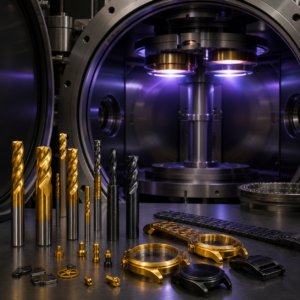
Proceso de recubrimiento al vacío PVD
PVD significa deposición física de vapor. en el vacío, evaporación, chisporrotear, arco catódico, o métodos relacionados liberan átomos o iones de un material fuente y los depositan sobre la pieza de trabajo como una película delgada.
Las películas PVD comunes incluyen TiN, TiCN, TiAlN, CrN, AlCrN, contenido descargable, películas decorativas de metal, y recubrimientos multicapa o degradados.
PVD se utiliza principalmente en dos áreas:
- Recubrimientos duros funcionales para herramientas de corte, moldes, y piezas de desgaste.
- Recubrimientos decorativos para relojes., hardware, accesorios sanitarios, dispositivos móviles, y productos de consumo premium.
Flujo de proceso típico:
Limpieza de precisión → carga → bombeo de vacío → calentamiento y desgasificación → limpieza o grabado de iones → deposición → enfriamiento → inspección.
Las películas de PVD suelen tener un espesor de sólo fracciones de un micrómetro a varios micrómetros.. pueden ser dificiles, dimensionalmente ligero, visualmente atractivo, y adecuado para diseño multicapa.
Sin embargo, PVD tiene un claro efecto de línea de visión. agujeros profundos, surcos, y las áreas sombreadas pueden recibir un recubrimiento insuficiente. Rotación planetaria, rotación de piezas, y el diseño de accesorios se utilizan a menudo para mejorar la cobertura..
Riesgos clave:
- Mala limpieza que provoca delaminación..
- Dureza o soporte del sustrato insuficiente.
- Estrés excesivo de la película interna..
- Defectos en los bordes y áreas sombreadas..
- Variación de color y espesor causada por la posición de la cámara..
- Templado o distorsión del sustrato debido a la temperatura de deposición..
- Rugosidad de la superficie copiada a través de la película delgada..
Llevar:
Los recubrimientos PVD pueden ser muy duros, pero no mejoran automáticamente la resistencia general al desgaste.. Si el sustrato es demasiado blando, demasiado áspero, o mal preparado, la película dura puede agrietarse o pelarse. HolaPIMS, contenido descargable, y los recubrimientos nanoestructurados multicapa se utilizan cada vez más en aplicaciones de alto rendimiento.
Recubrimientos de conversión química: Cambiar la superficie por reacción química
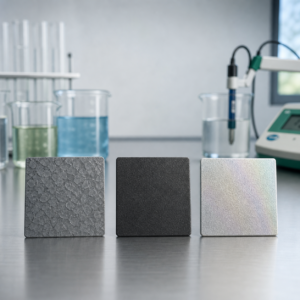
Proceso de recubrimiento por conversión química.
Un recubrimiento de conversión química no es simplemente una capa externa colocada sobre un sustrato.. Se forma cuando la superficie del sustrato reacciona con la solución de tratamiento y crea una película compuesta unida..
Los procesos comunes incluyen el fosfatado del acero., fosfato de zinc, fosfato de manganeso, fosfato de hierro, tratamiento de conversión de aluminio, óxido negro o pavonado del acero, y recubrimientos de conversión sin cromo.
fosfatado
La fosfatación forma una película de conversión de fosfato sobre las superficies metálicas..
Se utiliza principalmente para:
- Pretrate las piezas antes de pintarlas o aplicarles un recubrimiento electrónico..
- Mejorar la adhesión del recubrimiento orgánico.
- Mejorar la resistencia a la corrosión debajo de la película.
- Reduce la fricción y retiene el aceite..
- Admite lubricación por conformado en frío.
La calidad del fosfato a menudo se evalúa por el peso del recubrimiento y no solo por el espesor..
Los controles importantes incluyen la limpieza., desoxidar, acondicionamiento de superficies, ácido total, ácido libre, concentración de acelerador, temperatura, tiempo de tratamiento, composición del sustrato, enjuague, y secado.
Óxido negro o azulado
El óxido negro alcalino tradicional de alta temperatura sobre acero forma una película delgada compuesta principalmente de magnetita.. El ennegrecimiento a temperatura ambiente puede utilizar diferentes productos químicos y no se debe asumir que proporciona el mismo rendimiento..
El óxido negro tiene muy poco impacto dimensional.. Se utiliza comúnmente para sujetadores., herramientas, armas de fuego, piezas mecanicas, decoración de bajo costo, y protección contra la oxidación a corto plazo.
Sin embargo, El óxido negro por sí solo tiene una resistencia a la corrosión limitada.. Normalmente requiere engrase, depilación, o sellado.
Llevar:
Los recubrimientos de conversión química son de bajo costo, delgado, y adecuado para la producción por lotes. También se utilizan ampliamente como tratamientos previos antes de pintar o aplicar recubrimiento electrónico.. Pero su resistencia a la corrosión independiente es limitada., y el control de las condiciones del baño es fundamental.
Cómo elegir el tratamiento superficial adecuado
Proceso | Sustratos típicos | Funciones principales | Carácter de capa | Riesgos típicos |
galvanoplastia | Acero, cobre, plásticos tratados | Protección contra la corrosión, conductividad, resistencia al desgaste, decoración | Depósito de metal o aleación | Fragilización por hidrógeno, espesor desigual, carga ambiental |
Anodizado | Aleaciones de aluminio | Protección, aislamiento, decoración, resistencia al desgaste | Película de óxido in situ | variación de color, fragilidad, cambio dimensional |
Recubrimiento por pulverización | Metales y algunos no metales. | Protección contra la corrosión, decoración, resistencia a la intemperie | Película orgánica relativamente espesa | Adhesión, curación, defectos visuales |
abrigo electrónico | Metales conductores | Imprimación uniforme resistente a la corrosión | Buena cobertura de cavidades | Sensibilidad previa al tratamiento, poros, poder de lanzamiento insuficiente |
Oxidación por microarco | Aluminio, magnesio, aleaciones ligeras de titanio | Alta dureza, resistencia al desgaste, resistencia al calor | Película de óxido cerámico | Aspereza, porosidad, alto uso de energía |
PVD | Rieles, cerámica, plásticos tratados | Alta dureza, baja fricción, decoración | Película delgada a escala micrométrica | sombreado, adhesión, soporte de sustrato |
Recubrimiento de conversión química | Acero, zinc, aluminio | base de pintura, control de fricción, protección contra la oxidación de bajo costo | Película de reacción delgada | Resistencia a la corrosión independiente limitada, sensibilidad al baño |
Antes de seleccionar un proceso, responde estas preguntas:
- cual es el sustrato, y es compatible con el proceso?
- ¿El producto necesita resistencia a la corrosión?, resistencia al desgaste, aislamiento, conductividad, decoración, o una combinación de funciones?
- ¿La pieza enfrentará niebla salina?, humedad cíclica, condensación, ultravioleta, exposición química, temperatura alta, o abrasión?
- ¿Puede el diseño tolerar el crecimiento de la película?, acumulación de bordes, enmascaramiento, o post-mecanizado?
- ¿La geometría incluye agujeros profundos?, caries, zonas ciegas, esquinas afiladas, soldaduras, o trampas de drenaje?
- ¿Puede el sustrato resistir el decapado?, alto voltaje, temperatura de vacío, voladura, o hornear?
- ¿El volumen de producción y los costos respaldan el proceso seleccionado y los requisitos de inspección??
- Hacer las especificaciones del cliente, reglas ambientales, RoHS/ALCANCE, Revisiones relacionadas con PFAS, y los permisos de aguas residuales permiten la química?
- Más tarde soldará, vinculación, cuadro, contacto eléctrico, caza de focas, o montaje de precisión se verá afectado?
- ¿Las consecuencias del fallo justificarían el sellado?, un abrigo, un sistema dúplex, o protección redundante?
Por qué las pruebas de niebla salina no son suficientes
Las pruebas de niebla salina se utilizan a menudo para comparar tratamientos de superficie., pero es fácil sobreinterpretar el resultado.
La prueba de niebla salina es útil para:
- Comparación de la consistencia del proceso dentro de la misma familia de recubrimientos.
- Control de procesos de proveedores.
- Pruebas de conformidad con un estándar de producto.
- Detección de porosidad, problemas de sellado, o problemas previos al tratamiento.
Sin embargo, Las horas de niebla salina no deben considerarse iguales a la vida útil real..
El comportamiento real de la corrosión se ve afectado por los ciclos de temperatura-humedad., condensación, exposición a los rayos ultravioleta, quimicos, cambios de temperatura, abrasión, grietas, corrosión galvánica, daños en el montaje, contaminación, y condiciones de mantenimiento.
Una evaluación completa también puede incluir la apariencia., diferencia de color, espesor de la película o peso del recubrimiento, adhesión, dureza, resistencia al desgaste, porosidad, aspereza, resistencia química, resistencia a la humedad, cambio dimensional, y pruebas funcionales.
Llevar:
Las pruebas de niebla salina son una herramienta útil de control de calidad, pero no debería ser la única base para juzgar un tratamiento superficial. El plan de inspección debe seguir la función del producto., riesgo de falla, y especificaciones del cliente.
Pensamientos finales
galvanoplastia, anodizado, recubrimiento por pulverización, revestimiento electrónico, oxidación por microarco, PVD, y los recubrimientos de conversión química modifican las superficies a través de diferentes mecanismos: deposición de metales, oxidación del sustrato, revestimiento orgánico, deposición de campo eléctrico, reacción plasmática, deposición de vapor al vacío, y conversión química.
Un buen tratamiento superficial no es necesariamente el más grueso, mas caro, o opción más compleja.
La mejor opción es la que crea estabilidad., verifiable, Rendimiento superficial repetible al mismo tiempo que cumple con las funciones funcionales del producto., fabricación, costo, y requisitos de cumplimiento.
Etiquetas sugeridas:
Tratamiento superficial, ingeniería de superficies, galvanoplastia, anodizado, recubrimiento por pulverización, recubrimiento electroforético, abrigo electrónico, oxidación por microarco, OPE, revestimiento PVD, recubrimiento de conversión química, protección contra la corrosión, proceso de fabricación

Leo Liang, Fundador Mejor Socio de R&D
LEO, fundador de JADE-CNC, que aporta más de dos décadas de experiencia en la industria, Leo comenzó su carrera como aprendiz y practica sus habilidades en tratamiento de superficies y mecanizado CNC..