


Fresado CNC de plástico
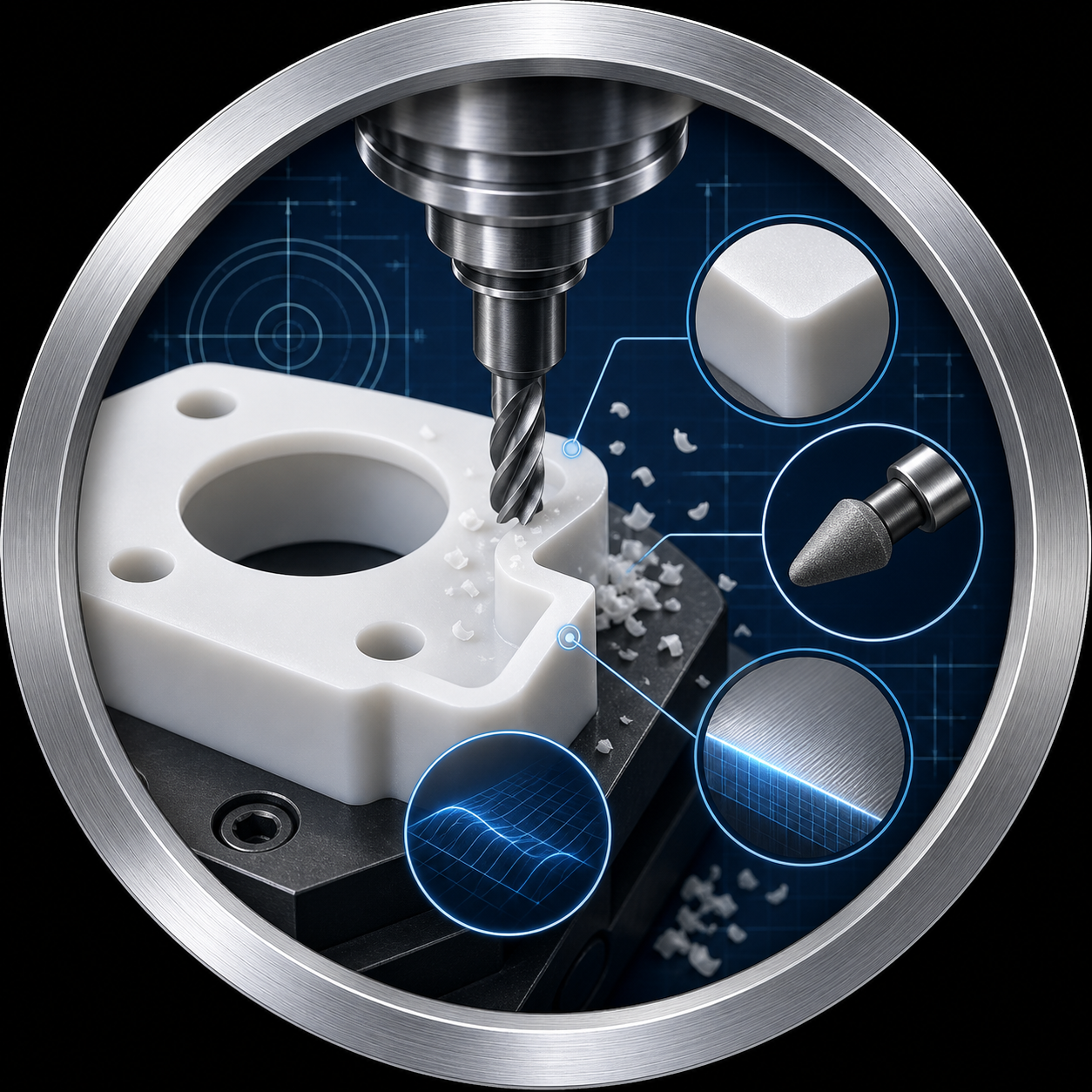
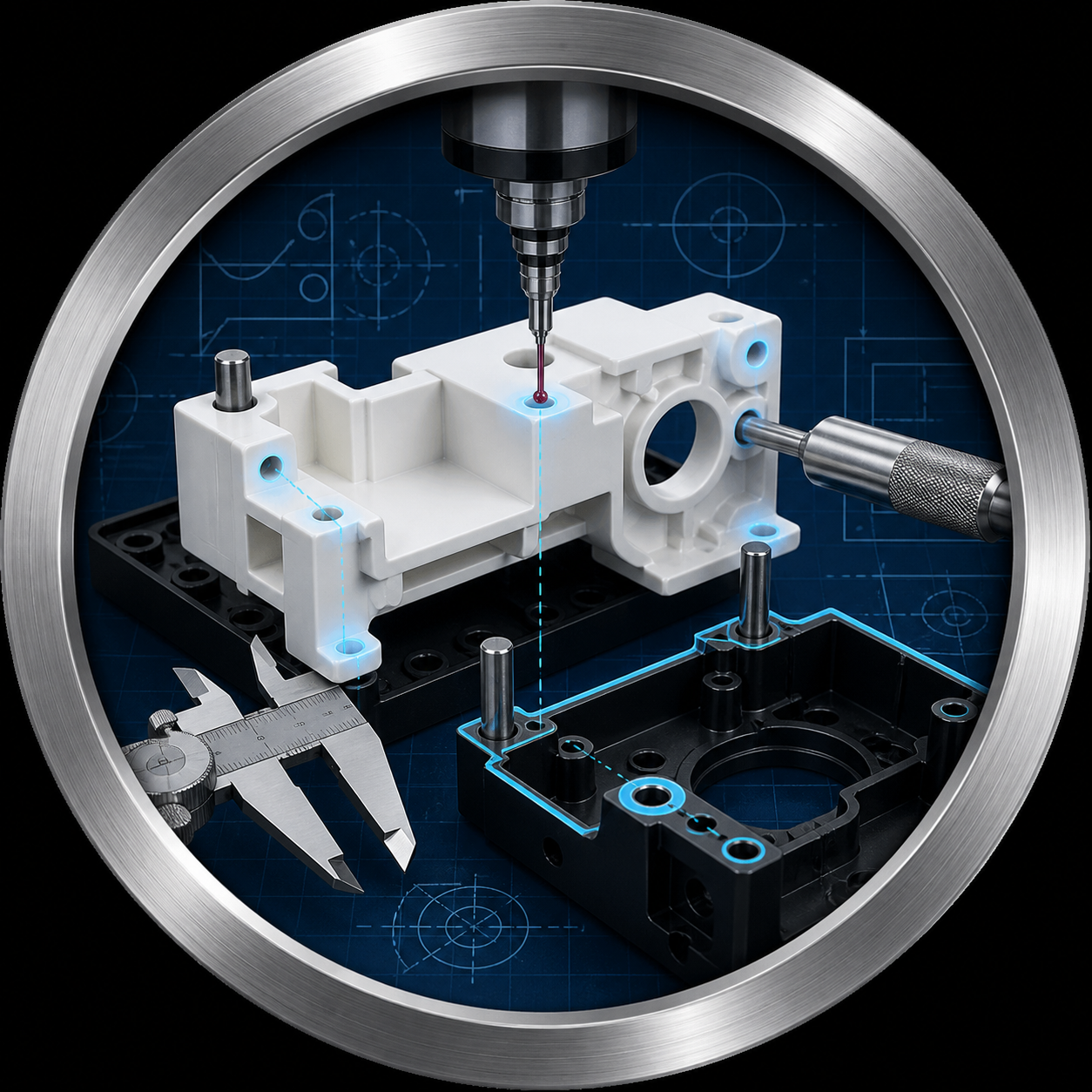
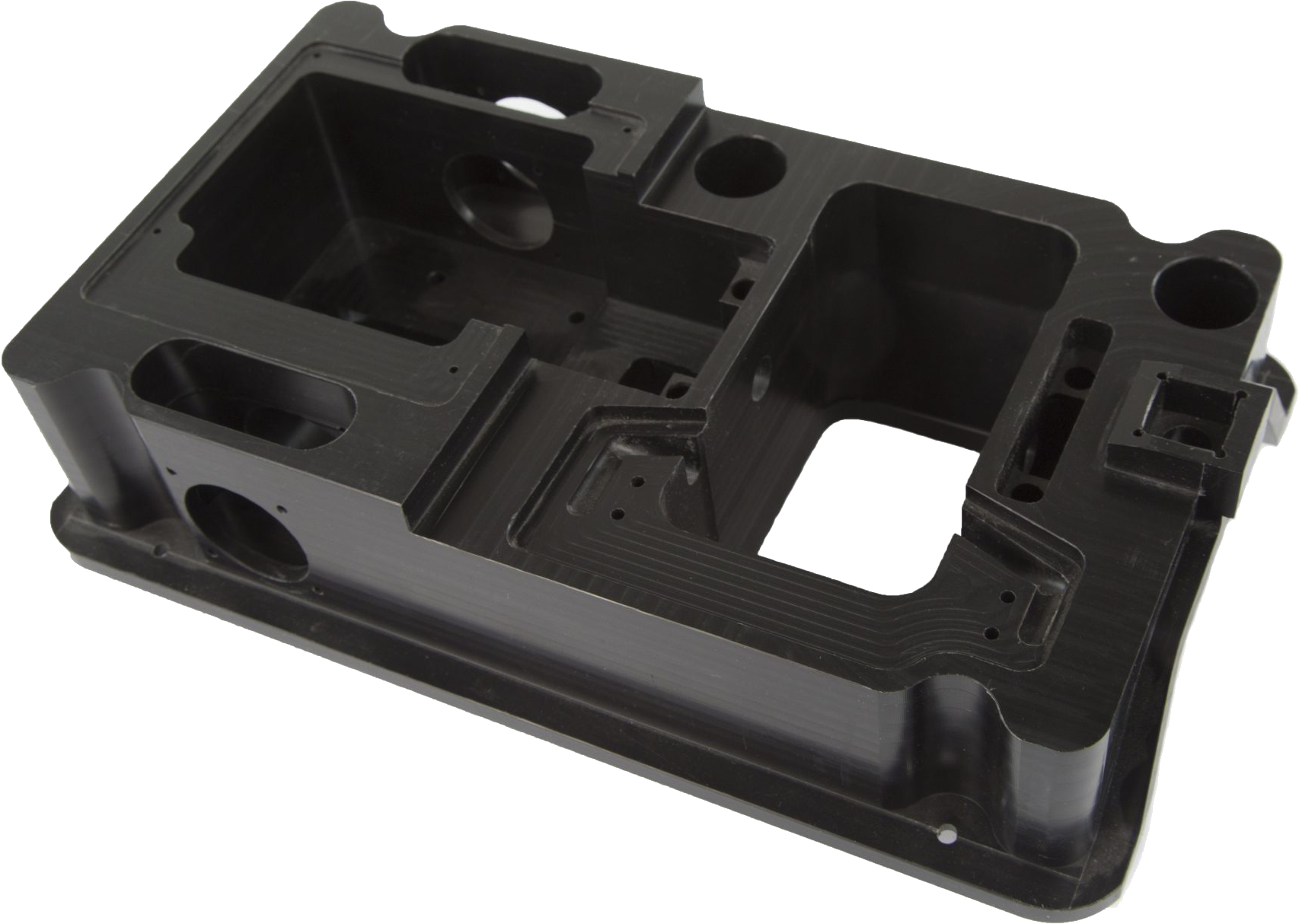
Similar al mecanizado de metales, pero un buen fresado de plástico normalmente requiere velocidades de husillo más altas y herramientas más afiladas..
CNC torneado de plástico
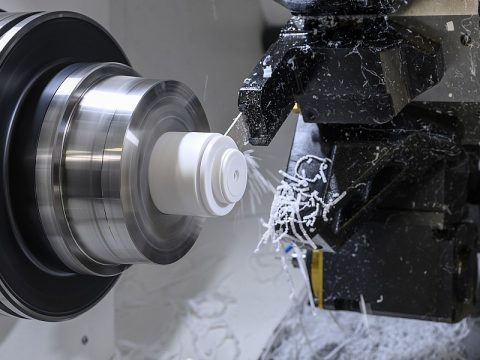
La pieza de trabajo gira mientras la herramienta se mueve linealmente., ideal para piezas cilíndricas y cónicas.
Plástico de perforación CNC
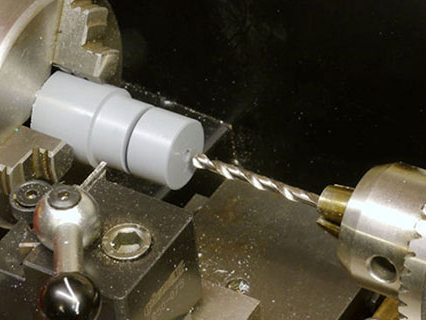
Se debe tener cuidado con la dureza del material y la resistencia de la rosca al roscar plásticos..
La opción preferida para la creación de prototipos de bajo coste, especialmente para piezas que requieren pruebas funcionales, controles de montaje, y evaluación estética. Puede ser considerado para Cajas de productos, piezas interiores de automóviles, y prototipos funcionales.
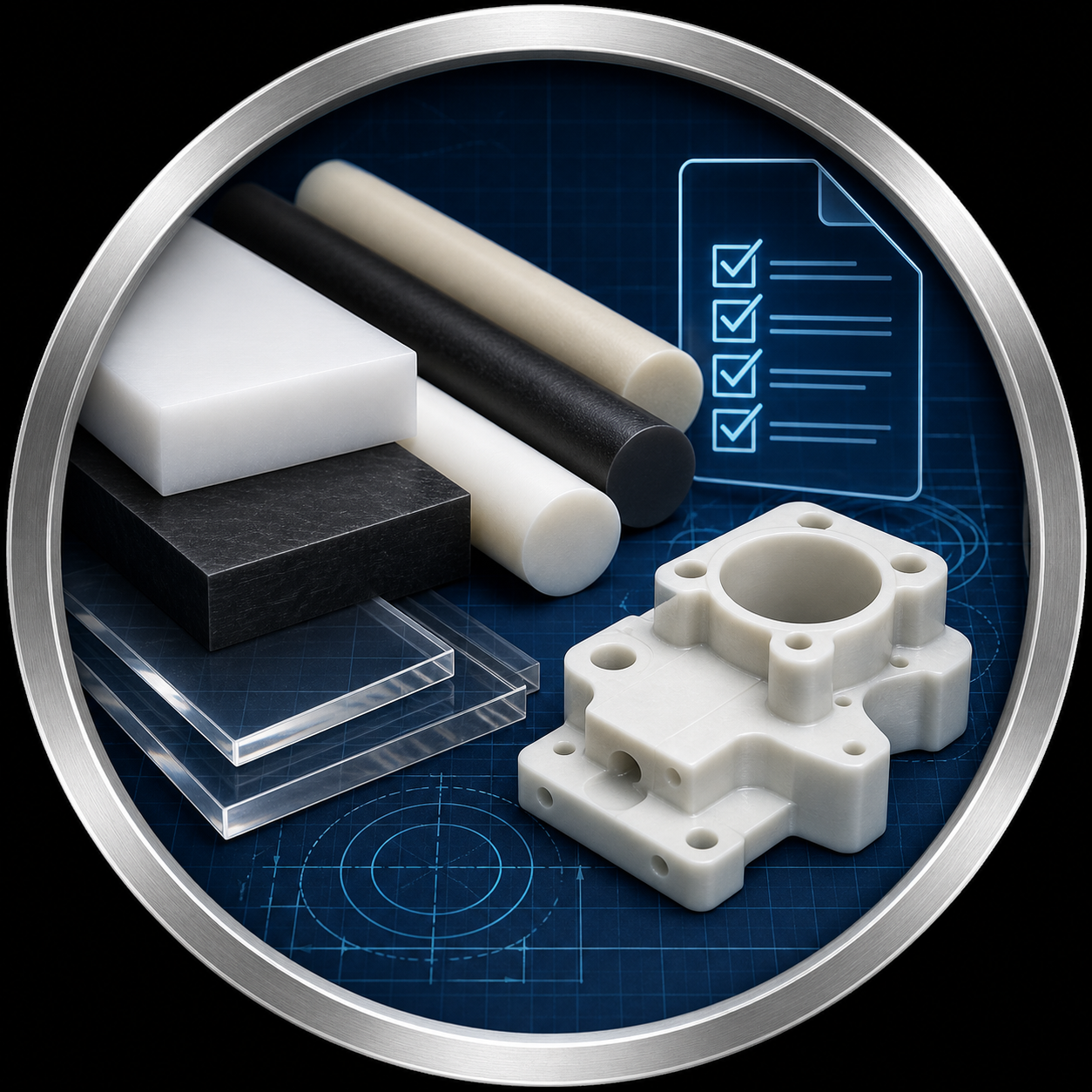
Grado de material, formulario de acciones, diseño de pared, tolerancia, finalizar, documentación, y el cronograma se confirman durante la solicitud de cotización en función del dibujo y el comportamiento del material plástico..
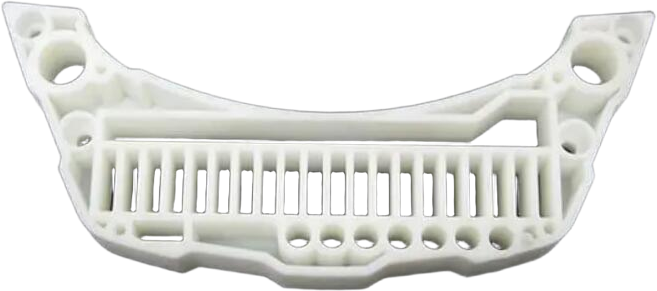
PEEK es un plástico de ingeniería utilizado para piezas mecanizadas que necesitan una mayor resistencia a la temperatura., rendimiento de desgaste, resistencia química, o estabilidad dimensional que los plásticos comunes.
Grado de material, formulario de acciones, diseño de pared, tolerancia, finalizar, documentación, y el cronograma se confirman durante la solicitud de cotización en función del dibujo y el comportamiento del material plástico..

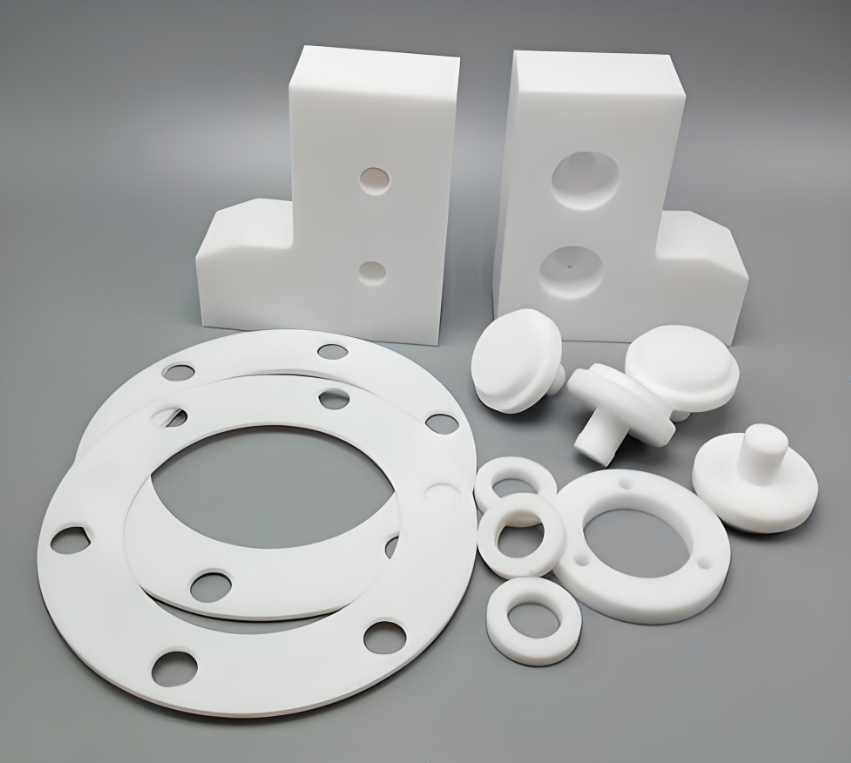
El PTFE siempre está reservado para entornos especializados que requieren resistencia a temperaturas extremas., resistencia a productos químicos fuertes, o propiedades de fricción ultrabaja/antiadherencia. Y se ha utilizado para sellos., juntas, revestimientos de válvulas, piezas aislantes, material de laboratorio, sustrato para revestimientos antiadherentes.
Grado de material, formulario de acciones, diseño de pared, tolerancia, finalizar, documentación, y el cronograma se confirman durante la solicitud de cotización en función del dibujo y el comportamiento del material plástico..
Siempre se ha sabido que la PC es la mejor opción para aplicaciones que exigen una combinación de alta resistencia al impacto., transparencia, y estabilidad térmica. Puede considerarse para piezas muy transparentes., como gafas de seguridad, escudos antidisturbios, cubiertas de luces automotrices, carcasas para dispositivos electrónicos, componentes transparentes de alta resistencia.
Grado de material, formulario de acciones, diseño de pared, tolerancia, finalizar, documentación, y el cronograma se confirman durante la solicitud de cotización en función del dibujo y el comportamiento del material plástico..

PMMA tiene eClaridad óptica excepcional (>92%), buena resistencia a la intemperie, alta dureza superficial, y se puede pulir hasta obtener un acabado cristalino. es tla mejor opción cuando hay alta transparencia, excelente apariencia, y se requiere resistencia a los rayos UV y a la intemperie.. Puede ser considerado para luzprototipos.
Grado de material, formulario de acciones, diseño de pared, tolerancia, finalizar, documentación, y el cronograma se confirman durante la solicitud de cotización en función del dibujo y el comportamiento del material plástico..

El tablero epoxi es valorado en el mecanizado CNC por su excelente aislamiento eléctrico., buena resistencia mecánica, estabilidad dimensional, y versatilidad. Que se puede utilizar para recintos de equipos eléctricos., Paneles estructurales ligeros donde el aislamiento eléctrico es clave.. Puede diseñarlo para piezas estructurales que requieren más rigidez que el acrílico pero donde el metal es innecesario..
Grado de material, formulario de acciones, diseño de pared, tolerancia, finalizar, documentación, y el cronograma se confirman durante la solicitud de cotización en función del dibujo y el comportamiento del material plástico..

POM'El otro nombre es “sustituto del metal.” cual fCaracterísticas de alta rigidez., excelente estabilidad dimensional, un coeficiente de fricción muy bajo, y resistencia superior a la fluencia. Máquinas a un suave, acabado satinado. POM es pPerfecto para piezas mecánicas de precisión que necesitan alta rigidez., baja fricción, y precisión dimensional, A menudo se reemplaza el metal para ahorrar peso o evitar la corrosión.. POM se puede utilizar para pengranajes de resección, aspectos, cámaras, valvulas, mangos de cuchillo, y cerrar componentes.
Grado de material, formulario de acciones, diseño de pared, tolerancia, finalizar, documentación, y el cronograma se confirman durante la solicitud de cotización en función del dibujo y el comportamiento del material plástico..

El nailon es an yotrato material para piezas móviles que requieren alta resistencia al desgaste, baja fricción, y durabilidad bajo carga cíclica. El nailon puede considerarse para Engranajes, aspectos, rodillos, plantillas, casquillos resistentes al desgaste.
Grado de material, formulario de acciones, diseño de pared, tolerancia, finalizar, documentación, y el cronograma se confirman durante la solicitud de cotización en función del dibujo y el comportamiento del material plástico..

PP tiene gBuena resistencia a la fatiga, Excelente resistencia a los disolventes químicos., y buen aislamiento eléctrico. Frágil a bajas temperaturas, cual es adecuado apCapa en piezas que requieren peso ligero., resistencia química, diseño de bisagra viva, o artículos de un solo uso/desechables.
Grado de material, formulario de acciones, diseño de pared, tolerancia, finalizar, documentación, y el cronograma se confirman durante la solicitud de cotización en función del dibujo y el comportamiento del material plástico..