


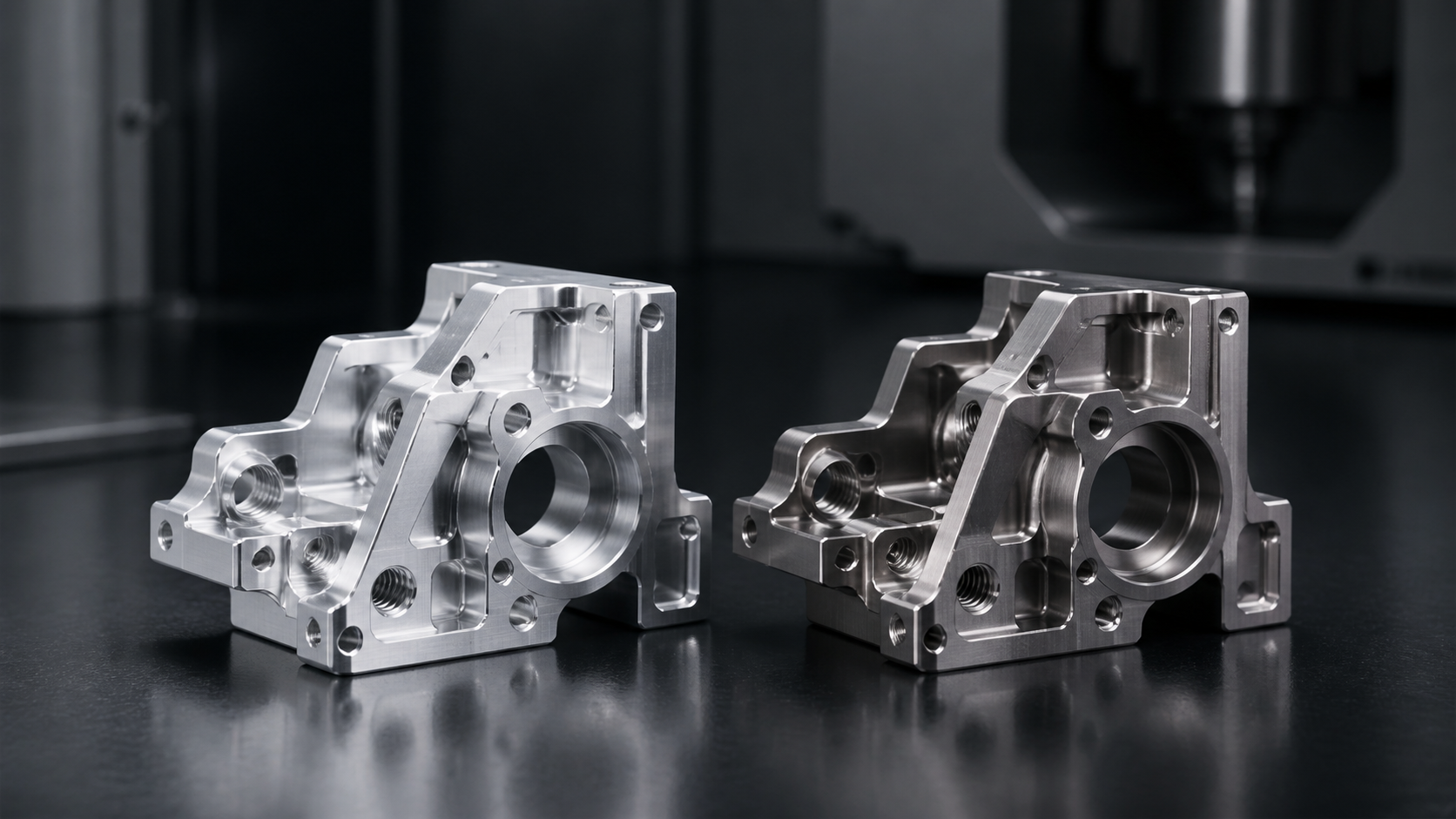
Aluminum vs Stainless CNC Machining decisions affect weight, Stärke, corrosion behavior, machining stability, finish options, Inspektion, und Kosten. JADE-CNC reviews aluminum and stainless steel material choice together with drawings, Geometrie, Finishing-Bedürfnisse, Inspektionsanforderungen, Menge, and part function so the quotation can match the intended use.
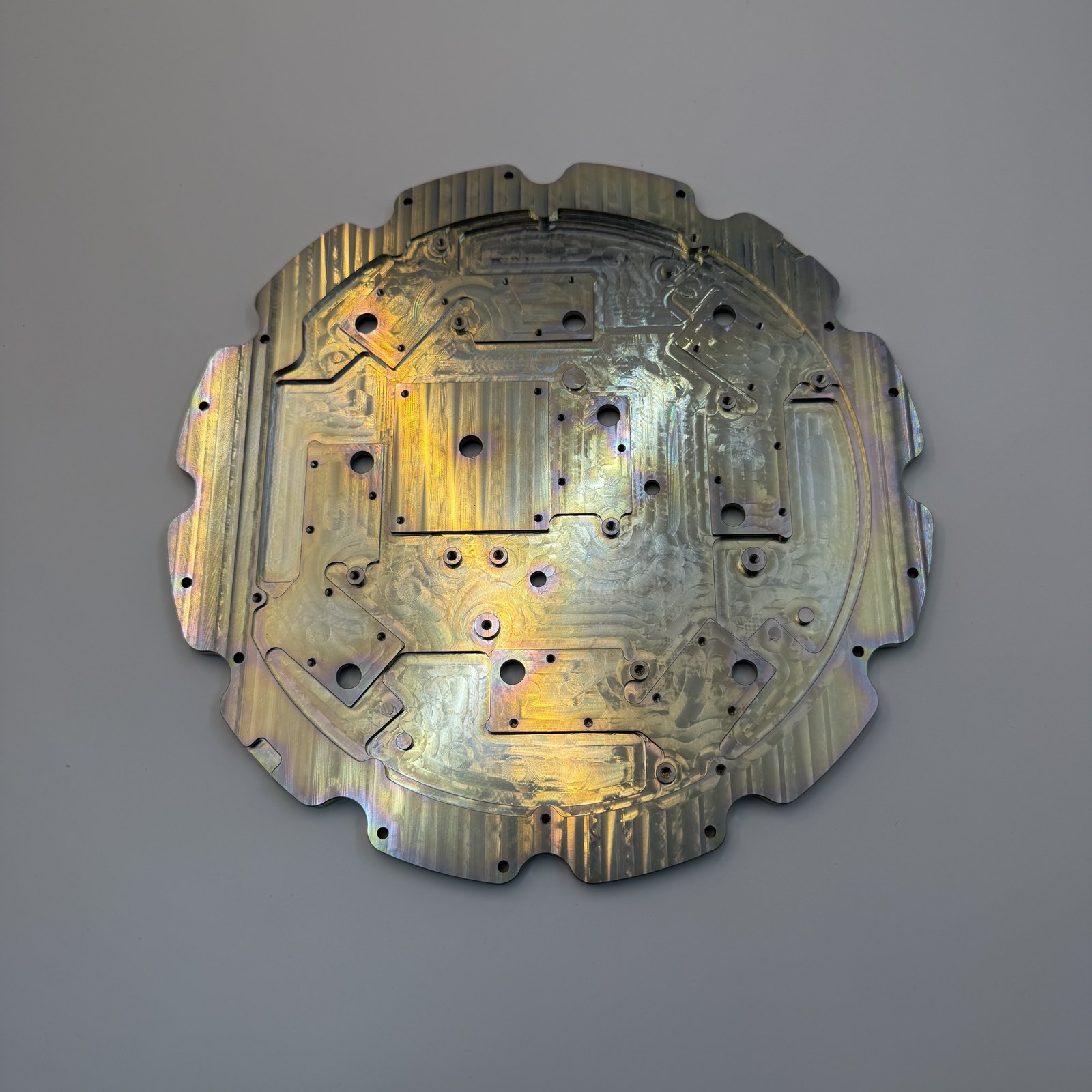
Quick Comparison: Aluminum vs Stainless Steel
| Faktor | Aluminum CNC machining | Stainless steel CNC machining |
|---|---|---|
| Weight | Useful when lower part weight is important for housings, Paneele, Klammern, Vorrichtungen, and moving components. | Heavier than aluminum and often selected when strength, Korrosionsbeständigkeit, or durability carries more value than weight reduction. |
| Bearbeitbarkeit | Often supports efficient machining and good surface finish when the design is suitable. | Often needs more careful review of cutting heat, tool wear, workholding, Gratkontrolle, and finished surface quality. |
| Korrosionsbeständigkeit | Can be paired with suitable finishing such as anodizing or coating based on application and appearance needs. | Often reviewed for corrosion resistance, Passivierung, Polieren, and demanding operating environments. |
| Abschluss | Eloxieren, Perlenstrahlen, Polieren, Beschichtung, and cosmetic appearance are common review topics. | Passivierung, Polieren, Perlenstrahlen, Überzug, and corrosion-resistant finish requirements are common review topics. |
When Aluminum Is Often a Practical CNC Choice
Aluminum is often reviewed for parts where weight, Bearbeitbarkeit, thermische Leistung, Aussehen, and cost efficiency matter. It is commonly used for machined housings, Abdeckungen, Paneele, Kühlkörper, Klammern, Vorrichtungen, and precision components that need a clean machined finish or anodized surface.
JADE-CNC can review wall thickness, Gewindefunktionen, thin ribs, cosmetic faces, Ebenheit, anodizing requirements, and post-machining inspection points before quotation. For parts that need tight appearance control, material and surface treatment need to be discussed together.
When Stainless Steel Is Often a Better Fit
Stainless steel is often reviewed for CNC machined parts that need stronger mechanical performance, Korrosionsbeständigkeit, Verschleißfestigkeit, durable threaded features, or stable performance in tougher environments. It can be a practical choice for brackets, Wellen, fittings, medical-related components, automation parts, and precision mechanical components when the application requires it.
Because stainless steel can affect machining time, tool wear, heat control, Grate, and surface finish, JADE-CNC reviews geometry and critical requirements before quotation. This helps align machining process, Inspektion, and finishing expectations early.
Material Decision Factors Before RFQ
Part Function
Review load, stiffness, tragen, sealing, motion, heat transfer, electrical behavior, and assembly interfaces.
Environment
Review moisture, corrosion exposure, temperature, chemicals, outdoor conditions, and cleaning requirements.
Abschluss
Review anodizing, Passivierung, Polieren, Perlenstrahlen, Überzug, Beschichtung, Maskierung, and cosmetic expectations.
Inspektion
Review critical dimensions, finished dimensions, Bezugspunkte, assembly surfaces, and documentation needs.
Cost and Lead-Time Factors
Material choice can affect raw material cost, machining speed, tool wear, Setup-Strategie, workholding, scrap risk, Oberflächenveredelung, inspection time, and packaging. Aluminum can often support efficient machining, while stainless steel may require more process control for heat, tool life, Grate, and surface finish.
JADE-CNC reviews these factors during quotation instead of treating material choice as a simple price line. The same drawing may require different process planning when the material changes.
How JADE-CNC Reviews Aluminum and Stainless Steel Projects
- Check 2D drawings and 3D CAD models for geometry, Toleranzen, das Datum, and critical features.
- Review material grade notes or acceptable alternatives provided by the customer.
- Evaluate surface finish requirements together with material selection.
- Review threaded features, thin walls, Taschen, cosmetic faces, and areas affected by finishing.
- Discuss inspection documentation, first article needs, and finished-part acceptance points when required.
- Route the project to a practical quotation step based on quantity, function, and manufacturing requirements.
Related JADE-CNC Pages
FAQ
Can JADE-CNC review aluminum and stainless steel options before quotation?
Is aluminum easier to machine than stainless steel?
When is stainless steel a better choice for CNC machined parts?
Can surface finish requirements affect the material choice?
Request Aluminum or Stainless Steel CNC Machining Review
Teilen Sie Ihre Zeichnung, CAD file, Materialqualität, Oberflächenbeschaffenheit, Menge, Toleranzhinweise, and application requirements. JADE-CNC will review the project information and confirm the next quotation step.