



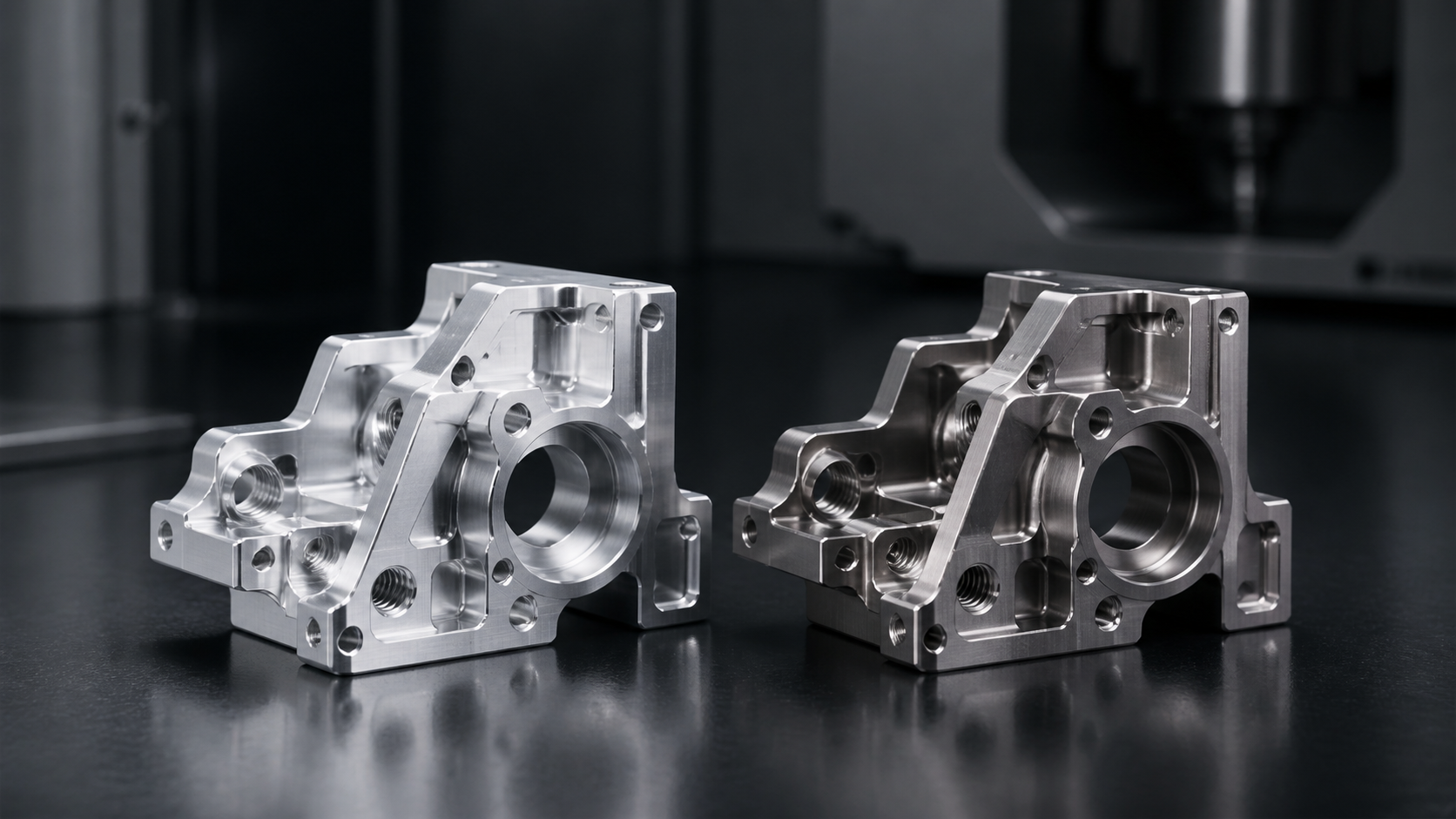
Las decisiones sobre mecanizado CNC de aluminio o acero inoxidable afectan el peso, fortaleza, comportamiento de corrosión, estabilidad de mecanizado, opciones de acabado, inspección, y costo. JADE-CNC revisa la elección de materiales de aluminio y acero inoxidable junto con dibujos, geometría, necesidades de acabado, requisitos de inspección, cantidad, y función de la pieza para que la cotización pueda coincidir con el uso previsto.
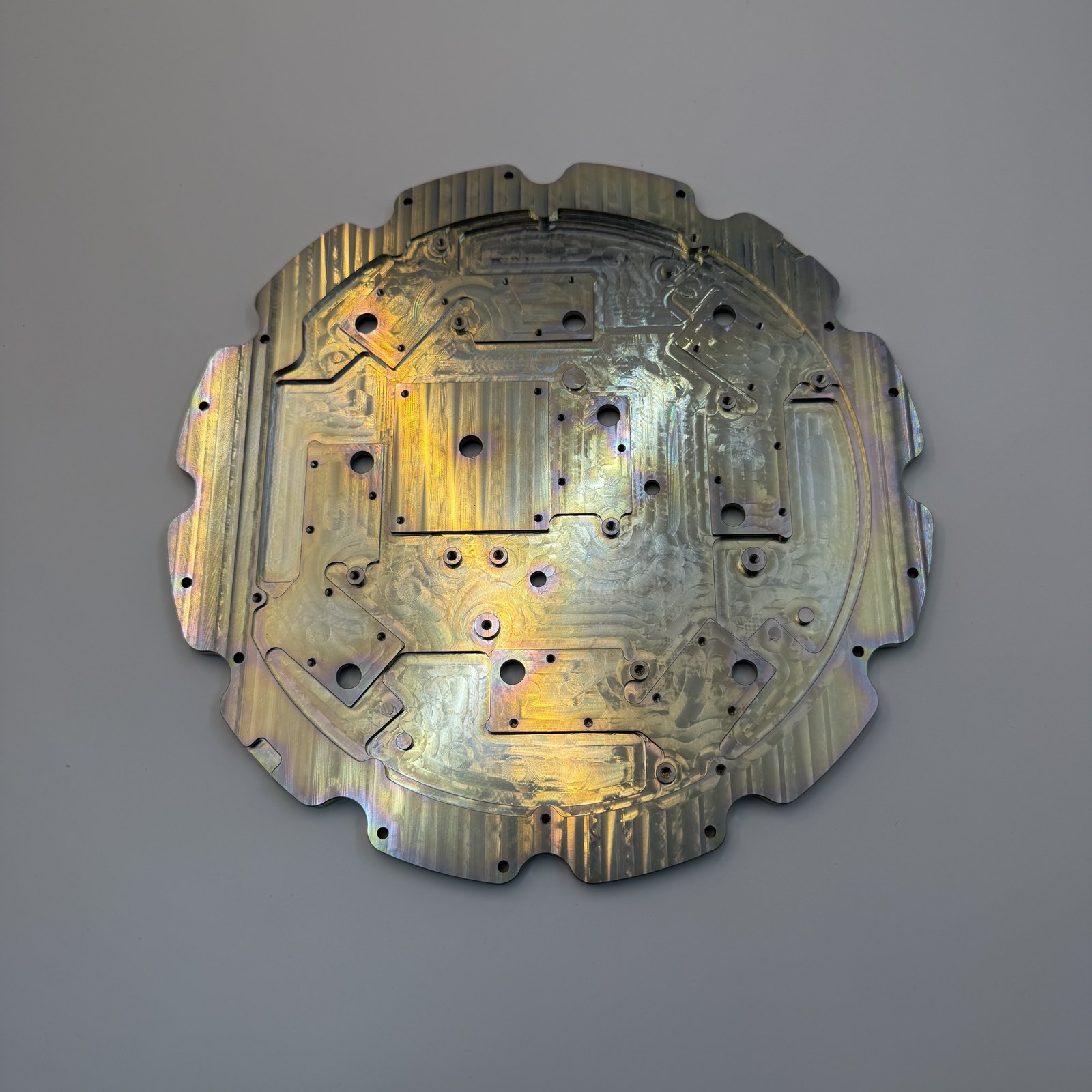
Comparación rápida: Aluminio versus acero inoxidable
| Factor | Mecanizado CNC de aluminio | Mecanizado CNC de acero inoxidable |
|---|---|---|
| Peso | Útil cuando es importante reducir el peso de la pieza para las carcasas., paneles, paréntesis, accesorios, y componentes móviles. | Más pesado que el aluminio y, a menudo, seleccionado por su resistencia., resistencia a la corrosión, o la durabilidad tiene más valor que la reducción de peso. |
| maquinabilidad | A menudo admite un mecanizado eficiente y un buen acabado superficial cuando el diseño es adecuado.. | A menudo se necesita una revisión más cuidadosa del calor de corte., desgaste de herramientas, sujeción de piezas, control de rebabas, y calidad de la superficie acabada. |
| Resistencia a la corrosión | Se puede combinar con un acabado adecuado, como anodizado o revestimiento, según las necesidades de aplicación y apariencia.. | A menudo revisado por su resistencia a la corrosión., pasivación, pulido, y entornos operativos exigentes. |
| Refinamiento | Anodizado, voladura de cuentas, pulido, revestimiento, y la apariencia cosmética son temas de revisión comunes. | Pasivación, pulido, voladura de cuentas, enchapado, y los requisitos de acabado resistente a la corrosión son temas de revisión comunes. |
Cuando el aluminio suele ser una opción práctica para el CNC
El aluminio se revisa a menudo para piezas donde el peso, maquinabilidad, rendimiento térmico, apariencia, y la rentabilidad son importantes. Se utiliza comúnmente para carcasas mecanizadas., cubre, paneles, disipadores de calor, paréntesis, accesorios, y componentes de precisión que necesitan un acabado mecanizado limpio o una superficie anodizada.
JADE-CNC puede revisar el espesor de la pared, características roscadas, costillas delgadas, caras cosméticas, llanura, requisitos de anodizado, y puntos de inspección post-mecanizado antes de la cotización. Para piezas que necesitan un control estricto de la apariencia, El material y el tratamiento de la superficie deben discutirse juntos..
Cuando el acero inoxidable suele ser una mejor opción
El acero inoxidable se revisa a menudo para piezas mecanizadas por CNC que necesitan un rendimiento mecánico más fuerte., resistencia a la corrosión, resistencia al desgaste, características roscadas duraderas, o rendimiento estable en entornos más difíciles. Puede ser una opción práctica para brackets., ejes, guarniciones, componentes relacionados con la medicina, piezas de automatización, y componentes mecánicos de precisión cuando la aplicación lo requiere.
Porque el acero inoxidable puede afectar el tiempo de mecanizado, desgaste de herramientas, control de calor, rebabas, y acabado superficial, JADE-CNC revisa la geometría y los requisitos críticos antes de la cotización. Esto ayuda a alinear el proceso de mecanizado., inspección, y terminar las expectativas temprano.
Factores de decisión importantes antes de la solicitud de cotización
Función de la pieza
Revisar la carga, rigidez, tener puesto, caza de focas, movimiento, transferencia de calor, comportamiento eléctrico, e interfaces de montaje.
Ambiente
Revisar la humedad, exposición a la corrosión, temperatura, quimicos, condiciones al aire libre, y requisitos de limpieza.
Refinamiento
Revisar anodizado, pasivación, pulido, voladura de cuentas, enchapado, revestimiento, enmascaramiento, y expectativas cosméticas.
Inspección
Revisar dimensiones críticas, dimensiones terminadas, referencias de datos, superficies de montaje, y necesidades de documentación.
Factores de costo y plazo de entrega
La elección del material puede afectar el costo de la materia prima, velocidad de mecanizado, desgaste de herramientas, estrategia de configuración, sujeción de piezas, riesgo de chatarra, acabado superficial, tiempo de inspección, y embalaje. El aluminio a menudo puede soportar un mecanizado eficiente, mientras que el acero inoxidable puede requerir un mayor control del proceso para el calor., vida útil de la herramienta, rebabas, y acabado superficial.
JADE-CNC revisa estos factores durante la cotización en lugar de tratar la elección del material como una simple línea de precios.. El mismo dibujo puede requerir una planificación de proceso diferente cuando cambia el material..
Cómo JADE-CNC revisa proyectos de aluminio y acero inoxidable
- Consulte los dibujos 2D y los modelos CAD 3D para conocer la geometría., tolerancias, la fecha, y características críticas.
- Revisar las notas de calificación del material o alternativas aceptables proporcionadas por el cliente..
- Evaluar los requisitos de acabado superficial junto con la selección de materiales..
- Revisar las funciones encadenadas, paredes delgadas, bolsillos, caras cosméticas, y zonas afectadas por el acabado.
- Discutir la documentación de inspección., primer artículo necesita, y puntos de aceptación de piezas terminadas cuando sea necesario.
- Dirija el proyecto a un paso práctico de cotización basado en la cantidad., función, y requisitos de fabricación.
Páginas JADE-CNC Relacionadas
Preguntas frecuentes
¿Puede JADE-CNC revisar las opciones de aluminio y acero inoxidable antes de cotizar??
¿Es el aluminio más fácil de mecanizar que el acero inoxidable??
¿Cuándo es el acero inoxidable una mejor opción para piezas mecanizadas por CNC??
¿Pueden los requisitos de acabado de la superficie afectar la elección del material??
Solicite una revisión del mecanizado CNC de aluminio o acero inoxidable
Comparte tu dibujo, archivo CAD, grado del material, acabado superficial, cantidad, notas de tolerancia, y requisitos de aplicación. JADE-CNC revisará la información del proyecto y confirmará el siguiente paso de cotización..