


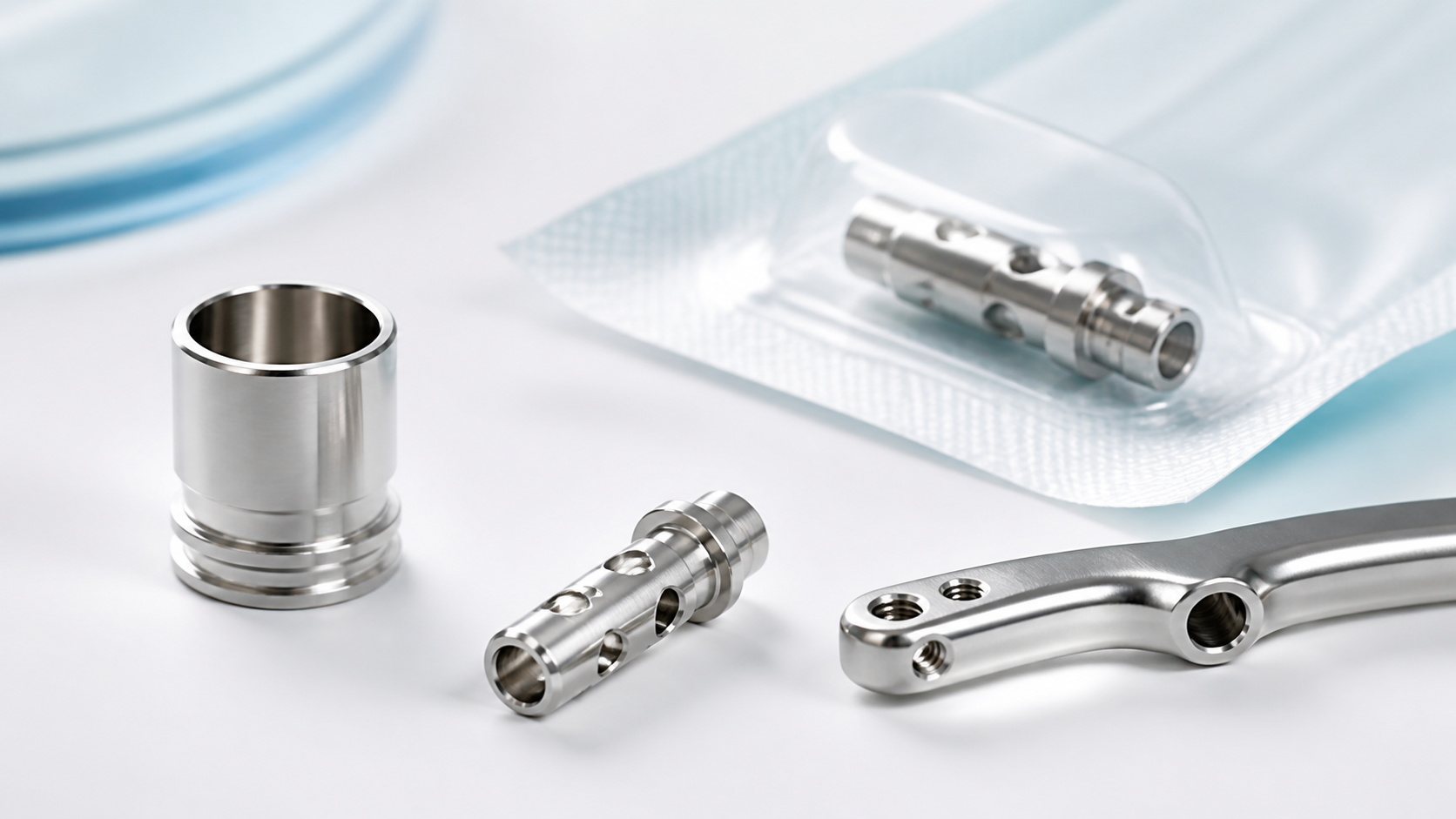
تصنيع الأجزاء الطبية من الفولاذ المقاوم للصدأ: ما الذي يجعلها مختلفة عن الأجزاء القياسية؟
تعد متطلبات التصنيع للأجزاء الطبية المصنوعة من الفولاذ المقاوم للصدأ أكثر صرامة من الأجزاء الصناعية القياسية. يجب أن تلبي الأجزاء القياسية متطلبات الأبعاد والمظهر, لكن الأجزاء الطبية غالبًا ما تضيف التوافق الحيوي, السيطرة على لدغ, انخفاض الإجهاد المتبقي, إمكانية التتبع, ومتطلبات التعبئة والتغليف النظيفة. قد تؤدي أي مشكلة في أي من هذه الخطوات إلى رفض تدقيق العميل, تأخر الافراج, أو إعادة صياغة دفعة.
الفولاذ المقاوم للصدأ الأكثر استخدامًا في الصناعة الطبية هو 316L لأنه يوفر توازنًا قويًا في مقاومة التآكل, التوافق الحيوي, وقابلية اللحام. تشرح هذه المقالة المتطلبات الخاصة والنهج العملي الذي تتبعه JADE-CNC في تصنيع أجزاء الفولاذ المقاوم للصدأ الطبية عبر أربعة مجالات: اختيار المواد, عملية التصنيع باستخدام الحاسب الآلي, التشطيب السطحي, ودعم الامتثال. لطريق التصنيع باستخدام الحاسب الآلي الفولاذ المقاوم للصدأ على نطاق أوسع, انظر لدينا دليل التصنيع باستخدام الحاسب الآلي الفولاذ المقاوم للصدأ.
316L اختيار المواد لأجزاء الفولاذ المقاوم للصدأ الطبية
يجب أن تستوفي الأجزاء التي تتصل بجسم الإنسان متطلبات المواد والتوافق الحيوي المحددة في الرسم, مواصفة, والطريق التنظيمي. درجة المادة, حزمة, استعراض منتصف المدة (تقرير اختبار المواد), رقم الحرارة, ويجب أيضًا أن تكون سجلات التصنيع قابلة للتتبع. 316L الفولاذ المقاوم للصدأ, بمحتواه المنخفض من الكربون (عادة <=0.03%), لديه خطر أقل للتآكل بين الحبيبات بعد اللحام, مقاومة جيدة للتآكل, واستخدامها على نطاق واسع في يزرع, الأدوات الجراحية, و جهاز طبي أجزاء الاتصال. 304 يمكن استخدامها لبعض الأجزاء الطبية غير المتصلة, لكن مقاومتها للتآكل وقابلية اللحام أقل من 316L, لذلك عادة ما يتم تجنبه بالنسبة للأجزاء التي تلامس سوائل الجسم.
غالبًا ما يكمن الفرق بين الدرجة الطبية 316L والدرجة الصناعية 316L في التحكم في الشوائب والتوثيق. المواد الطبية لديها سيطرة أكثر صرامة على الكبريت, الفوسفور, وغيرها من الشوائب, عدد أقل من الادراج غير المعدنية, وخصائص ميكانيكية أكثر استقرارا. للأجزاء الحرجة, قد تحتاج شهادات المواد إلى مرجع ASTM F138/F139 أو مواصفات المواد المعتمدة لدى العميل.
مادة | أجزاء الاتصال الطبية | الأجزاء الطبية غير المتصلة | سبب |
316ل | المفضل | مقبول | مقاومة التآكل + التوافق الحيوي + قابلية اللحام جيدة |
316 | غير مستحسن | مقبول | خطر التآكل بين الحبيبات بعد اللحام |
304 | غير مستحسن | مقبول | مقاومة التآكل غير كافية, عرضة للتآكل في بيئات الجسم السائلة |
17-4الرقم الهيدروجيني | تطبيقات محددة | مقبول | قوة عالية, ولكن مقاومة التآكل أقل من 316L |
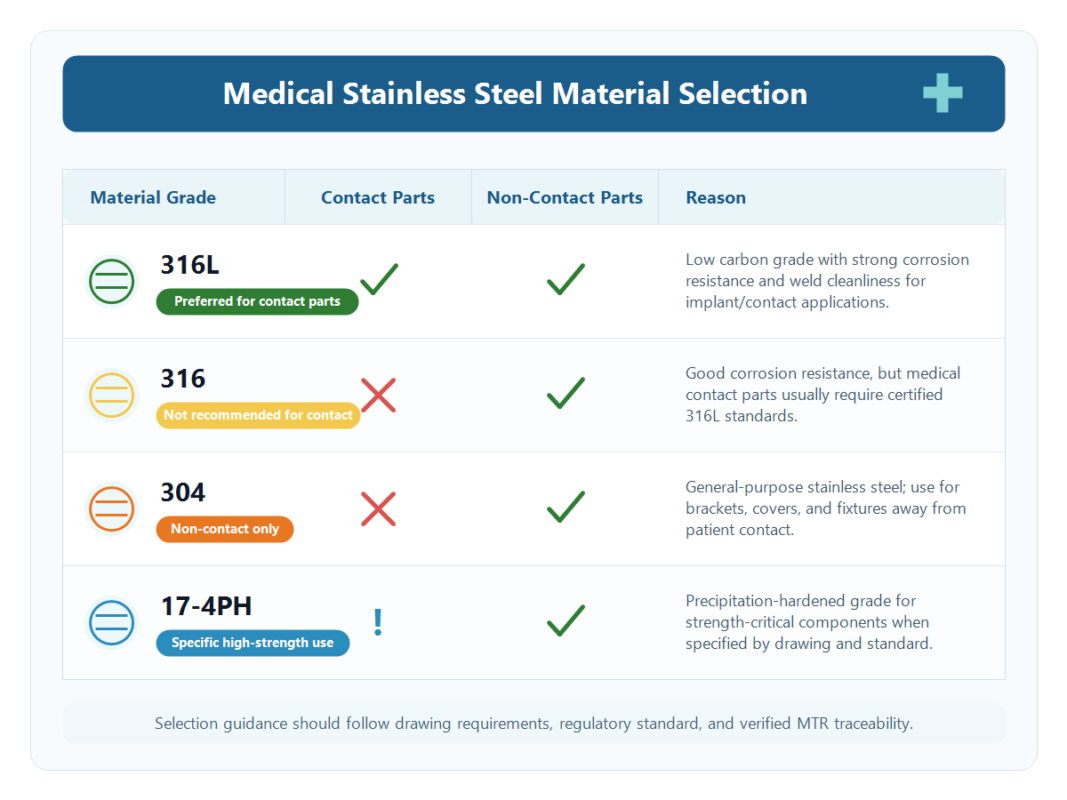
فتحة الصورة 1: الجدول المرجعي لاختيار المواد الطبية المصنوعة من الفولاذ المقاوم للصدأ
أساسيات عملية التصنيع باستخدام الحاسب الآلي: التحكم في الأزيز, ضغط منخفض وتشطيب عالي للسطح
المتطلبات الأساسية لتصنيع الأجزاء الطبية هي التحكم في الأزيز, انخفاض الإجهاد المتبقي, والانتهاء من السطح العالي. يمكن أن تنفصل النتوءات في بيئة طبية وتخلق خطرًا على المنتج. لذلك, فواصل الحافة, يخرج الثقب, فتحات متقاطعة, المواضيع, فتحات, ويجب مراجعة التحولات الحادة أثناء تخطيط العملية, ثم يتم إزالة الأزيز باستخدام مزيج مناسب من إزالة الأزيز اليدوية, التشطيب الميكانيكي الخاضع للرقابة, التشطيب الاهتزازي, والتنظيف بالموجات فوق الصوتية.
يمكن أن يتسبب الإجهاد المتبقي في تشوه الأجزاء أثناء المعالجة اللاحقة, التشطيب, تعقيم, أو الخدمة, وهو أمر بالغ الأهمية بشكل خاص للمكونات الطبية ذات الجدران الرقيقة والأجزاء المتعلقة بالزرع. يتمثل نهج JADE-CNC في ترك بدل كافٍ بعد المعالجة القاسية, إجراء التلدين لتخفيف الضغط بعد الانتهاء من نصف التشطيب عندما تسمح المواد والمواصفات بذلك, واستخدم عمقًا صغيرًا للقطع مع تغذية مستقرة للمعالجة النهائية لتقليل إجهاد القطع. تستخدم الأجزاء ذات الجدران الرقيقة تركيبات مخصصة لتقليل تشوه التثبيت.
من حيث الانتهاء من السطح, غالبًا ما تتطلب أجزاء الاتصال الطبية Ra 0.4um أو أقل, وقد تتطلب بعض الأجزاء المتعلقة بالزرع Ra 0.1um أو أقل. يمكن للتصنيع باستخدام الحاسب الآلي القياسي أن يحقق في كثير من الأحيان حوالي Ra 1.6um; قد تتطلب التشطيبات الأعلى طحنًا دقيقًا, تلميع, أو التلميع الكهربائي. تقوم JADE-CNC باختيار طريقة التصنيع والتشطيب أثناء تخطيط العملية بحيث لا يتم اكتشاف متطلبات النهاية بعد فوات الأوان في الإنتاج.
التشطيب السطحي لأجزاء الفولاذ المقاوم للصدأ الطبية: التخميل والتلميع الكهربائي
غالبًا ما يستخدم التشطيب السطحي لأجزاء الفولاذ المقاوم للصدأ الطبية طريق التخميل والتلميع الكهربائي عند الرسم, وظيفة, أو أن شرط النظافة يستدعي ذلك. يعمل التخميل على استعادة الطبقة الواقية من أكسيد الكروم على السطح, بينما يخلق التلميع الكهربائي سطحًا أكثر نعومة ويمكن أن يساعد في إزالة النتوءات الدقيقة والحديد الحر. تعتبر الأسطح المصقولة كهربائيًا أكثر سلاسة من الأسطح المصقولة ميكانيكيًا وتتجنب الجزيئات المدمجة التي يمكن أن تأتي من التلميع الميكانيكي غير المنضبط.
عادةً ما يزيل التلميع الكهربائي حوالي 0.01-0.03 ملم من المادة, لذا فإن الأجزاء عالية الدقة تتطلب بدلًا. للأجزاء الملحومة, يجب معالجة اللحام قبل الصقل الكهربائي للتأكد من أنه سلس بدون أي قطع أو معدن لحام زائد; خلاف ذلك, قد تظهر المنخفضات عند اللحام بعد التلميع الكهربائي. اعتمادا على المواصفات, يمكن لـ JADE-CNC دعم عمليات فحص الفريت, فحص مقاومة التآكل, أو غيرها من التحقق من جودة السطح بعد التلميع الكهربائي.
غالبًا ما يكون التخميل هو العملية النهائية, باستخدام تخميل حامض الستريك عندما يكون مناسبًا للجزء ومتطلبات العميل. بعد التخميل, يتم شطف الأجزاء بالماء النقي لتقليل الأيونات المتبقية. لا ينبغي لمس الأجزاء الخاملة باليد مباشرة; يتم استخدام القفازات النظيفة لأن الأملاح والزيوت الموجودة في الأيدي يمكن أن تؤثر على الفيلم السلبي.
دعم الامتثال: إمكانية التتبع من المادة إلى المنتج النهائي
تمر متطلبات الامتثال في الصناعة الطبية خلال عملية الإنتاج بأكملها. على الجانب المادي, يجب أن يكون لكل دفعة خاضعة للرقابة تقرير اختبار المواد (استعراض منتصف المدة) تحتوي على رقم حراري, التركيب الكيميائي, والخصائص الميكانيكية. يمكن لـ JADE-CNC التحقق من تركيبة المواد الواردة باستخدام مطياف للتأكد من تطابق المادة مع الشهادة.
على الجانب الإنتاجي, بطاقة مسار التصنيع لمعدات تسجيل الأجزاء الطبية, خطوات العملية, مشغلي, و تقتيش نتائج العمليات الخاضعة للرقابة. العمليات الحرجة مثل اللحام, التلميع الكهربائي, التنظيف النهائي, ويمكن دعم الفحص النهائي بتعليمات العمل وسجلات فحص المادة الأولى.
التغليف النظيف هو البوابة النهائية. بعد التنظيف, يتم تنظيف الأجزاء الطبية بالموجات فوق الصوتية وشطفها بالماء النقي, المجففة, ومعبأة بشكل فردي في ورق VCI أو أكياس غرف الأبحاث وفقًا لمتطلبات الجزء. يتم تسمية الكرتون الخارجي برقم الجزء, حزمة, كمية, وتاريخ الإنتاج. إذا كان لدى العملاء متطلبات نظافة خاصة, مثل الدرجة 1000 تغليف غرف الأبحاث, يمكن لـ JADE-CNC مراجعة المتطلبات أثناء ذلك اقتباس.
بند الامتثال | متطلبات | نهجنا |
إمكانية تتبع المواد | استعراض منتصف المدة + رقم الحرارة | التحقق من مطياف لكل دفعة, الشهادات المشحونة مع البضائع |
توثيق العملية | بطاقة الطريق + فحص المادة الأولى | المعدات/المعلمات/الموظفين المسجلة لكل عملية |
جودة السطح | را .40.4 ميكرومتر, خالية من لدغ | التلميع الكهربائي + الفحص البصري لكل رسم |
التعبئة والتغليف النظيفة | غرف الأبحاث / مانع للصدأ | التنظيف بالموجات فوق الصوتية + التعبئة والتغليف الفردية |
شهادة النظام | ايزو 13485 (إذا كان العميل يتطلب) | ايزو 9001, يمكن أن تدعم عمليات تدقيق العملاء |
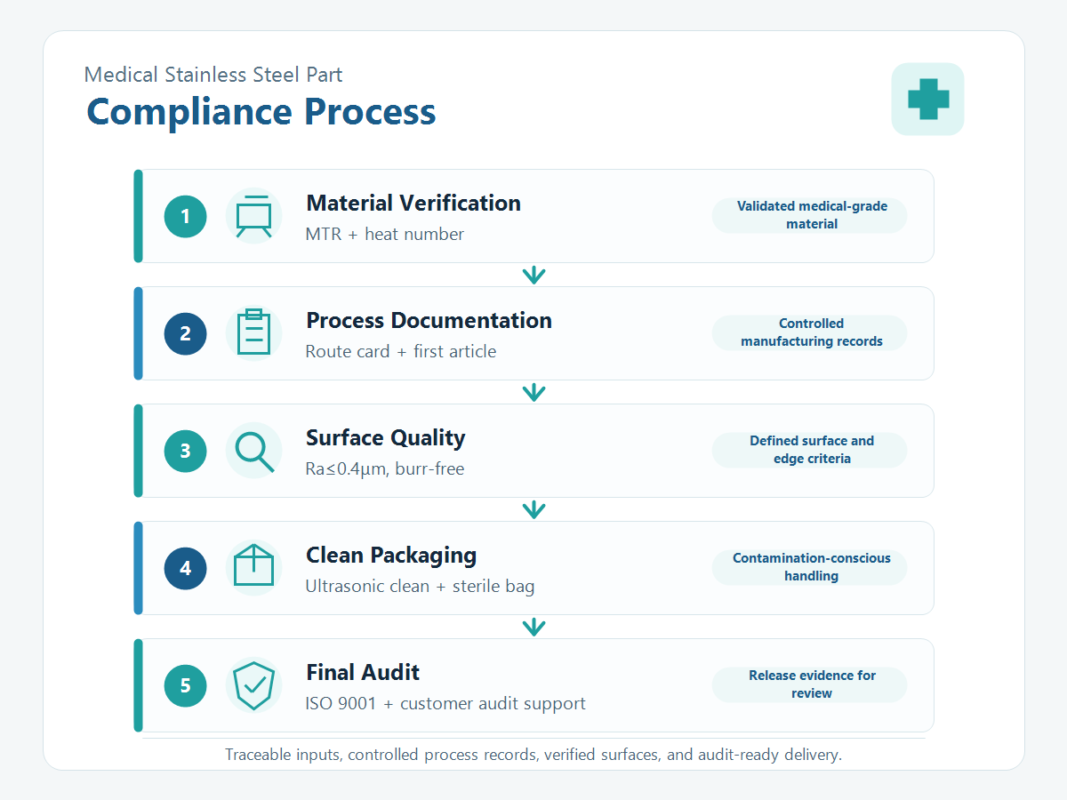
فتحة الصورة 2: مخطط تدفق عملية الامتثال للجزء الطبي
مشاكل وحلول تصنيع الفولاذ المقاوم للصدأ الطبية الشائعة
من المشاكل الشائعة في الأجزاء الطبية انحراف الأبعاد بعد التلميع الكهربائي. غالبًا ما يكون السبب هو الفشل في حجز بدل التلميع الكهربائي أو وقت التلميع المفرط الذي يؤدي إلى الإفراط في الإزالة. يتمثل نهج JADE-CNC في حساب الإزالة أثناء تخطيط العملية, تطبيق حماية اخفاء على الأسطح المتزاوجة عند الحاجة, وإجراء فحص CMM بعد التلميع وفقًا للرسم.
مشكلة شائعة أخرى هي تآكل اللحام بعد اللحام. قد يكون السبب هو استخدام سلك الحشو الخاطئ, مثل ER308 لـ 316L, أو الفشل في التخميل بعد اللحام. للأجزاء الطبية الملحومة 316L, يتحكم JADE-CNC في اختيار سلك الحشو, تنظيف ما بعد اللحام, التخميل, واختبار الاختراق للحامات الحرجة عند الحاجة.
يعد عدم المطابقة للنظافة أيضًا مشكلة متكررة, غالبًا ما يكون السبب هو التنظيف غير الكامل أو الغبار في بيئة التغليف. يستخدم JADE-CNC طريق تنظيف متحكم فيه مثل التنظيف بالموجات فوق الصوتية, الشطف بالمياه النقية, والتنظيف بالكحول عند الحاجة, ثم يقوم بتعبئة الأجزاء على طاولة نظيفة ويدعم فحص الجسيمات عند تحديد ذلك.
حول اليشم باستخدام الحاسب الآلي
JADE-CNC متخصص في تصنيع الأجزاء الدقيقة من الفولاذ المقاوم للصدأ, مع التصنيع بخمسة محاور, التصنيع المركب لطاحونة الدوران, معدات طحن الدقة, ايزو 9001 شهادة, وخدمة الشباك الواحد من التصنيع واللحام إلى تشطيب السطح والفحص. يمكن التحقق من المواد الواردة بواسطة مطياف, مع الفحص الذاتي بالإضافة إلى الفحص المخصص في مراحل العملية الرئيسية, المساعدة في التحكم في المهلة الزمنية, جودة, واتساق الدفعة.
أرسل الرسم الخاص بك, نموذج كاد, مواصفات المواد, متطلبات الانتهاء من السطح, شرط النظافة, معيار التفتيش, وكمية الدفعة لتقييم العملية والاقتباس, عادة داخل 24 ساعات.
مقالات ذات صلة بالفولاذ المقاوم للصدأ
– آلات الغذاء تصنيع الفولاذ المقاوم للصدأ: مواد صحية, اللحام والتشطيب السطحي
ليو ليانغ, أفضل شريك مؤسس مع R&د
JADE-CNC مؤسس LEO, الذي يجلب أكثر من عقدين من الخبرة في الصناعة, بدأ ليو حياته المهنية كمتدرب ومارس مهاراته في معالجة الأسطح والتصنيع باستخدام الحاسب الآلي.