



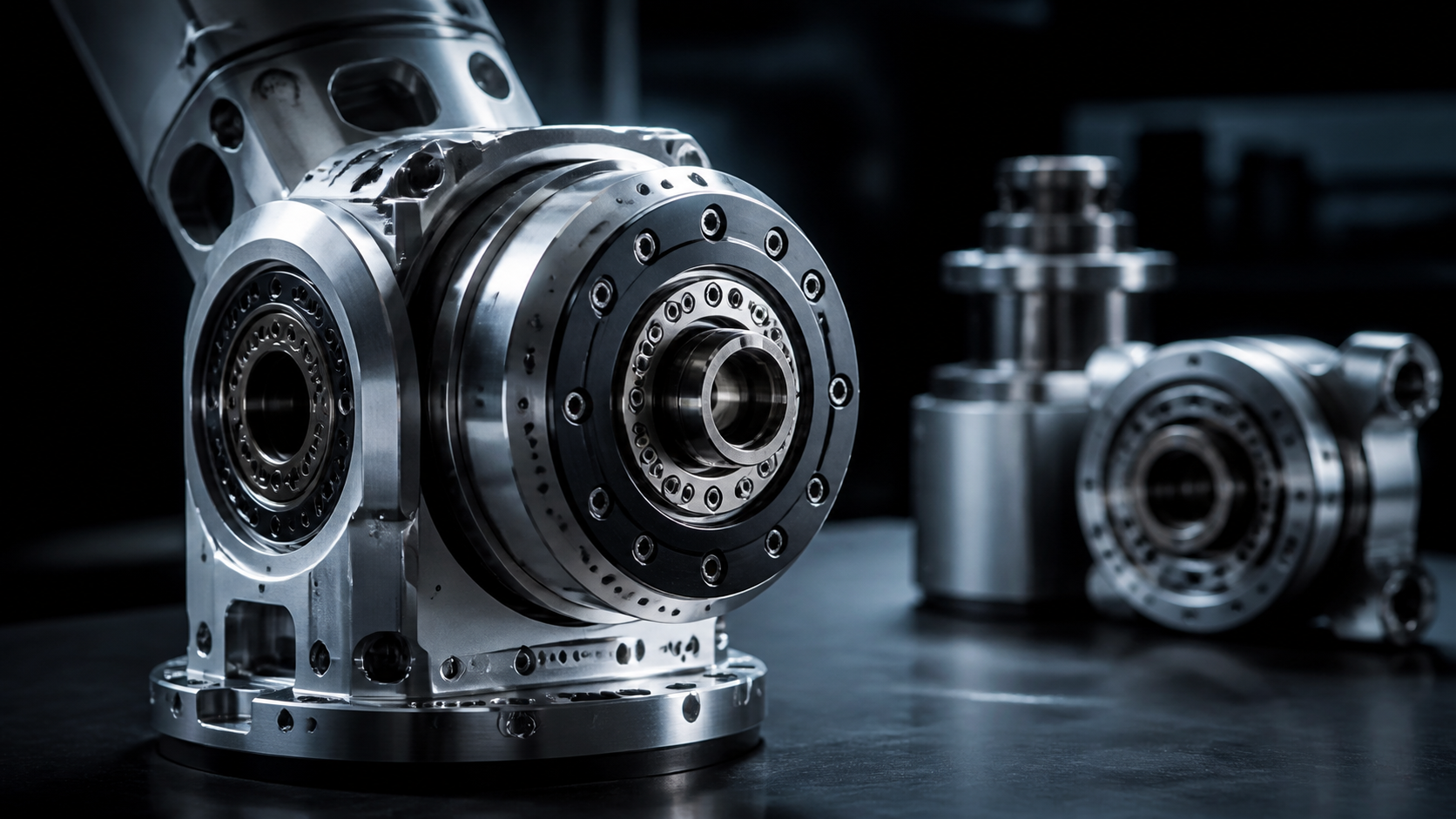
En sistemas robóticos, La precisión del movimiento comienza en la articulación..
Un robot puede parecer avanzado desde fuera, pero su estabilidad de movimiento depende en gran medida de la precisión de sus componentes mecánicos.. entre ellos, La carcasa de la articulación del robot es una de las partes más críticas.. Soporta rodamientos, sistemas de engranajes, motores, y conexiones estructurales entre ejes..
En Mecanizado CNC de piezas de juntas de robot, Detalles como asientos de rodamientos., caras de montaje, referencias de datos, concentricidad, y la tolerancia del mecanizado debe controlarse cuidadosamente. Incluso pequeñas desviaciones en una carcasa conjunta pueden provocar una desalineación, vibración, ruido, distribución de carga desigual, y problemas de rendimiento a largo plazo.
Las carcasas para juntas de robots no son sólo piezas estructurales. Afectan directamente a la precisión del movimiento., transferencia de carga, y confiabilidad del sistema.
¿Qué es una carcasa conjunta de robot??
La carcasa de una articulación robótica es un componente mecánico de precisión que se utiliza para soportar y alinear los elementos de movimiento clave dentro de una articulación robótica..
Dependiendo del diseño del robot, puede apoyar:
- Aspectos
- Accionamientos armónicos o sistemas de engranajes.
- motores
- Ejes
- Caras de montaje
- Puntos de conexión estructural
Su función principal es garantizar una rotación precisa y una transferencia de carga estable entre los ejes del robot..
Si la carcasa no está mecanizada con precisión, Es posible que el rodamiento no se asiente correctamente., Es posible que el motor y la caja de cambios no estén alineados., o la articulación puede generar vibraciones durante el movimiento. Para aplicaciones de robótica, esto puede afectar la repetibilidad, precisión de posicionamiento, vida útil, y el rendimiento general del sistema.
La precisión del asiento del rodamiento es fundamental
Los asientos de los rodamientos se encuentran entre las características más importantes de las carcasas de juntas de robots..
Un asiento de rodamiento debe sujetar el rodamiento de forma segura mientras mantiene un ajuste adecuado., redondez, y alineación. Si el orificio está demasiado apretado, El montaje se vuelve difícil y la tensión del soporte puede aumentar.. Si está demasiado flojo, El rodamiento puede desplazarse bajo carga y reducir la precisión del movimiento..
Para muchas piezas de juntas de robots de precisión, Es posible que sea necesario controlar la tolerancia del asiento del rodamiento dentro de rangos estrechos, como ±0,01mm, dependiendo del dibujo y la aplicación.
La calidad del asiento del rodamiento afecta:
- Suavidad de rotación
- Ajuste de montaje
- transferencia de carga
- Ruido y vibración
- Vida del rodamiento
- Repetibilidad del movimiento
Esta es la razón por la que se taladra con precisión, cuidadosa selección de herramientas, y una inspección estricta son esenciales durante el mecanizado CNC.
Alineación entre motores, Caja de cambios, y el rodamiento debe ser controlado
Una carcasa de articulación de robot a menudo conecta varios componentes de movimiento entre sí.. el motor, caja de cambios, unidad armónica, cojinete, eje, y las superficies de montaje deben funcionar como un solo sistema.
Si estas características no están alineadas, la articulación puede experimentar una carga desigual, vibración, fricción, o desgaste prematuro.
Los requisitos de alineación importantes pueden incluir:
- Concentricidad
- Paralelismo
- Perpendicularidad
- relación de dato
- Precisión de la posición del agujero
- Planicidad de la cara de montaje
En mecanizado CNC, Estos requisitos se controlan mediante la planificación de datos., diseño de accesorios, estrategia de mecanizado multieje, e inspección. Para carcasas de articulaciones de robots complejas, La relación entre características es a menudo más importante que cualquier dimensión única..
Una pieza puede verse correcta visualmente, pero si el orificio del motor y el asiento del cojinete no son concéntricos, Es posible que la articulación robótica final no funcione correctamente..
Las estructuras de paredes delgadas crean riesgo de deformación
Las piezas robóticas a menudo necesitan ser ligeras. Esta es la razón por la que muchas carcasas de juntas de robots utilizan estructuras de paredes delgadas., bolsillos, costillas, y cavidades optimizadas.
El diseño liviano ayuda a reducir la inercia y mejorar el rendimiento del movimiento del robot.. Sin embargo, El mecanizado de paredes delgadas crea desafíos de fabricación.
Durante el mecanizado CNC, Las paredes delgadas pueden deformarse debido a:
- Fuerza de corte
- Presión de sujeción
- Tensión del material interno
- Generación de calor
- Eliminación desigual de material
- Vibración de herramienta
Si la deformación no está controlada, la carcasa final puede perder planitud, redondez, o estabilidad dimensional.
JADE-CNC gestiona el mecanizado de paredes delgadas a través de trayectorias de herramientas optimizadas, sujeción estable del trabajo, parámetros de corte controlados, margen de mecanizado adecuado, e inspección paso a paso.
El calor y la vibración afectan el rendimiento a largo plazo
Las articulaciones del robot funcionan bajo carga dinámica.. Los motores generan calor, Los engranajes transmiten el par., y los rodamientos llevan movimiento repetido. Una carcasa conjunta debe permanecer estable en estas condiciones de funcionamiento..
Superficies mal mecanizadas, asientos de rodamientos inexactos, o las caras de montaje desalineadas pueden aumentar la vibración y el calor durante el funcionamiento. Con el tiempo, Esto puede reducir la vida útil o provocar un movimiento inestable..
Para sistemas robóticos, El mecanizado de precisión no consiste solo en pasar la inspección dimensional.. Se trata de respaldar la confiabilidad a largo plazo en condiciones de trabajo reales..
Es por eso que la fabricación de carcasas para juntas de robots debe considerar tanto la precisión del mecanizado como el rendimiento de la aplicación..
Cómo el mecanizado CNC resuelve los desafíos de las carcasas de juntas de robots
El mecanizado CNC es muy adecuado para carcasas de juntas de robots porque puede producir cavidades complejas., perforaciones precisas, caras de montaje, agujeros roscados, y características de múltiples ángulos de metal o materiales plásticos de ingeniería.
En JADE-CNC, Los servicios de mecanizado CNC robótico incluyen más que cortar la pieza.. Antes de la producción, revisamos dibujos, archivos CAD, materiales, tolerancias, acceso a herramientas, requisitos de acabado superficial, referencias de datos, y alcance de la inspección.
Para carcasas de articulaciones de robots y piezas de movimiento relacionadas, normalmente aplicamos:
- Fresado CNC de alta velocidad para cavidades complejas
- Mandrinado de precisión para asientos de rodamientos
- 5-Mecanizado de ejes para características de múltiples ángulos.
- Estrategias de mecanizado controlado para estructuras de paredes delgadas
- Control de acabado superficial para interfaces de rodamientos y montaje
- Planificación de inspección para dimensiones críticas.
Este proceso ayuda a mejorar la precisión dimensional., confiabilidad del ensamblaje, y coherencia entre partes.
Capacidades clave de mecanizado CNC para componentes robóticos
Las piezas de las juntas del robot a menudo requieren una combinación de fresado, aburrido, perforación, tocando, torneado, y acabado de superficies.
JADE-CNC admite componentes de precisión como:
- Carcasas para juntas de robots
- Soportes
- Ejes
- Patas
- Mangas
- Piezas relacionadas con rodamientos
- Componentes del sistema de movimiento
- Carcasas fresadas
- Funciones convertidas
Las capacidades clave de mecanizado incluyen:
- Tolerancia estricta hasta ±0,01mm, dependiendo de la geometría de la pieza y los requisitos del dibujo
- Acabado superficial liso para interfaces de rodamientos
- Deformación controlada para piezas de pared delgada
- 5-Mecanizado CNC de ejes para estructuras complejas.
- Creación rápida de prototipos y producción de lotes pequeños
- Acabado de superficies como anodizado., pulido, y revestimiento
La ruta de mecanizado final depende del diseño de la pieza., material, tolerancia, cantidad, y requisitos de inspección.
Selección de materiales para carcasas de juntas de robots
La selección del material afecta la resistencia., peso, estabilidad de mecanizado, tratamiento superficial, y costo.
Los materiales comunes para las carcasas de juntas de robots incluyen:
Aluminio 7075
7075 El aluminio es ligero y resistente.. A menudo se utiliza cuando se requiere una mayor resistencia mecánica manteniendo un peso bajo..
Aluminio 6061
6061 el aluminio es rentable, mecanizable, y ampliamente utilizado para carcasas de robots, paréntesis, y componentes estructurales.
Acero inoxidable
El acero inoxidable proporciona mayor resistencia y resistencia a la corrosión., pero es más pesado y más difícil de mecanizar que el aluminio..
Titanio
El titanio se utiliza para aplicaciones de alta gama que requieren resistencia., bajo peso, y resistencia a la corrosión. Requiere un cuidadoso control del mecanizado debido al comportamiento del material..
Plásticos de ingeniería
Materiales como POM, Nylon, y PEEK se puede utilizar para materiales ligeros., baja fricción, aislamiento eléctrico, o requisitos de aplicación especiales.
Un proveedor de mecanizado confiable debería ayudar a evaluar la selección de materiales en función de la función de la pieza., tolerancia, cantidad de producción, y ambiente de trabajo.
Del prototipo a la producción en pequeños lotes
El desarrollo de la robótica a menudo implica iteraciones repetidas del diseño..
Se pueden crear prototipos de una carcasa de articulación de robot en pequeñas cantidades, probado, modificado, y luego producido de nuevo. Esto hace que la respuesta rápida y la fabricación flexible sean importantes..
Soportes JADE-CNC:
- Creación rápida de prototipos CNC
- Producción de lotes pequeños
- Revisión de planos antes del mecanizado.
- Comentarios sobre el diseño para la fabricación
- Sugerencias de materiales y procesos.
- Coordinación de acabados superficiales.
- Inspección de características críticas.
Para equipos de robótica, Esto ayuda a acortar los ciclos de desarrollo manteniendo los requisitos de precisión..
Un buen prototipo no sólo sirve para comprobar la apariencia. También debe verificar el montaje., movimiento, alineación, y riesgo de desempeño a largo plazo.
Por qué es importante la inspección de piezas de juntas de robots
Las carcasas de juntas de robots suelen contener varias características críticas que deben funcionar juntas. Por lo tanto, la inspección debe centrarse en las dimensiones funcionales., no sólo el tamaño total.
Los puntos de inspección importantes pueden incluir:
- Diámetro del asiento del rodamiento
- Redondez del agujero
- Concentricidad
- Planicidad de la cara de montaje
- Posición del agujero
- Calidad del hilo
- Grosor de la pared
- Dimensiones relacionadas con datos de referencia
- Acabado superficial de las zonas de contacto.
Para piezas de alta precisión, Es posible que se requieran informes de inspección antes del envío.. Esto ayuda a los clientes a confirmar si la pieza cumple con los requisitos de dibujo y ensamblaje..
Conclusión
La precisión en el movimiento robótico comienza con componentes mecánicos precisos.
Una carcasa de articulación del robot bien mecanizada ayuda a garantizar una rotación estable, alineación precisa, transferencia de carga suave, y confiabilidad a largo plazo. Asientos de rodamientos, caras de montaje, referencias de datos, estructuras de paredes delgadas, y las tolerancias de mecanizado deben controlarse cuidadosamente.
JADE-CNC proporciona servicios de mecanizado CNC para carcasas de juntas de robots y componentes de movimiento relacionados, compatible con la fabricación de CAD a CNC, selección de materiales, fresado de precisión, aburrido, 5-mecanizado de ejes, acabado superficial, y planificación de inspecciones desde el prototipo hasta la producción de lotes pequeños.
llamada a la acción
Buscando un fabricante de componentes robóticos para carcasas de juntas de robots o piezas de movimiento relacionadas?
JADE-CNC puede revisar los requisitos de mecanizado de RFQ para componentes de aluminio, piezas mecanizadas de titanio, carcasas fresadas, ejes torneados, patas, mangas, y características relacionadas con los rodamientos antes de confirmar la ruta de producción más práctica.
Para proyectos a menudo comparados con un Fábrica de piezas de torneado CNC, Fábrica de piezas de aluminio torneado CNC, Fabricante de piezas de torneado CNC, o Fabricantes de piezas de torneado CNC, JADE-CNC también puede evaluar si el torneado, molienda, 5-mecanizado de ejes, o un proceso combinado es la mejor solución.
El proceso final depende del dibujo., material, tolerancia, acabado superficial, cantidad, y alcance de la inspección.
No dude en compartir sus archivos CAD con nosotros.
Tabla de contenido

Leo Liang, Fundador Mejor Socio de R&D
LEO, fundador de JADE-CNC, que aporta más de dos décadas de experiencia en la industria, Leo comenzó su carrera como aprendiz y practica sus habilidades en tratamiento de superficies y mecanizado CNC..