


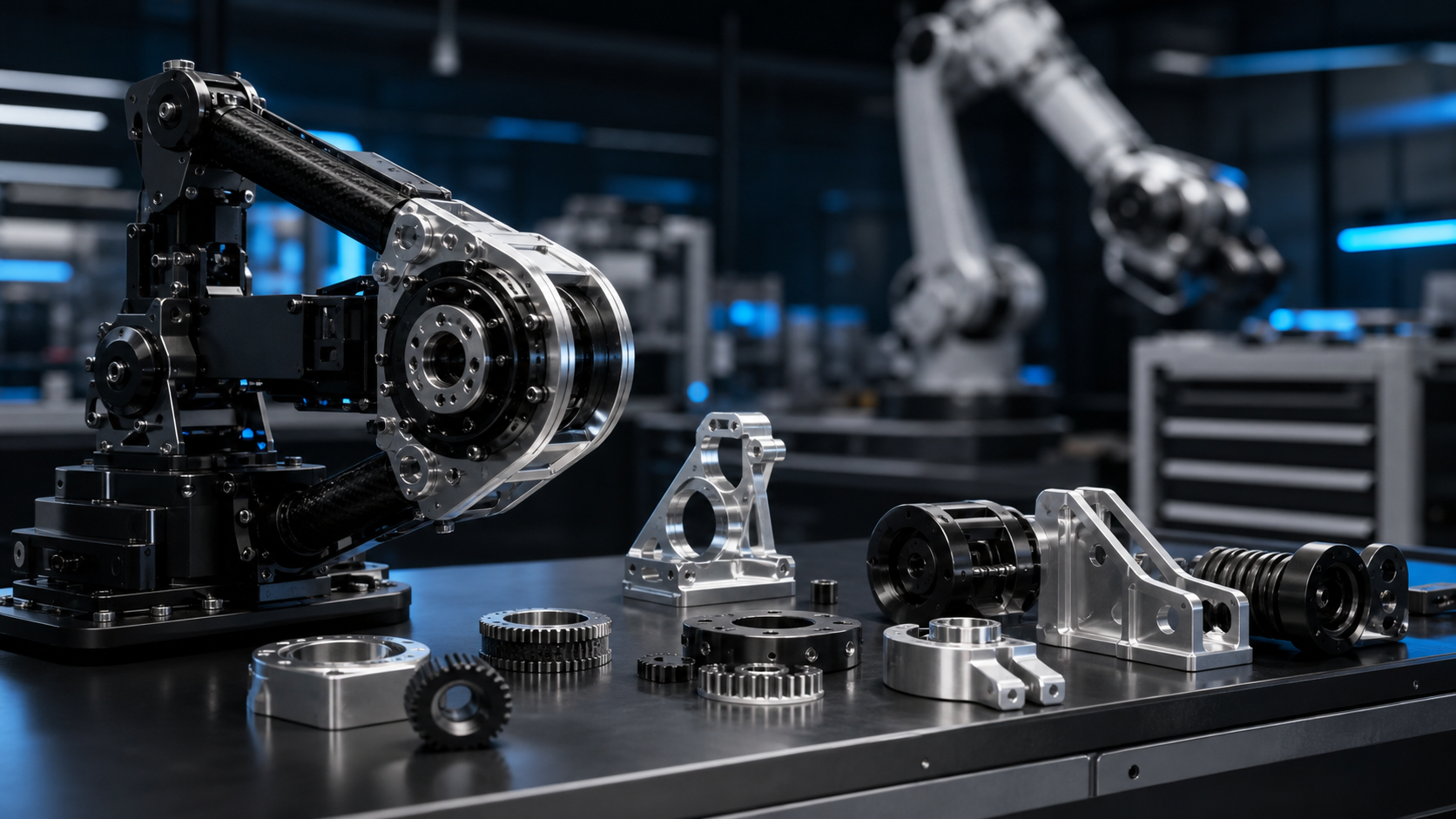
Los equipos de robótica no sólo necesitan un proveedor; necesitan un servicio de mecanizado CNC industrial que pueda mantenerse al día con iteraciones rápidas, tolerancias estrictas, y constante evolución del diseño. From early-stage prototypes to pre-production validation, the right machining partner directly affects product performance, fiabilidad, and time-to-market.
En JADE–CNC, we support robotics CNC machining and robot components machining for humanoid systems, industrial automation, and advanced mechatronics. This article explains what matters when robotics teams evaluate robotic parts, tolerancia de mecanizado, CAD to CNC machining support, RFQ machining review, plastics for machining, stainless steel CNC machining, steel CNC machining, and related production communication.
Engineering-Driven Manufacturing, Not Just Production
Robotics is not a “standard parts” industry. Every component interacts with sensors, actuadores, control systems, and structural loads.
Why engineering collaboration matters
A strong manufacturing partner should:
- Understand functional requirements, not just drawings
- Provide DFM (Diseño para la fabricabilidad) feedback early
- Help reduce weight while maintaining stiffness
- Support iterative redesigns without long delays
This is especially critical in humanoid robotics and precision motion systems.
Related capability:https://www.jadecnc.com/custom-cnc-machining/
Precision That Matches Motion Systems Requirements
Robótica assemblies depend on tight mechanical alignment. Even minor deviations can cause:
- Joint friction increase
- Sensor misalignment
- Motion calibration drift
- Reduced lifespan of actuators and bearings
Typical robotics tolerance expectations
- Structural frames: ±0,05 milímetros
- Bearing housings: ±0.01–0.02 mm
- Gear interfaces: controlled concentricity & sin
- Multi-part assemblies: stack-up controlled machining strategy, revisión de materiales, and process planning for stainless steel machining company requirements, stainless steel screw machining, características convertidas, milled housings, and motion-related components when specified by the drawing.
Fast Iteration Capability for Prototyping Cycles
Robotics development cycles are short and aggressive. Teams often iterate every 1–3 weeks.
What manufacturing support should look like
A capable partner should offer:
- Rapid quoting within 24–48 hours
- Single-piece or low-volume production (1–50 pcs)
- Flexible engineering change handling
- Parallel manufacturing for multiple design versions
This is where prototype-focused CNC infrastructure becomes critical.
Explore :https://www.jadecnc.com/robotics/
Multi-Material and Multi-Process Capability
Robotics systems combine multiple engineering domains:
- Structural aluminum frames
- Lightweight magnesium or titanium parts
- Plastic housings for sensors
- Surface-treated aesthetic components
Why multi-process integration matters
Without integration, teams suffer from:
- Supplier fragmentation
- Tolerance mismatch between parts
- Longer assembly debugging cycles
A strong partner should combine:
- Mecanizado CNC
- Fabricación de chapa
- Acabado de superficies(anodizado, voladura, pulido)
- Assembly support
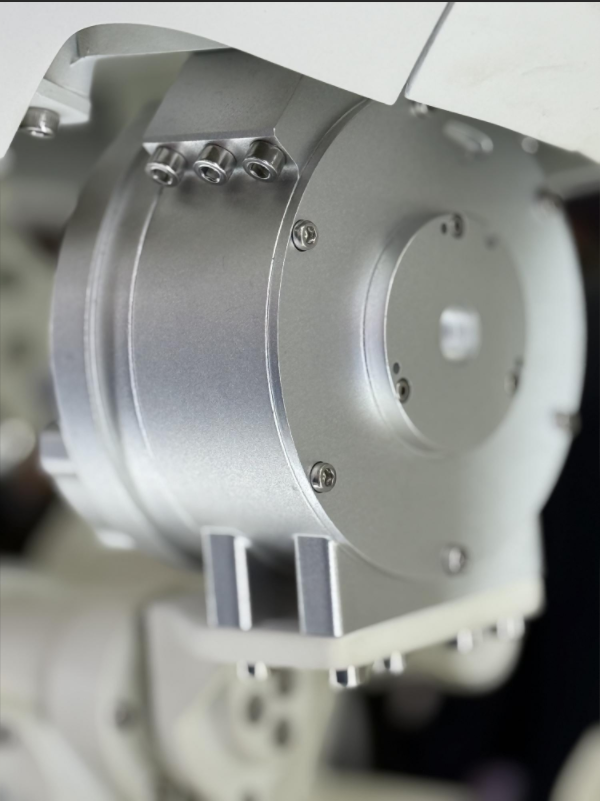
Surface Quality and Functional Finishing for Robotics Products
Acabado de superficies is not just aesthetic in robotics—it affects durability and performance.
Common robotics finishing requirements
- Hard anodizing for wear resistance
- Bead blasting for uniform surface texture
- High-gloss finishing for consumer-facing humanoids
- Anti-corrosion coatings for long-cycle testing
Poor surface consistency can lead to:
- Increased friction in moving joints
- Thermal instability
- Assembly misfit in tight enclosures
Testing Support and Engineering Validation
Robotics teams increasingly require validation-ready fabricación.
Key validation requirements
- Dimensional inspection reports (MMC)
- Material traceability
- Load testing support
- Assembly fit verification
- Thermal and vibration testing readiness
Manufacturing is no longer the final step—it is part of the validation loop.
Scalability From Prototype to Pre-Production
A major risk for robotics startups is switching suppliers when scaling.
A reliable partner should support:
- Prototipo (1–10 pcs)
- Engineering validation (10–100 pcs)
- Pre-production batches (100–1000 pcs)
This ensures:
- No redesign during scaling
- Stable quality baseline
- Predictable cost structure
Why Robotics Teams Work With JADE CNC
JADE CNC supports robotics and mechatronics teams con:
- High-precision CNC machining (3/4/5-eje)
- Rapid prototyping for iterative development
- Multi-material engineering support
- Tight-tolerance mechanical assemblies
- Engineering feedback for manufacturability improvement
Conclusión
Robotics manufacturing is not about producing parts—it’s about enabling engineering speed, mechanical precision, and system reliability.
The best manufacturing partners act as an extension of the robotics engineering team, not just a supplier. That alignment is what determines whether a robot moves smoothly—or fails in testing.

Leo Liang, Founder Best Partner with R&D
LEO, fundador de JADE-CNC, que aporta más de dos décadas de experiencia en la industria, Leo comenzó su carrera como aprendiz y practica sus habilidades en tratamiento de superficies y mecanizado CNC..