



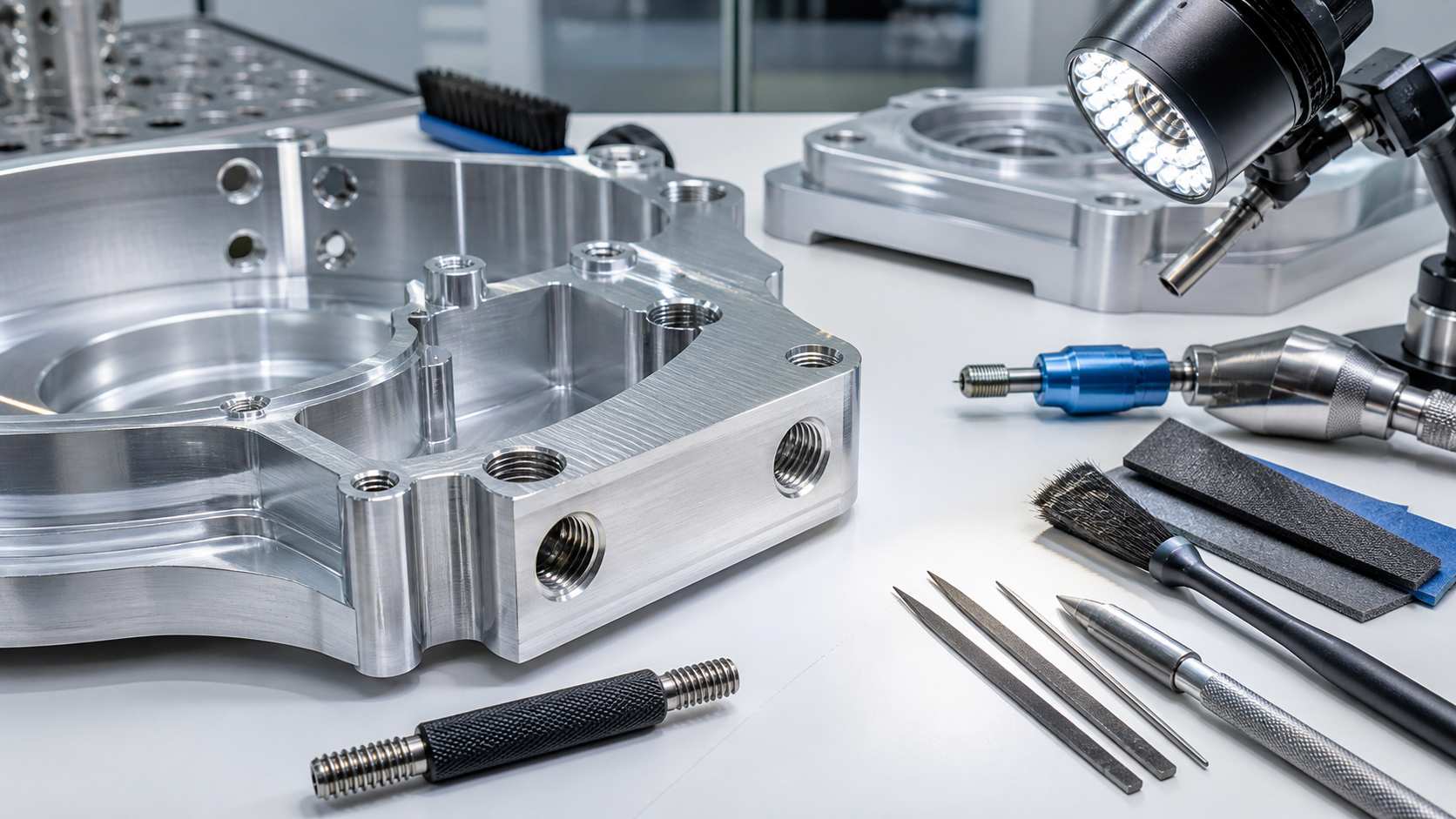
CNC-Teile sind in der Regel nicht sofort nach der Bearbeitung perfekt.
Auch wenn die Abmessungen genau sind und der Werkzeugweg korrekt ist, An den Kanten können kleine Grate zurückbleiben, Löcher, Slots, Threads, und Innenecken. Diese Grate können geringfügig aussehen, Sie können jedoch die Montage beeinträchtigen, Oberflächenbehandlung, Sicherheit, und Endproduktqualität.
Bevor ein CNC-bearbeitetes Teil den Kunden erreicht, es durchläuft oft mehrere manuelle und Inspektionsschritte. Bei JADE-CNC, Die Präzisionsbearbeitung hört nicht auf, wenn die Maschine mit dem Schneiden fertig ist. Weiter geht es mit dem Entgraten, Oberflächenglättung, Innenreinigung, Überprüfung der Gewindebohrung, und Beleuchtungsinspektion.
In diesem Artikel, Wir erklären die wichtigsten Schritte hinter dem CNC-Teilereinigungs- und Entgratungsprozess von JADE-CNC.
Die CNC-Bearbeitung ist nur der erste Schritt
Viele Käufer konzentrieren sich hauptsächlich auf die CNC-Maschine selbst. Maschinenmarke, Achsenanzahl, Toleranzfähigkeit, und Schnittgeschwindigkeit sind alle wichtig. Die Bearbeitungsphase ist jedoch nur ein Teil des gesamten Herstellungsprozesses.
Nachdem ein Teil von der CNC-Maschine kommt, Es können noch kleine Grate vorhanden sein, scharfe Kanten, Schneidflüssigkeit, Chips, Staub, oder Werkzeugspuren, die kontrolliert werden müssen.
Wenn diese Angaben ignoriert werden, Das Teil kann später zu Problemen führen.
Zum Beispiel, Ein Grat in der Nähe eines Gewindelochs kann dazu führen, dass eine Schraube nicht reibungslos eingeführt werden kann. Eine scharfe Kante kann beim Zusammenbau ein anderes Bauteil zerkratzen. In einer Tasche verbleibende Späne können das Endprodukt verunreinigen. Eine raue Kante kann das Eloxieren beeinträchtigen, Malerei, oder Beschichtungsqualität.
Aus diesem Grund ist die Reinigung nach der Bearbeitung ein entscheidender Bestandteil der Präzisionsfertigung.
Kleine Grate können große Montageprobleme verursachen
Ein Grat ist ein kleines unerwünschtes Materialstück, das nach dem Schneiden zurückbleibt, Bohren, Mahlen, klopfen, oder Schlitzen.
Grate kommen bei der CNC-Bearbeitung häufig vor, vor allem um:
- Lochränder
- Gewindelöcher
- Spielautomaten
- Taschen
- Dünne Wände
- Schnittpunkte zwischen Flächen
- Innenecken
- Scharfe Außenkanten
Obwohl Grate winzig sein können, Sie können echte Probleme verursachen. Sie können die Montage blockieren, die zusammenpassenden Teile beschädigen, Auswirkungen auf die Dichtflächen haben, zu Messfehlern führen, oder zu losen Verunreinigungen innerhalb eines mechanischen Systems führen.
Für Präzisionsbauteile, Bei der Gratkontrolle geht es nicht nur darum, das Teil besser aussehen zu lassen. Es geht darum sicherzustellen, dass das Teil ordnungsgemäß funktionieren kann.
Erstes Entgraten mit Feilen
Bei JADE-CNC, Der Reinigungsprozess beginnt oft mit dem ersten Entgraten mittels Feilen.
Dateien sind einfache Werkzeuge, Sie sind jedoch sehr effektiv, wenn sie von erfahrenen Technikern verwendet werden. Sie helfen dabei, größere Grate von bearbeiteten Kanten zu entfernen und das Teil für feinere Endbearbeitungsschritte vorzubereiten.
Der Schlüssel ist Kontrolle. Zu viel Feilen kann die Abmessungen beschädigen, wichtige Kanten abrunden, oder das Aussehen kosmetischer Oberflächen verändern. Zu wenig Feilen hinterlässt Grate, die die Montage beeinträchtigen können.
Für diesen Schritt müssen die Mitarbeiter verstehen, welche Kanten weicher gemacht werden müssen und welche Präzisionsmerkmale geschützt werden müssen.
Bei einem guten Entgratungsprozess wird nicht blind Material entfernt. Es wird nur das entfernt, was nicht vorhanden sein sollte.
Feines Schleifpapier hilft, die Oberfläche zu glätten
Nach dem ersten Entgraten, JADE-CNC verwendet feines Schleifpapier, um ausgewählte Oberflächen zu glätten.
Feines Schleifen kann die Schärfe beeinträchtigen, Verbessern Sie das Handgefühl, Entfernen Sie kleine Gratspuren, und schaffen Sie vor dem nächsten Vorgang eine sauberere Oberfläche. Dies ist besonders nützlich für Teile, die später eloxiert werden sollen, Malerei, Überzug, oder andere Oberflächenbehandlung.
Jedoch, Auch das Schleifen muss sorgfältig kontrolliert werden. Einige Oberflächen können kosmetischer Natur sein, während andere möglicherweise funktionsfähig sind. Eine Dichtfläche, Lagersitz, Präzisionsloch, oder Kanten mit engen Toleranzen sollten nicht nachlässig geschliffen werden.
Aus diesem Grund, JADE-CNC behandelt das Schleifen als kontrollierten Endbearbeitungsschritt, nicht nur eine einfache manuelle Operation.
Komplexe interne Bereiche erfordern spezielle Werkzeuge
Einige Grate und Späne sind von außen nicht sichtbar.
Komplexe CNC-Teile können Innentaschen enthalten, tiefe Löcher, Kreuzlöcher, Rillen, schmale Schlitze, und versteckte Ecken. In diesen Bereichen können sich Späne festsetzen, Staub, oder kleine Grate nach der Bearbeitung.
Für die Reinigung dieser Bereiche sind Spezialwerkzeuge erforderlich. Abhängig von der Teilestruktur, Techniker können Bürsten verwenden, Schaber, Luftreinigung, kleine Dateien, oder andere Präzisionsreinigungswerkzeuge, um interne Funktionen zu erreichen.
Dieser Schritt ist wichtig, da eine interne Kontamination versteckte Risiken mit sich bringen kann. Ein Teil kann äußerlich sauber aussehen, Im Inneren verbleibende Späne können jedoch später den Zusammenbau oder die Funktion beeinträchtigen.
Für Präzisionsteile in der Elektronik, Automatisierung, Robotik, Kommunikationsgeräte, oder mechanische Baugruppen, Innere Sauberkeit kann genauso wichtig sein wie das äußere Erscheinungsbild.
Für eine perfekte Montage müssen die Gewindelöcher sauber sein
Gewindelöcher sind einer der wichtigsten Bereiche, die nach der CNC-Bearbeitung überprüft werden müssen.
Sogar ein kleiner Grat, Chip, oder Rückstände in einem Gewindeloch können zu Montageproblemen führen. Schrauben können sich fest anfühlen, Kreuzfaden, auf halber Strecke anhalten, oder das Gewinde beim Einbau beschädigen.
Bei JADE-CNC, Gewindelöcher werden sorgfältig gereinigt und überprüft, um eine reibungslose Montage zu gewährleisten.
Dies kann das Entfernen von Spänen umfassen, Überprüfung des Threadeintrags, Reinigen des Bodens von Sacklöchern, und bestätigen, dass die Schraube oder Lehre richtig einrasten kann.
Für Käufer, Dieses Detail ist wichtig, da Gewindeprobleme oft erst bei der Endmontage auftreten. Bis dahin, Nacharbeiten können das gesamte Projekt verzögern.
Saubere Gewindelöcher tragen dazu bei, das Montagerisiko zu reduzieren und das Kundenerlebnis zu verbessern.
Die Beleuchtungsinspektion hilft, kleine Mängel aufzudecken
Nach dem Entgraten und Reinigen, JADE-CNC führt Inspektionen unter Beleuchtung durch.
Eine gute Beleuchtung hilft Technikern, kleine Grate zu erkennen, scharfe Kanten, Kratzer, Rückstand, verstopfte Löcher, und Oberflächenfehler, die unter normalen Bedingungen übersehen werden könnten.
Kanten und Löcher werden sorgfältig geprüft, da hier häufig Grate zurückbleiben. Für komplexe Teile, Möglicherweise sind mehrere Betrachtungswinkel erforderlich, um zu bestätigen, dass verborgene Bereiche sauber sind.
Die Beleuchtungsinspektion ist ein einfacher, aber wichtiger Qualitätskontrollschritt. Dadurch wird sichergestellt, dass jedes sichtbare Detail bestätigt wird, bevor das Teil zum nächsten Prozess übergeht.
Jedes Detail wird vor dem nächsten Prozess bestätigt
Nach Reinigung und Inspektion, Das Teil kann eloxiert werden, Malerei, Überzug, Polieren, Montage, Verpackung, oder Direktlieferung.
Wenn vor der Oberflächenbehandlung Grate oder Verunreinigungen zurückbleiben, Die Endbearbeitung kann Mängel aufweisen. Wenn die Gewindelöcher vor der Montage nicht sauber sind, Schrauben passen möglicherweise nicht richtig. Wenn die Kanten vor der Lieferung nicht überprüft werden, Der Kunde erhält möglicherweise Teile, die unfertig aussehen.
Aus diesem Grund bestätigt JADE-CNC die Details, bevor der nächste Prozess beginnt.
Dieser schrittweise Ansatz trägt dazu bei, Probleme in der Produktion zu verhindern. Es reduziert auch die Nacharbeit, verbessert die Konsistenz, und unterstützt eine zuverlässige Lieferung.
Entgraten schützt sowohl Funktion als auch Aussehen
Das Entgraten wird oft als kosmetischer Schritt angesehen, aber es hat sowohl funktionalen als auch visuellen Wert.
Funktional, Es trägt dazu bei, dass Teile reibungslos zusammengebaut werden, reduziert Störungen, schützt zusammenpassende Komponenten, und entfernt loses Material. Visuell, es verbessert die Kantenqualität, Oberflächenreinheit, und der Gesamteindruck des Teils.
Für hochwertige CNC-Teile, Der Käufer sollte keine Ecken und Kanten sehen, verstopfte Löcher, oder offensichtliche Grate. Das Teil sollte sich bereit für die Montage oder Endbearbeitung anfühlen.
Aus diesem Grund ist die Aufmerksamkeit für kleine Details Teil der Präzisionsbearbeitung.
10. Präzisionsbearbeitung beginnt mit der Liebe zum Detail
Die Botschaft von JADE-CNC ist einfach: Präzisionsbearbeitung beginnt mit der Liebe zum Detail.
Eine CNC-Maschine kann die Geometrie schneiden, Aber Menschen und Prozesskontrolle vervollständigen den Teil. Entgraten, Schleifen, Innenreinigung, Threadprüfung, und Beleuchtungsinspektion sind Teil der Endqualität.
Für Kunden, Diese Schritte bedeuten weniger Montageprobleme, sauberere Oberflächen, bessere Endergebnisse, und zuverlässigere Teile.
Praktische Ratschläge für Käufer von CNC-Teilen
Bei der Bestellung von CNC-bearbeiteten Teilen, Es hilft, die Entgratungs- und Reinigungserwartungen klar zu definieren.
Käufer sollten angeben:
- Ob scharfe Kanten gebrochen werden sollen
- Welche Kanten müssen scharf bleiben?
- Thread-Anforderungen
- Sauberkeitsanforderungen
- Kosmetische Oberflächen
- Oberflächenbehandlung nach der Bearbeitung
- Montagekritische Löcher oder Schlitze
- Ob interne Chips inakzeptabel sind
- Inspektionsstandards, falls erforderlich
Ein einfacher Zeichenhinweis wie „Alle Kanten entgraten“ ist hilfreich, aber für Präzisionskomponenten, Genauere Hinweise können Missverständnissen vorbeugen.
Abschluss
CNC-Teile sind nicht immer sofort nach der Bearbeitung perfekt. Kleine Grate, Chips, scharfe Kanten, und innere Rückstände können zurückbleiben, vor allem um Löcher herum, Threads, Slots, und komplexe Funktionen.
Bei JADE-CNC, Wir folgen einem vollständigen Reinigungs- und Entgratungsprozess. Für die erste Gratentfernung verwenden wir Feilen, feines Schleifpapier zum Glätten der Oberfläche, Spezialwerkzeuge für komplexe interne Bereiche, sorgfältige Reinigung der Gewindelöcher, und Beleuchtungsinspektion für jede Kante und jedes Loch vor dem nächsten Prozess.
Diese Liebe zum Detail trägt dazu bei, dass CNC-bearbeitete Teile sauber sind, genau, bereit zur Montage, und zur weiteren Veredelung geeignet.
Benötigen Sie saubere und zuverlässige CNC-bearbeitete Teile?
Senden Sie Ihre Zeichnungen, Material, Menge, und Montageanforderungen. JADE-CNC kann bei der Herstellung von Präzisionskomponenten mit sorgfältiger Prozesskontrolle von der Bearbeitung bis zur Endkontrolle helfen.
Inhaltsverzeichnis

Leo Liang, Gründer Bester Partner mit R&D
JADE-CNCs Gründer LEO, der über zwei Jahrzehnte Branchenexpertise mitbringt, Leo begann seine Karriere als Lehrling und erprobte seine Fähigkeiten in der Oberflächenbehandlung und CNC-Bearbeitung.