



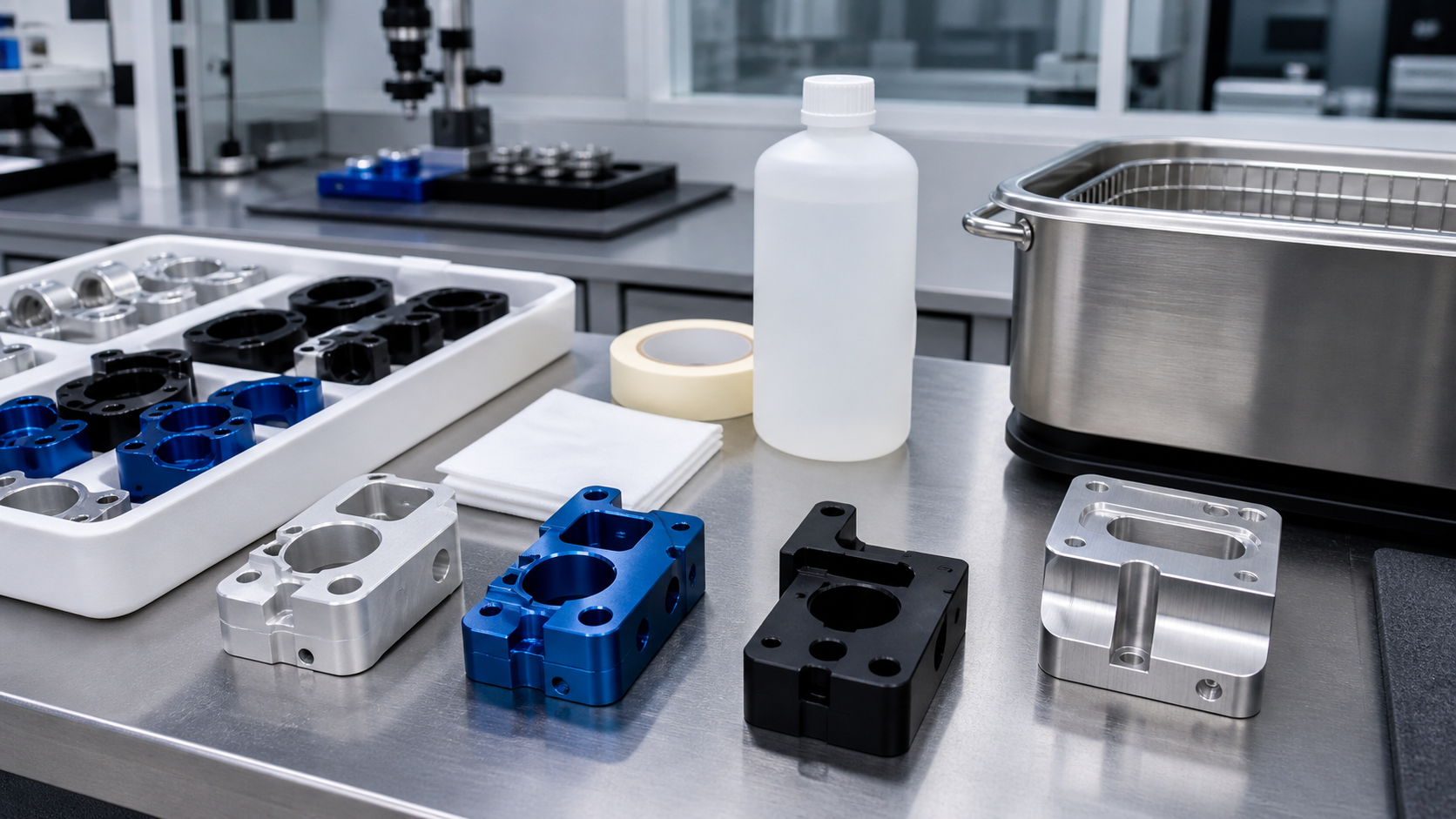
Verschiedene CNC-Teile erreichen ihre beste Leistung durch unterschiedliche Oberflächenbehandlungen.
Einige Teile benötigen Korrosionsbeständigkeit. Manche brauchen ein erstklassiges optisches Erscheinungsbild. Manche benötigen eine glatte Textur für die Handhabung. Andere erfordern Farbe, Härte, Verschleißfestigkeit, Isolierung, Leitfähigkeit, oder Schutz für den Langzeitgebrauch.
Eine anspruchsvolle Oberflächenveredelung kann einem Teil ein beeindruckendes Aussehen verleihen, Aber hinter jeder verfeinerten CNC-Komponente steckt eine Reihe sorgfältig kontrollierter Herstellungsdetails.
Frisch bearbeitete Teile sind meist nicht perfekt. Werkzeugspuren, Grate, Schneidflüssigkeit, Staub, und Oberflächenunregelmäßigkeiten können nach der Bearbeitung bestehen bleiben. Bevor ein Teil sein endgültiges Aussehen erhalten kann, JADE-CNC verfolgt eine systematische Reinigung, Oberflächenvorbereitung, und Endbearbeitungsverfahren.
In diesem Artikel, Wir erklären Ihnen, wie aus CNC-bearbeiteten Teilen hochwertige Fertigbauteile entstehen.
Die Oberflächenveredelung beginnt nach der Bearbeitung
Wenn ein CNC-Teil von der Maschine kommt, es hat bereits seine Hauptgeometrie erreicht. Dies bedeutet jedoch nicht, dass das Teil für den Kunden bereit ist.
Die frisch bearbeitete Oberfläche kann enthalten:
- Werkzeugspuren
- Scharfe Kanten
- Kleine Grate
- Chips
- Rückstände von Schneidflüssigkeit
- Fingerabdrücke
- Leichte Oxidation
- Ungleichmäßige Textur
Diese Details können sowohl das Aussehen als auch die Funktion beeinflussen. Wenn sie vor der Fertigstellung nicht kontrolliert werden, die endgültige eloxiert, bemalt, gesprengt, oder gebürstete Oberfläche kann Mängel aufweisen.
Deshalb beginnt die Oberflächenveredelung mit der richtigen Reinigung und Vorbereitung.
Die Entfernung von Graten ist die Grundlage für ein gutes Finish
Grate sind kleine unerwünschte Kanten oder Fragmente, die beim Schneiden entstehen, Bohren, Mahlen, oder klopfen.
Sie können geringfügig aussehen, Sie können sich jedoch auf viele Endbearbeitungsprozesse auswirken. Grate können zu einer ungleichmäßigen Beschichtung führen, Ecken und Kanten, schlechte Montage, scharfe Handhabungsoberflächen, und uneinheitliches Aussehen nach dem Eloxieren oder Lackieren.
JADE-CNC verwendet systematische Verfahren, um Grate vor der endgültigen Endbearbeitung zu entfernen. Je nach Teil, dazu kann manuelles Entgraten gehören, Werkzeugreinigung, Sandstrahlen, oder andere kontrollierte Methoden.
Eine gute Endoberfläche hängt von sauberen Kanten ab. Ohne Gratkontrolle, Selbst ein fortgeschrittener Veredelungsprozess führt möglicherweise nicht zu einem erstklassigen Ergebnis.
Sandstrahlen hilft, Grate zu entfernen und eine gleichmäßige Textur zu erzeugen
Sandstrahlen ist ein gängiges Verfahren zur Oberflächenvorbereitung von CNC-bearbeiteten Metallteilen.
Es verwendet abrasive Medien, um auf die Oberfläche einzuwirken und eine gleichmäßigere matte Textur zu erzeugen. Es kann helfen, kleine Grate zu entfernen, Reduzieren Sie sichtbare Werkzeugspuren, und bereiten Sie die Oberfläche für spätere Behandlungen wie das Eloxieren vor, Malerei, oder Beschichtung.
Für Teile, die eine Verfeinerung erfordern, nicht reflektierendes Aussehen, Sandstrahlen kann die visuelle Konsistenz erheblich verbessern.
Jedoch, Sandstrahlen muss sorgfältig kontrolliert werden. Medientyp, Druck, Distanz, Winkel, und Bearbeitungszeit können das Endergebnis beeinflussen. Übermäßiges Strahlen kann scharfe Kanten aufweichen oder die Haptik der Oberfläche verändern, während unzureichendes Strahlen zu unebenen Bereichen führen kann.
JADE-CNC wählt die richtige Vorbereitungsmethode entsprechend dem Material des Teils aus, Struktur, und Endbearbeitungsanforderung.
Alkoholreinigung und Ultraschallspülung entfernen versteckte Verunreinigungen
Nach der Gratentfernung, Teile müssen gereinigt werden.
Alkoholreinigung hilft, Öl zu entfernen, Fingerabdrücke, und Oberflächenrückstände. Durch die Ultraschallspülung können kleine Rillen erreicht werden, Innenecken, Löcher, und komplexe Funktionen, die manuell nur schwer zu reinigen sind.
Dieser Schritt ist vor dem Eloxieren besonders wichtig, Malerei, oder bürsten. Auf der Oberfläche verbleibende Verunreinigungen können die Farbe beeinträchtigen, Haftung, Helligkeit, oder Texturkonsistenz.
Ein Teil sieht für das Auge möglicherweise sauber aus, aber versteckte Rückstände können immer noch in Threads verbleiben, Sacklöcher, Slots, und Innentaschen. Die Ultraschallreinigung trägt dazu bei, die Sauberkeit komplexer CNC-bearbeiteter Teile zu verbessern.
Die Qualität der Oberflächenveredelung hängt stark von der Oberflächenreinheit ab.
Durch Eloxieren entsteht ein raffinierter Farb- und Oberflächenschutz
Sobald Grate und Verunreinigungen entfernt sind, Das Teil kann mit dem Prozess zur Erzielung der vom Kunden gewünschten Endbearbeitung beginnen.
Für Aluminiumteile, Eloxieren ist eine der häufigsten Oberflächenbehandlungen. Beim Eloxieren, Das Teil wird in eine Oxidationslösung getaucht. Dadurch entsteht eine Oxidschicht auf der Aluminiumoberfläche, Verbesserung der Korrosionsbeständigkeit und Oberflächenhärte bei gleichzeitiger Möglichkeit der Farbveredelung.
Durch Eloxieren kann die Oberfläche edler und professioneller aussehen. Es wird häufig für Aluminiumgehäuse verwendet, Abdeckungen, Klammern, Kühlkörper, Robotikteile, elektronische Komponenten, und Präzisionsmechanikteile.
Jedoch, Die Eloxierungsqualität hängt von vielen Faktoren ab, einschließlich Aluminiumqualität, Oberflächenvorbereitung, Chargenkontrolle, Teilegeometrie, und Behandlungsbedingungen. Deshalb ist eine konsequente Prozesskontrolle wichtig.
Das Malen erfordert sorgfältiges Maskieren und schichtweisen Schutz
Lackieren ist eine weitere wichtige Veredelungsmethode für CNC-bearbeitete Teile.
Vor dem Lackieren, unnötige oder funktionale Bereiche müssen vollständig geschützt werden. Dies geschieht in der Regel durch Maskierung. Themen, Passflächen, Löcher, Kontaktbereiche, und Montageschnittstellen müssen möglicherweise unlackiert bleiben.
Wenn diese Bereiche nicht geschützt sind, Die Beschichtung kann die Montage beeinträchtigen, Erdung, Versiegelung, oder Maßhaltigkeit.
JADE-CNC steuert die Lackierung durch schichtweise Vorbereitung. Normalerweise, Der Farbauftrag erfolgt in zwei Hauptschritten:
- Grundierungsschicht
- Farbige Farbschicht
Der Primer trägt zur Verbesserung der Haftung und Oberflächenstabilität bei. Die farbige Farbe sorgt für das endgültige Erscheinungsbild und die optische Wirkung.
Bei guter Lackierung geht es nicht nur darum, Farbe auf ein Teil zu sprühen. Es erfordert Vorbereitung, Maskierung, Beschichtungskontrolle, Trocknen oder Aushärten, Inspektion, und Verpackung.
Durch das Bürsten entsteht eine hochwertige lineare Metallstruktur
Beim Bürsten handelt es sich um einen Veredelungsprozess, der konsistente lineare Texturen auf Metalloberflächen erzeugt.
Dieser Prozess verleiht den Teilen eine einzigartige visuelle Ausrichtung und ein hochwertiges Metallbild. Es wird häufig für sichtbare Aluminium- oder Edelstahlkomponenten mit Struktur verwendet, Verfeinerung, und das Produktgefühl sind wichtig.
Der Schlüssel zum Zähneputzen liegt in der strikten Kontrolle von Richtung und Kraft.
Wenn die Putzrichtung inkonsistent ist, Die Oberfläche wird unordentlich aussehen. Wenn die Kraft ungleichmäßig ist, die Texturtiefe kann variieren. Wenn die Oberfläche vor dem Bürsten nicht richtig vorbereitet wurde, Werkzeugspuren oder Grate können sichtbar bleiben.
Eine hochwertige gebürstete Oberfläche erfordert erfahrene Bediener und eine stabile Prozesskontrolle.
Unterschiedliche Oberflächenbeschaffenheiten erfüllen unterschiedliche Funktionen
Bei der Oberflächenveredelung geht es nicht nur darum, Teile schön zu machen.
Unterschiedliche Oberflächen bieten unterschiedliche funktionale Vorteile:
- Sandstrahlen verbessert die Konsistenz der Textur und die Qualität der Zubereitung.
- Eloxieren verbessert die Korrosionsbeständigkeit und Oberflächenhärte von Aluminium.
- Malerei sorgt für Farbe, Schutz, und Personalisierung des Erscheinungsbilds.
- Durch das Bürsten entsteht eine hochwertige gerichtete Metallstruktur.
- Die Reinigung verbessert die Haftung der Beschichtung und die Zuverlässigkeit der Oberfläche.
Das richtige Finish hängt vom Verwendungszweck des Teils ab.
Ein Kühlkörper muss möglicherweise eloxiert und thermisch geprüft werden. Eine sichtbare Abdeckung muss möglicherweise gebürstet oder gestrichen werden. Eine mechanische Halterung muss möglicherweise korrosionsbeständig sein. Eine Kommunikationskomponente benötigt möglicherweise einen Beschichtungsschutz mit maskierten Funktionsbereichen.
Für Käufer, Bei der Auswahl einer Oberfläche sollten immer sowohl das Aussehen als auch die Anwendung berücksichtigt werden.
Professionelle Finishing-Partner tragen zur Aufrechterhaltung einer gleichbleibenden Qualität bei
JADE-CNC arbeitet mit professionellen Oxidationsfabriken zusammen, in denen täglich Tausende von Teilen bearbeitet werden.
Dies ist wichtig, da die Qualität der Oberflächenveredelung von einer stabilen Produktionskontrolle abhängt. Chargenkonsistenz, Farbkontrolle, Reinigungsstandards, Behandlungszeit, Lösungsbedingung, und Inspektionsverfahren beeinflussen alle das Endergebnis.
Für Kunden, Konsistenz ist oft wichtiger als eine perfekte Probe. In Serienproduktion, Jedes Teil sollte dem gleichen Qualitätsstandard entsprechen.
Durch die Zusammenarbeit mit erfahrenen Veredelungspartnern und die Einhaltung strenger Qualitätsansprüche, JADE-CNC trägt dazu bei, stabile Ergebnisse bei Prototypen- und Produktionsaufträgen zu liefern.
Von der Bearbeitung bis zur Endbearbeitung, Jeder Schritt zählt
Ein hochwertiges CNC-Teil entsteht nicht durch einen Prozess allein.
Durch die Bearbeitung entsteht die Geometrie. Durch das Entgraten werden die Kanten vorbereitet. Durch die Reinigung werden Verunreinigungen entfernt. Sandstrahlen verbessert die Textur. Eloxieren, Malerei, oder Bürsten erzeugt den endgültigen Oberflächeneffekt. Durch die Inspektion wird bestätigt, dass das Ergebnis den Anforderungen des Kunden entspricht.
Wenn ein Schritt übersprungen oder schlecht kontrolliert wird, Das letzte Teil kann optisch oder funktionell fehlerhaft sein.
Bei JADE-CNC, Ziel ist es, den gesamten Prozess von der Bearbeitung bis zur Endbearbeitung zu verwalten, damit die Kunden hochwertige, saubere Komponenten erhalten, konsistent, und gebrauchsfertig.
Praktische Ratschläge für Käufer
Wenn Sie eine Oberflächenveredelung für CNC-bearbeitete Teile anfordern, Käufer sollten eindeutig angeben:
- Materialqualität
- 2D-Zeichnungen und 3D-Dateien
- Erforderlicher Endtyp
- Farb- oder Musterreferenz
- Putzrichtung bei Bedarf
- Kosmetische Oberflächenbereiche
- Maskierungspflicht
- Anforderungen an die Oberflächenrauheit
- Gegebenenfalls Anforderungen an die Schichtdicke
- Anforderungen an die Korrosionsbeständigkeit
- Menge
- Anwendungsumgebung
- Akzeptanzstandard für das Erscheinungsbild
Je detaillierter die Anforderungen, desto einfacher ist es, das richtige Veredelungsverfahren auszuwählen und Missverständnisse zu vermeiden.
Abschluss
Hinter jeder anspruchsvollen CNC-Oberflächenveredelung steht ein umfassender Vorbereitungsprozess, Reinigung, Behandlung, Inspektion, und Qualitätskontrolle.
Frisch bearbeitete Teile weisen häufig Werkzeugspuren und Grate auf. JADE-CNC nutzt systematische Verfahren wie Sandstrahlen, Alkoholreinigung, Ultraschallspülung, Eloxieren, Malerei, Bürsten, und professionelle Veredelungszusammenarbeit, um verfeinert zu schaffen, dauerhaft, und gleichmäßige Oberflächen.
Von der Bearbeitung bis zur Endbearbeitung, Wir konzentrieren uns auf jeden Schritt, um qualitativ hochwertige Komponenten zu liefern.
Benötigen Sie kundenspezifische CNC-bearbeitete Teile mit erstklassiger Oberflächenveredelung?
Senden Sie JADE-CNC Ihre Zeichnungen, Material, Menge, und Endbearbeitungsanforderungen. Wir können Ihnen bei der Bereitstellung präziser Fertigungslösungen von der Bearbeitung bis zur abschließenden Oberflächenbehandlung helfen.
Inhaltsverzeichnis

Leo Liang, Gründer Bester Partner mit R&D
JADE-CNCs Gründer LEO, der über zwei Jahrzehnte Branchenexpertise mitbringt, Leo begann seine Karriere als Lehrling und erprobte seine Fähigkeiten in der Oberflächenbehandlung und CNC-Bearbeitung.