



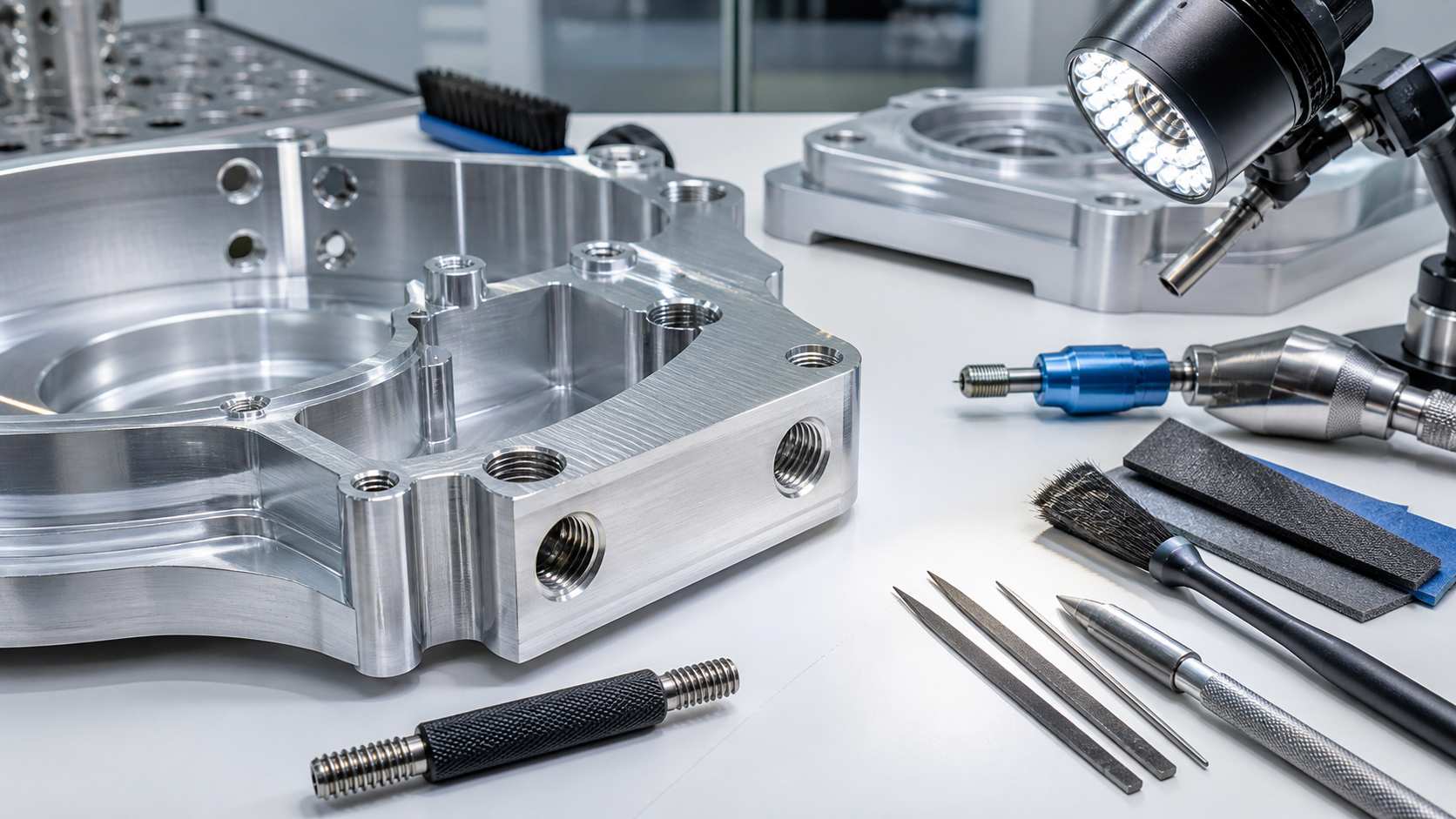
Las piezas CNC no suelen ser perfectas inmediatamente después del mecanizado.
Incluso cuando las dimensiones son precisas y la trayectoria de la herramienta es correcta, Pueden quedar pequeñas rebabas alrededor de los bordes., agujeros, tragamonedas, trapos, y esquinas internas. Estas rebabas pueden parecer menores, pero pueden afectar el montaje, tratamiento superficial, seguridad, y calidad del producto final.
Antes de que una pieza mecanizada por CNC llegue al cliente, A menudo pasa por varios pasos manuales y de inspección.. En JADE-CNC, El mecanizado de precisión no se detiene cuando la máquina termina de cortar.. Continúa mediante el desbarbado., alisado de superficies, limpieza interna, control de agujeros roscados, e inspección de iluminación.
En este artículo, Explicaremos los pasos clave detrás del proceso de limpieza y desbarbado de piezas CNC de JADE-CNC..
El mecanizado CNC es solo el primer paso
Muchos compradores se centran principalmente en la propia máquina CNC.. Marca de la máquina, recuento de ejes, capacidad de tolerancia, y la velocidad de corte son todos importantes. Pero la etapa de mecanizado es sólo una parte del proceso completo de fabricación..
Después de que una pieza sale de la máquina CNC, todavía puede haber pequeñas rebabas, bordes afilados, fluido de corte, papas fritas, polvo, o marcas de herramientas que deben controlarse.
Si se ignoran estos detalles, la pieza puede crear problemas más adelante.
Por ejemplo, una rebaba cerca de un orificio roscado puede impedir que un tornillo entre suavemente. Un borde afilado puede rayar otro componente durante el montaje.. Las virutas que quedan dentro de un bolsillo pueden contaminar el producto final. Un borde áspero puede afectar el anodizado, cuadro, o calidad del chapado.
Esta es la razón por la que la limpieza posterior al mecanizado es una parte fundamental de la fabricación de precisión..
Las pequeñas rebabas pueden causar grandes problemas de montaje
Una rebaba es un pequeño trozo de material no deseado que queda después del corte., perforación, molienda, tocando, o ranurar.
Las rebabas son comunes en el mecanizado CNC, especialmente alrededor:
- Bordes del agujero
- Agujeros roscados
- Tragamonedas
- Bolsillos
- Paredes delgadas
- Intersecciones entre superficies
- Esquinas internas
- Bordes externos afilados
Aunque las rebabas pueden ser pequeñas, pueden causar problemas reales. Pueden bloquear el montaje, dañar las piezas de acoplamiento, afectan las superficies de sellado, crear errores de medición, o convertirse en contaminación suelta dentro de un sistema mecánico.
Para componentes de precisión, El control de rebabas no consiste sólo en hacer que la pieza luzca mejor.. Se trata de asegurarse de que la pieza pueda funcionar correctamente..
Desbarbado inicial con limas
En JADE-CNC, El proceso de limpieza a menudo comienza con el desbarbado inicial con limas..
Los archivos son herramientas simples, pero son muy eficaces cuando los utilizan técnicos experimentados.. Ayudan a eliminar rebabas más grandes de los bordes mecanizados y a preparar la pieza para pasos de acabado más finos..
La clave es el control.. Demasiado limado puede dañar las dimensiones., redondear los bordes importantes, o cambiar la apariencia de las superficies cosméticas. Demasiado poco limado deja rebabas que pueden afectar el montaje..
Este paso requiere que los trabajadores comprendan qué bordes deben suavizarse y qué características de precisión deben protegerse..
Un buen proceso de desbarbado no elimina material a ciegas. Elimina sólo lo que no debería estar allí..
El papel de lija fino ayuda a suavizar la superficie
Después del desbarbado inicial, JADE-CNC utiliza papel de lija fino para alisar superficies seleccionadas.
El lijado fino puede reducir la nitidez, mejorar la sensación de la mano, eliminar pequeños rastros de rebabas, y crear una superficie más limpia antes del siguiente proceso. Esto es especialmente útil para piezas que luego recibirán anodizado., cuadro, enchapado, u otro tratamiento superficial.
Sin embargo, El lijado también debe controlarse cuidadosamente.. Algunas superficies pueden ser cosméticas., mientras que otros pueden ser funcionales. Una superficie de sellado, asiento de rodamiento, agujero de precisión, o el borde de tolerancia estrecha no debe lijarse casualmente.
Por esta razón, JADE-CNC trata el lijado como un paso de acabado controlado, no es sólo una simple operación manual.
Las áreas internas complejas necesitan herramientas especializadas
Algunas rebabas y astillas no son visibles desde el exterior..
Las piezas CNC complejas pueden incluir bolsillos internos, agujeros profundos, agujeros cruzados, surcos, ranuras estrechas, y rincones escondidos. Estas áreas pueden atrapar virutas., polvo, o pequeñas rebabas después del mecanizado.
La limpieza de estas áreas requiere herramientas especializadas.. Dependiendo de la estructura de la pieza, Los técnicos pueden utilizar cepillos., raspadores, limpieza del aire, archivos pequeños, u otras herramientas de limpieza de precisión para alcanzar las características internas.
Este paso es importante porque la contaminación interna puede crear riesgos ocultos.. Una pieza puede verse limpia externamente., pero los chips que quedan en el interior pueden afectar el montaje o el funcionamiento posterior.
Para piezas de precisión utilizadas en electrónica., automatización, robótica, dispositivos de comunicación, o conjuntos mecánicos, La limpieza interna puede ser tan importante como la apariencia externa..
Los orificios roscados deben estar limpios para un montaje perfecto
Los agujeros roscados son una de las áreas más importantes a comprobar después del mecanizado CNC.
Incluso una pequeña rebaba, chip, o residuos dentro de un orificio roscado pueden causar problemas de montaje. Los tornillos pueden sentirse apretados, hilo cruzado, detenerse a mitad de camino, o dañar la rosca durante la instalación.
En JADE-CNC, Los orificios roscados se limpian y revisan cuidadosamente para ayudar a garantizar un montaje sin problemas..
Esto puede incluir la eliminación de virutas., comprobando la entrada del hilo, limpiar el fondo de los agujeros ciegos, y confirmar que el tornillo o calibre pueda encajar correctamente.
Para compradores, Este detalle es importante porque los problemas de rosca suelen aparecer sólo durante el montaje final.. Para entonces, el retrabajo puede retrasar todo el proyecto.
Los orificios roscados limpios ayudan a reducir el riesgo de ensamblaje y mejorar la experiencia del cliente.
La inspección de iluminación ayuda a revelar pequeños defectos
Después de desbarbar y limpiar, JADE-CNC realiza inspección bajo iluminación.
Una buena iluminación ayuda a los técnicos a ver pequeñas rebabas, bordes afilados, rayones, residuo, agujeros bloqueados, y defectos superficiales que pueden pasar desapercibidos en condiciones normales.
Los bordes y agujeros se revisan cuidadosamente porque son áreas comunes donde quedan rebabas.. Para piezas complejas, Es posible que se necesiten múltiples ángulos de visión para confirmar que las áreas ocultas estén limpias..
La inspección de la iluminación es un paso de control de calidad simple pero importante. Ayuda a garantizar que cada detalle visible se confirme antes de que la pieza pase al siguiente proceso..
Cada detalle se confirma antes del siguiente proceso.
Después de la limpieza e inspección, la pieza puede pasar a anodizarse, cuadro, enchapado, pulido, asamblea, embalaje, o entrega directa.
Si quedan rebabas o contaminación antes del tratamiento de la superficie, el acabado final puede presentar defectos. Si los agujeros roscados no están limpios antes del montaje, Es posible que los tornillos no encajen correctamente.. Si los bordes no se revisan antes de la entrega, El cliente puede recibir piezas que parecen inacabadas..
Es por eso que JADE-CNC confirma detalles antes de que comience el siguiente proceso..
Este enfoque paso a paso ayuda a evitar que los problemas avancen en la producción.. También reduce el retrabajo, mejora la consistencia, y soporta entrega confiable.
El desbarbado protege tanto la función como la apariencia
El desbarbado se considera a menudo como un paso cosmético., pero tiene valor funcional y visual.
Funcionalmente, ayuda a que las piezas se ensamblen sin problemas, reduce la interferencia, protege los componentes acoplados, y elimina el material suelto. Visualmente, mejora la calidad del borde, limpieza de superficies, y la impresión general de la pieza.
Para piezas CNC de alta calidad, el comprador no debe ver asperezas, agujeros bloqueados, o rebabas obvias. La pieza debe sentirse lista para el montaje o acabado..
Por eso la atención a los pequeños detalles forma parte del mecanizado de precisión.
10. El mecanizado de precisión comienza con la atención al detalle
El mensaje de JADE-CNC es simple: El mecanizado de precisión comienza con la atención a cada detalle..
Una máquina CNC puede cortar la geometría., pero las personas y el control de procesos completan la parte. Desbarbado, lijado, limpieza interna, comprobación de hilo, y la inspección de iluminación son parte de la calidad final..
Para clientes, Estos pasos significan menos problemas de montaje., superficies más limpias, mejores resultados de acabado, y piezas más fiables.
Consejos prácticos para compradores de piezas CNC
Al pedir piezas mecanizadas CNC, Ayuda a definir claramente las expectativas de desbarbado y limpieza..
Los compradores deben especificar:
- Si se deben romper los bordes afilados
- ¿Qué bordes deben permanecer afilados?
- Requisitos del hilo
- Requisitos de limpieza
- Superficies cosméticas
- Tratamiento superficial después del mecanizado.
- Orificios o ranuras de montaje crítico
- Si los chips internos son inaceptables
- Estándares de inspección si es necesario
Una nota de dibujo simple como “desbarbar todos los bordes” es útil, pero para componentes de precisión, notas más detalladas pueden evitar malentendidos.
Conclusión
Las piezas CNC no siempre son perfectas inmediatamente después del mecanizado. Pequeñas rebabas, papas fritas, bordes afilados, y pueden quedar residuos internos, especialmente alrededor de los agujeros, trapos, tragamonedas, y características complejas.
En JADE-CNC, Seguimos un completo proceso de limpieza y desbarbado.. Usamos limas para la eliminación inicial de rebabas., papel de lija fino para alisar superficies, herramientas especializadas para áreas internas complejas, limpieza cuidadosa de agujeros roscados, e inspección de iluminación para cada borde y agujero antes del siguiente proceso.
Esta atención al detalle ayuda a garantizar que las piezas mecanizadas por CNC estén limpias., preciso, listo para el montaje, y apto para posteriores acabados.
Necesita piezas mecanizadas CNC limpias y confiables?
Envía tus dibujos, material, cantidad, y requisitos de montaje. JADE-CNC puede ayudar a fabricar componentes de precisión con un cuidadoso control del proceso desde el mecanizado hasta la inspección final..
Tabla de contenido

Leo Liang, Fundador Mejor Socio de R&D
LEO, fundador de JADE-CNC, que aporta más de dos décadas de experiencia en la industria, Leo comenzó su carrera como aprendiz y practica sus habilidades en tratamiento de superficies y mecanizado CNC..