



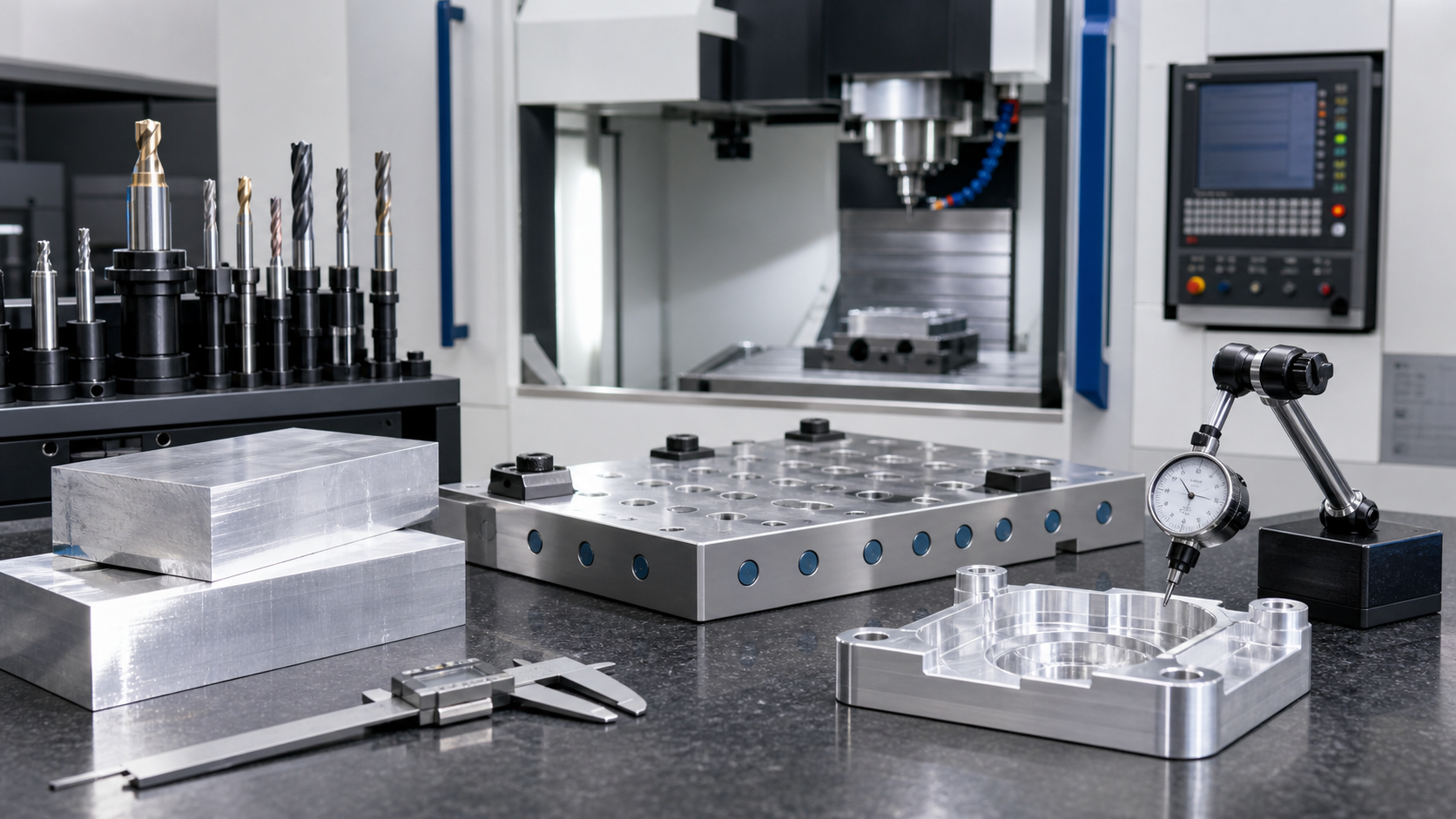
Perfect CNC parts require perfect preparation.
A high-quality precision component is not created only during cutting. Long before the tool touches the material, many details have already been checked: machine condition, cutting tools, raw material, CNC program, fixture setup, vacuum holding stability, and first-piece inspection.
At JADE-CNC, machining quality is built into every step of the process. From equipment selection to production preparation, we focus on stable and accurate manufacturing so customers receive reliable precision parts.
In this article, we will explain how JADE-CNC ensures CNC machining quality before and during production.
Quality Starts With Reliable CNC Equipment
Reliable equipment is the foundation of precision machining.
JADE uses Taikan CNC machining centers, a leading Chinese CNC machine brand, to support stable and accurate machining. A good CNC machining center helps maintain spindle stability, positioning accuracy, repeatability, and surface quality during production.
For precision parts, machine stability matters because even small deviations can affect dimensions, hole positions, surface finish, and assembly performance.
Reliable equipment does not replace process control, but it gives the manufacturing team a stable foundation to build on.
The Right Cutting Tools Create Better Results
Cutting tools directly affect machining quality.
Different materials and part structures require different tools. Aluminum, stainless steel, brass, copper, engineering plastics, and high-strength alloys all behave differently during cutting. Tool geometry, coating, diameter, flute design, sharpness, and wear condition can influence accuracy and surface finish.
JADE-CNC carefully selects and manages cutting tools according to different machining requirements.
Good tool management helps reduce:
- Chatter marks
- Burr formation
- Poor surface finish
- Tool breakage
- Dimensional drift
- Inconsistent batch quality
The right tool helps the machine produce cleaner, more stable, and more accurate parts.
Incoming Material Inspection Prevents Problems Before Production
Quality control starts before production.
If raw material does not meet requirements, even the best machining process cannot fully solve the problem. Material grade, size, surface condition, hardness, flatness, and batch consistency may all affect final part quality.
JADE-CNC inspects incoming materials to confirm that they meet production requirements before machining begins.
This step helps prevent avoidable issues such as wrong material, insufficient stock size, surface defects, or unexpected machining behavior.
For buyers, incoming material inspection is important because material mistakes can lead to performance failure, assembly problems, or costly rework.
CNC Program and Machine Settings Must Be Prepared Carefully
Before machining, operators carefully prepare the CNC program and machine settings.
The CNC program controls tool movement, machining sequence, cutting speed, feed rate, depth of cut, tool changes, and coordinate references. If the program is not prepared correctly, the part may have dimensional errors, tool marks, collision risks, or unstable cutting.
Machine settings are also important. Work coordinate setup, tool length compensation, fixture alignment, coolant condition, and machining parameters all affect the final result.
Careful program preparation helps ensure stable and accurate production from the first part to the last.
Stable Fixturing Is Essential for Precision Machining
A part cannot be machined accurately if it is not held accurately.
Stable fixturing keeps the workpiece in the correct position during machining. It helps prevent movement, vibration, deformation, and repeat positioning errors.
Proper positioning is especially important when parts require multiple setups or tight relationship between features. Holes, slots, pockets, threads, and mating surfaces must remain aligned according to the drawing.
JADE-CNC plans fixtures and positioning methods according to part geometry, material, machining force, tolerance, and production quantity.
Good fixturing is one of the hidden reasons behind consistent CNC machining quality.
Custom Setups Help Solve Special Part Challenges
Not every part can be machined with a standard setup.
Special parts may have irregular shapes, thin walls, delicate features, complex surfaces, or difficult clamping areas. For these parts, JADE-CNC optimizes the machining setup with customized solutions.
A custom setup may include special fixtures, soft jaws, support blocks, vacuum holding, locating pins, auxiliary clamps, or process adjustments.
The goal is to keep the part stable while protecting critical surfaces and maintaining accuracy.
For complex CNC machined components, customized fixturing and process planning can reduce deformation, improve repeatability, and support better production efficiency.
Vacuum Holding Stability Must Be Controlled
For flat and thin parts, vacuum workholding can be an effective clamping method.
Vacuum holding uses negative pressure to secure the workpiece against a fixture surface. It can reduce local clamping pressure and help protect thin or delicate parts from deformation.
However, vacuum stability depends on proper sealing.
In the video, JADE-CNC seals unnecessary holes to improve vacuum holding stability during machining. This is a practical and important detail. If air leaks through unused holes, vacuum force may decrease, and the part may shift during cutting.
By sealing unnecessary holes, the fixture can maintain stronger and more stable suction.
This small preparation step helps improve machining accuracy and reduce production risk.
First Piece Inspection Protects the Whole Batch
Before full production, the first piece is carefully inspected.
This is often called first article inspection or first piece inspection. It helps confirm that the program, tools, fixture, material, and machine settings are correct before the full batch is produced.
Critical dimensions are checked to ensure accuracy. If any issue is found, the team can adjust the process before more parts are made.
First piece inspection helps prevent batch defects and reduce waste. It is one of the most important quality control steps in CNC production.
Critical Dimensions Must Be Verified
Not every dimension has the same importance.
Some dimensions affect assembly, sealing, motion, alignment, or product performance. These are critical dimensions, and they must be verified carefully.
JADE-CNC checks key features according to drawing requirements. Depending on the part, this may include:
- Hole position
- Thread quality
- Flatness
- Parallelism
- Pocket depth
- Slot width
- Wall thickness
- Overall dimensions
- Mating surfaces
- Datum-related dimensions
By focusing on critical dimensions, the quality team ensures that the parts are not only visually acceptable but also functional and ready for assembly.
Quality Comes From Responsible Process Control
At JADE-CNC, quality is not treated as a final inspection step only.
It is built into the full production process, including equipment, tools, material inspection, programming, fixturing, vacuum stability, first-piece inspection, and final dimensional verification.
A responsible attitude and attention to every detail come together to create great parts.
For customers, this means better consistency, fewer assembly risks, and more reliable precision components from prototype to batch production.
Practical Advice for Buyers
When ordering CNC machined parts, buyers can help improve quality by providing clear technical requirements.
Useful information includes:
- 2D drawings with tolerances
- 3D CAD files
- Material grade
- Critical dimensions
- Datum requirements
- Surface treatment requirements
- Quantity
- Assembly function
- Cosmetic surface requirements
- Inspection report requirements
- Application environment
Clear information allows the supplier to prepare the right tools, fixtures, inspection plan, and production process.
Conclusion
Perfect CNC parts require perfect preparation.
JADE-CNC ensures machining quality through reliable Taikan CNC machining centers, careful cutting tool selection, incoming material inspection, CNC program preparation, stable fixturing, customized setups, vacuum holding control, and first piece inspection.
Every detail matters before full production begins. That is how JADE-CNC builds quality into every step of the process and delivers precision parts with stable accuracy and reliable performance.
Need high-quality custom CNC machined parts?
Send JADE-CNC your drawings, material, quantity, and application requirements. Our team can help prepare a reliable machining solution for your project.
Table of Contents
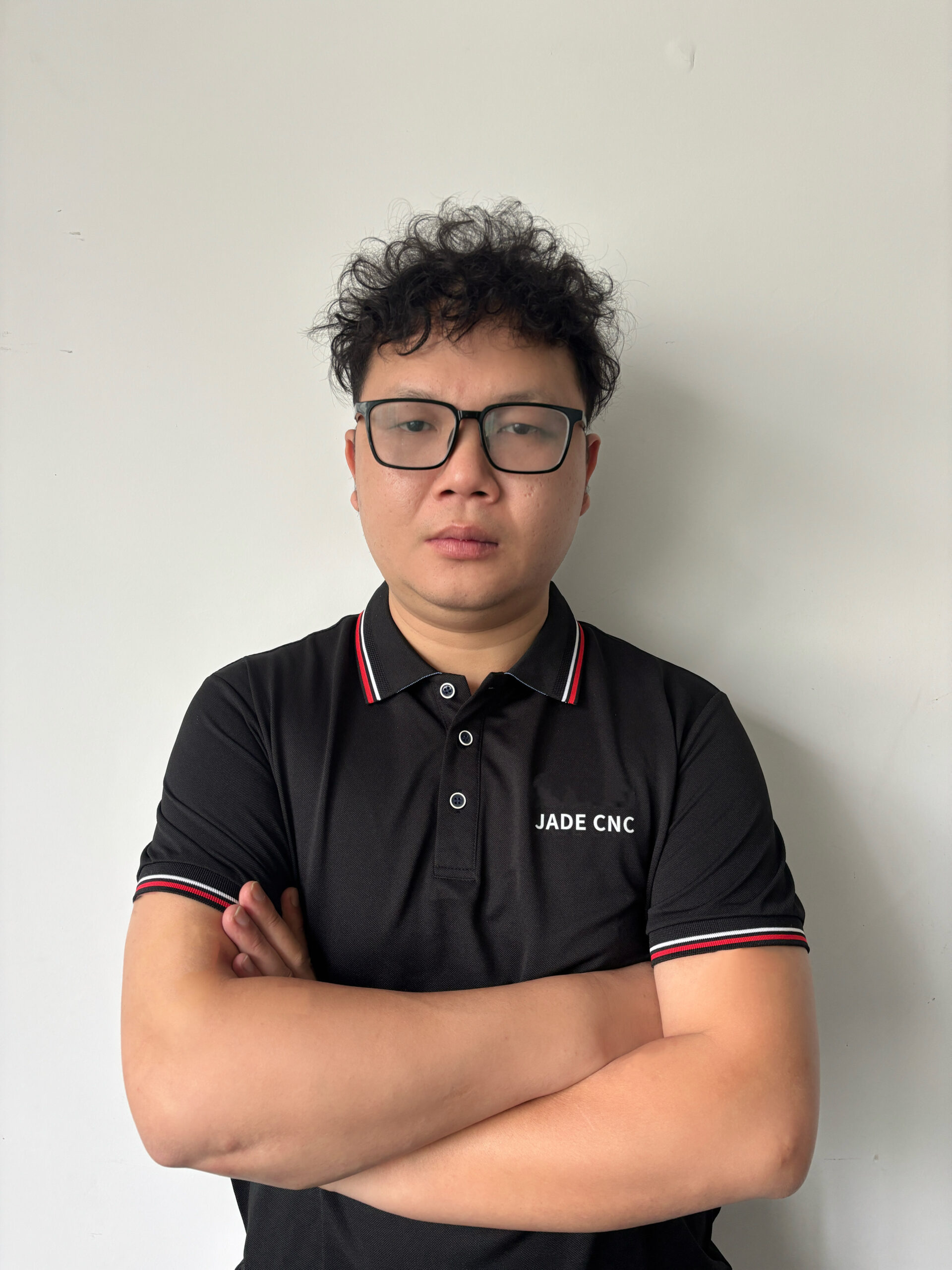
Leo Liang, Founder Best Partner with R&D
JADE-CNC’s Founder LEO, who brings over two decades of industry expertise, Leo started his career as an apprentice and practice his skills in surface treatment and CNC machining.