



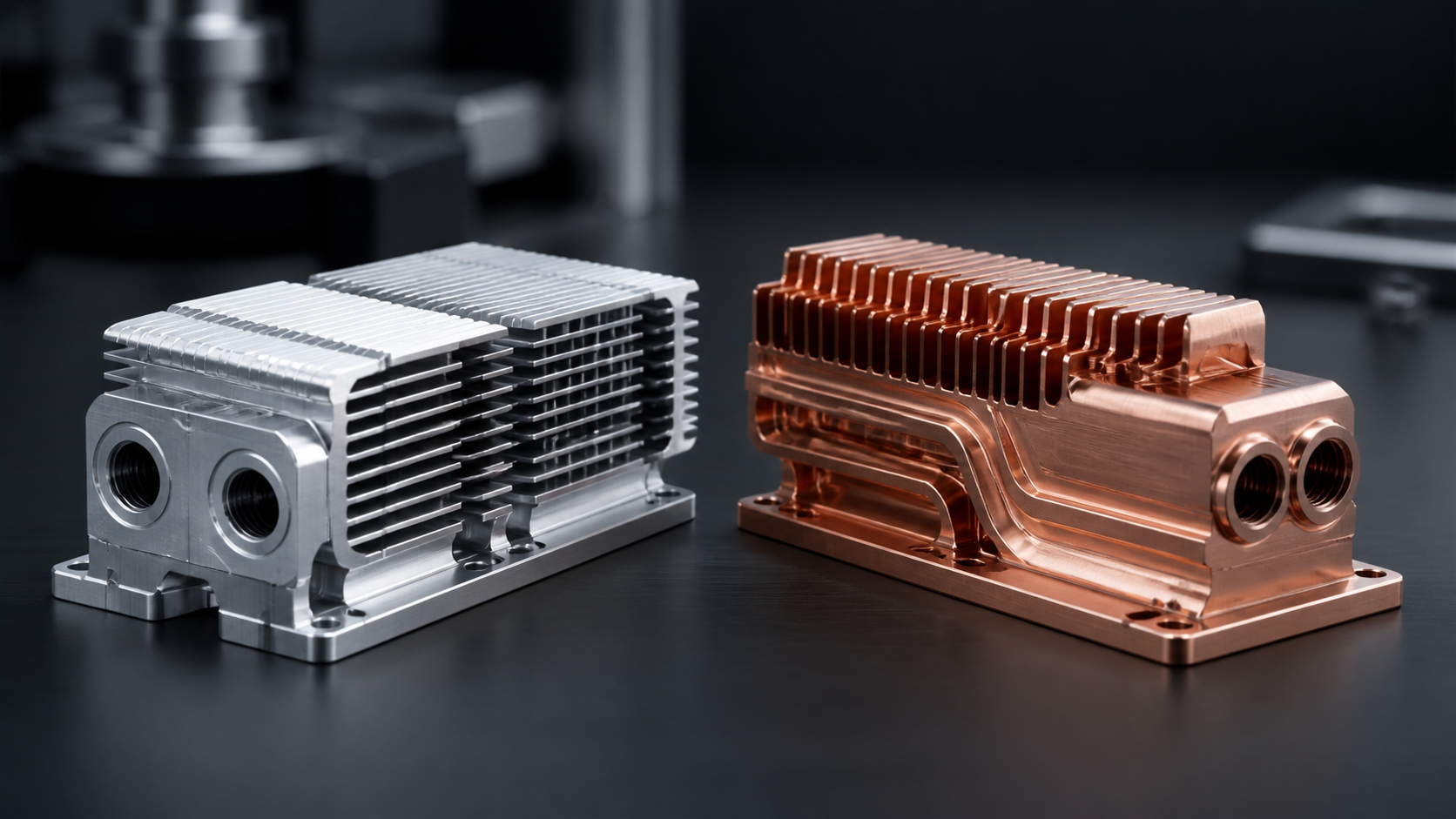
L'aluminium et le cuivre sont tous deux des matériaux courants pour les pièces usinées CNC qui impliquent un transfert de chaleur., conductivité électrique, contrôle du poids, et assemblage de précision. JADE-CNC examine les choix de qualités d'aluminium tels que 5052 aluminium contre 6061, 6061 aluminium contre 7075, 6061 contre 5052 aluminium, 6061 contre 6063 résistance de l'aluminium, 6063 contre 6061 aluminium, 7075 aluminium contre 6061, 7075 contre 6061 aluminium, aluminium 5052 contre 6061, et aluminium 6061 t6 vs t6511 avec dessins, géométrie, finition, inspection, et la quantité de production afin que le devis puisse correspondre aux exigences du projet du client.
Comparaison rapide: Aluminium vs Cuivre
| Facteur | Usinage CNC en aluminium | Usinage CNC du cuivre |
|---|---|---|
| Fonction thermique | Souvent sélectionné lors du transfert de chaleur, faible poids, usinabilité, et les coûts pratiques doivent être équilibrés. | Souvent sélectionné lorsqu'une conductivité thermique ou électrique plus forte est une exigence fonctionnelle clé. |
| Poids | Un poids inférieur peut aider avec les pièces mobiles, assemblages compacts, et des structures usinées plus grandes. | Une densité plus élevée peut ajouter du poids, ce qui peut affecter le montage, expédition, et conception d'assemblage. |
| Usinabilité | Permet souvent un usinage efficace et des surfaces propres lorsque la géométrie de la pièce est adaptée. | Nécessite un examen attentif du comportement de coupe, contrôle des bavures, risque de déformation, et qualité de surface. |
| Finition | Anodisation, revêtement, microbillage, et les finitions cosmétiques sont des sujets d'évaluation courants. | Placage, polissage, besoins en antioxydants, et les exigences en matière de surfaces conductrices sont des sujets d'examen courants. |
Quand l’aluminium est souvent pratique pour les pièces de transfert thermique
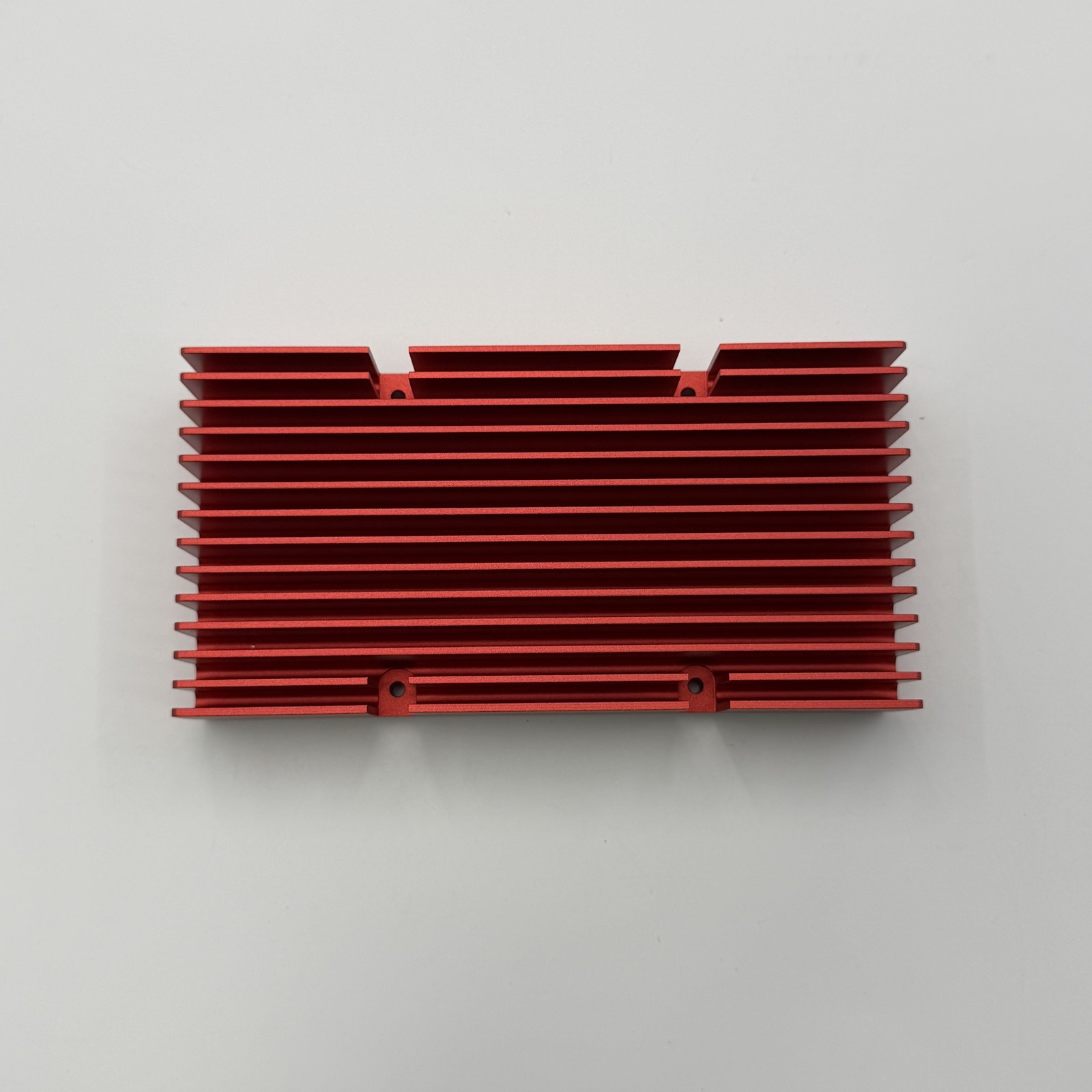
L'aluminium est souvent utilisé pour les pièces usinées nécessitant un transfert de chaleur avec un poids inférieur et un usinage efficace.. Cela peut être une option pratique pour les boîtiers de transfert de chaleur, plaques de montage, couvre, luminaires, panneaux, et pièces nécessitant une anodisation ou un aspect contrôlé.
JADE-CNC peut revoir la zone de contact thermique, épaisseur de paroi, profondeur de poche, trous de montage, fonctionnalités filetées, surfaces cosmétiques, exigences d'anodisation, et dimensions critiques avant devis. Cela permet de relier le choix des matériaux à la fabricabilité et à la planification de l'inspection..
Quand le cuivre est souvent examiné pour les pièces usinées CNC
Le cuivre est souvent examiné lorsque la conductivité est une fonction principale, y compris les composants de contact électrique, interfaces de transfert de chaleur, blocs conducteurs, pièces de mise à la terre, et des composants spécialisés de gestion thermique. La sélection du matériau en cuivre peut affecter le temps d'usinage, contrôle des bavures, manipulation des pièces, et protection des surfaces.
JADE-CNC examine attentivement la géométrie des pièces en cuivre car les parois sont minces, arêtes vives, poches profondes, et les surfaces cosmétiques peuvent influencer la planification des processus. Les attentes en matière de finition et d'antioxydation doivent également être discutées lors de la demande de prix lorsqu'elles affectent l'apparence ou la fonction finale..
Facteurs d'examen technique avant la demande de prix
Chemin thermique
Examiner les surfaces de contact, pression croissante, emplacement de la source de chaleur, flux d'air, planéité de la surface, et exigences d'interface.
Fonction électrique
Vérifier la conductivité, surfaces de contact, besoins en placage, caractéristiques de mise à la terre, limites d'isolation, et interfaces d'assemblage.
Géométrie d'usinage
Revoir les murs minces, poches profondes, côtes, trous, fils de discussion, bords sensibles aux bavures, et caractéristiques qui affectent la tenue de la pièce.
Finition et inspection
Examiner les exigences cosmétiques, revêtement/placage, dimensions finies, platitude, état de surface, et rendre compte des attentes.
Considérations relatives aux coûts et à la production
L'aluminium et le cuivre peuvent donner lieu à des plans de cotation et de production différents. Coût des matières premières, vitesse d'usinage, usure des outils, élimination des bavures, état de surface, risque de ferraille, temps d'inspection, et l'emballage peut tous changer lorsque le matériau change.
JADE-CNC examine ces facteurs dans le cadre du processus d'appel d'offres. Si un dessin permet soit de l'aluminium, soit du cuivre, l'examen peut comparer quelle option correspond le mieux à l'objectif fonctionnel, terminer l'attente, quantité, et budget de production.
Informations Avis JADE-CNC pour les projets en aluminium ou en cuivre
- 2Dessin D et fichier CAO 3D pour la géométrie, tolérance, et révision de l'assemblage.
- Notes sur la qualité des matériaux ou alternatives de matériaux acceptables.
- Exigences thermiques ou électriques qui affectent le choix des matériaux.
- Surfaces de contact, interfaces de montage, fonctionnalités filetées, et zones sensibles aux bavures.
- Finition des surfaces, couleur, protection contre l'oxydation, placage, ou attentes d'anodisation.
- Quantité, étape de production, documents d'inspection, et les conditions de livraison.
Pages JADE-CNC associées
FAQ
JADE-CNC peut-il examiner les options en aluminium et en cuivre pour les pièces de transfert de chaleur?
Le cuivre est-il toujours meilleur que l'aluminium pour le transfert de chaleur?
Pourquoi l'aluminium est-il courant pour les pièces usinées de transfert de chaleur?
Que devraient partager les clients pour l'examen de la demande de prix sur l'aluminium ou le cuivre?
Demander un examen de l'usinage CNC en aluminium ou en cuivre
Partagez votre dessin, Fichier CAO, qualité du matériau, exigences en matière de transfert de chaleur ou de conductivité, état de surface, quantité, notes de tolérance, et les besoins en matière d'inspection. JADE-CNC examinera les informations du projet et confirmera la prochaine étape du devis.