



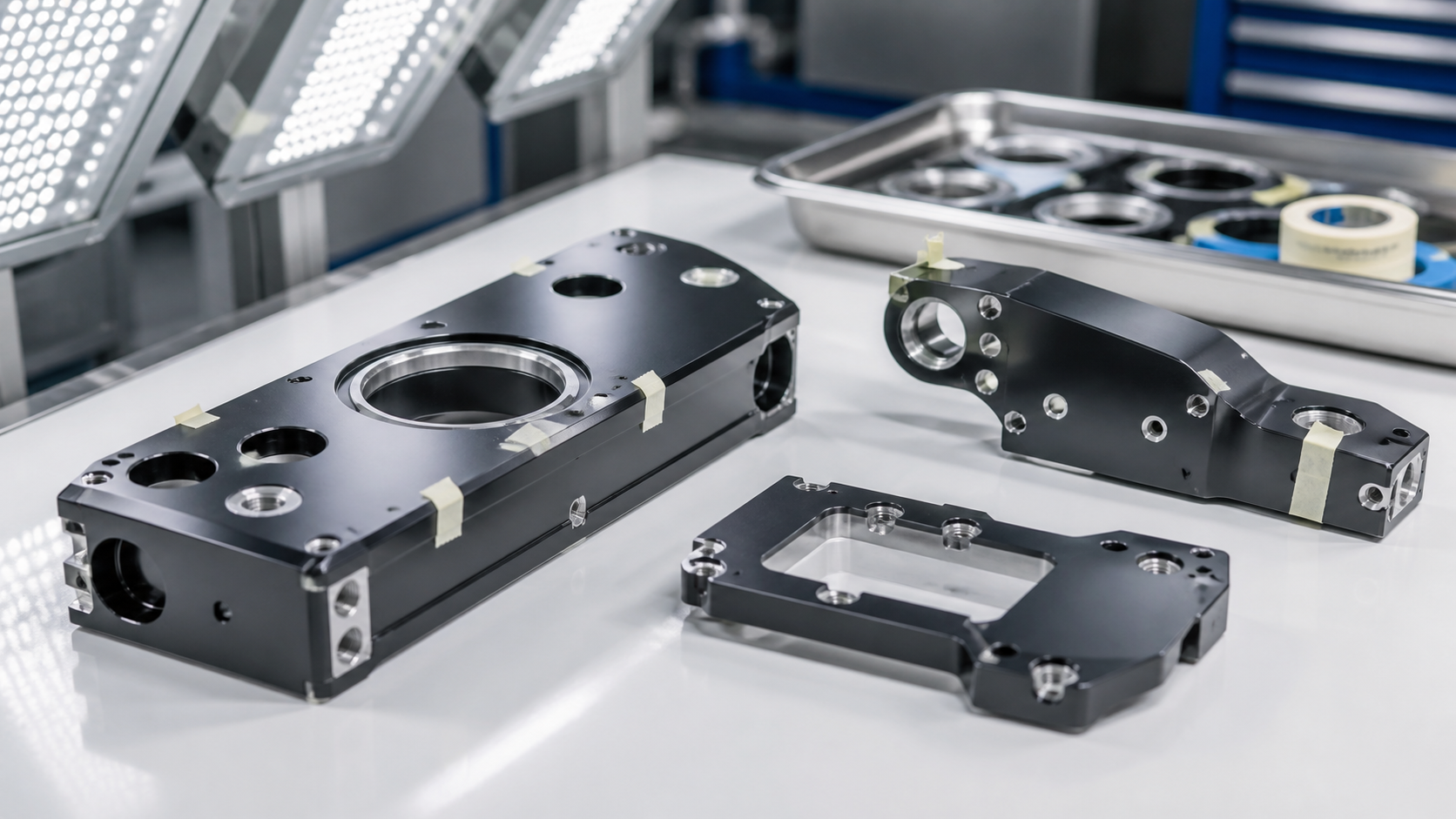
Avez-vous déjà reçu des pièces usinées CNC avec une finition de peinture inégale ou irrégulière?
La pièce peut être dimensionnellement correcte, mais la surface semble inégale. Certaines zones peuvent paraître plus sombres, plus léger, plus rugueux, plus brillant, ou moins uniforme que prévu. Ces petites imperfections peuvent affecter l'apparence générale du produit final, spécialement pour les boîtiers visibles, couvre, parenthèses, panneaux, et composants de précision.
Chez JADE-CNC, la peinture au pistolet est traitée comme un processus de finition contrôlé, pas seulement une étape finale de couleur. Une finition de peinture lisse et uniforme dépend de ce qui se passe avant de peindre, pendant la peinture, après la peinture, et avant d'emballer.
Dans cet article, nous expliquerons comment JADE-CNC aide à éviter les finitions de peinture inégales sur les pièces usinées CNC personnalisées.
La qualité de la peinture commence avant de peindre
De nombreux défauts de peinture ne commencent pas dans la cabine de peinture. Ils commencent plus tôt, pendant l'usinage, ébavurage, nettoyage, ou préparation de surface.
Une fois l'usinage CNC terminé, la surface de la pièce peut encore présenter de minuscules bavures, marques d'outils, huile, fluide de coupe, poussière, oxydation, ou des arêtes vives. Si ces problèmes ne sont pas contrôlés avant de peindre, le revêtement final peut présenter des défauts.
Par exemple, de minuscules bavures peuvent provoquer une accumulation de peinture sur les bords. Les résidus d'huile peuvent réduire l'adhérence. La poussière peut créer de petites particules en surface. Une texture de surface inégale peut créer une brillance ou une couleur incohérente.
C'est pourquoi JADE-CNC vérifie et prépare les pièces usinées avant de les envoyer en peinture au pistolet..
De minuscules bavures peuvent affecter la finition de la peinture
Les bavures peuvent paraître petites, mais ils peuvent avoir une grande influence sur la qualité de la peinture.
Lorsque la peinture est appliquée sur des bavures, bords, trous, ou des transitions difficiles, le revêtement peut ne pas s'écouler uniformément. Certaines zones peuvent recueillir trop de peinture, tandis que d'autres zones peuvent paraître minces. Après séchage ou durcissement, ces défauts peuvent devenir visibles sous forme de bords rugueux, taches brunes, brillance inégale, ou texture irrégulière.
Les bavures peuvent également se briser plus tard et endommager la surface.
Pour pièces CNC peintes par pulvérisation, l'ébavurage n'est pas seulement une exigence d'assemblage. C'est aussi une exigence de finition de surface. Les bords nets aident le revêtement à recouvrir la pièce plus uniformément et à créer une apparence finale plus professionnelle.
La préparation de surface crée une meilleure base de revêtement
Avant la peinture au pistolet, la surface usinée doit atteindre un état approprié pour le revêtement.
Cela peut inclure l'ébavurage, nettoyage, lissage, activation superficielle, passivation, ou d'autres étapes de préparation en fonction du matériau et des exigences de finition.
JADE-CNC effectue des étapes de préparation pour aider la surface de la pièce à atteindre un état optimal avant de peindre. L’objectif est d’améliorer l’adhérence du revêtement, réduire les défauts visibles, et créer une base stable pour la finition finale.
Si la préparation de la surface est ignorée ou précipitée, la peinture peut encore recouvrir la pièce, mais le résultat final peut ne pas être cohérent. Une bonne peinture dépend d'une bonne préparation.
La passivation aide à améliorer l'état de la surface
Dans le script vidéo, JADE-CNC mentionne la passivation avant la peinture par pulvérisation.
La passivation est un procédé de traitement de surface utilisé pour améliorer l'état de surface de certains matériaux. En fonction du matériau et du processus, cela peut aider à éliminer les contaminants, améliorer la résistance à la corrosion, et préparer la surface pour un traitement ultérieur.
Pour pièces CNC peintes, le but du traitement de surface avant la peinture est de rendre la surface plus propre, plus stable, et plus adapté au revêtement.
Cette étape est particulièrement importante lorsque les pièces nécessitent à la fois une apparence et une durabilité.. Une surface bien préparée permet une meilleure adhérence de la peinture et une qualité de finition plus fiable.
La peinture au pistolet est la dernière étape visuelle
Une fois les pièces usinées nettoyées et préparées, ils peuvent être envoyés pour peinture au pistolet.
La peinture au pistolet donne à la pièce sa couleur définitive, texture, et identité visuelle. Pour de nombreux produits, c'est la première chose que les clients remarquent. Même si la pièce est mécaniquement précise, une mauvaise qualité de peinture peut réduire la valeur perçue du produit.
Les problèmes courants de peinture par pulvérisation incluent:
- Couleur inégale
- Revêtement fin
- Accumulation de peinture
- Texture rugueuse
- Particules de poussière
- Incohérence de brillance
- Écorce d'orange
- Rayures
- Bords exposés
- Mauvaise adhérence
Éviter ces problèmes nécessite un contrôle stable des processus et une inspection minutieuse.
L’inspection de l’éclairage multi-angle est essentielle
Après peinture, JADE-CNC inspecte chaque pièce sous tous les angles sous éclairage.
Il s'agit d'une étape importante car les défauts de peinture peuvent ne pas être visibles dans une seule direction.. Sous différents angles, l'éclairage peut révéler des couleurs inégales, ondes de surface, poussière, rayures, zones manquées, accumulation de revêtement, ou différences de brillance.
Pour les pièces usinées CNC sur mesure, composants particulièrement visibles, l’inspection ne peut pas se contenter d’un simple coup d’oeil. Chaque pièce doit être soigneusement vérifiée avant approbation.
Une bonne inspection de l'éclairage permet de garantir que la surface finale répond aux normes d'apparence requises avant l'emballage et l'expédition..
Une coloration inégale nécessite d'être repeinte
Si une pièce présente une coloration inégale, il ne devrait pas être expédié comme acceptable.
JADE-CNC contrôle cela en identifiant les pièces présentant des couleurs incohérentes ou des défauts de revêtement visibles et en les envoyant pour repeindre si nécessaire..
Cette étape est importante pour la cohérence des lots. Dans un ordre de fabrication, une partie peut paraître belle en soi, mais lorsqu'il est placé à côté d'autres pièces, les différences de couleur peuvent devenir évidentes. Pour les produits assemblés, une couleur incohérente sur plusieurs pièces peut donner au produit final un aspect non professionnel.
Le contrôle de la repeinture contribue à protéger à la fois la qualité de l’apparence et la satisfaction du client.
Une surface lisse et une couleur uniforme améliorent la valeur du produit
Une surface lisse et une couleur uniforme font plus que rendre la pièce belle.
Ils améliorent la qualité perçue de l'ensemble du produit. Pour les logements, couvre, panneaux, composants de communication, pièces industrielles, équipement d'automatisation, et pièces métalliques destinées aux consommateurs, la finition de la surface peut influencer la façon dont les clients jugent le produit.
Une finition propre peinte par pulvérisation suggère une fabrication soignée, contrôle de qualité stable, et le souci du détail.
Pour les acheteurs, c'est important car la pièce CNC fait souvent partie d'un produit plus grand. Si les composants visibles semblent incohérents, l'ensemble du produit peut sembler de moindre qualité.
L'emballage doit protéger la surface finie
Après peinture et inspection, les pièces sont prêtes à être emballées et expédiées.
L'emballage n'est pas un petit détail. Les surfaces peintes par pulvérisation peuvent être rayées, frotté, ou endommagés pendant le transport s'ils ne sont pas correctement protégés.
Les pièces finies doivent être séparées, amorti, et emballé de manière à empêcher tout contact et mouvement avec la surface. Pour des pièces peintes de haute qualité, le but est simple: la surface qui a passé l'inspection doit arriver chez le client dans le même état.
Chez JADE-CNC, un emballage soigné fait partie du flux de travail de finition.
Une bonne finition de peinture nécessite un contrôle total du processus
L'effet final peint par pulvérisation dépend du processus complet, y compris l'usinage, ébavurage, préparation des surfaces, passivation, peinture, inspection, repeindre, et emballage.
Si une étape est ignorée, le résultat final peut en souffrir.
C'est pourquoi JADE-CNC considère la peinture par pulvérisation comme faisant partie de la fabrication de précision. L'apparence finale n'est pas créée uniquement par la peinture. Il est créé par l'ensemble du flux de travail avant et après la peinture.
Conseils pratiques pour les acheteurs
Lors de la commande de pièces usinées CNC peintes par pulvérisation, les acheteurs doivent clairement fournir les exigences de finition.
Les informations utiles comprennent:
- Couleur de peinture ou code couleur
- Niveau de brillance
- Exigence de texture
- Surfaces cosmétiques
- Zones de masquage
- Exigence d’épaisseur de revêtement le cas échéant
- Qualité du matériau
- Exigence de préparation de surface
- Quantité
- Environnement applicatif
- Exemple ou photo de référence
- Norme d'acceptation pour la différence de couleur
Des exigences claires aident à éviter les malentendus et à améliorer la cohérence finale.
Conclusion
Une finition de peinture inégale ou irrégulière peut affecter l'apparence générale des pièces usinées CNC. Beaucoup de ces problèmes proviennent de petits détails tels que des bavures, contamination superficielle, préparation insuffisante, mauvaise inspection, ou un emballage inapproprié.
Chez JADE-CNC, nous contrôlons le processus de peinture par pulvérisation étape par étape. Après usinage, nous préparons les pièces, enlever les petites bavures, effectuer un traitement de surface tel que la passivation si nécessaire, envoyer les pièces pour peinture au pistolet, inspecter chaque pièce sous tous les angles sous un éclairage, repeindre toutes les pièces de couleur inégale, et emballez soigneusement les pièces finies avant expédition.
Le résultat est une surface lisse, même la couleur, et un composant fini plus fiable.
Besoin de pièces usinées CNC personnalisées de haute qualité avec peinture par pulvérisation?
Contactez JADE-CNC avec vos dessins, matériel, quantité, et exigences de finition. Nous pouvons vous aider à fabriquer des pièces de précision avec un usinage fiable et une finition de surface contrôlée.
Table des matières
Léo Liang, Fondateur Meilleur partenaire avec R&D
LEO, fondateur de JADE-CNC, qui apporte plus de deux décennies d'expertise dans l'industrie, Leo a commencé sa carrière en tant qu'apprenti et met en pratique ses compétences en traitement de surface et en usinage CNC..